

























Better Guest Seating Ideas Around a Round Meeting Table
Better guest seating around a round meeting table starts with more than adding chairs. The right layout supports comfort, conversation, sight...
Learn more
Visit quiz page to see how we makes it easy to create an inspiring workplace


Guest seating carries more influence than most offices give it credit for. A visitor may only sit for a few minutes, but that short moment can shape how comfortable, welcomed, and prepared the space feels. The chair offered to a guest quietly communicates whether the office was designed around real human interaction or simply filled with available furniture.
A conference chair fit brings a more thoughtful standard to guest seating because it is built around the kind of posture people use during conversation. It supports upright sitting, balanced attention, and natural movement. Unlike casual lounge seating, it does not encourage a visitor to sink too low. Unlike a basic side chair, it does not make the guest feel temporary or physically unsupported. It sits in the middle, where comfort, professionalism, and everyday practicality meet.
That balance matters in reception areas, private offices, interview rooms, meeting corners, team-adjacent zones, and flexible workspaces. Guests are rarely just waiting anymore. They may be reviewing documents, joining a quick discussion, answering interview questions, checking a laptop, or participating in a project conversation. Seating that borrows the proportions and support logic of a conference chair helps those moments feel smoother.
Guest chairs often fail because they are chosen only to occupy space. They may look acceptable at first glance, but once someone sits down, the weaknesses become clear. The seat is too shallow. The back feels too rigid. The chair sits too low across from a desk. The frame feels light in a way that reduces confidence. The guest starts shifting before the conversation has even begun.
A better guest chair begins with the assumption that the visitor will participate, not just sit. That shift changes the criteria. The chair needs to support eye contact, easy posture changes, and a comfortable seated position for a real workplace exchange. It should make the guest feel settled without making the setting feel overly casual.
Many visitor chairs are designed around convenience first. They are small, stackable, easy to move, or visually simple. Those qualities can be useful, but they are not enough by themselves. A chair can be convenient for the office and still uncomfortable for the person using it.
The temporary feeling often comes from three things: weak support, awkward proportions, and poor relationship to the surrounding furniture. A guest seated too low in front of a desk may feel physically diminished. A guest sitting in a chair with no back comfort may become restless. A guest placed in a chair that does not visually match the room may feel like an afterthought.
That is why a conference chair fit works so well for guest seating. It is not about making every guest chair look like it belongs in a boardroom. It is about borrowing the same design priorities: stable posture, appropriate scale, and comfort that supports conversation.
The best guest seating takes cues from conference chairs for offices and meeting rooms because meeting seating is designed for attention. People need to sit upright, speak comfortably, listen without constant shifting, and remain supported through conversations that may last longer than expected.
A conference chair fit usually feels more complete because the seat width, back angle, cushion support, and frame stability are working together. Guests do not need complex adjustments. They simply need a chair that feels right when they sit down. That immediate comfort makes a difference in how confident and natural the visit feels.
A lounge chair may be pleasant in a waiting area, but it can work against focused conversation. Low seating can make it harder to maintain eye contact across a desk or table. Deep cushions may encourage a reclined posture that feels too relaxed for a professional discussion. Soft seating can also make it harder to write, use a laptop, or review printed materials.
Conversation comfort is different. It keeps the guest alert but not stiff. It supports the back without forcing a rigid posture. It allows the visitor to lean in, sit back, turn slightly, and stand up easily. Conference chair fit is valuable because it supports that kind of active comfort.
A guest chair feels better when it fits the body in a balanced, predictable way. Visitors should not have to think about how to sit. They should not need to perch on the edge, shift to find support, or adjust their posture repeatedly just to stay comfortable.
The fit does not have to be complicated. In fact, guest seating should feel simple. The most important elements are seat height, seat depth, back support, frame stability, and ease of entry and exit.
Seat height has a direct effect on how a guest experiences a conversation. If the chair is too low, the visitor may feel like they are looking upward at the person across from them. If it is too high, the guest may feel physically awkward or disconnected from the table surface.
The right height allows the guest to sit with feet grounded, knees comfortable, and posture naturally upright. In desk-facing guest seating, this helps the conversation feel more equal. Around a meeting table, it supports smoother participation because everyone sits at a similar visual level.
A well-fitted guest chair does not call attention to itself. It lets the person focus on the exchange, not the discomfort of the seat.
Seat depth is one of the easiest comfort details to overlook. A shallow seat can make guests feel unsupported, especially if they are sitting for more than a few minutes. An overly deep seat can push smaller users away from the backrest or make them recline more than they want to.
Balanced seat depth allows the guest to use the backrest while keeping their feet comfortably on the floor. That creates a more grounded posture. It also makes the chair feel more accommodating to a wider range of visitors without requiring adjustments.
This is one reason conference-style proportions are so useful for guest seating. They are often designed for shared use rather than one assigned user. That makes the fit feel more neutral, inclusive, and appropriate for visitor settings.
A guest who is physically uncomfortable becomes less engaged. They may still listen politely, but part of their attention goes toward managing posture. They cross and uncross their legs. They lean forward because the backrest is not useful. They shift backward because the seat does not support them properly.
Back support changes that experience. A supportive back helps visitors remain present during interviews, client conversations, consultations, and internal meetings. It does not need to be aggressive or highly contoured. It simply needs to meet the body in a way that encourages upright comfort.
Picture two guest chairs across from a private office desk. In one version, the chairs are low, rigid, and visually unrelated to the rest of the office. Guests sit awkwardly, place bags on the floor, and lean forward to be heard. The room feels transactional.
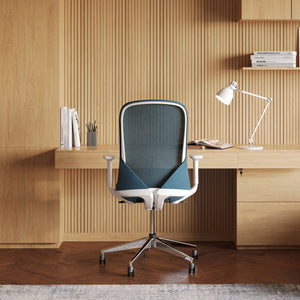
In the better version, the chairs have conference-style proportions. They sit at an appropriate height, support the back, and visually belong in the room. Guests settle quickly. Eye contact feels natural. The conversation begins from a place of comfort instead of adjustment.
A chair cannot be judged alone. Guest seating becomes comfortable when the chair works with the desk, table, or shared surface around it. Even a supportive chair can feel wrong if it is too wide for the space, too low for the table, or difficult to pull in.
The relationship between chair and surface affects posture, movement, and the overall tone of the seating area. A guest should be able to sit down, place a notebook or laptop where appropriate, and participate without feeling crowded.
Guest seating often falls apart at the table level. If there is not enough knee clearance, visitors sit too far away. If the chair arms do not fit under or near the table, the guest may feel pushed back. If the table is too small for the number of chairs, the setting feels cramped before anyone speaks.
Good guest seating planning looks at the full arrangement. How far does the chair pull out? Can someone walk behind it? Is there enough room for a bag? Can guests rest their arms naturally? Does the table support the purpose of the visit?
These practical details create comfort that guests may not consciously notice, but they will feel the difference.
Not every guest area needs a full meeting table. Some offices benefit from smaller seating zones where a visitor can wait, have a quick check-in, or hold an informal one-on-one conversation. In these settings, a compact round bistro table can support a more complete guest experience without making the area feel crowded.
The round shape is useful because it softens the interaction. There are no sharp directional cues, and the arrangement can feel more relaxed while still remaining professional. When paired with guest chairs that have a conference-style fit, a small table setting can become more than a waiting corner. It becomes a purposeful place for short, comfortable interaction.
Round tables also work well when the guest conversation involves more than two people. A round meeting table for small huddles can make discussions feel less hierarchical because everyone has a clearer line of sight. There is no obvious head of the table, which can help clients, candidates, collaborators, or visiting team members feel more included.
This matters because guest seating is not only about physical comfort. It also affects social comfort. The right chair and table relationship can make a meeting feel more open, less formal, and easier to join.
Different visitors bring different needs into the office. A candidate wants to feel respected. A client wants to feel confident. A vendor may need to review details. A partner may need to join a working conversation. A supportive guest chair helps each of those moments feel more prepared.
Conference-style guest seating performs well because it can adapt across these scenarios without feeling out of place.
Reception seating is often the first furniture a visitor uses. That makes it part of the office’s greeting. A chair that feels flimsy, overly casual, or physically uncomfortable can make the space feel less considered. A chair that feels supportive and visually aligned with the office gives a different message.
Guests should feel that the space expected them. They should have a clear place to sit, enough room to settle, and seating that does not make waiting feel awkward. The comfort does not need to be luxurious. It simply needs to feel intentional, clean, stable, and appropriate.
Interviews already carry enough pressure. A poor guest chair can add unnecessary discomfort. If the candidate is perched too low, struggling with posture, or unsure where to place their belongings, the room becomes less supportive.
Conference chair fit helps by creating a neutral, steady seating experience. The candidate can sit upright, maintain eye contact, and focus on the conversation. The interviewer also benefits because the room feels more balanced and respectful.
Good interview seating does not try to impress through exaggeration. It supports the person quietly and lets the conversation take priority.
Client and vendor meetings often become working sessions. Someone may need to open a laptop, compare notes, review drawings, discuss documents, or look at shared materials. Guest seating that only works for passive waiting is not enough for these situations.
Simple accessories can also improve temporary work comfort. A slim laptop stand can be part of a guest-ready setup when visitors need to work from a laptop during a meeting or short stay.
Modern offices often blur the line between visitor and participant. A consultant may sit with the team for part of the day. A client may join a planning conversation. A hybrid employee from another location may need a temporary seat near a project group.
In these situations, guest seating needs more capability than a decorative chair can provide. A conference chair fit gives the guest a practical place to participate without making the space feel like it has been rearranged at the last minute.
Comfort is not only physical. A guest also reads the room visually. The chair’s shape, scale, materials, and relationship to surrounding furniture all influence how professional the space feels.
A guest chair that matches the office environment creates continuity. It tells visitors that the seating was chosen as part of the workspace, not added as an afterthought.
Mismatched chairs can be charming in some hospitality settings, but in an office, they can easily feel improvised. A leftover task chair in a reception corner, a dining chair across from an executive desk, or a lounge chair placed at a work table can create visual confusion.
Conference-style guest seating helps solve that problem because it naturally belongs in workplace environments. It can fit in private offices, meeting rooms, reception areas, and collaboration spaces while still feeling consistent.
The goal is not to make every room identical. The goal is to create a shared design language. Clean lines, appropriate scale, stable frames, and coordinated finishes can help guest seating feel connected to the rest of the office.
Guest seating should work with the broader furniture plan. When an office uses clean, functional, and human-centered pieces, visitor chairs should support that same language. Pairing guest seating with modern ergonomic office furniture helps create a workspace where comfort and visual clarity feel connected.
This matters because visitors do not separate furniture into categories the way planners do. They experience the office as one environment. If the desks feel considered but the guest chairs feel random, the impression weakens. If the guest seating fits the same design logic, the entire space feels more complete.
Guest seating is not limited to reception or meeting rooms. Many offices need chairs near project areas, shared desks, or open work zones. A visitor might sit briefly with a department, review materials with a manager, or join a team discussion.
When guest seating is placed near a six-person office workstation desk, the chair needs to support participation without crowding the team. It should feel accessible but not intrusive. Scale matters here. Too large, and the guest chair disrupts circulation. Too small or casual, and it feels disconnected from the work setting.
A conference chair fit is useful because it gives the visitor a defined seat that still belongs near active work.
Guest chairs do not need the same range of adjustments as task chairs used all day. Visitors are not usually customizing a chair for eight hours of work. They need a supportive seat that feels comfortable quickly and works for many people.
That is why ergonomic guest seating is less about controls and more about intelligent proportions. The chair should support the body in a natural way without requiring explanation.
A fully adjustable task chair can be excellent for assigned workstations, but it may not be ideal for guests. Visitors may not know how to adjust it, may not want to fuss with controls, or may feel as though they are using an employee’s chair rather than a visitor seat.
Conference-style guest seating avoids that problem. It offers a more universal fit. The visitor can sit down and feel supported without needing to change settings. That simplicity is part of the comfort.
Armrests can make guest seating feel more relaxed and supportive, especially during longer conversations. They give visitors a natural place to rest their arms and can make the chair feel more substantial.
However, armrests are not always the right choice. In compact spaces, armless chairs may allow easier movement and better table access. Around smaller tables, arms can interfere with spacing. Across a desk, they may be comfortable if the chair has enough clearance.
The decision should come from the room and the type of visit. A good guest seating plan does not add features for the sake of adding them. It chooses what supports the experience.
Guest seating should not feel hard, but it should not feel like a lounge seat either. The best cushioning supports a seated posture that feels comfortable and engaged. Visitors should be able to relax into the chair while still feeling ready to talk, write, listen, or participate.
Too little cushioning makes the chair feel temporary. Too much softness can reduce support. A balanced seat helps guests remain comfortable without losing the active posture that workplace conversations often require.
Use these fit signals when evaluating guest seating:
1. The seat height works with the desk, table, or guest area.
2. The seat depth supports the thighs without forcing a reclined posture.
3. The back angle encourages upright comfort.
4. The frame feels stable when the guest sits down or stands up.
5. The chair can be moved without feeling flimsy.
6. The materials look appropriate for the surrounding office.
7. The chair supports the expected length and purpose of the visit.
| Seating Type | Best Workplace Use | Comfort Strength | Common Limitation | Why Conference Chair Fit Often Feels Better |
|---|---|---|---|---|
| Basic side chair | Very short visits or overflow seating | Small footprint | Can feel rigid or temporary | Adds more posture support and visual intention |
| Lounge chair | Casual waiting areas | Relaxed feel | Often too low for work conversations | Keeps guests upright and easier to engage |
| Dining-style chair | Café-inspired office corners | Familiar shape | May lack workplace support | Better suited to office conversations and table use |
| Task chair | Longer individual work sessions | Adjustable comfort | Can feel employee-specific | Creates a more polished visitor experience |
| Conference-style guest chair | Reception, private offices, interviews, and meeting spaces | Balanced support and professionalism | Needs proper spacing | Supports posture, conversation, and room consistency |
This comparison shows why conference chair fit is such a reliable standard. It does not try to turn guest seating into lounge furniture or task seating. It gives visitors enough support to feel comfortable while preserving the professional purpose of the space.
A guest chair can be well designed and still feel uncomfortable if it is placed poorly. Visitors need more than a seat. They need a clear place within the room. They need enough space to enter, sit, stand, and participate without feeling exposed or in the way.
Spatial comfort is one of the strongest reasons guest seating should be planned rather than improvised.
When a guest enters a workspace, they instinctively look for cues. Where should they sit? Is this area private enough for a conversation? Are they interrupting someone else’s work? Is there a place for a bag or laptop?
Clear seating zones reduce that uncertainty. A pair of guest chairs across from a desk, a small table setting in a reception area, or a defined meeting corner can all help visitors understand their place in the space.
The chair itself plays a role in this clarity. A conference-style guest chair has enough presence to define a seat without overwhelming the room.
In open offices, guest seating may sit near active teams, shared workstations, or circulation paths. Without some level of definition, visitors can feel exposed. They may also feel as though their conversation is distracting nearby employees.
Office workstation panels can help create clearer boundaries around guest-adjacent areas. Panels can support visual separation and make seating zones feel more intentional without requiring the space to feel fully closed off.
This is especially helpful when guest seating is placed near active work areas. The visitor remains connected to the office, but the seating arrangement feels calmer and more deliberate.
A guest area should not feel hidden unless privacy is the main purpose. It should feel accessible, visible, and easy to understand. At the same time, visitors should not feel like they are sitting in the middle of traffic.
The best layouts create a comfortable middle ground. Guests can see where they belong, move easily, and participate without feeling exposed. Conference chair fit supports this because the chair feels appropriate in both open and semi-private settings.
Choosing guest seating becomes easier when the decision starts with use. The best chair for a short reception wait may not be the same as the best chair for client meetings. The right choice depends on visit length, room size, table relationship, and the type of interaction the space supports.
Different guest moments require different levels of comfort:
Under 10 minutes: Prioritize easy entry, a compact footprint, and simple support.
10 to 30 minutes: Choose better back support, stable seat depth, and compatibility with nearby tables or desks.
30 to 60 minutes: Look for balanced cushioning, stronger posture support, and armrests where the room allows.
Longer working visits: Use seating that feels closer to meeting-room comfort than basic waiting-room seating.
This approach prevents overfurnishing small spaces while still giving guests the support they need.
A guest chair should never make the room harder to use. Before selecting a chair, consider how people will move around it. Can the guest pull the chair out easily? Can someone walk behind the seated visitor? Does the chair block a cabinet, doorway, or workstation path?
Circulation is especially important in smaller offices and shared areas. A chair with the right comfort profile but the wrong footprint can create daily friction. The best guest seating feels good when occupied and disappears naturally into the room when not in use.
Guest seating should look clean, feel comfortable, and handle regular use. Material choice affects all three. Upholstered seating can add softness and warmth. Smooth finishes may be easier to visually coordinate. Breathable construction can help guests feel more comfortable during longer conversations.
The safest approach is to choose materials that fit the setting honestly. A high-traffic reception area may need a different surface than a private office. A meeting room may need chairs that balance comfort with easy movement. A guest chair near a workstation may need a finish that blends with nearby desks and panels.
Before choosing guest seating, ask:
Does the chair support upright conversation?
Does the seat height work with the nearby table or desk?
Can guests sit down and stand up easily?
Does the chair visually match the surrounding furniture?
Is there enough room for movement, bags, and laptop use?
Does the seating area feel prepared rather than improvised?
Will the chair support the most common type of guest visit?
A comfortable guest chair does more than support the body. It improves the rhythm of the visit. People settle faster. They listen with fewer distractions. They participate more naturally. They feel that the space was prepared for them.
Conference chair fit is effective because it supports the physical and social realities of office visits. Guests need comfort, but they also need confidence. They need a chair that lets them wait, talk, review, think, and participate without feeling like the furniture is working against them.
When a chair fits well, guests stop managing their posture and start focusing on the moment. That may mean answering interview questions with more ease, reviewing documents with more patience, or participating in a meeting without constant shifting.
This kind of comfort is quiet. It does not need to announce itself. It simply removes friction from the visit.
Offering someone a good chair is a simple act of hospitality. In an office, it also communicates preparation. It says the visitor was expected, the conversation matters, and the space is ready to support the interaction.
That message is especially important in client-facing areas, interview rooms, and collaborative workspaces. The guest chair becomes part of the overall experience, shaping trust before the discussion develops.
The strongest guest seating is not decorative filler. It supports the body, the conversation, the furniture layout, and the overall workplace impression. A conference chair fit helps guest seating perform across many office situations because it offers a practical balance of comfort, support, and professional presence.
When the chair fits the visitor, the table, and the room, guest seating feels better immediately. The office feels more intentional. Conversations feel more natural. Visitors feel more included. That is the real value of choosing guest seating with a conference chair fit.


You have unlocked free shipping!
You're saving $29 and unlocked free shipping!
Leave a comment