








Client Seating That Looks Better With a Conference Chair

Client seating carries more visual responsibility than many office elements. A desk can be tidy, a wall can be freshly painted, and a table can be well placed, but the chair is where the client physically enters the experience. It is the point where first impressions become comfort, posture, conversation, and trust.
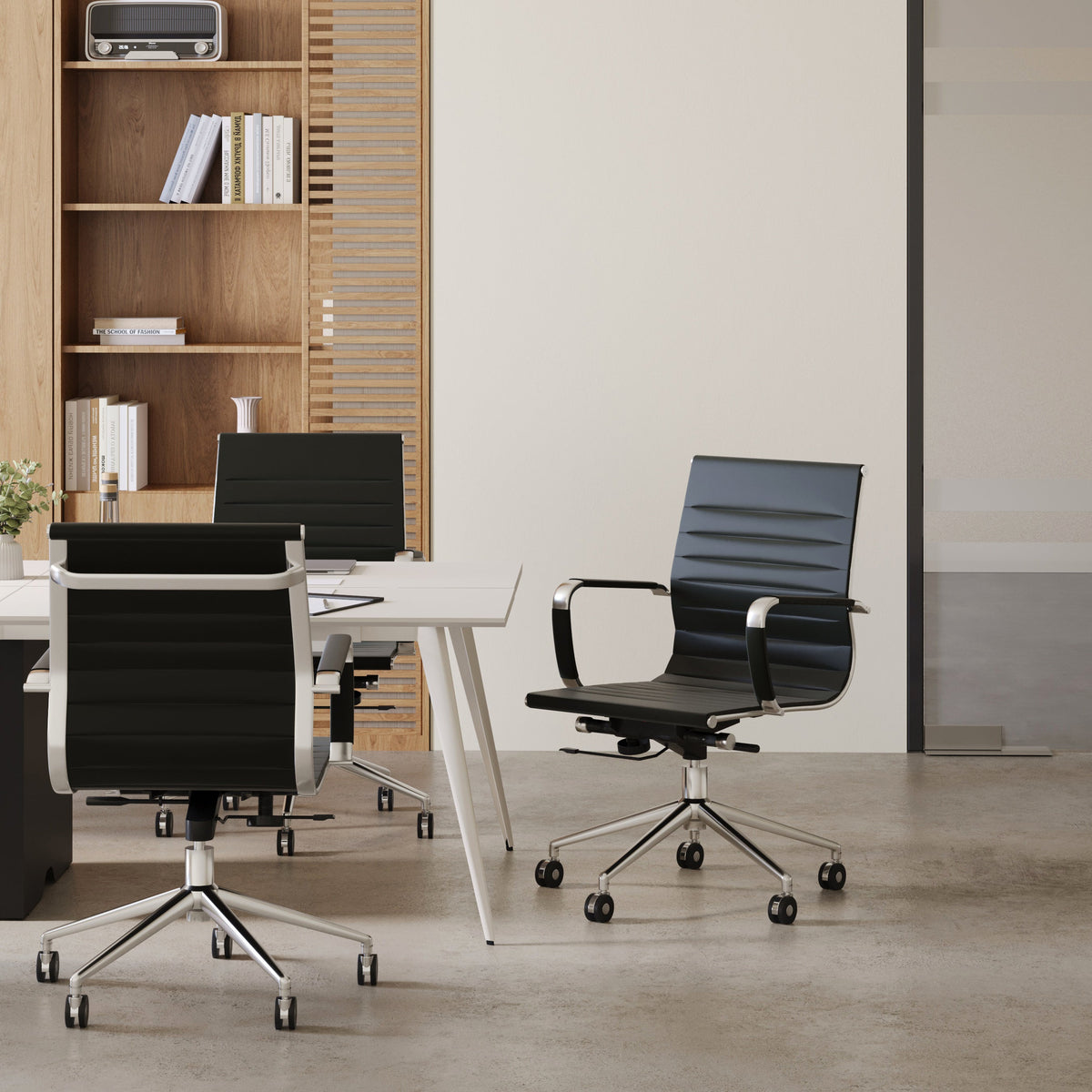
A conference chair is especially effective in client-facing spaces because it sits between formality and approachability. It is more polished than a casual spare chair, more upright than lounge seating, and more visually aligned with the kind of focused conversations that happen around proposals, consultations, presentations, and decision-making tables. When chosen and placed well, it makes client seating look prepared rather than improvised.
The best client seating does not call attention to itself in a loud way. It supports the room quietly. It gives guests a clear place to sit, a comfortable posture for conversation, and a visual cue that the meeting has been considered in advance. That is why client seating often looks stronger, cleaner, and more complete when it is built around a well-matched conference chair.
Client Seating Sets the Tone Before the Conversation Starts
Clients begin reading a room as soon as they enter it. They notice whether chairs are aligned, whether the table feels crowded, whether there is enough room to move, and whether the seating feels like it belongs in the space. These details do not need to be dramatic to matter. A well-planned seating arrangement can make a room feel calm, organized, and professional before anyone says a word.
A conference chair for meeting rooms helps create that tone because its purpose is clear. It belongs around tables, in discussion spaces, and in rooms where people need to sit upright, engage, listen, and respond. Unlike a spare task chair pulled from another desk, a conference chair looks intentional in a client setting.
Why Spare Seating Often Weakens the Room
Spare chairs can work in temporary situations, but they often create visual friction in client-facing areas. A chair with the wrong height, oversized arms, bulky wheels, or a mismatched silhouette can make the entire seating zone feel accidental. Even when the chair is comfortable, it may not support the mood of the meeting.
Client seating needs a different standard. It should look appropriate when the room is empty and feel supportive when the room is occupied. Conference chairs are useful because they are naturally associated with discussion, review, and collaboration. They can help a small room look more professional without making it feel too formal.
What Clients Notice Without Thinking About It
Clients may not consciously analyze the chair design, but they feel the result. A balanced chair height makes the table easier to use. A clean back profile keeps the room from looking busy. Repeated chair shapes make the space feel more coordinated. Proper spacing makes guests feel welcome rather than squeezed into place.
Small cues combine quickly. Straightened chairs, consistent finishes, open walkways, and a clear view across the table all suggest that the space is ready for business. That quiet sense of readiness is one of the biggest reasons conference chairs work so well in client seating plans.
The Design Language That Makes Conference Chairs Client-Ready
Conference chairs have a built-in advantage in professional spaces because their design language supports conversation. They are usually upright enough for attention, compact enough for table seating, and refined enough to pair with a range of office interiors. This makes them practical for spaces where clients may be reviewing documents, watching a presentation, discussing a project, or signing off on decisions.
The goal is not to make every office look identical. The goal is to choose seating that matches the level of care clients expect from the business. A chair that looks considered can reinforce confidence in the service being provided.
Slim Profiles Keep Client Rooms Open
Client seating often has to work in rooms that are not very large. A consultation room, side office, or small meeting area may only have space for a table, a few chairs, and basic presentation tools. In these rooms, bulky seating can quickly make the layout feel crowded.
A slimmer conference chair profile keeps the room more open. Chair backs should not visually dominate the table. Arms, if included, should not prevent easy movement. The base should allow clients to sit and stand comfortably without making the room feel congested.
Supportive Shapes Look Professional Without Feeling Stiff
Good client seating should encourage engagement. A chair that leans too far back can feel too casual for a focused conversation. A chair that is too rigid can feel unwelcoming. Conference chairs usually work well because they support an upright posture while still allowing a relaxed meeting experience.
The right support helps clients stay comfortable during longer discussions. Seat height, back shape, arm placement, and table clearance all influence how natural the meeting feels. When those elements are balanced, the chair supports the conversation instead of distracting from it.
Color and Finish Choices Should Match the Room’s Mood
Client seating looks better when the chair finish connects to the rest of the space. A black chair can add structure and contrast. A neutral chair can soften the room. A chair with metal details can connect to modern office finishes, while warmer tones may pair better with wood tables and softer interiors.
The key is consistency. One contrasting element can look designed. Too many unrelated finishes can make the room feel assembled from leftovers. A conference chair should relate to the table, flooring, walls, and surrounding work areas so the client-facing space feels visually connected.
Table Pairings That Make Conference Chairs Look More Complete
A conference chair depends heavily on the table beside it. Even a strong chair can look awkward if the table is the wrong scale, shape, or height. Client seating works best when the chair and table feel like a planned pairing.
For small conversations, a round or compact table can make the space feel approachable. For larger discussions, a broader meeting table can create a more complete setting. The table choice determines how close people sit, how easily they make eye contact, and how much surface area they have for laptops, documents, and samples.
Compact Client Conversations Around a Bistro-Scale Table
For quick consultations, portfolio reviews, short planning conversations, or coffee-style meetings, a compact bistro table can give conference chairs a more relaxed but still professional setting. The smaller table scale helps the seating area feel intentional without turning the room into a full meeting room.
This pairing works especially well in offices that need flexible client zones. A pair of conference chairs around a small round table can create a comfortable place for one-on-one discussions, informal check-ins, or pre-meeting conversations. The setup feels more complete than two chairs placed against a wall because the table gives the interaction a clear center.
Round Tables Support More Balanced Client Dialogue
A round table for small meetings pairs naturally with conference chairs because it reduces hierarchy. There is no obvious head of the table, which can make client conversations feel more collaborative. This is useful for design reviews, advisory meetings, interviews, and project discussions where everyone needs to see one another easily.
Round tables also soften the room visually. They reduce hard directional lines and make chair placement feel more fluid. When paired with matching conference chairs, a round meeting table can make client seating feel approachable, balanced, and prepared for conversation.
Table Shape Changes the Client Experience
Different table shapes create different meeting behaviors. The right choice depends on how the client seating area will actually be used.
| Table Type | Best Client Seating Use | How Conference Chairs Support the Setup |
|---|---|---|
| Small round table | One-on-one conversations, quick reviews, informal consultations | Keeps the arrangement compact, balanced, and easy to enter |
| Larger round meeting table | Collaborative discussions with several participants | Encourages eye contact and equal participation |
| Rectangular table | Presentations, structured reviews, leadership-led meetings | Creates clear direction and organized seating positions |
| Square table | Small group decisions or focused planning | Gives each person a defined place without feeling too formal |
The table should not overpower the chairs, and the chairs should not crowd the table. When both pieces are scaled correctly, the client seating area looks natural from every angle.
Layout Rules That Make Client Seating Feel Balanced
Client seating looks better when the layout respects movement. A beautiful chair can still feel wrong if there is no room to pull it back, turn slightly, place a bag, or leave the table without disrupting others. Good layout planning makes the chair look more appropriate because it gives the furniture room to function.
Spacing is part of visual design. An open walkway makes the room feel calmer. Even chair placement makes the table look more important. A clear sightline helps clients understand where to sit and where to focus.
Chair Count Should Reflect Real Meeting Behavior
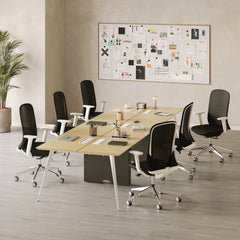
Not every client seating area needs as many chairs as the table can physically fit. Overcrowding is one of the fastest ways to make a conference chair look less refined. A smaller number of well-spaced chairs often looks more premium than a full ring of chairs packed tightly around the table.
A two-chair setup works well for consultations. A four-chair setup suits small teams and client reviews. A larger configuration should be used when the room genuinely supports multiple participants without blocking movement.
The Client’s View Matters as Much as the Host’s View
A client sees the room from the chair. That view should be considered carefully. If the chair faces exposed cords, storage clutter, blank walls, messy workstations, or heavy foot traffic, the seating experience may feel less polished.
A stronger layout gives clients a clean focal point. This might be a presentation wall, a tidy table surface, a simple piece of art, a plant, or a well-composed view into the office. The chair should place the client in a position that feels comfortable and respected.
A Practical Seat Test for Client-Facing Rooms
Before finalizing a client seating layout, sit in each chair and evaluate the room from that exact position.
1. Check whether the chair pulls out easily without hitting a wall, table base, or another chair.
2. Confirm that the table height feels natural for writing, typing, or reviewing documents.
3. Look for visible clutter, exposed cables, or distracting traffic paths.
4. Test whether people can make eye contact comfortably.
5. Make sure bags, notebooks, and devices have a reasonable place to go.
6. Step back and view the room empty to see whether the chairs still look aligned and intentional.
This simple test helps catch issues that floor plans often miss.
Styling Details That Make Conference Chairs Look More Elevated
Client seating does not need dramatic styling to feel refined. In many offices, the most effective approach is restraint. Repeated shapes, clean spacing, and thoughtful material pairings can make conference chairs look more elevated without adding unnecessary decoration.
The chair should support the room’s purpose. It should not compete with the table, distract from the conversation, or introduce a style that feels unrelated to the rest of the office.
Repetition Creates Visual Confidence
Matching conference chairs create rhythm. When clients enter a meeting room and see chairs with the same silhouette, height, and finish, the space immediately feels more organized. Repetition reduces visual noise and makes the room look intentionally furnished.
This is especially important in client areas that are visible from reception, open workspaces, or glass-front rooms. A consistent row of chairs can make the entire office feel more composed.
Negative Space Makes Seating Look More Expensive
The space around a chair is part of how the chair is perceived. If chairs are crammed into corners or pressed tightly against a table, they can look less considered. When there is enough room around the legs, backs, and walkways, the same chairs often look cleaner and more premium.
Negative space also helps clients move comfortably. It gives the seating area a sense of ease, which is important in rooms where trust and focus matter.
Fewer Furniture Styles Often Look More Professional
Mixing furniture styles can work, but client-facing rooms require discipline. Too many chair types, table finishes, and accessory styles can create a scattered impression. A conference chair works best when it is part of a clear furniture language.
That does not mean everything must match perfectly. It means the furniture should share a common direction. Similar lines, compatible colors, and repeated materials help the client seating area feel connected to the larger office.
Comfort Signals That Clients Notice During Longer Meetings
A client chair has to look good, but it also has to support the body during real conversations. Meetings can stretch longer than expected. A proposal review may turn into a strategy discussion. A quick consultation may require forms, screens, and detailed questions. If the chair becomes uncomfortable, the room’s visual polish loses value.
Comfort does not require overpromising or complicated features. It comes from basic alignment between the chair, table, room size, and meeting purpose.
Upright Support Keeps the Conversation Active
Client meetings often require attention. People need to look across the table, listen carefully, review materials, and respond. A chair that supports an upright seated position helps maintain that energy.
Too much softness can make a meeting feel less focused. Too little support can make clients shift constantly. The best client seating finds the middle ground, giving guests enough comfort to stay engaged without making the setting feel casual or unfocused.
Arm Position and Table Clearance Shape the Experience
Arms can make a conference chair feel more complete, but only if they work with the table. If arms hit the table edge or prevent the chair from sliding in, the setup can feel awkward. If the seat is too low or too high, clients may struggle to write, type, or sit naturally.
These details affect the entire meeting. Chair height, seat depth, arm placement, and table clearance should work together so clients do not have to adjust their posture repeatedly.
Mobility Can Help Client Conversations Flow
In many meeting rooms, some movement is useful. A chair that allows a natural turn toward a screen, speaker, or shared document can make the conversation feel smoother. This is especially helpful in presentation rooms, design review areas, and collaborative settings where attention shifts between people and materials.
Mobility should still feel controlled. The goal is not to create a restless seating experience. It is to let clients adjust comfortably as the conversation changes.
Accessories That Keep Client Seating Areas Clean and Useful
The most polished client seating areas are not empty. They are prepared. The difference is that their tools are controlled and placed with intention. Laptops, notebooks, samples, chargers, and presentation devices can support the meeting, but they should not clutter the client’s surface.
A chair and table set the foundation. Accessories determine whether the space remains clean during use.
Laptop Placement Should Support the Meeting, Not Crowd It
A slim stand for laptops can help keep a client-facing table more organized during presentations, virtual walkthroughs, proposal reviews, or shared screen discussions. The value is practical: raising or positioning a laptop can make the setup feel more intentional while preserving table space for documents or conversation materials.
This matters because client seating often surrounds a limited surface. When devices spread across the table, the room can start to feel more like an active workstation than a prepared meeting area. Thoughtful accessory placement keeps the focus on the client interaction.
Device and Document Control Makes the Room Feel Ready
Client-facing tables should have enough surface area for real meeting needs, but not so much loose material that the space looks cluttered. A notebook, a water glass, a tablet, or a small sample may belong on the table. Extra cables, unused devices, and leftover papers usually do not.
A clean table makes the conference chair look better because the entire seating area appears maintained. Chairs, table, and accessories work together as one visual system.
Reset Habits Protect the Look of the Seating Area
Client spaces should be easy to reset between meetings. Chairs should return to the same position. Table surfaces should be cleared. Presentation tools should have a consistent place. Accessories should support the room without becoming permanent clutter.
These habits matter because a client seating area is often judged in its quiet moments. A room that looks ready before the client arrives creates confidence before the meeting begins.
Open Office Client Seating That Still Feels Defined
Not every client conversation happens in a closed conference room. Modern offices often need semi-private zones for quick approvals, project reviews, informal consultations, or overflow meetings. In open spaces, conference chairs can still create polished client seating, but the surrounding layout must define the area clearly.
Without boundaries, client seating can look temporary. With the right visual separation, it can feel like a purposeful part of the office.
Panels Can Create a Clear Client Zone
In an open office, office space panels can help define a client-facing seating area without making the office feel closed off. Panels can create a boundary, reduce visual distraction, and give a small table with conference chairs a stronger sense of place.
This is especially useful when a business needs flexible meeting areas but does not want every client conversation to happen at a private room. A defined seating zone can make the interaction feel more focused while still supporting an open workplace.
Semi-Private Seating Works for Shorter Client Interactions
Some client conversations do not require a formal conference room. A quick design approval, brief onboarding discussion, product explanation, or document handoff may work better in a semi-private setting. Conference chairs help these areas feel more professional because they support upright conversation and table-based work.
The key is to avoid making the setup feel like an afterthought. Panels, a properly scaled table, and consistent chair placement can turn an open corner into a useful client seating area.
Chair Orientation Protects Focus and Comfort
In open offices, chair direction matters. Clients should not feel exposed to constant foot traffic or forced to sit with their back to a busy walkway. They also should not be positioned where private screens or internal work areas are too visible.
A thoughtful layout orients chairs toward the conversation while reducing distractions. The result is a client seating area that feels comfortable, even without a fully enclosed room.
Client Seating Should Connect to the Larger Office Plan
Client seating does not exist separately from the rest of the office. A meeting area near cluttered desks, crowded storage, or mismatched work zones can feel disconnected. A strong office plan creates a visual relationship between client areas and employee work areas so the entire environment feels coherent.
Conference chairs can help establish that coherence. Their clean, meeting-ready appearance can act as a bridge between private rooms, open collaboration zones, and team workstations.
Nearby Work Areas Influence Client Perception
Clients often pass through or look into work areas before reaching a meeting space. The surrounding environment affects how the seating is perceived. If the office feels organized, the meeting room feels more credible. If the surrounding layout is chaotic, even good client seating may lose impact.
A client-ready office considers sightlines, traffic flow, and how work areas frame the meeting experience. The goal is not perfection. The goal is a workplace that feels functional, maintained, and consistent.
Workstations and Client Areas Need Clear Separation
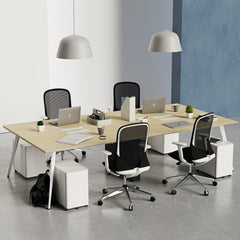
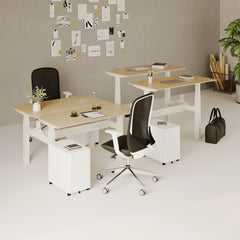
A six-person office workstation belongs to team productivity, not client seating, but its placement can influence how client-facing areas function. When workstations are positioned thoughtfully, clients can move through the office without feeling like they are interrupting staff or sitting too close to active work.
Separation does not always require a wall. It can come from layout direction, walking paths, panels, table placement, or a shift in furniture type. Conference chairs help signal the transition from work zone to meeting zone.
Cohesion Comes From Repeated Design Choices
An office feels more polished when the client seating area shares visual cues with the rest of the furniture plan. Matching or compatible finishes, balanced proportions, and repeated design lines can make the space feel unified.
This is where conference chairs provide value beyond their immediate function. They help client-facing rooms look connected to the broader workplace rather than treated as separate, forgotten spaces.
Modern Client Seating for Compact Urban Offices
Many offices need client seating that works hard without taking over the room. Creative studios, professional service firms, design teams, consultants, and growing companies often rely on multipurpose spaces. A meeting area may need to support client conversations in the morning, internal collaboration in the afternoon, and presentation work later in the day.
Conference chairs are well suited to this kind of flexibility because they can look professional in multiple settings. They can support formal meetings, small group discussions, and quick seated conversations without requiring a completely different furniture category.
Flexible Offices Need Seating That Still Looks Designed
Flexibility should not mean randomness. A room that changes functions still needs a clear visual foundation. Conference chairs provide that foundation because they work around different table types and can maintain a consistent look across rooms.
In compact offices, every piece is more visible. A poorly matched chair stands out quickly. A well-scaled conference chair can make a smaller room feel planned rather than limited.
Furniture Planning Should Support Client Impressions
Strong client seating often starts with a broader office plan. A business choosing modern office furniture planning can think beyond individual pieces and consider how meeting areas, workstations, storage, accessories, and open spaces support the same client experience.
This planning mindset helps prevent common issues such as overcrowded rooms, unclear meeting zones, mismatched seating, or client chairs that do not fit the table. The result is a more consistent office environment where client-facing spaces feel intentional from entrance to meeting.
Real Room Constraints Should Guide the Seating Choice
Room size, door swing, window placement, table shape, walkway width, and screen location all affect client seating. The right conference chair should fit those constraints instead of forcing the room to adapt around it.
In a narrow room, a slimmer chair may protect circulation. In a multipurpose room, a chair that works with several table arrangements may be more practical. In a visible meeting area, consistency and alignment may matter as much as comfort.
Common Mistakes That Make Client Seating Look Less Professional
Conference chairs can elevate client seating, but only when they are used thoughtfully. The wrong layout, scale, or mix of furniture can make even suitable chairs look out of place. Avoiding common mistakes helps protect the room’s credibility.
Choosing Chairs Before Measuring the Room
A chair should never be selected in isolation. It must work with the table, wall clearance, walkway, and number of people expected to use the room. Measuring first helps prevent crowded layouts and awkward movement.
The chair may look attractive on its own, but client seating is judged as a complete arrangement. Scale determines whether the room feels comfortable or forced.
Mixing Too Many Chair Styles in One Client Area
One mismatched chair may seem harmless, but several unrelated seating styles can make a client area feel inconsistent. This is especially noticeable around meeting tables, where repeated forms are part of the room’s visual order.
A more disciplined seating plan creates trust. Matching conference chairs around a table, or coordinating related chair styles across nearby client zones, helps the office feel more deliberate.
Forgetting How Clients Enter and Leave
Client seating should be easy to approach. Guests should not have to squeeze behind chairs, step around table legs, or move through staff work areas to sit down. The path into the chair matters as much as the chair itself.
A good layout respects arrival, seating, conversation, and exit. When movement feels natural, the client experience feels smoother.
A More Polished Client Seating Standard Starts With the Right Conference Chair
Client seating looks better with a conference chair because the chair supports the purpose of the room. It gives the client a clear place to sit, frames the meeting with visual order, and helps the space feel prepared for focused conversation.
The strongest client-facing rooms are not built from decoration alone. They come from proportion, comfort, spacing, table pairing, clean sightlines, and furniture choices that work together. A conference chair can anchor those decisions because it belongs in the moments where clients listen, ask questions, review details, and form impressions.
When seating is consistent, comfortable, and properly placed, the room feels more credible. The client does not have to wonder where to sit, whether the space is ready, or whether the meeting area was assembled at the last minute. The furniture quietly communicates care.
That is the real strength of client seating built around conference chairs. It makes the office feel organized without feeling stiff, professional without feeling cold, and prepared without needing to overstate anything. In a client-facing space, that balance is what makes the chair look right.
Related Articles
-
 Round Meeting Table Choices for Smarter Shared Work Spaces
-
 How to Style a Round Meeting Table for Focused Work Talks
-
 Round Meeting Table Setups That Make Small Talks Easier
-
 Make Client Seating Feel Easier Around a Round Meeting Table
-
 Why Shared Teams Work Better Around a Round Meeting Table
-
 Round Meeting Table Ideas That Make Team Talks Smoother


