



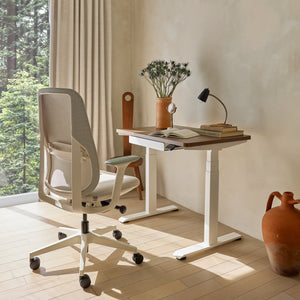
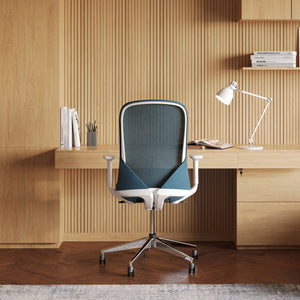






















Office Workstations Need Seating That Moves With Teams Today
Modern office workstations need seating that supports how teams actually work today: shifting between focus, collaboration, meetings, video c...
Learn more
Visit quiz page to see how we makes it easy to create an inspiring workplace


A team desk is often judged by how efficiently it seats the people assigned to it. The surface area, cable access, monitor spacing, chair movement, and storage all matter. Yet a shared workstation can still feel unfinished when there is no thoughtful place for visitors to sit. In real offices, team desks are rarely used only by the people who work there every day. Managers stop by for quick reviews. A teammate from another department joins a discussion. A client or vendor may need to look at a screen. A new hire may shadow someone for part of the day.
When there is no guest seating nearby, those moments become awkward. Someone stands behind a chair, leans over a shoulder, borrows a seat from another zone, or crowds the aisle. The conversation may still happen, but the space does not support it gracefully. Better guest seating makes those interactions feel planned rather than improvised.
A complete team desk area starts with a solid workstation foundation, such as a shared six-person workstation, then builds around it with seating that supports the way people actually move through the workday. Guest seating is not just a decorative extra. It is a practical layer that helps the desk zone feel welcoming, flexible, and ready for collaboration without interrupting focused work.
A team desk is a work setting, not just a furniture footprint. It holds daily routines, quick decisions, small interruptions, and group problem-solving. Guest seating helps the space respond to all of those moments without forcing people into uncomfortable positions.
Without planned visitor seating, the desk becomes too dependent on improvisation. That can make even simple interactions feel disruptive. A manager who only needs a few minutes may end up standing in a walkway. A colleague reviewing a project may pull over a task chair from another station. A visitor may hover close to someone’s monitor because there is nowhere else to be.
Guest seating solves a social and spatial problem at the same time. It gives visitors a clear place to land and gives employees a better boundary around their personal work zone.
Standing conversations can be useful when they are very brief, but they become uncomfortable quickly. A seated visitor can participate more naturally, especially when looking at documents, screens, samples, sketches, or shared notes. The interaction becomes more balanced because both people can speak at a similar level rather than one person standing above the other.
This is especially important near team desks, where conversations often happen in the flow of active work. A visitor might only need a few minutes, but those few minutes should still feel organized. A designated guest chair reduces hesitation and makes the purpose of the space clear.
Guest seating is not only for the visitor. It also protects the employee’s comfort. When people stand behind a seated worker or lean over a desk, the employee may feel crowded. That can make collaboration feel intrusive, even when the conversation is useful.
A planned guest seat creates a more respectful distance. It keeps the visitor close enough to engage, but not so close that they take over the desk. This balance is one of the main reasons team desks feel more complete when guest seating is considered early in the layout.
A guest chair near a team desk should feel intentional, supportive, and appropriately scaled. It does not need to function like an all-day task chair, but it should still provide enough comfort for short meetings, side conversations, and temporary participation.
The wrong chair can create problems. A chair that is too bulky may block walkways. A chair that is too casual may feel out of place. A chair that is uncomfortable may discourage people from using the seating at all. The goal is to choose guest seating that fits the visual and practical rhythm of the team area.
Team desks already contain many active elements: monitors, chairs, keyboards, storage items, cables, bags, and personal accessories. Guest seating should not add unnecessary visual weight. It should support the space without making it feel packed.
A clean, practical conference chair for shared discussions can work well around collaborative areas because it is designed for group settings, meetings, and visitor use. The value comes from matching the chair to the role it plays: a supportive seat for conversation, review, and temporary participation.
Guest chairs should never make the team desk harder to use. Employees still need to roll back from their stations, stand up, reach storage, and move through the aisle. Visitors also need to sit down and leave without forcing others to adjust.
A good guest chair placement considers:
Clear walking paths around the workstation
Enough pull-out room for both task chairs and guest chairs
Easy access to desk ends and shared surfaces
A comfortable distance from employee monitors
A consistent look that does not make the area feel pieced together
These practical details determine whether guest seating feels helpful or becomes another obstacle in the workspace.
The edges of a team desk are valuable because they allow guests to join a conversation without entering the core work area. This is where many visitor interactions should happen. A desk end or open side can support quick reviews, approvals, questions, and coaching moments.
When desk edges are ignored, visitors tend to gather in less useful places. They may stand behind chairs or place items on an employee’s work surface. When the edge is planned with seating in mind, the interaction becomes smoother.
A chair near the end of a team desk is useful for short, focused conversations. A team lead can review a document, answer a question, or look at a screen without moving deeper into the workstation cluster. This placement also makes it easier for the visitor to leave without disturbing the whole team.
End seating is especially effective when the desk layout has a clear approach path. The visitor should be able to reach the chair without crossing behind multiple employees or blocking the main aisle.
Sometimes a visitor needs more than a quick check-in. A floating teammate, intern, manager, or project partner may need to participate for a longer period. In those cases, side seating can feel more connected to the group’s work.
Side seating should be placed carefully. It should not sit directly behind another chair or crowd an employee’s personal work bubble. The best side seating gives the guest access to the conversation while preserving everyone’s ability to move.
Not every desk-side conversation should stay at the desk. When a discussion grows beyond one or two people, or when it involves laptops, printouts, and longer review time, a separate surface nearby can prevent the workstation from turning into an informal meeting room.
A round table for team conversations can extend the usefulness of the team desk without crowding it. It gives people a place to shift discussions away from active workstations while keeping collaboration close to the team’s daily environment.
A chair alone is sometimes enough, but guest seating becomes more useful when there is a surface nearby. Visitors often bring laptops, phones, notebooks, drinks, samples, or printed materials. Without a place to set those items, they may use an employee’s desk or balance everything awkwardly.
Small tables help guest seating feel complete. They create a touchdown point for quick work, informal conversations, and temporary collaboration. They also make the office feel more hospitable without requiring a full meeting room for every discussion.
A small table with one or two nearby chairs can soften the area around a team desk. It gives people a place for coffee chats, quick resets, informal reviews, or short conversations that do not need to happen at the workstation itself.
A compact bistro table for shared spaces is useful in this kind of setting because it supports casual, small-scale interaction. It can help create a secondary zone that complements the desk rather than competing with it.
Round tables are often easier to move around in compact or active work zones because they do not create sharp corner conflicts. They can also make conversations feel more balanced since there is no obvious head of the table.
Near team desks, that matters. Guest seating should not create unnecessary hierarchy or friction. A round surface can help a quick discussion feel more natural, especially when two or three people need to gather briefly.
When guest seating does not include a usable surface, visitors may place items wherever they can. That often means on the employee’s desk. Over time, this can create clutter and make the workstation feel less personal and less controlled.
A small guest table protects the employee’s surface while giving visitors a clear place for their belongings. The result is a cleaner, more respectful team desk environment.
Guest seating should be planned according to actual workplace behavior. The best layout depends on who visits the team desk, how long they stay, what tools they bring, and how often conversations happen.
A creative team may need frequent visual reviews. A sales or operations team may need short check-ins throughout the day. A growing company may need places for training and shadowing. A hybrid office may need extra seating for people who are in the office only part of the week.
The seating plan should support those patterns clearly.
| Guest Seating Arrangement | Best Workplace Use | How It Helps the Team Desk | Placement Consideration |
|---|---|---|---|
| End-of-desk guest chair | Quick reviews or approvals | Keeps brief conversations close and contained | Keep the aisle open |
| Side guest chair | Temporary collaboration | Lets a visitor join the team flow | Avoid crowding task chairs |
| Nearby meeting table | Longer discussions | Moves conversation away from active desks | Keep it close enough to use naturally |
| Bistro-style seating | Informal chats or short breaks | Adds a softer touchdown point | Prevent clutter buildup |
| Panel-supported guest zone | Focus-sensitive work areas | Adds separation while staying open | Angle seating away from private screens |
A guest chair should sit where visitors already tend to go. If people naturally approach from the main aisle, seating should be accessible from that direction. If employees often meet at the end of the desk, that edge may be the best location for visitor seating.
Good layout planning reduces friction. People should not have to ask where to sit or move furniture around to start a conversation.
A complete team desk area still needs space to function. Guest seating should not block storage, power access, trash bins, walking paths, or chair movement. Even a well-chosen chair can become frustrating if it is placed too close to active work zones.
A practical seating layout keeps the desk usable first, then adds guest comfort around it.
Before finalizing guest seating near a team desk, it helps to check whether the setup supports daily movement.
Can employees stand without bumping into guest chairs?
Can visitors sit without blocking the main aisle?
Can conversations happen without exposing every screen?
Can chairs be moved when the team needs more flexibility?
Does each guest seat have a clear purpose?
These checks keep the guest seating plan grounded in real use rather than appearance alone.
In smaller offices, every piece of furniture needs to earn its place. Guest seating cannot simply fill an empty corner. It needs to support multiple uses while keeping the space calm, open, and easy to navigate.
Compact team desk areas often benefit from furniture that feels light, consistent, and adaptable. A chair might serve a manager in the morning, a visiting teammate after lunch, and a client later in the day. A small table might support a laptop review, a casual conversation, or a quiet moment away from the main desk.
Companies furnishing dense, design-conscious offices often need workspace planning for modern offices that considers how desks, seating, tables, and accessories work together. Guest seating becomes more successful when it is part of the full plan rather than an afterthought.
A single-purpose chair is harder to justify in a compact office. A flexible guest chair is different. It can support short meetings, onboarding, collaboration, and temporary work without requiring a dedicated room for every interaction.
This does not mean the chair needs to do everything. It means the chair should be practical enough to serve several common visitor scenarios around the team desk.
Compact offices can look crowded quickly when furniture styles are mismatched. Guest seating should relate visually to the workstation area. Consistent materials, colors, or silhouettes can make the whole team zone feel more intentional.
When guest seating looks integrated, the office feels more complete. When it looks random, even useful furniture can make the space feel unfinished.
Open team desks encourage communication, but they can also expose employees to more distraction. Guest seating needs to support collaboration without making focused work harder.
The solution is not always to separate everything with walls. Often, small boundaries and better seating angles are enough. A guest can feel welcome while employees still feel protected from constant visual interruption.
Team desks benefit from subtle structure. Modular privacy panels for desks can help define focused work areas, reduce visual distraction, and make guest seating feel more contained.
Panels can be especially helpful when a guest chair sits near active workstations. They create a sense of boundary without fully closing the team off from the rest of the office.
Where a guest chair faces matters. A chair aimed directly at someone’s screen can feel invasive. A chair angled toward a shared edge or side conversation feels more respectful.
Better angles help visitors participate without giving them a direct view into every workstation. They also make employees feel less watched during normal work.
The best team desk environments are not silent, closed-off spaces. They are open enough for collaboration but structured enough for focus. Guest seating plays a key role in that balance.
A chair placed with care invites conversation. A chair placed without care creates distraction. The difference often comes down to a few inches, a slight angle, or the presence of a modest visual boundary.
Many visitors arrive with a laptop, not just a question. They may need to review a file, share a presentation, compare data, or take notes. Guest seating should anticipate that behavior.
A visitor using a laptop from a poor position may end up hunched over, balancing the device on their knees, or taking over part of an employee’s desk. That makes the interaction less comfortable and less organized.
A guest may not need a permanent workstation, but temporary work should still feel supported. A chair, a small surface, and a simple accessory can make a quick review feel more professional and less improvised.
A minimal laptop stand for desk use can support laptop-based conversations when paired with an appropriate table or desk surface. It helps make temporary device use feel more structured without overcomplicating the setup.
Guest seating becomes more effective when the surrounding details make sense. A surface for a laptop, a clear place for a phone, access to power, and enough room to sit comfortably all help the space feel ready for real work.
These details also reduce interruptions. Visitors do not need to ask where to place items or whether they can use someone’s desk. The environment quietly answers those questions.
The strongest guest seating plans begin with use cases rather than style alone. A chair should be selected because it supports a specific type of interaction. A table should be placed because it solves a real need. A panel should be added because it improves focus or privacy.
This approach keeps the team desk area grounded, practical, and honest. It avoids overpromising what furniture can do while still recognizing how much better a space can feel when every piece has a purpose.
For short manager visits or peer questions, one well-placed guest chair near the end of the desk may be enough. The setup should be easy to access and easy to leave. It should not encourage long conversations in a place where people are trying to focus.
For screen reviews, project feedback, or document discussions, a nearby table may be more appropriate. It gives people space to spread out without taking over the workstation.
When someone needs to sit near a team member for a longer stretch, comfort and spacing become more important. The guest seat should allow participation without blocking the employee’s chair movement or reducing access to tools.
Not every discussion needs to happen at a desk or meeting table. A small bistro-style area can support lighter conversations that still matter to team culture. It can also give employees and visitors a place to step away from monitors without leaving the work area completely.
A team desk feels complete when it supports the full reality of shared work. Assigned employees need focus, comfort, and reliable access to their tools. Visitors need a natural place to participate. Teams need ways to collaborate without turning every workstation into a meeting room.
Better guest seating brings these needs together. It helps the office feel more intentional because it recognizes how work actually happens. People stop by. Questions come up. Reviews happen quickly. Laptops appear. Conversations shift between focused and collaborative modes throughout the day.
The most effective team desk areas are not crowded with unnecessary furniture. They are carefully layered. The workstation anchors the team. Guest chairs support brief participation. Small tables create landing zones. Panels protect focus. Laptop accessories support modern conversations. Each element has a role, and each role makes the space easier to use.
When guest seating is planned with care, team desks stop feeling like isolated rows of workstations. They become complete shared environments that welcome collaboration while respecting the people who work there every day.


You have unlocked free shipping!
You're saving $29 and unlocked free shipping!
Leave a comment