
























Tables That Support Focus, Flow, and Flexibility

Why Tables Shape Productive, Human-Centered Work
Every workday begins with a surface that either supports attention or scatters it. As a furniture brand devoted to purposeful environments, we design tables to behave like systems, not static objects. A well-considered table stabilizes posture, reduces visual noise, clarifies reach zones, and invites healthy movement. That combination is what turns ordinary effort into sustainable performance.
Good ergonomics is the base layer. Proper heights, clear leg space, and logical placement of tools minimize strain and keep the nervous system calm. Guidance such as the recommendations in the official resource on ergonomic best practices from OSHA reinforces a simple truth: when the setup fits the body, the mind stays available for meaningful work.
Beyond posture, layout choices influence cognition. Clear edges and intuitive cable routing reduce micro-distractions. Radius corners soften the visual field. Matte, low-glare finishes prevent reflections that fatigue the eyes. In shared rooms, table geometry regulates conversation and privacy. These are not extras. They are the quiet design decisions that protect attention, session after session.
Designing Personal Focus: Surfaces That Reduce Cognitive Load
Deep work requires a desk that removes friction rather than adding features. The intent is not maximal capability. It is reliable clarity.
Anchoring a Daily Rhythm
Minimal surfaces prioritize the task at hand. Depth accommodates forearms and provides space to stage work items without stacking them. A clean underside prevents knees from bumping hardware, which disrupts posture. Cable grommets or discreet channels keep lines out of the sightline, and that alone can lower perceived clutter.
Where Simplicity Outperforms Complexity
For single-user setups, we often recommend a streamlined worktop that pairs visual calm with solid structure. The sleek writing desk for home or office embodies this balance. Its straightforward format supports notebooks, a laptop, and desk lighting with room to breathe. The result is a stage for focus that does not compete with the work itself.
Micro-Organization That Pays Off
Small accessories should serve the surface, not dominate it. Slim trays, a low-profile monitor riser when needed, and a single task lamp positioned to the opposite side of the dominant hand complete the arrangement. The goal is an environment that feels stable and usable at a glance.
Sustaining Energy Through Movement: Height Adjustability That Works
Static posture drains energy. Alternating positions helps the body maintain blood flow and keeps the mind alert.
Sit-to-Stand As a Natural Pattern
The most effective pattern is a gentle rotation between seated and standing positions. Rather than long blocks, we encourage brief standing intervals that align with task transitions, such as after finishing an email thread or before starting a design sketch. The adjustable height standing desk makes these shifts effortless, so movement becomes part of the day rather than a disruption to it.
Practical Tips for Comfortable Transitions
-
Position the keyboard so wrists are level, not flexed.
-
Raise the display so the top third sits close to eye level.
-
Keep frequently used items within a forearm’s reach.
-
Place a supportive mat in front of the standing position to reduce foot fatigue.
Calibrating Height for Tools and Tasks
Different work modes benefit from slightly different settings. Typing prefers a neutral elbow angle. Sketching sometimes calls for a lower surface to keep shoulders relaxed. Pairing adjustability with these micro-adjustments avoids strain without complicating the routine.
Compact and Agile Spaces: Performance Where Square Footage Is Tight
Small rooms and hybrid living arrangements are now common. Tables for these settings must deliver full-scale ergonomics within a concentrated footprint.
What Matters Most in Tight Quarters
Depth and neutral posture still lead. A narrower width can succeed if leg clearance and monitor distance remain comfortable. Mobility becomes a secondary asset, letting the table relocate between zones when routines change.
A Compact Option That Still Encourages Movement
The compact standing desk for small rooms shows how an efficient form can preserve motion and comfort. The proportions fit alcoves and studio layouts while still allowing sit-to-stand cycling. For multipurpose rooms, that combination is often the difference between a desk that is used daily and one that becomes a shelf.
Layout Strategies For Multiuse Rooms
-
Float the table perpendicular to a wall to share light and create a visual boundary.
-
Use a low-profile rolling pedestal for storage that tucks away when not needed.
-
Keep the primary chair lightweight to slide into dining or lounge roles without visual clutter.
Collaboration, Without Clutter: Layouts That Drive Team Flow
Teams do their best thinking when furniture makes participation natural and logistics invisible. Shared tables should make it easy to join the conversation, protect personal space, and keep tools organized.
Geometry As a Communication Tool
Square and quad formats signal equal participation. Linear islands support project staging with a clear left-to-right logic. The geometry you choose sets expectations for how people will engage with one another.
Four Seats, One Cohesive Surface
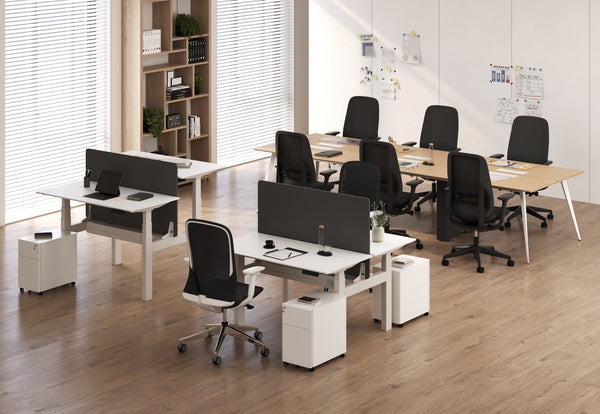
Small groups benefit from a structure that balances proximity with personal order. The multi-user workstation with four-seat layout gives each person a defined zone while keeping eye contact and shared surfaces available. That configuration suits agile collaboration, quick reviews, and focused pair work inside a compact footprint.
Scaling Up While Keeping Signals Clear
Larger groups require more space and more clarity. The large six-person workstation table organizes seating so communication lines remain obvious and cables stay contained. The additional width protects posture and keeps materials from bleeding into neighboring zones.
Managing Noise and Visual Fields
In open offices, sound and sightlines can erode attention. Low dividers or material contrasts along the centerline give enough privacy to read and type comfortably without isolating teammates. A shared power trough gathers cables and chargers so the table reads as a single, calm surface.
Health, Posture, and Cognitive Load: Principles That Endure
Focus is physical as much as mental. When the spine rests in a neutral curve and shoulders hang without tension, the brain gets the steady signals that allow for sustained concentration.
Height, Reach, and Edge Comfort
Correct desk height aligns forearms with the surface during typing. Rounded front edges reduce pressure on wrists and forearms. A stable frame prevents micro-wobble that distracts during detailed tasks. These are small choices that add up to a calmer experience.
Light, Texture, and Color
Matte textures reduce glare. Mid-tone surfaces avoid high contrast with paper or screen backgrounds. Natural materials provide warmth that encourages longer, more comfortable sessions. The aim is not a trend-based look, but a visual field that helps eyes relax.
Movement as a Mental Reset
Brief posture changes act like punctuation in the day. Standing for a call, shifting the chair back for a stretch, or stepping to a whiteboard resets the nervous system. Tables that support those transitions protect focus without asking the user to think about ergonomics every hour.
A Cohesive Ecosystem: Surfaces That Work Together
One desk can support a person. A set of coordinated surfaces can support a whole organization. When tables align around shared standards, everyone benefits.
A Toolkit for Multiple Zones
Private focus pods, small collaboration bays, and open project areas perform best when their surfaces come from the same design language. The curated desk collection for modern workplaces offers a consistent baseline of heights, proportions, and finishes so teams can move between zones without cognitive friction.
Power, Cable Management, and Device Access
Thoughtful routing avoids a tangle of chargers and adapters. Integrated channels and under-surface trays keep everything out of the sightline. The table remains clean, and the tech remains ready.
Planning For Change
Rooms evolve. Tables should anticipate that. Durable joinery, thoughtful hardware, and replaceable components keep surfaces in service for years, which is the most sustainable path of all.
Paired Productivity: Social Ergonomics for Two
Two-person work can be either motivating or distracting. The right table encourages conversation when it is useful, and personal focus when it is not.
Independent Control, Shared Momentum
When each user can set height and spacing independently, both comfort and productivity improve. The dual standing workstation for two users supports synchronized or separate adjustments, which keeps momentum without forcing compromises.
Rituals That Keep Tandem Work Healthy
-
Start sessions seated to align on goals, then stand for short review segments.
-
Keep a small shared tray for pens, markers, and sticky notes so the surface stays clear.
-
Use a single, centered display only when both people need the same view. Otherwise, stay on separate screens to avoid posture twists.
Materials, Craft, and Longevity: Quiet Qualities That Matter
We build tables to serve daily routines for the long term. That means resisting short-term trends in favor of dependable qualities.
Surface Science
Scratch-resistant finishes, repairable materials, and balanced color palettes age gracefully. Rounded corners protect both people and walls. The underlying structure matters just as much. Stability is not a luxury. It is a prerequisite for a desk that feels trustworthy.
Responsibly Made, Responsibly Maintained
Durability reduces waste. Replaceable components and standardized fasteners keep tables serviceable. When a workspace changes, a table that can adapt to a new role avoids another purchase and the environmental cost that comes with it.
Planning and Measurement: Turning Intent Into a Working Layout
A great setup begins with a plan and ends with habits that keep it working. We encourage teams and individuals to translate principles into specifics they can measure and monitor.
A Practical Setup Checklist
1. Confirm task types for the space, then assign surface sizes and heights that reflect those tasks.
2. Place the table so natural light falls from the side, not directly in front or behind the monitor.
3. Route power and data before placing equipment to keep cables out of the sightline.
4. Calibrate seat height so knees rest just below hip level, then match desk height to a neutral elbow angle.
5. Stage daily tools within a forearm’s reach and archive everything else.
6. Establish a simple microbreak routine: stand for short tasks, return to sitting for deep work.
Comparison Guide for Common Configurations
| Table Configuration | Primary Use Case | Ideal Group Size | Approximate Footprint Guidance | Movement Support | Privacy Level | Reconfiguration Speed |
|---|---|---|---|---|---|---|
| Streamlined single-user desk | Deep, individual focus | 1 person | Standard depth with clear leg space | Seated, with posture clarity | High | High |
| Height-adjustable single desk | Alternating tasks and postures | 1 person | Similar to single-user with cable routing | Sit to stand cycling | High | Medium |
| Compact height-adjustable desk | Small rooms or multipurpose areas | 1 person | Reduced width and depth | Sit to stand within tight spaces | Medium | High |
| Quad-format team station | Agile collaboration in small teams | 4 people | Shared core with personal zones | Seated focus with quick movement | Medium | Medium |
| Six-person linear station | Larger team zones with staging space | 6 people | Extended width with clear aisles | Seated focus with shared access | Medium | Medium |
| Two-person dual-adjust station | Pair work with independent control | 2 people | Wider shared surface | Independent sit to stand | Medium to High | Medium |
These guidelines are starting points that help teams choose a format based on real needs. The next step is iteration. Adjust once after a week, then again after a month, until the surface and the workflow feel naturally aligned.
Crafting Flow in Shared Rooms: Wayfinding, Storage, and Light
Large spaces require gentle guidance so people understand where to go and what each area is for without reading a sign.
Wayfinding Through Furniture
Use table shape and orientation to signal intent. A long island parallel to circulation encourages quick meetings. A cluster of smaller tables set at right angles invites quieter work. Consistency in finish and hardware ties the plan together, so the room reads as a whole rather than a collection of parts.
Storage That Protects Surfaces
When storage is inadequate, tables become shelves. Pair each zone with the right container for its work items: a shallow drawer for writing tools, a closed cabinet for peripherals, and a shared caddy for markers and chargers. Clear surfaces make it easier to begin and easier to stop, which is the basis of rhythm.
Light That Supports Attention
Ambient light sets the mood, but task lighting sets the pace. A focused pool of light on a work surface trains the eye where to rest. In shared areas, low-glare fixtures mounted above the table balance even illumination with visual comfort.
Inclusive, Mindful Environments: Comfort for Different Bodies and Brains
Inclusive tables acknowledge that people experience space differently. Thoughtful design respects those differences without calling attention to them.
Adjustability With Purpose
A broad height range accommodates a variety of body types. Leg clearance supports different seating and mobility devices. Neutral textures and restrained color palettes avoid overstimulation for those who prefer calm visual fields.
Sensory and Cognitive Comfort
Some individuals focus better with tactile cues such as a slightly textured edge. Others prefer a completely smooth surface. Offering subtle material choices keeps the environment friendly to more people while maintaining a cohesive look.
Where We Are Headed: Tables That Evolve With Real Work
The future of work surfaces is not about spectacle. It is about reliability that adapts as routines change. As our clients refine their processes, we continue refining the essentials: stable frames, healthy adjustability, finishes that age well, and configurations that make collaboration straightforward. The most valuable table will still be the one that disappears into the background when ideas start moving, then quietly supports the next session with the same steady presence.
Related Articles
-
 Our Conference Chairs and Meeting Tables Compared, so You Can Furnish a Huddle Room, a Meeting Room, or a Boardroom for Eight in One Order
-
 This Is How To Build A Small Home Office You Actually Want To Work From, And How To Pick Desks For Small Spaces - Urbanica Furniture's Full Guide
-
 Best Setup for Laptop and 2 Monitors With Less Neck Strain
-
 Can a Desk Lamp Improve Productivity or Just Improve the Look of a Desk?
-
 Can a Laptop Stand Improve Focus, Desk Space, and Typing Position?
-
 Why Midday Fatigue Starts Where You Sit


