























Spaces Office Furniture Ideas for Modern Teams

How We Think About Space For Modern Teams
Modern teams are fast moving, hybrid, and highly collaborative. As a furniture brand, we have seen that the most successful workplaces are not defined by a single layout or a single type of product. They are defined by how well every piece of furniture supports people: their focus, their collaboration, their health, and their culture.
Instead of treating furniture as a set of isolated items, we approach it as a toolkit for building environments. Desks shape how people concentrate. Chairs influence how long they can work comfortably. Lounge seating and shared tables create the tone of collaboration and belonging. When all of this is aligned, the office becomes an asset that evolves with the needs of the team.
From Static Layouts To Adaptable Work Environments
Earlier office layouts were built around permanence. Today, teams shift from quiet work to workshops to video calls within the same day. That is why we encourage our clients to think in zones rather than rows. Individual, collaborative, social, and transitional areas each need their own furniture logic, but they must also connect fluidly so people can move naturally between them.
A key part of that flexibility lies in desk choice. Many teams need a mix of individual focus stations, shared tables, and flexible hot desks. For those needs, we often start by mapping out where different desk types should live, and then draw from versatile desk collections that allow us to match sizes, finishes, and profiles to the character of each zone.
Why Furniture Strategy Matters More Than Furniture Style
Style matters, but strategy matters more. When we design spaces, we always ask three questions:
1. What types of work actually happen here in a typical week
2. How does the team prefer to collaborate, both formally and informally
3. What kind of atmosphere should this space create for visitors and employees
The answers drive furniture decisions. For example, a product design team might want flexible seating and larger surfaces for their project work, while a finance team might need more privacy and stable desk configurations. The right furniture selection and placement allow both to operate at their best in the same overall space.
Desk Planning That Matches Real Work Patterns
Desks remain foundational elements of the workplace, shaping focus, posture, and workflow. For modern teams, the emphasis is on ensuring that desk arrangements support the broad variety of workstyles present in a single day.
Individual Workstations For Deep Focus
Every office benefits from environments that protect focus. Roles involving detailed analysis, writing, or strategic thinking require workstations that minimize disturbance. Clear surfaces, thoughtful cable management, and modest personal boundaries help people settle into uninterrupted work.
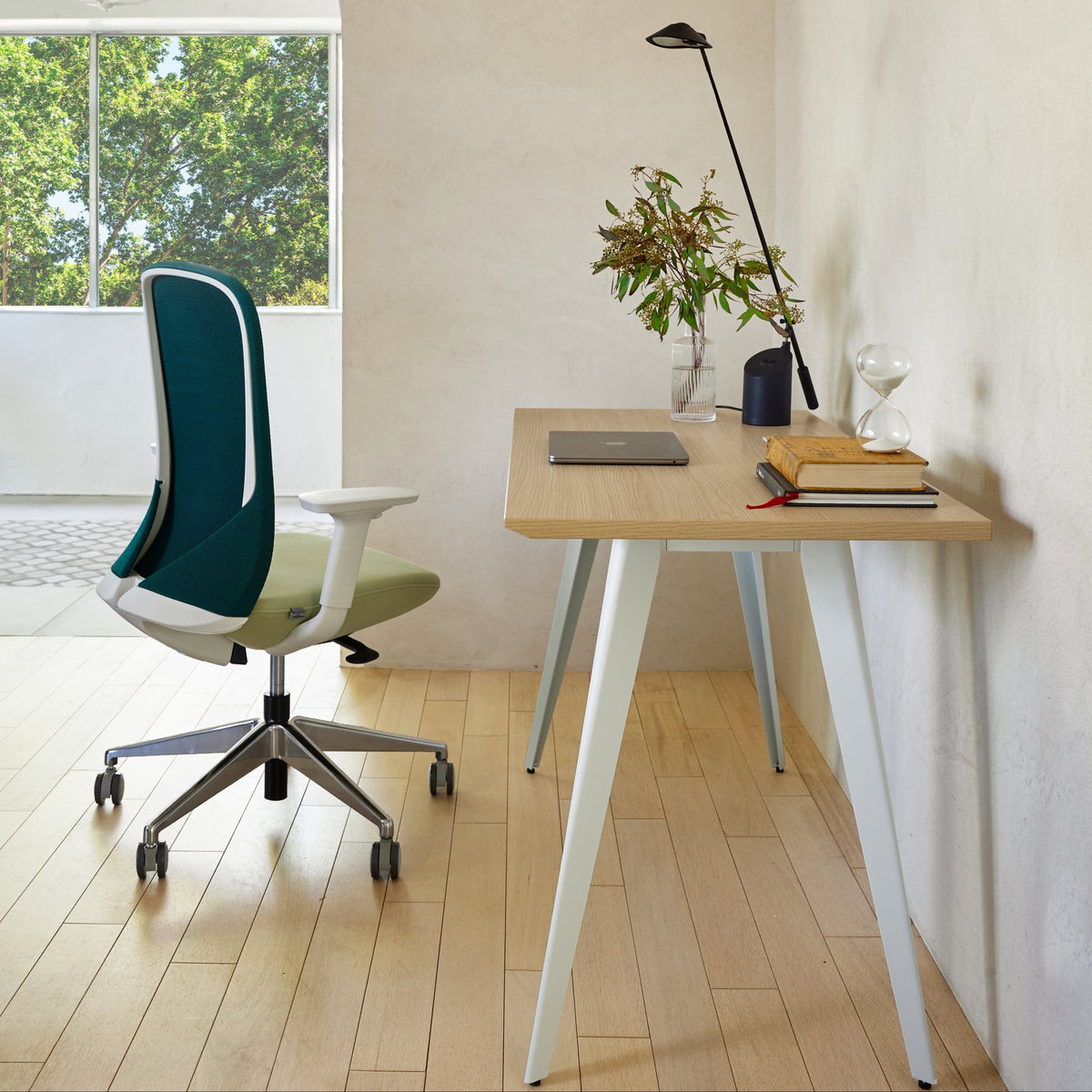
In these zones, we often specify a refined office desk design because its clean, modern profile keeps unnecessary distractions out of the user’s line of sight.
Height Adjustability As A Daily Habit, Not A Luxury
Height adjustable desks are not a trend. They are an everyday tool for supporting comfort and healthy posture. Switching positions helps prevent stiffness and encourages movement throughout the day. We typically place these desks in areas where varied postures support productivity, such as project corners or hybrid seating zones.
A standing-height desk option integrates naturally into these environments, helping people adjust based on their physical needs.
Desk Pods And Shared Surfaces For Collaborative Teams
For teams that communicate frequently, shared surfaces and desk pods simplify group work. Layouts vary depending on the team’s needs:
-
Triangular pods for small teams that rely on frequent eye contact
-
Linear pods that keep people oriented in the same direction while staying connected
-
Larger tables for cross functional workshops or planning sessions
This type of arrangement supports collaboration without creating unnecessary noise for the rest of the office.
Organizing Desk Orientation For Comfort And Flow
Desk orientation influences attention and comfort. We position desks to minimize glare, reduce exposure to high traffic walkways, and create distances that encourage natural movement around the space. This strategic placement makes an office feel organized without feeling rigid.
Desk Zoning Techniques For Multi Layered Teams
Multi layered teams benefit from micro zones dedicated to different types of tasks. Designating areas for technical work, marketing collaboration, or leadership focus helps everyone stay aligned. These small distinctions allow employees to choose their environment based on what they need in the moment.
Ergonomic Seating As A Foundation For Health And Focus
Seating is one of the elements employees interact with most. The right chair helps people maintain healthy posture, stay comfortable, and sustain concentration over longer periods. We reference neutral, trusted guidance such as ergonomic safety guidelines for office setups when advising teams on seating strategy.
What We Look For In Everyday Task Chairs
For primary task seating, we prioritize qualities that promote daily comfort:
-
Adjustable height and tilt
-
Supportive backrests that follow natural posture
-
Materials that stay comfortable during long work hours
These fundamentals help the majority of employees find a comfortable sitting position.
Seating For Long Duration, High Concentration Roles
Some team members work through long cycles of deep focus. For them, we recommend chairs designed to support natural alignment without excess softness. An ergonomic chair with structured back support is the type of solution we specify for these roles because it offers steady, predictable posture support.
Seating For Creative Corners And Casual Collaboration
Creative spaces thrive when furniture invites relaxed conversation and open thinking. Softer, more sculptural seating helps people shift their posture and participate more naturally in casual dialogue.
-
A soft-shell chair for relaxed collaboration creates a welcoming foundation for informal meetings
-
A modern chair for creative spaces supports movement and spontaneous interaction
These chairs help shape environments where ideas flow freely.
Precision Seating For Technical And Detail Heavy Work
In technical roles that involve coding, detailed visuals, or documentation, nuanced adjustability becomes important. An adjustable ergonomic task chair allows employees to fine tune their seating position to fit the nature of their work.
Matching Chair Types To Team Roles
Different teams have distinct seating needs. Engineers and analysts may prefer consistent ergonomic support. Sales and account teams often appreciate lighter, more flexible seating. Leadership teams may prioritize a balanced blend of support and visual presence. Tailoring chair types to work patterns leads to more intuitive comfort across the office.
Collaboration Spaces That Fit Real Conversations
There is no single format for collaboration. We design spaces that support quick exchanges, thoughtful dialogue, and structured team sessions, using furniture to define the tone and functionality of each type.
Focused Conversation Nooks
Semi private nooks support one to one conversations or small group discussions. Soft seating and compact tables help create a quieter atmosphere where people can speak openly without interruption.
Open Huddle Points For Fast Syncs
Near project areas, small tables and stools encourage frequent touchpoints. These are ideal for short stand up discussions where teams align on next steps before moving on with their day.
Tiered And Multi Level Group Seating
Layered seating options help teams find comfortable positions during longer sessions. Benches, stools, and lounge chairs allow individuals to choose how they want to participate without disrupting group dynamics.
Managing Sound Where Collaboration Is Constant
To maintain balance in open offices, collaborative zones must be thoughtfully positioned. Upholstered materials, sound absorbing panels, and strategic separation from focus areas help keep noise levels manageable.
Lounge Areas And Social Zones As Culture Builders
Modern teams rely on social and restorative spaces to maintain morale and build real relationships. These areas function as cultural anchors, offering a change of pace from task-driven environments.
What Makes A Lounge Truly Restorative
A lounge should feel warm and inviting. Softer lighting, textured materials, and varied seating arrangements help employees relax. We often include a mix of solo seating, small clusters, and longer benches so people can choose the level of interaction they want.
Furniture Pairings That Encourage Belonging
Thoughtfully paired furniture creates natural gathering points. Lounge chairs with side tables support quiet reflection, while larger seating arrangements help small groups connect. These spaces strengthen the social fabric of the office.
How Social Spaces Support Team Health
When employees have access to comfortable communal areas, they can decompress naturally during breaks. Informal interactions in these zones often deepen trust and help teams perform more cohesively.
Storage, Organization, And Flow As Hidden Performance Drivers
Storage and circulation influence how efficiently an office operates. When items are easy to find and pathways are clear, daily work becomes smoother and less mentally taxing.
Reducing Visual Noise Through Storage Planning
Strategic storage placement keeps essential items accessible without cluttering surfaces. Tall cabinets along walls, organized shelving, and thoughtful division between shared and personal storage help maintain visual clarity.
Balancing Shared And Personal Storage
Every team has a blend of shared tools and personal items. Lockers, pedestals, and community storage zones ensure that people can store what they need without overwhelming the workspace.
Supporting Hybrid Teams With Clear Systems
Hybrid teams depend on predictable organization. Clear labeling, shared resource zones, and mobile caddies help employees transition smoothly between on-site and off-site work.
Linking Digital And Physical Workflows
Even digital teams engage with physical materials. Integrating wall systems, shelving, and surface space allows employees to move between digital and physical modes without creating clutter.
Sensory Design: Color, Texture, And Materials In Office Furniture
How a workspace feels is shaped heavily by its sensory elements. Materials and colors influence how people focus, relax, and communicate.
Material Choices That Support Comfort And Focus
We lean toward materials that reduce visual strain and add subtle warmth. Matte finishes, soft textiles, and natural wood tones help create environments that feel stable and comfortable without overwhelming the senses.
Color Palettes That Reflect Team Identity
Color affects energy levels and atmosphere. Soft neutrals support deep work, while more vibrant tones can energize collaboration zones. Integrating brand colors through accents helps unify the space without turning it into a themed environment.
Integrating Brand Without Overstimulation
Small color cues, selective artwork, and subtle material choices can reflect brand identity without overwhelming the overall aesthetic. This helps maintain professionalism and visual comfort.
Biophilic Elements That Support Wellbeing In Workspaces
Natural elements bring a sense of calm and connection into the office. Biophilic design plays a supportive role in employee wellbeing and mental clarity.
Bringing Greenery Into Work Zones
Plants placed on shelving, cabinets, or in dedicated planters help soften harder architectural lines. When grouped strategically, they provide visual comfort without clutter.
Nature Inspired Forms And Textures
Furniture with curved edges, organic shapes, and tactile surfaces introduces a more welcoming, human feeling. These subtle gestures help alleviate workplace tension.
Supporting Micro Breaks Through Nature
Brief visual exposure to greenery or natural textures can help people reset between tasks. Positioning plants or natural materials within sightlines reinforces this quiet restorative effect.
Multi Zone Planning For Offices That Can Grow With The Team
Planning an office by zones rather than individual rooms allows the environment to evolve as the team grows or shifts.
Defining Primary Zones Around Work Activities
1. Every office benefits from four essential zones:
2. Focus zones for individual concentration
3. Collaboration zones for shared workflows
4. Social zones for rest and connection
5. Transition zones that support movement and orientation
Each zone receives furniture aligned with its intended function, making it easier for employees to choose where to work based on their needs.
Designing Traffic Flow And Accessibility With Intention
Clear, comfortable pathways help employees move naturally throughout the space. Attention to accessibility ensures that everyone can navigate the office safely and confidently.
Planning For Future Changes Without Constant Renovation
Teams evolve, and their workspace should evolve with them. Modular furniture, movable storage, and flexible desk groupings help support changes in team size, workflow, and collaboration patterns without requiring major renovations.
How Thoughtful Furniture Choices Shape Spaces For Modern Teams
Furniture decisions shape far more than aesthetics. They influence how teams think, communicate, and feel throughout the day. When desks support personal work styles, when chairs encourage healthy posture, when social areas foster connection, and when storage keeps the environment organized, the office becomes a powerful tool for supporting the people who use it. Thoughtfully curated furniture decisions give modern teams the clarity, comfort, and flexibility they need to thrive in a fast changing world.
Related Articles
-
 How Team Desks and Panels Create Better Daily Work Zones
-
 Workstation Panels That Support Focus Without Closing Space
-
 Better Office Workstations Start With Smarter Panel Layouts
-
 How Panels Help Commercial Office Furniture Feel Organized
-
 Open Plan Office Furniture Needs Smarter Privacy Panels
-
 Why Collaborative Furniture Needs Flexible Privacy Panels


