















Skip to content
For Teams
Upgrade Your Workspace This Spring with Our Premium Ergonomic Office Furniture | Free Shipping on Orders $65+
FAQ
need to know

Useful articles

Small standing desk for small spaces that still fits dual monitors

Small standing desk for small spaces that still fits dual monitors

Small footprint standing desk for compact spaces

Dual monitors in a tight footprint: the real constraints that decide whether a small desk works

Monitor width is rarely the true limit, positioning is

Dual monitors create a “span” problem, but the span is not just the screen widths added together. The moment you angle displays inward, mount them on arms, or rotate one screen vertically, the footprint changes dramatically. In small spaces, the goal is not to squeeze two screens onto any surface. The goal is to create a stable viewing zone where your primary screen sits centered, your secondary screen supports your workflow, and neither forces awkward posture.

Side-by-side, portrait plus landscape, and stacked setups change the desk requirement

Side-by-side is the most familiar, but it demands the most horizontal real estate and makes cable routing more visible. Portrait plus landscape reduces required width while staying easy to read for documents, chat, and research. Stacked monitors minimize width the most, but they demand more precise arm placement and screen height planning to avoid neck strain.

Why “bezel math” fails once real-world mounting enters the picture

Even if two monitors seem like they should fit on paper, VESA plates, clamp mounts, tilt angles, and cable bend radius all add space. Tight setups fail most often behind the screens, not in front of them. If the desk is pressed against a wall, the back of the monitor and the movement arc of an arm can become the first constraint.

Desk depth decides comfort more than desk width in small rooms

Shallow desks create a common small-space trap. They make dual monitors feel possible, but they force the screens too close to your eyes and reduce keyboard and mouse space. Depth gives you a healthier viewing distance and a stable place for forearms, which matters even more when you stand part of the day.

Viewing distance: why shallow desks push posture off track

When screens sit too close, people tend to crane forward. With dual monitors, that forward lean repeats for hours. A deeper surface lets the monitors sit back while keeping the keyboard in a natural position, reducing the urge to perch on the edge of the chair or hunch.

The hidden depth you lose to wrists and forearms

A compact desk can still feel spacious if you plan for where your arms land. If your wrists hover over the front edge, your shoulders and neck compensate. Depth is what makes a small desk feel workable.

Sit-stand stability gets harder as footprints shrink

Standing height magnifies movement. Dual monitors on arms can act like levers, making wobble more noticeable. Stability is not about perfection, it is about whether normal typing and mousing feels steady and whether the screens stay visually calm.

What actually causes wobble at standing height

Narrow leg stance, high extension, uneven floors, and soft surfaces like thick carpet can all contribute. In a small room, you are often forced to place the desk where the floor is not perfectly level, so levelers and careful placement matter.

How dual monitors amplify vibration

Two screens can double the visual effect of small vibrations, especially if one is on an arm that extends far forward. The more compact the desk, the more important it is to keep the center of mass close to the frame.

Minimum dimensions that reliably support dual monitors without turning the room into all desk

Width thresholds by common dual-monitor setups

Small-space success comes from matching your monitor plan to the desk footprint rather than forcing a layout that fights the room.

Two 24-inch monitors: realistic minimums with smart angles

Two 24-inch monitors are typically the easiest pairing for compact desks because they can be angled inward and still feel balanced. A narrow surface can work if the screens are slightly wrapped toward you and mounted so the bases do not consume valuable width.

Two 27-inch monitors: where compromises appear

Two 27-inch monitors can still work in a small space, but the desk often needs more width, or you need a layout change. If the room cannot give you more width, a portrait plus landscape setup is usually more comfortable than trying to force a perfect side-by-side arrangement.

Ultrawide plus a secondary monitor: an underrated narrow-desk approach

An ultrawide can replace the need for two equal screens, while a smaller secondary monitor handles chat, email, or reference material. This approach can reduce the required width and simplify alignment.

Depth thresholds that protect posture in micro-offices

Depth influences viewing distance and input comfort. If you have to choose between slightly more width or slightly more depth, depth often produces the bigger comfort gain in small rooms.

The forearms-on-desk test

A practical check: sit or stand in your normal working posture and place your forearms on the surface while keeping your shoulders relaxed. If your wrists are forced to hover or your elbows fall off the desk, the depth or your accessory choices may need adjustment.

When a shallow desk can still work

A shallow surface can be workable when the monitors are lifted and moved back with arms, and the keyboard and mouse area is managed carefully. The key is keeping screen distance reasonable without pushing the desk into the room.

Weight capacity and desktop strength for clamps and arms

Dual monitors often lead to arms, docking stations, and cable trays. That means you should think about clamp zones and edge thickness before you fall in love with a small footprint.

Clamp clearance and edge thickness

Some arms need a flat edge and enough clearance under the top. If the desk has a thick apron or unusual underside shape, clamping can be tricky. Planning this up front avoids frustrating workarounds later.

Cable exits and wall spacing

A tiny gap behind the desk can be useful for cable bends and power routing. The aim is not to pull the desk far into the room, it is to give cables a safe path so nothing kinks or strains when you raise the desk.

Compact standing desk design features that matter more than extra surface area

Height range: the spec that protects comfort long term

A compact sit-stand desk can be an excellent fit if it reaches your ergonomic range without forcing compromises. Comfort comes from matching desk height to your elbows and keeping screens at a consistent eye line.

Finding a workable standing height without guesswork

When you stand naturally with relaxed shoulders, your elbows form a comfortable angle. The desk should meet your forearms without pushing your shoulders up or forcing you to lean down.

Shared workstations and height flexibility

In small homes, desks get shared. A desk with a usable height range is more forgiving when different people use the same setup.

Frame geometry: what makes a compact desk feel solid

With compact frames, stability is earned through smart geometry and good setup habits.

Leg placement and stance

A wider stance often feels steadier, but it can reduce knee clearance depending on your chair and room layout. The best compact desks balance stability with usable leg space.

Crossbars and under-desk clearance

Some designs include supports that improve rigidity. In tight spaces, you also need comfortable chair movement and room for feet, especially when standing.

Organization readiness that keeps dual monitors from becoming a cable problem

In a small room, cable mess is not just cosmetic. It can limit where you place the desk and how easily you switch between sitting and standing.

Under-desk routing that preserves knee space

A compact cable tray placed toward the back can keep wires organized without crowding your legs. Adhesive clips and a single route down one leg can keep the area clean.

Power placement strategy

A simple approach works best: one power strip mounted under the desk, one main cable to the wall, and enough slack for sit-stand movement if needed.

Choosing a genuinely small standing desk that can still run two monitors

When a compact sit-stand surface is the right call

A small standing desk makes sense when you want movement during the day and you are willing to be intentional about layout. Compact sit-stand setups thrive when the desktop stays focused on core tasks rather than becoming a catch-all.

Best fit: laptop with docking and dual monitors

This is a classic small-space configuration. The laptop can stay closed or sit on a vertical stand, leaving the main surface for keyboard, mouse, and a clean monitor layout.

Best fit: ultrawide plus a portrait screen

This pairing keeps the footprint tight while preserving productivity. It also reduces the need to constantly turn your head as you move between displays.

How to set up dual monitors on a compact top without feeling cramped

Center the primary monitor directly in front of you, then place the secondary screen so it supports your dominant tasks. In a small space, the best setup is the one that reduces constant neck rotation.

Prioritize one primary screen

Treat one monitor as the “home base” for focus work. The secondary monitor becomes reference, communication, or tool panels.

Reduce required width with angles

A slight inward angle can reclaim inches of usable footprint and makes the two screens feel more cohesive.

A compact sit-stand option designed for tighter rooms

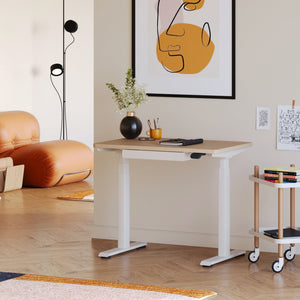
For rooms where every inch matters, a purpose-built compact desk helps keep the workstation focused and proportional. Our Mini Standing Desk is meant to serve that kind of layout-first planning, where the desk supports the essentials and the monitor strategy does the heavy lifting.

Dual-monitor mounting choices that shrink footprint without shrinking usability

Desk-mounted arms: when they help, when they hurt

Arms can free up surface space, but they also introduce new constraints behind the desk. In small rooms, the question is whether you have enough rear clearance and whether the arm’s movement keeps screens stable.

Single-post dual arms vs independent arms

A single-post dual arm can keep the setup visually tidy and centralized. Independent arms offer more flexibility, which can help with portrait plus landscape layouts, but they may require more clamp space and more planning.

The common failure point: rear clearance

If the desk must sit close to a wall, choose mounting approaches that do not require a large backward arc. Also plan for cable bend radius so connectors do not press against the wall.

Stacked configuration: smallest width, highest precision requirement

Stacked monitors can be excellent in tight spaces, but only if the top screen is placed thoughtfully.

Screen height planning that protects your neck

The top display should not force constant upward gaze. A slight tilt downward and careful placement of the most-used content on the lower screen reduces strain.

Best content split for stacked screens

Keep focus tasks on the lower screen and secondary reference material on the upper screen, so your head stays mostly neutral.

Portrait plus landscape: the easiest narrow-desk win

This configuration reduces width demands while keeping reading comfortable.

Best workflows for portrait plus landscape

Documents, messaging, research, and coding often benefit immediately because the vertical screen fits long pages naturally.

Practical window management

Use consistent zones for each screen so your brain does not waste energy hunting for apps.

Desk layout tactics that make a dual-monitor setup feel lighter in a small room

Placement strategy that protects walkways

In small spaces, the “desk location” decision matters as much as the desk itself. A good layout keeps chair movement smooth and prevents the workstation from blocking daily life.

Wall placement vs corner placement

Wall placement often simplifies cable routing and keeps the room open. Corner placement can maximize unused space, but it may complicate lighting and limit monitor arm movement.

Clearance rules that keep the room functional

Aim for enough space to pull the chair back and stand comfortably without bumping the bed, sofa, or shelving. The desk should support your life, not interrupt it.

Glare control when screens are close to windows

Dual monitors double the chance of reflections. Small spaces also limit where you can place lamps.

Practical fixes for glare

Angle screens away from direct light, use adjustable blinds or curtains when possible, and choose a task lamp that can be aimed without reflecting in the displays.

Lighting that stays comfortable

Soft, indirect lighting often works better than a bright lamp placed near the screens.

The invisible clutter problem: dual monitors multiply accessories

Two screens often invite more devices. The key is to keep accessories intentional.

Peripheral placement in tight footprints

If you use a dock, give it a consistent home. If you use speakers, consider compact options that do not crowd the desk edges. Keep the center area clear so your main work zone stays calm.

When a larger sit-stand surface is the smarter dual-monitor decision

Signs you have outgrown the smallest category

Sometimes the limitation is not your room, it is the workload. If you need a dedicated writing space, a larger keyboard setup, or frequent paperwork, a bigger surface can reduce daily friction.

Two larger monitors and creative tools

If your setup includes larger screens, tablets, or other peripherals, extra depth and width can keep the experience comfortable.

Stability and reach

A slightly larger top can also make it easier to position monitors without pushing arms to their limits.

A full-size sit-stand option for more breathing room

When the room allows it, a more standard sit-stand footprint can simplify dual-monitor placement and cable routing. Our Standing Desk is the kind of baseline option many people use when they want dual monitors with fewer compromises, while still keeping a clean workspace.

Fixed-height desks for small spaces: the stability-first alternative that still supports dual monitors

Why fixed-height can outperform sit-stand in ultra-tight rooms

Not every small space benefits from sit-stand. If the room is extremely narrow, or the desk must sit tightly against a wall, a fixed-height desk can feel simpler and steadier.

Stability benefits with dual monitors

Fixed-height desks often feel more planted because there is no lifting mechanism and fewer moving components. With two screens, that steadiness can be a meaningful quality-of-life improvement.

Easier cable routing

Since the height does not change, cables can be routed more tightly without planning for movement slack.

Choosing fixed-height dimensions that still feel dual-monitor friendly

Depth remains critical. A stable surface that lets screens sit back and keeps your hands comfortable can make dual monitors feel natural even in a tight room.

Preserve legroom with smart organization

Use rear-mounted cable trays rather than bulky drawers. Keep under-desk storage minimal so chair movement stays smooth.

A fixed-height option that anchors a dual-monitor workspace

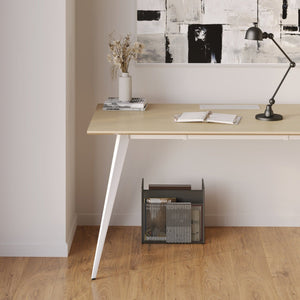
For people who prefer a straightforward setup, our Office Desk is a practical foundation for dual monitors, especially when paired with a thoughtful mounting strategy and tidy cable routing.

Chair pairing for small-space dual-monitor work: comfort that does not overwhelm the floor plan

Chair sizing that matters when the desk is compact

In a small room, an oversized chair can steal space and limit movement.

Seat depth and arm width

A chair that tucks in neatly helps keep the walkway clear. Arm width matters because some chairs bump into compact desktops and prevent you from getting close enough to type comfortably.

Rolling clearance and daily movement

Make sure the chair can move without constantly hitting walls or furniture. Smooth movement reduces fatigue and makes the workstation feel less cramped.

The small-room seating tradeoff: big ergonomic chairs vs streamlined silhouettes

Some large ergonomic chairs provide excellent support but can dominate a small room. In tight spaces, a balanced chair with a slimmer profile can be the better everyday fit.

When armless or lower-arm chairs help

A chair without wide arms can slide under the desk more easily, which helps preserve walking space and keeps the room feeling open.

Seating options designed for desk work

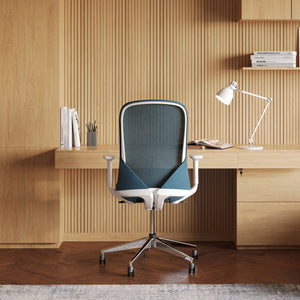
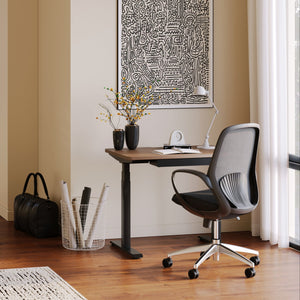
We keep a range of seating styles to match different desk footprints and room constraints. The Office Chairs collection is a useful place to compare silhouettes and features without assuming one chair type fits every small space.

Storage and organization that keeps a compact dual-monitor workstation functional

Vertical storage beats horizontal storage in small rooms

Horizontal storage eats the very space you are trying to protect. Vertical storage uses walls and keeps the floor clearer.

What to store up high vs within reach

Put reference items and occasional-use accessories on shelves. Keep daily-use items within arm’s reach so you do not constantly stand up and break focus.

When monitor risers help

A riser can create a small drawer zone for notebooks or accessories, but it can also bring screens too high. Prioritize screen height first, then consider risers only if they support the ergonomic plan.

Cable management that stays friendly to small standing desks

Cables should not be an afterthought. They should be part of the footprint plan.

Cable slack planning for sit-stand movement

If you use a sit-stand desk, ensure cords have enough slack to move safely without dangling into your knees. Secure cables so they follow a predictable path rather than swinging.

One-strip, one-route power strategy

Mount one power strip under the desk and route one main cord to the wall. Keep adapters and power bricks off the floor when possible, so the space under the desk stays open.

A simple reset system for micro-offices

A small room benefits from a routine that restores order quickly.

1. Keep only daily tools on the desktop

2. Assign a home for every peripheral

3. Route cables so they follow one consistent path

4. Clear the desk surface at the end of the day when possible

5. Re-check monitor alignment weekly so posture stays consistent

Shared rooms and multi-user setups: keeping dual monitors from consuming the entire home

Two people, one small room: zoning that prevents screen sprawl

Dual monitors can create visual clutter fast. Zoning makes the room feel intentional.

Visual boundaries

Angle monitors slightly inward to keep screens directed toward the user. Use consistent lighting so one workstation does not flood the other with glare.

Managing movement and noise

Standing transitions, chair rolling, and keyboard noise are more noticeable in shared spaces. Thoughtful placement and tidy routing reduce disruption.

When a shared workstation solves the layout better than two separate desks

In some small rooms, two separate desks create clutter and competing cable paths. A single integrated workstation can keep the room cleaner and easier to manage.

Centralized power and predictable routing

Shared workstations often allow cables to be grouped, which can make the room feel less chaotic.

A collaborative workstation option

For coworking setups, studios with multiple users, or office teams, the Quad Workstation Desk is a structured way to support multiple screens and devices while keeping the layout orderly and consistent.

Browsing desk options by style and footprint without getting lost in specs

A shortlist method for choosing the right category

Start with your room measurement and monitor plan, then narrow down to desk types that fit both.

A practical measurement workflow

Use painter’s tape to map the desk footprint on the floor. Then simulate chair movement and standing space.

Choose depth first, then choose width

Depth protects comfort. Width supports your monitor configuration. If either is missing, the setup will feel compromised.

Explore desk categories in one place

If you want to compare silhouettes, footprints, and workspace styles, the Desks collection helps you scan options side by side and match them to the size and function your room can realistically support.

Dual-monitor layout comparison table for compact desks

Layout style Small-space strength What it asks from the desk Who it fits best
Side-by-side Familiar workflow and symmetry More width and careful cable discipline People who multitask across two equal screens
Portrait plus landscape Narrower footprint with strong reading comfort A flexible mount or careful base placement Writers, analysts, coders, and research-heavy work
Stacked monitors Minimal width and clean footprint Precise arm setup and screen height planning Tight rooms where width is the limiting factor
Ultrawide plus secondary Reduces need for two equal screens Depth helps, alignment matters People who want one main canvas and one support screen


Shipping, support, and making sure the setup fits before it arrives

What to have ready before choosing a compact desk

A small-space workstation works best when you design it from constraints, not from wishful thinking.

A measurement list that prevents common mistakes

  • Room width and length in the area where the desk will live

  • Baseboards, vents, and outlets that affect placement

  • Monitor sizes and whether you plan to use arms

  • Chair dimensions and how far it rolls back

  • The walkway you need to keep the room functional

Practical support for workspace orders

When people are building a small-space workstation, questions often come down to fit, setup, and logistics rather than flashy features. Our delivery and support details page outlines the practical information that helps you plan with confidence, especially when space is limited and you want the process to stay straightforward.

The long-term small-space dual-monitor formula that stays comfortable as your setup evolves

Lock in the fundamentals first: depth, stability, and monitor positioning

A compact dual-monitor setup stays enjoyable when the fundamentals are right. Depth protects posture, stability keeps screens calm, and monitor positioning keeps your neck neutral.

Upgrade path that preserves the footprint

Start by getting alignment right. Then improve the experience in layers: mounting, lighting, cable routing, and accessories. Each layer should reduce friction, not add clutter.

Designing for the next monitor without replacing the desk

If you think you might change screens later, keep flexibility in the mount plan and cable routing. A compact desk can last a long time when it is treated like a platform and the setup is engineered around it.

Previous article Smarter Upgrades for a Better Workday

Leave a comment

* Required fields

Get 10% off your first order

Find the office furniture that’s designed to match your style, comfort, and needs perfectly. Subscribe

My Office

You have unlocked free shipping!

You're saving $29 and unlocked free shipping!


Your cart is empty.
Start Shopping

Contact Us