



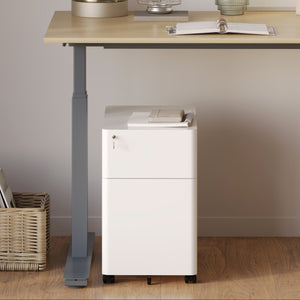









Filing Cabinet Choices for Cleaner Workstation Planning
Cleaner workstation planning starts with filing storage that matches the desk, document volume, security needs, and daily workflow. Explore how cab...
Learn more
Visit quiz page to see how we makes it easy to create an inspiring workplace


Dual monitor setups have become a practical requirement for modern work rather than a specialized preference. Professionals across design, operations, engineering, finance, and content roles rely on simultaneous visibility to maintain focus and efficiency. As work shifts into apartments, shared rooms, and smaller home offices, furniture design has had to adapt to tighter spatial constraints without sacrificing performance.
Narrow desks now carry expectations that once belonged only to large office workstations. They must support multiple displays, mounting hardware, and long hours of focused use while fitting naturally into compact environments. Achieving this balance requires careful consideration of dimensions, structure, materials, and ergonomics rather than simple downsizing.
A desk is typically considered narrow when its width is reduced to conserve floor space. This distinction matters because width and depth influence usability in different ways. Width governs how monitors can be arranged side by side, while depth determines viewing distance and posture.
In dual monitor setups, insufficient depth creates more problems than limited width. Screens positioned too close to the user increase eye strain and encourage forward leaning, which leads to neck and shoulder discomfort. Narrow desks that preserve adequate depth can still support dual monitors comfortably, especially when paired with appropriate mounting solutions.
Narrow desks that maintain moderate depth allow monitors to sit at a natural viewing distance while keeping the overall footprint compact. Modern monitors with slim bezels reduce horizontal space requirements, making it possible to place two displays on desks that would have been considered too small in the past.
The goal is not to chase minimum measurements but to ensure proportions work together realistically within the room and the user’s workflow.
Two monitors introduce concentrated weight, especially when mounted on arms. Unlike keyboards or laptops, monitors apply downward pressure and leverage force at specific points on the desk surface. Narrow desks must handle these forces without flexing, shifting, or wobbling.
A desk that feels stable when empty may behave differently once monitor arms are installed. Structural integrity depends on more than surface thickness and requires thoughtful frame design.
Well designed narrow desks rely on reinforced frames, solid leg placement, and secure joinery. Cross supports and quality fasteners distribute load more evenly and reduce movement during everyday use.
Stability is especially important for users who type, adjust screens frequently, or use sit stand configurations. A narrow desk should remain steady under normal motion, not just when stationary.
Monitor arms typically attach using clamps or grommets that compress the desktop surface. Solid wood surfaces generally tolerate this pressure well due to their density, while engineered wood and laminated surfaces depend on internal construction and thickness.
The ability of a narrow desk to support monitor mounting safely is tied directly to how its surface material handles localized stress over time.
Ultra thin surfaces are more susceptible to damage from clamps, even if they appear sturdy at first. Reinforced edges and well constructed cores help narrow desks maintain compatibility with monitor arms without compromising durability.
Choosing a desk that balances visual lightness with material strength is essential for supporting dual monitor setups reliably.
Monitor arms allow screens to float above the desk surface, freeing up valuable depth and enabling precise positioning. On narrow desks, this flexibility often determines whether a dual monitor setup feels functional or restrictive.
Adjustable arms make it possible to align screens with eye level, reduce head movement, and reclaim surface space for input devices.
Clamp mounts are common and convenient but require strong edges. Grommet mounts distribute weight through the surface and can improve stability when supported by proper desk construction. In extremely shallow setups, wall mounted arms remove desk limitations entirely but depend on wall structure and layout.
Each option involves tradeoffs that should be evaluated based on desk design and room constraints rather than assumptions about performance.
Height adjustability allows users to fine tune viewing angles and posture throughout the day. Small changes in desk height can improve ergonomics without increasing the desk footprint.
Alternating between sitting and standing also changes how users interact with their monitors, making narrow setups feel less confining during extended work sessions.
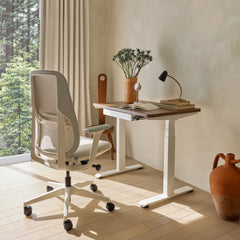
A height-adjustable standing desk designed for home offices offers the stability and lifting capacity needed to support dual monitors without excessive movement. Reliable performance comes from consistent motion and solid construction rather than novelty features.
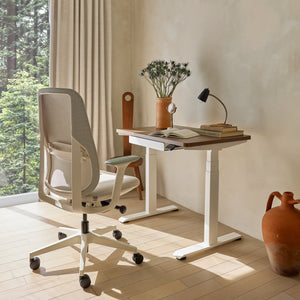
For smaller rooms and apartments, a compact electric desk for small workspaces provides adjustability within a reduced footprint. These desks focus on essential functionality, making them well suited for dual monitor setups in tight environments.
Angling monitors inward reduces the total width required and keeps the viewing field centered. This approach is particularly effective on narrow desks where width is limited but depth is sufficient.
Side by side arrangements remain viable when monitor arms allow fine adjustments that bring screens closer together without forcing awkward head rotation.
Stacking monitors vertically or designating one as a secondary display can significantly reduce horizontal space requirements. This strategy works well for workflows that prioritize a primary screen while keeping reference material visible.
Under desk keyboard trays, slim monitor arms, and minimal accessories help preserve surface space. Narrow desks benefit most when the desktop is reserved for essential tools rather than storage.
Limited desk space magnifies the effects of poor seating. Chairs that lack proper support encourage forward leaning and shoulder elevation, increasing strain during prolonged screen use.
Effective seating helps users maintain appropriate distance from monitors and reduces reliance on desk depth to compensate for posture issues.
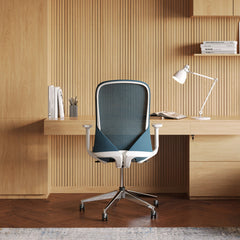
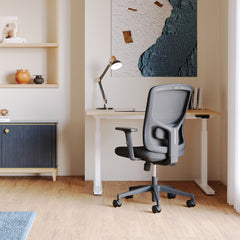
Office chairs designed for everyday work setups prioritize adjustability, lumbar support, and arm positioning. Exploring office chairs designed for everyday work setups helps ensure compatibility with compact desk environments.
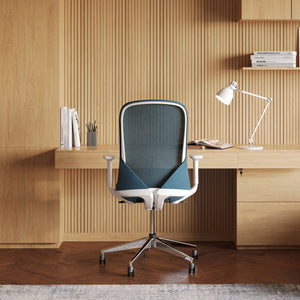
An ergonomic task chair with adjustable lumbar support promotes spinal alignment during focused work, while an ergonomic office chair designed for extended sitting supports comfort across long sessions and varied postures.
Desks without bulky aprons or built in storage allow monitor arms and seating to move freely. Open designs reduce obstructions and make narrow desks easier to adapt to dual monitor configurations.
While storage can be useful, it often interferes with monitor mounting and leg positioning. A selection of desks suited for modern workspaces emphasizes clean structure and adaptability over excess features.
Urban environments introduce challenges such as limited wall depth, shared rooms, and uneven floors. Narrow desks must function within these realities rather than assuming ideal conditions.
Choosing modern office furniture for compact city living helps ensure scale, proportion, and functionality align with real residential layouts rather than oversized commercial standards.
Dual monitors, mounting hardware, and accessories add weight, but well constructed desks are designed to handle everyday professional use safely. Distributing load evenly and respecting desk limits helps maintain stability over time.
Effective cable routing reduces clutter and prevents cables from pulling monitors out of alignment. Under desk trays and integrated routing paths help maintain both visual order and functional efficiency on narrow surfaces.
Assessing desk depth, frame stability, surface material, and mounting options together provides a clearer picture of suitability. No single feature determines success, but alignment among these factors does.
In many cases, improving monitor mounting or seating resolves discomfort without changing the desk itself. Thoughtful configuration often unlocks the full potential of a narrow setup.
Narrow desks continue to evolve as work environments become more compact and more demanding at the same time. Advances in structural design, materials, and ergonomic integration have made it possible for slim profiles to support professional grade setups reliably.
As dual monitor work remains a fixture of modern productivity, narrow desks are no longer compromises. They are carefully engineered solutions that reflect how people actually work, live, and use their space every day.


You have unlocked free shipping!
You're saving $29 and unlocked free shipping!
Leave a comment