



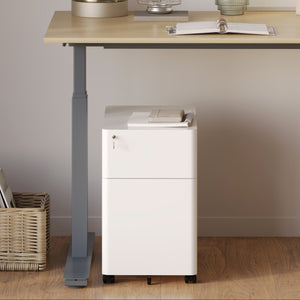






















Filing Cabinet Choices for Cleaner Workstation Planning
Cleaner workstation planning starts with filing storage that matches the desk, document volume, security needs, and daily workflow. Explore how cab...
Learn more
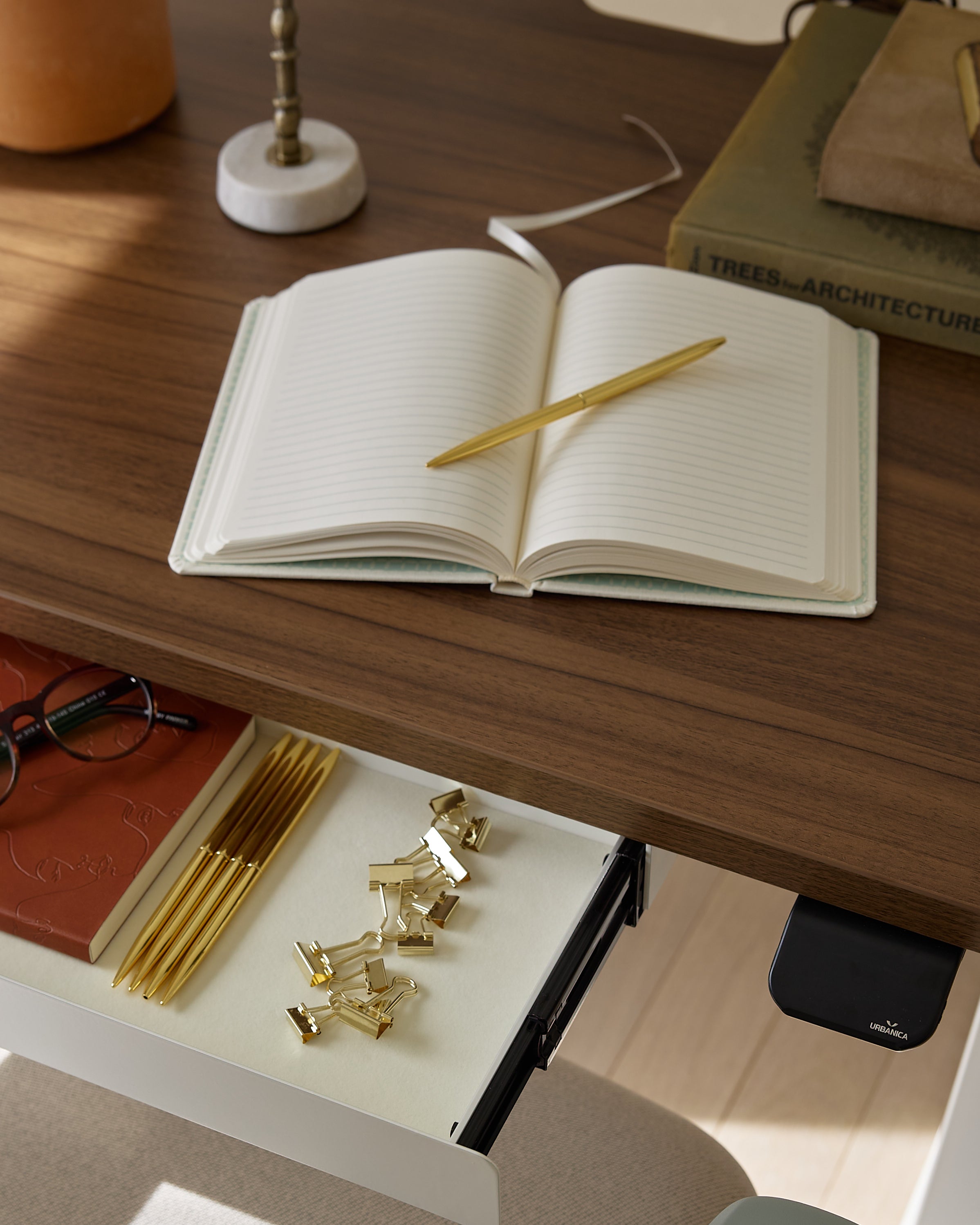
Visit quiz page to see how we makes it easy to create an inspiring workplace


Apartment living asks more from a workspace than a typical home office. The desk is rarely “just a desk.” It is often a boundary marker between rest and responsibility, a surface that has to play nice with your living room style, and a footprint that cannot disrupt how you actually move through the day.
We design furniture for real homes, not floorplans that pretend every room has spare space. That means treating your apartment like a set of zones you can borrow from, not a blank canvas you can permanently dedicate.
A useful apartment workspace starts with picking the right micro-zone, then sizing furniture to protect what the zone is supposed to do.
A wall-slice workspace is a narrow strip along a wall that keeps the center of the room open. It works best when the desk depth supports your posture without forcing the chair into the walkway. The key is to leave enough space behind the chair so you can sit down without shuffling furniture every time.
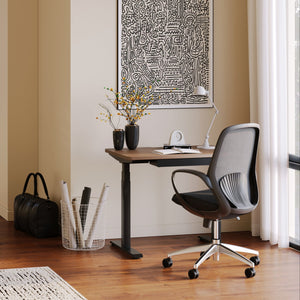
A desk near a window can make work feel lighter, but glare can turn a “bright spot” into squinting and leaning. If you prefer a window-line setup, plan where the monitor will sit first, then decide whether you need a simple blind adjustment, a different screen angle, or a matte screen option. Comfort comes from what you can sustain, not what looks good at 10 a.m.
Corners are underused in apartments because people assume they feel cramped. A corner nook works when the desk and chair pairing lets you tuck in fully, with enough elbow room to type naturally. The corner also creates a built-in visual frame, so your workspace feels deliberate rather than temporary.
Behind-sofa workspaces are popular in apartments because they keep “work” from taking over the room. The trick is to treat it like a slim console zone with a desk profile that feels at home in a living area. If you can stand up without bumping the sofa and you can pull the chair out cleanly, the zone works.
You do not need a measuring tape for everything, but you do need it for three things:
1. Desk footprint: width and depth decide whether your workspace feels stable or constantly in the way.
2. Chair pull-back space: enough room to sit down and stand up without dragging the chair sideways.
3. Walkway clearance: the tightest path matters more than the open space, especially around doors, hallways, and kitchen lanes.
A quick, reliable method is outlining the desk footprint on the floor with painter’s tape, then adding a second taped rectangle behind it for chair movement. If you can walk past without turning your shoulders and you can sit without bumping anything, you are close.
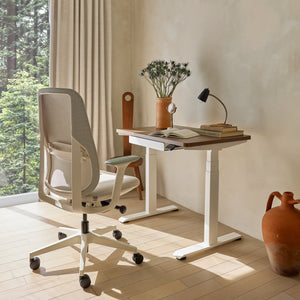
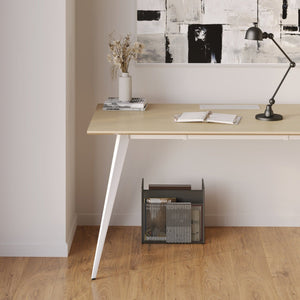
When you want a fixed-height desk that fits cleanly into apartment zones, start with a profile that keeps the underside open and avoids bulky forms. Our Office Desk is built around that straightforward, apartment-friendly idea.
In apartments, a workspace often shares duties with dining, hobbies, or household “drop zone” needs. That makes surface behavior more important than extra features.
A double-duty desk works when:
The surface can handle daily contact points like keys, mugs, notebooks, and chargers.
The edges feel comfortable for forearms and wrists, especially if you lean in during focused work.
You can reset it quickly, so it stops looking like an unfinished task when you are trying to relax.
Instead of adding more furniture, set the desk up with a small containment habit. A tray or shallow bin for “daily carry” items keeps the surface from becoming cluttered, and it prevents your apartment from feeling like work has no boundaries.
The right desk for an apartment is not the smallest desk. It is the desk that supports how you work while staying visually calm. Comfort and layout depend on depth, reach, and what the desk frame does under the surface.
Depth is where apartment workstations succeed or fail. A desk that is too shallow forces the keyboard forward, pushes the screen too close, and encourages hunching. A desk that is deep enough supports neutral wrists and healthier viewing distance, even if the desk is not very wide.
Use your work style to decide:
Laptop-only work: you can often use less width, but you still need depth for hands, wrists, and a stable posture.
External keyboard and mouse: depth matters because your hands need to sit comfortably without crowding the screen.
Paper and writing tasks: you need enough depth for a notebook and elbow space without balancing items on the edge.
Apartment desks often prioritize light, minimal forms, which is good for visual space. But the structure underneath matters. Crossbars and supports can interfere with your knees and shins, especially in tighter chair positions.
A good rule is to sit at the desk line you plan to use, then check:
Where your knees land when you scoot in.
Whether your feet can move naturally without hitting anything.
Whether you can change posture without twisting.
The ability to shift positions is part of real comfort, especially in small homes where you might work longer than expected.
Placement is not just about fitting the desk into a room. It is about how the desk behaves with light, movement, and storage.
Against a wall: easiest for cable routing and visual neatness, but you need a plan for scuffs and how far the chair will roll back.
Floating in the room: can feel premium and intentional, but you must manage cables cleanly and keep the backside visually tidy.
Near a window: energizing for many people, but only if you manage glare and monitor placement.
If you are choosing between two placements, pick the one that supports daily flow. In apartment life, the “best” desk is the one you do not resent walking around.
Measure the narrowest doorway and hallway turn on the delivery path.
Check where the desk will be assembled, not just where it will end up.
Confirm chair space behind the desk, not just desk space on the floor.
Decide where power will come from before placing the desk.
Reserve a small staging spot for packaging so it does not block your home.
Height-adjustable setups can be a game changer, but in apartments they need to be chosen with intention. The goal is movement that feels natural and neighbor-friendly, not a setup that dominates the room or creates daily friction.
A full standing desk is worth considering when your workdays are long, when you shift between tasks often, or when you share the workstation with someone else. It can also help when sitting for extended periods leaves you feeling stiff, because it gives you a different posture option without moving to another room.
Apartment realities to consider:
You need a stable base so the desk does not feel shaky in tight spaces.
You need to plan cable slack so cords do not tug when height changes.
You need to decide where accessories will live, because clutter on an adjustable surface can become visual noise.
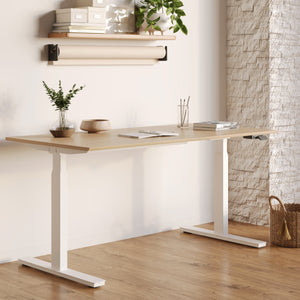
If a full-size adjustable setup fits your apartment flow, our Standing Desk is designed for that kind of everyday flexibility.
Apartment setups usually have fewer outlets and less room to hide power strips. A clean plan is:
Mount or place the power strip so it moves with the desk, or stays close enough that slack remains consistent.
Keep the heaviest cords, like power adapters, secured so they do not swing or pull.
Route cables upward first, then down, so movement does not drag cords across the floor.
The best cable setup is the one you do not notice. If standing becomes a hassle because cables snag, you will stop using the standing function.
In apartments, small vibrations can travel. A few choices reduce that:
Place the desk so it is not pressed against a shared wall if possible.
Use floor protection that prevents the feet from shifting or rattling.
Keep the desktop organized so nothing taps or slides during height changes.
Quiet, steady movement feels better for you and for the people living around you.
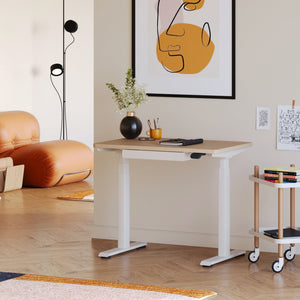
Studios and hybrid living spaces often need a work zone that can visually “close” when the day ends. A smaller adjustable surface can make sense when the workspace is tucked into a bedroom corner, a living room edge, or a narrow niche.
Our Mini Standing Desk fits this category when you want height adjustment without committing a large footprint to a single zone.
If there is one place apartment work setups struggle, it is seating. People tolerate a chair that “looks fine” until they realize the discomfort is influencing posture, focus, and even how often they take breaks.
A chair has to match your desk height, your body, and your apartment constraints. The right pairing makes a small setup feel bigger because you can sit naturally, move easily, and stay comfortable without constant adjustments.
Fit comes down to a few non-negotiables:
Seat height: you want your feet supported and your shoulders relaxed at the keyboard.
Seat depth: enough thigh support without forcing you to perch forward.
Arm behavior: armrests can help, but they can also prevent you from pulling in close to the desk. In tight spaces, that matters.
Control means you can make small adjustments that keep you comfortable throughout the day. Not too bulky means the chair does not dominate the room visually or physically.
Apartment work often happens in sessions. A chair can feel okay for ten minutes and fail at ninety. The 90-minute test is a simple way to spot issues:
Lower back fatigue that makes you slump.
Shoulder tension from a height mismatch.
Wrist discomfort from being too high or too low relative to the desk.
If a chair holds up through a focused session, it usually holds up through the day.
Better ergonomic support often reduces the need for add-ons that take up space. When posture support is built into the chair, you are less likely to stack cushions, hunt for footrests, or keep adjusting your position.
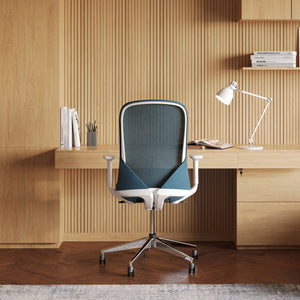
For an ergonomic chair option designed for daily use, the Novo Chair is one of the seating references we built for that “beyond the workday” reality.
Mobility is an apartment feature, not a luxury. You might roll between desk and closet, pivot to a shelf, or slide the chair out of the way when guests arrive.
Plan:
Enough swivel room that you are not scraping walls.
The right floor interface, whether that is casters with a mat or glides for stability.
A chair profile that can tuck under the desk so the zone looks calmer.
In apartment living, the chair is often visible from the sofa. That means design matters, but it needs to be honest. A chair that looks great but feels awkward will not support daily work, and a chair that looks overly “corporate” can make your home feel like an office after hours.
Visual weight is not just size. It is shape, color, and how much the chair interrupts sightlines.
Open, breathable silhouettes often feel lighter.
Dark, solid forms can feel heavier, especially in small rooms.
Rounded shapes can feel softer and more residential.
Choosing a chair that matches your apartment’s tone makes the entire workspace feel intentional, even if it is in a shared area.
Typing comfort and conversation comfort are related, but not identical. For desk use, you often want support and posture control. For hosting, you want a chair that feels welcoming, stable, and easy to sit in without fuss.
If your workspace is in a living area, a chair that looks at home matters. The Muse Chair is an option we position for everyday comfort with an adjustable structure, while still fitting a home-forward aesthetic.
Apartments can trap heat, especially in smaller rooms with limited airflow. Material choice can affect comfort more than people expect. Breathable surfaces can help you stay comfortable during longer sessions without constantly shifting.
If you prefer a chair with breathable mesh and integrated arm design, the Seashell Chair reflects that performance-driven direction.
Ergonomics does not have to mean more objects. In apartments, the smartest ergonomic improvements often come from how you set up what you already have.
If the screen is too low, your neck pays for it. If it is too close, your eyes and posture compensate. For laptop setups, a simple improvement is separating the screen from the typing surface by using an external keyboard and mouse, then raising the screen enough to reduce neck strain.
When space is limited, the principle stays the same:
Keep the screen at a comfortable viewing height.
Maintain enough distance that you are not leaning forward.
Keep input devices positioned so wrists stay neutral.
If your desk is narrow, keep the working area clean and avoid stacking objects where your hands need to be. Use vertical organization so the surface supports your posture, not your clutter.
Good small-space habits:
Move the monitor slightly back and keep the keyboard centered.
Store small items vertically, not spread across the desk.
Keep a dedicated place for chargers and adapters so they do not become “permanent residents” of the work surface.
Foot support is a comfort lever. If your feet dangle or if the chair height forces you into an awkward posture, you will feel it in your lower back and legs.
Before you buy anything, adjust what you can:
Set chair height so your shoulders relax at the desk.
Use a stable, small-footprint support if needed.
Shift posture periodically, even with small micro-movements.
For a chair option we frame around all-day ergonomic support, the Onyx Chair is built for that sustained-use goal without turning your apartment into an equipment showroom.
Storage is what keeps a workspace from leaking into the rest of your life. In apartments, wide storage is usually the enemy. Vertical storage and contained routines are your best friends.
Wide storage steals floor space and makes rooms feel smaller. Vertical storage uses height and keeps the footprint slim.
Consider:
Tall, narrow shelving instead of low, wide cabinets.
Wall-mounted rails or pegboards when drilling is allowed, or adhesive-friendly options when it is not.
Stacking drawers that fit under or beside the desk without blocking movement.
Under-desk storage works when it does not force you to sit twisted or with your legs angled. The moment storage changes your posture, it becomes a comfort cost.
Better under-desk storage choices are compact and predictable:
A small bin for cables and adapters.
A slim organizer that hangs or tucks without blocking legs.
A movable container that can relocate when you need more foot room.
A consistent reset is one of the most effective “space upgrades” you can create. It keeps your apartment feeling like home, even when your desk is in a shared area.
60-second reset routine
Put loose papers into a single folder or tray.
Coil and place chargers in one contained spot.
Return the keyboard and mouse to the center line of the desk.
Clear one small landing zone for the next session.
Push the chair in so the workspace looks calm from across the room.
Cables are what make small spaces look messy. Power planning is what keeps your workspace safe and usable.
A clean cable setup does not require permanent changes. Rental-friendly options can keep your workspace visually calm:
Velcro ties for bundling cords.
Adhesive cable clips for routing.
Sleeves to combine multiple cables into a single line.
Clamp-on trays that hold a power strip off the floor when your desk allows it.
The goal is not perfection. The goal is to keep cables off walkways and to reduce visual noise.
Outlets are rarely where you want them. Plan the layout based on power access, not just wall space.
A practical approach:
Place the desk close enough to a reliable outlet to avoid long extension runs.
Keep the power strip accessible, not buried, so you can unplug safely.
Route cords along edges, not across the open floor.
If your home includes pets or a robot vacuum, treat cables like a safety issue. Keep cords elevated and secured, and avoid loose loops near the floor where they can be pulled or chewed.
Apartment workspaces are part furniture, part environment. Floors, noise, and building quirks can make a good setup feel frustrating if you ignore them.
Hard flooring: protect the surface and reduce roll-noise with a suitable mat or floor-friendly chair interface.
Carpet: ensure the chair can move without requiring extra effort, which can cause shoulder tension over time.
Small improvements here can change your daily comfort more than a new accessory.
Wobble feels worse in small spaces because you sit closer to the desk and walls amplify the sensation. A stable setup starts with the floor:
Level the desk if the apartment floor is uneven.
Avoid placing the desk so one side sits on a different surface or edge.
Keep heavy items distributed evenly.
Stability is not a luxury. It is what makes a workspace feel reliable.
Calls and meetings can reveal apartment acoustics quickly. Hard surfaces reflect sound, and small rooms can echo.
Simple, honest improvements:
Place the desk so your voice is not bouncing off bare walls.
Use soft furnishings you already own, like a rug or curtains, to reduce echo.
Avoid placing the workstation in a tight corner if it makes your voice sound harsh.
Choosing office furniture for apartment living is about reducing friction. A reliable framework keeps decisions grounded and avoids wishful shopping.
Measurement 1: desk footprint that respects your walkway.
Measurement 2: chair pull-back clearance so you can sit naturally.
Behavior: how you actually work, including session length, device setup, and how often you need posture changes.
If your behavior includes long sessions, prioritize a chair that supports sustained comfort. If your behavior includes frequent switching between tasks, prioritize desk usability and surface control.
The most strategic purchases are the ones that change how your day feels.
If discomfort is the issue, prioritize the chair and setup ergonomics.
If clutter is the issue, prioritize containment and cable discipline before adding furniture.
If movement is the issue, consider adjustability only if your layout supports it cleanly.
Apartment delivery day is about logistics, not excitement. Plan:
A staging spot for boxes and packaging.
The assembly area that will not block your kitchen or main walkway.
A clear route from door to assembly spot, especially in tight hallways.
A good setup matches your apartment type. The same furniture can feel perfect in one layout and annoying in another.
Studios benefit from furniture that creates a boundary without feeling like a wall. A desk placed to separate sleep and work zones can make the apartment feel more organized, as long as the chair and cables do not spill into the main walking path.
In a one-bedroom, the living room often becomes the workspace. The best setups are those that look like part of the room, not like a temporary workstation. Choose a desk with calm lines and a chair that fits your décor tone so the space feels cohesive.
In shared living, silent movement and fast resets matter. Choose setups that:
Keep cables contained.
Let you push the chair in cleanly.
Avoid blocking shared routes like the kitchen path.
The most apartment-friendly furniture is furniture that supports your routine without forcing everyone else to work around it.
Apartment workspaces last when they respect the space and the people living in it. The goal is not to build an office inside your home. The goal is to create a workstation that supports your day, then steps back when your day is done.
Before you add more furniture, look for improvements that do not expand your footprint:
Better lighting placement that reduces strain.
A cleaner cable route that removes visual clutter.
A monitor position that improves posture without adding a larger desk.
Small upgrades can make your setup feel new without changing the room.
Visual calm comes from fewer cues that shout “work.”
Keep the desktop surface mostly clear.
Store peripherals the same way every time.
Match furniture tones so the workspace blends into the room.
When the apartment looks calm, it feels calm.
Workspaces fail when they become neglected corners. A simple weekly habit protects your furniture and your routine:
Tighten any loosened connections.
Wipe contact points that collect oils and dust.
Re-check cable clips and ties so they stay secure.
A dependable apartment workspace is one you trust without thinking about it. That is the standard we build for, and it is the standard that makes working at home feel sustainable.


You have unlocked free shipping!
You're saving $29 and unlocked free shipping!
Leave a comment