


























Filing Cabinet Choices for Cleaner Workstation Planning
Cleaner workstation planning starts with filing storage that matches the desk, document volume, security needs, and daily workflow. Explore how cab...
Learn more

Visit quiz page to see how we makes it easy to create an inspiring workplace


Integrated desk power has become a defining feature of contemporary work environments because professionals depend on a steady, uninterrupted connection between their tools and their workspace. As work habits evolve, people now keep multiple devices active at once. This shift creates a continuous need for accessible power sources that do not interrupt workflow or introduce clutter that affects focus.
Modern professionals commonly keep their laptop, phone, headset, tablet, and sometimes external accessories running simultaneously. Each tool consumes power, yet each also requires quick and convenient charging without breaking concentration. Relying on distant wall outlets interrupts routines, pulling users away from optimal working posture or forcing them to stretch cables across the room.
In desk power supports these high demand workflows by placing ports and outlets exactly where they are needed. With access points integrated into the surface, users do not have to search for chargers or rearrange cords. The workspace becomes a stable system that can support both quick charging sessions and long hours of sustained device use.
Visual clarity plays a major role in productivity. Cables draped across the desk, oversized power bricks, and tangled accessories create unnecessary tension and visual noise. A clutter free desk reduces cognitive load, allowing users to shift into deeper work more easily.
In desk power consolidates charging activity into a single, structured point, keeping the surface more organized. When power modules are embedded into the wood, their profile remains low and unobtrusive. This gives the workspace a streamlined character that supports attention and helps people feel more in control of their tools.
Integrated charging becomes even more valuable when aligning with ergonomics. Proper reach distance prevents strain on the wrists, arms, and shoulders. Bringing outlets closer reduces how often users stretch toward the edge of the desk or lean awkwardly to plug something in.
Charging ports that sit comfortably within the reach zone complement the use of supportive seating such as ergonomic seating aesthetics. A workstation that combines integrated power with well proportioned seating maintains the neutral posture that people rely on throughout long days of work.
Understanding in desk power begins with understanding the internal components that make these systems function reliably. Each element supports a smooth charging experience, but every desk type interacts with these components differently.
Many in desk modules include standard AC outlets for powering equipment like monitors or older devices that still rely on traditional chargers. To work well, these outlets need appropriate internal spacing and stable mounting. When built correctly, they allow users to keep bulky power adapters off the floor, reducing clutter while keeping essential tools powered.
USB A remains widely used, while USB C continues to expand because of its fast charging and versatility. In desk modules often combine the two, giving users freedom to connect devices without external adapters. USB C power delivery can support modern laptops, tablets, and phones, reducing the number of chargers that need to stay on the desk.
Wireless charging pads can be positioned to support phones and earbuds without needing visible cords. While not always necessary, they provide an option that keeps everyday devices conveniently powered. Wireless performance depends on correct placement and device alignment, which requires thoughtful module design.
Reliable in desk power requires internal components that manage electrical loads safely. Surge protection helps safeguard electronics, while internal wiring must be structured to prevent overheating. Components that allow consistent airflow or heat dissipation reduce long term risk and ensure the power system remains stable.
Different desks respond differently to embedded power modules. Wood surfaces in particular work well because they provide a stable structure for cutouts and mounting hardware. Users evaluating options within a collection such as wood desk selection can choose surfaces that will comfortably support a power module without compromising stability.
Choosing the correct desk ensures that the power module integrates securely without damaging the surface or limiting functionality. Beyond aesthetics, the key considerations are thickness, internal structure, and cable accommodation.
Power modules require specific cutout sizes. A desk that is too thin may not support the module firmly, while a surface that is too fragile can splinter during installation. Solid or well reinforced materials maintain the integrity of the cutout and help anchor the module properly.
The underside of the desk must provide enough clearance for cabling. Modules often extend downward, and cords need room to run along brackets, channels, or cable trays. Adequate space ensures that plugs do not bend or sit under strain.
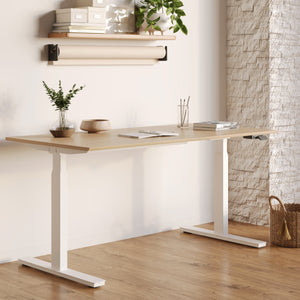
Fixed desks simplify the integration of in desk power because the cables remain stationary. Their structural stability allows clean routing paths beneath the surface. A layout that resembles traditional office desk layouts supports dependable power integration with fewer moving parts to consider.
Standing desks present movement that must be accounted for during installation. When the desk lifts, cables must remain safely out of the way. This is why adjustable systems benefit from cable loops, flexible routing channels, and motion tested cable paths. A product designed around this movement, such as standing desk height adjustment, offers insight into how movement affects cord organization.
Power access should never interfere with movement around the desk. Pairing the right chair with an integrated power system creates a comfortable and organized environment that protects both the user and the equipment.
A chair that encourages good posture positions the user closer to the surface naturally. Proper height alignment ensures that charging ports remain within comfortable reach without forcing the user to twist or lean.
Some desks route cables down the leg of the desk or through under mounted trays. Chairs with swivel mobility or broader leg movement must be paired thoughtfully to avoid catching cords underfoot. Safe workspace design keeps the pathways open and the connection points protected.
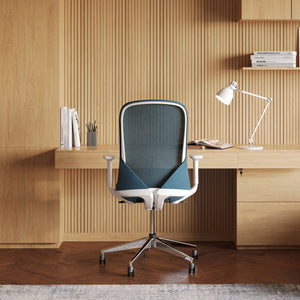
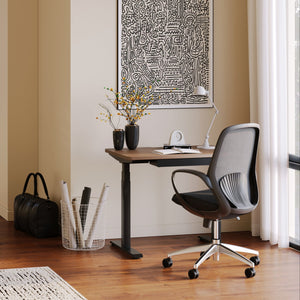
Different chair designs support different user preferences. Seating that combines structure with mobility works especially well around powered desks. Examples include sculpted shell chairs, ergonomic mesh options, and cushioned task chairs.
Chairs that pair well with integrated power setups include styles like
sculpted Seashell seating style, Onyx chair ergonomic detailing, and Muse chair comfort design. Each option has its own character and approach to comfort, giving users flexibility according to their work style.
Installing an in desk power module requires precision and attention to materials. Whether for a home office or a commercial space, following methodical steps ensures a dependable and visually clean result.
Manufacturers typically provide templates that specify the exact cutout required. Accurate measurement ensures that the module fits snugly without wobbling or leaving gaps. Users should verify the depth of the desk so the module sits flush.
The installation begins with carefully marking the layout and using the appropriate tools. A hole saw may create a clean circle, while a jigsaw can shape a rectangular or oval opening. Proper technique reduces splintering and prevents surface damage.
After placement, brackets or tension screws secure the module. Internal cables should be routed in a way that avoids unnecessary tension. Cable clips or under desk channels hold cords in place so they remain orderly.
Cable management determines whether a workstation remains clean over time. Solutions include trays, raceways, felt wraps, and adhesive clips that create predictable pathways. These tools prevent cords from sagging or becoming disruptive.
In commercial environments or workspaces with unusual materials, professional installers ensure that power units meet safety requirements. This approach maintains structural integrity and supports long term performance.
Safety remains central to using in desk power responsibly. Understanding load limits and following safe wiring practices protects both the user and the workspace.
Each outlet and USB port has its own load rating. Overloading can reduce performance or create safety hazards. Users can prevent issues by evaluating the combined draw of their devices and ensuring it matches the module's capacity.
Even low profile power modules need space for heat to dissipate. Adequate ventilation beneath the desk prevents heat buildup. This consideration becomes especially important when multiple outlets or fast charging ports are used simultaneously.
Power strips should not be chained together or used in ways that exceed their rating. Integrated desk power reduces the need for additional strips, but in cases where they are needed, they must be used conservatively and kept in accessible, open areas.
Safe workstation design includes both electrical and ergonomic considerations. Users seeking formal ergonomic standards can reference established guidelines such as
ergonomic workplace guidance from OSHA, which provides foundational recommendations for safe workstation practices.
In desk power can evolve as technology changes. A forward thinking setup allows users to adapt without replacing the entire desk.
As devices increase in capability, they often require more efficient power delivery. USB C, in particular, is becoming a primary connector for many tools. Workspaces that accommodate emerging standards remain more flexible over time.
Wireless charging continues to expand in use. While it will not replace wired charging entirely, it provides convenience for frequently used small devices. Hidden coil systems and flush charging pads offer users clean, accessible options.
Modular power inserts that can be swapped or upgraded contribute to long term adaptability. Users can replace just the power module rather than reworking the entire surface.
As workflows become increasingly device driven, seamless charging ensures that the desk remains a central hub of productivity. Reliable and well placed power contributes to calm, focused, and uninterrupted work patterns. When combined with supportive seating, thoughtful layout, and long lasting materials, in desk power elevates the entire workspace into a more practical and enjoyable environment.


You have unlocked free shipping!
You're saving $29 and unlocked free shipping!
Leave a comment