























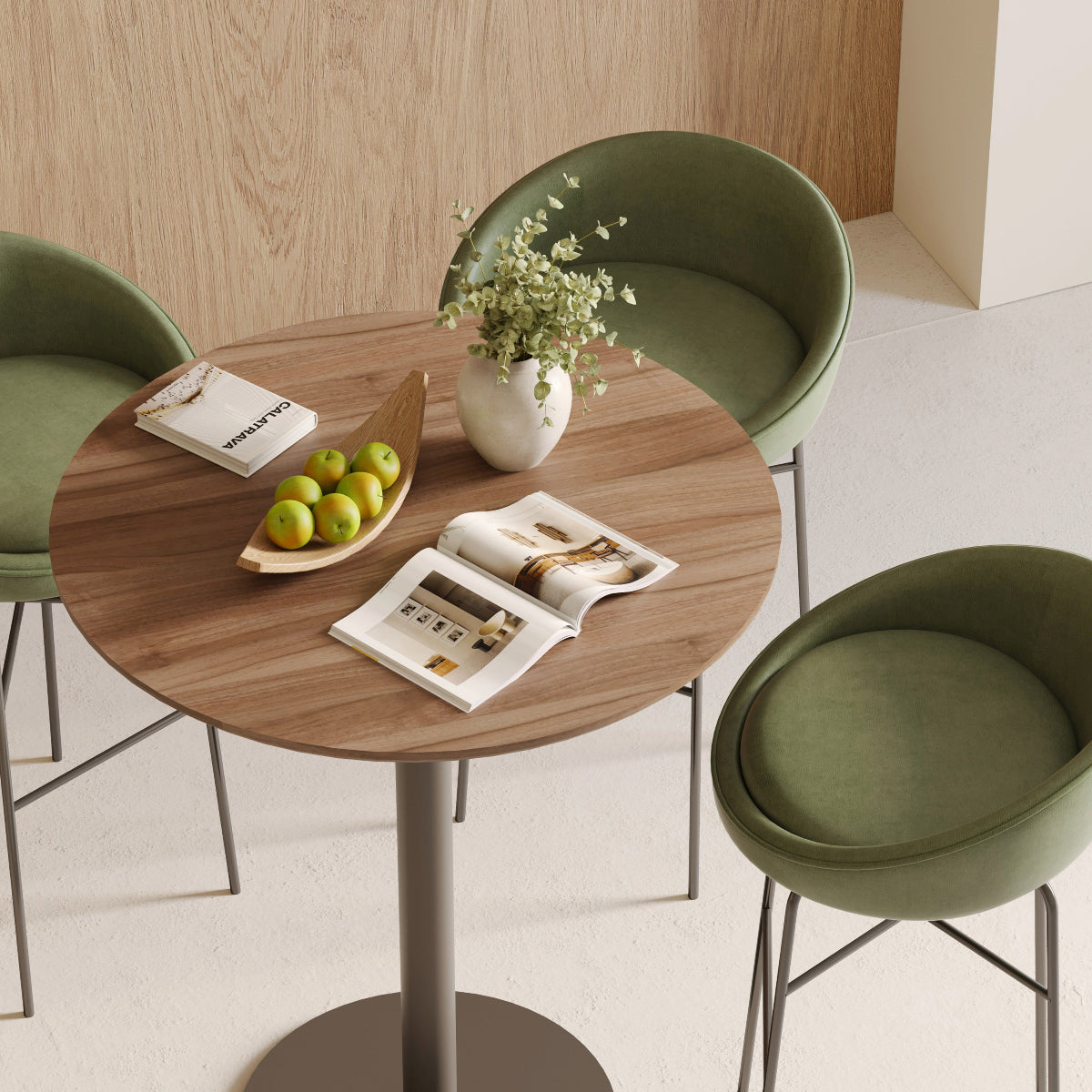
Round Bistro Table or Square Table: Which Works Better for Small Spaces?

Small spaces do not fail because a table is too large on paper. They fail when the table interrupts movement, crowds out seating, or makes the room feel boxed in once daily life starts happening around it. That is why the choice between a round bistro table and a square table is more important than it first appears. Shape affects how people pass through a room, how chairs move, how light falls across the area, and whether the space feels calm or cramped.
For compact homes, apartments, breakfast nooks, and multipurpose interiors, the strongest choice is rarely about trend. It is about how the table supports the room after chairs are pulled out, bags are set down, and someone needs to walk past without turning sideways. In many layouts, a bistro table for office and home can feel more natural because it softens circulation and reduces hard edges. In other layouts, a square table is the better solution because it aligns neatly with walls and makes the most of a clearly defined footprint.
The better option depends on how the room is shaped, how often the table is used, and what else the space needs to do.
Why table shape changes the way a small room works
Floor plan comfort depends on usable space, not just table dimensions
A table might technically fit into a room while still making the room uncomfortable to use. That distinction matters most in small spaces. The footprint of the tabletop is only one piece of the decision. The more important question is what happens around the table once people sit down and move through the room.
A round table tends to preserve softer walking lines. Without corners extending into circulation paths, it often feels easier to move around. This can be especially helpful in apartments where the dining area sits near a kitchen entry, living room pathway, or open-plan transition zone.
A square table, by contrast, creates a clearer edge. That can be useful when a dining area is tucked into a corner or when the room already has strong architectural boundaries. In those settings, straight lines can make the layout feel deliberate rather than crowded.
Visual weight has a major impact in compact interiors
In small spaces, furniture is always doing double duty. It is not only functional. It also changes how large or tight a room feels. Round tables usually introduce visual softness. They break up the repetition of rectangular cabinetry, sofas, shelves, and wall lines. That contrast can help a compact room feel less rigid.
Square tables can make a room feel more ordered. They echo the structure of most interiors and can create a neat, grid-like logic that works well in kitchens, alcoves, and corners. When the surrounding architecture is already linear, a square table can look integrated rather than imposed.
Where a round bistro table often works better in small spaces
Curved edges improve circulation in active areas
One of the strongest advantages of a round table is how it handles movement. Corners may seem minor in a showroom, but in a small room they become collision points. A sharp edge at knee height or hip height affects how people pass, pivot, and pull out chairs. Over time, that friction makes a room feel harder to use.
A round bistro table reduces those interruption points. In open layouts, narrow apartments, or dining corners placed along a main path, that softer profile often creates a more forgiving experience. A person walking by is less likely to clip a corner, and the room generally feels easier to navigate.
Round tables support more fluid social seating
Small-space dining is often informal. It may involve one person working in the morning, two people eating in the evening, and a friend joining for coffee later on. A round table supports this kind of flexibility well. Everyone sits at a more equal angle, and the seating arrangement usually feels conversational rather than fixed.
That flexibility matters even more when paired with the right seating. Slim, comfortable, easy-to-move seating can make a compact table area function much better day to day. Choosing ergonomic office chairs or similarly supportive, visually light seating can help a small dining corner feel more adaptable without becoming bulky.
Pedestal and compact-base designs can improve chair movement
Not every round table is equally effective in a small room. Base design matters. When the base allows better leg clearance and fewer obstructions underneath, chairs tuck in more easily and seating feels less awkward. This is one reason compact bistro tables remain a strong choice for small areas. They often create a usable center without demanding too much surrounding room.
Round tables are especially strong in these settings
-
Studio apartments where the dining area shares space with living and sleeping zones
-
Breakfast nooks with limited clearance on one or more sides
-
Open-plan rooms where people frequently walk through the dining area
-
Underused corners that need a softer focal point
Where a square table can be the smarter choice
Straight edges help when the room has clear boundaries
Square tables often perform best when the space itself is already defined. If a room has an obvious corner placement, built-in seating, surrounding cabinetry, or a clear wall-based layout, a square table can make efficient use of that geometry. The edges line up with the room rather than floating against it.
This can be especially valuable in compact eat-in kitchens or dedicated dining corners where every inch must be planned with care. When a table needs to sit close to a wall or visually align with surrounding elements, a square shape often looks cleaner and feels more intentional.
Square tables support structured daily use
Not every small-space table is used mainly for meals. In many homes, the table becomes a work surface, reading perch, sorting station, or temporary desk. Square tables can feel stronger in those routines because their straight edges support a more task-oriented posture and align naturally with adjacent furniture.
This is particularly relevant in homes where dining and working share the same footprint. When the room already includes storage, shelving, or a workspace nearby, adjustable ergonomic office desks can complement a more structured layout philosophy. In those spaces, a square table may feel like part of a cohesive system rather than a separate object.
Predictable seating often favors square layouts
If the table is usually used by one or two people and rarely needs flexible guest seating, square designs can be highly effective. They offer a defined place setting arrangement and work well when the room is not expected to shift often. That predictability is useful in compact homes where consistency matters more than reconfiguration.
The room-shape test matters more than trend preferences
Narrow rooms usually benefit from softer geometry
Long, slim rooms can become uncomfortable very quickly once furniture starts projecting into walking paths. In these layouts, a round table often performs better because it preserves a smoother line of movement around the piece. Even when the tabletop area is similar, the absence of corners changes how much visual and physical interruption the table creates.
That does not mean every narrow room needs a round table. It means the circulation pattern deserves more weight than the table measurement alone.
Square rooms often reward symmetry and alignment
When the room itself is nearly square, a square table can look grounded and proportional. This is particularly true in breakfast nooks or corner dining areas where the table is meant to feel anchored rather than floating. The shape echoes the room and can reinforce balance.
Round tables can also work in square rooms, especially when the goal is to soften the area, but the choice becomes more about mood and daily use than about spatial necessity.
Awkward corners require a practical geometry check
A leftover corner near a window, a small alcove beside a kitchen, or a transitional area between rooms can be difficult to furnish well. A round bistro table often turns that kind of leftover footprint into a welcoming destination because it does not fight the room with harsh lines. A square table may still work if the corner is tightly defined and the edges can align cleanly.
A simple evaluation helps:
1. Measure the available width and depth.
2. Account for chair pull-back, not just the tabletop.
3. Identify the main walking route through the room.
4. Decide whether the table will float or sit against a boundary.
5. Choose the shape that preserves comfort when the chairs are occupied.
Chairs and clearance matter as much as the tabletop
A small table can still feel too large if the seating is bulky
One of the most common small-space mistakes is selecting chairs that visually or physically overpower the table. A compact table paired with wide seats, thick frames, or heavy silhouettes can make the area feel cramped even when the tabletop itself is modest. Slimmer seating often creates more breathing room than people expect.
Armless chairs, narrower profiles, and designs that tuck in cleanly can dramatically improve the way either a round or square table performs.
Table shape and chair shape should work together
Round tables often pair well with seating that has softer contours. Square tables usually benefit from chairs with more structured lines. This is not a strict rule, but visual harmony helps a compact area feel composed. In small spaces, even small mismatches can make the setup feel restless or overdesigned.
Clearance is an everyday comfort issue
The real question is not whether a table seats a certain number of people. It is whether those people can sit, stand, and move naturally without constantly adjusting furniture. Small homes need practical honesty. A table that seats four in theory may be more comfortable for two or three in practice. That is not a flaw. It is an example of choosing livability over overcrowding.
Multipurpose rooms change the answer
The table often has to do more than serve meals
In many homes, the dining area is not a separate room. It is part of a larger zone that also handles work, reading, casual conversation, or temporary storage. That changes what makes a table successful. A round table often helps the area stay fluid and open. A square table often helps it stay organized and structured.
The better choice depends on which kind of pressure the room experiences most often.
Round tables suit flexible, movement-heavy spaces
If the room needs to shift often, a round table is usually more forgiving. It invites casual use, supports easier movement, and tends to feel less strict in a shared room. This can make a big difference in apartments and open-plan spaces where the dining area sits inside a larger living pattern.
Square tables suit routine-driven layouts
If the table acts more like a stable workstation, anchor point, or defined eating zone, a square format can be more natural. It works particularly well when paired with shelving, sideboards, or other furniture that relies on straight alignment and clean edges.
Lighting and accessories help a small dining area feel resolved
A compact table area needs visual completion, not clutter
Small dining spaces benefit from restraint. The goal is not to fill every available surface. The goal is to make the area feel intentional. Lighting, nearby accessories, and carefully chosen surrounding pieces help achieve that.
When accessories are added without a clear purpose, the table area can quickly lose the openness that made it appealing in the first place. Thoughtful, limited additions are almost always more effective than decorative excess. Curated office furniture accessories can support this approach by helping the surrounding area feel functional and finished rather than crowded.
Lighting can define the dining zone without taking over
Good lighting gives a compact dining area identity. It can separate the zone visually from the rest of the room, soften the atmosphere, and make the table feel like part of a complete setting rather than an afterthought.
For nearby shelving, side surfaces, or adjacent furnishings, pieces like the Alumina Lamp can support a smaller footprint because the role of lighting becomes more layered and architectural instead of bulky. Similarly, the Shore Table Lamp fits naturally into a small-space strategy where materials, scale, and surface impact all need to stay considered.
Small-space scenarios where the better choice becomes clearer
Studio apartments
In a studio, the dining area often sits directly inside the room's circulation path. People pass by it constantly, and the space may need to transition between eating, working, and relaxing within the same day. In this context, round tables usually perform better because they reduce friction and feel less intrusive.
Compact eat-in kitchens
When the dining spot is framed by cabinetry, walls, or built-in boundaries, square tables often gain an advantage. Their shape can align tightly with the architecture and make the area feel intentional and efficient.
Homes that blend work and dining
For live-work homes, the choice depends on whether the area needs flexibility or structure. If the dining zone regularly shifts between casual meals and focused work, the surrounding furniture plan becomes part of the decision. A broader modern office furniture selection can support this kind of hybrid planning by reinforcing comfort, organization, and consistency across compact multipurpose spaces.
Round bistro table vs square table at a glance
| Decision factor | Round bistro table | Square table |
|---|---|---|
| Walkway comfort | Better for active circulation | Better for fixed placements |
| Corner use | Softer in open or awkward areas | Strong in well-defined corners |
| Visual effect | More fluid and open | More structured and grounded |
| Seating feel | Flexible and social | Predictable and orderly |
| Best fit | Studios, narrow areas, open plans | Nooks, alcoves, compact kitchens |
| Daily strength | Movement and adaptability | Alignment and structure |
Which works better for small spaces
Choose round when movement and flexibility matter most
A round bistro table is often the better choice when the room needs easier circulation, softer visual lines, and more casual seating flow. It performs especially well in apartments, open layouts, and compact homes where the dining area is part of a larger living pattern.
Choose square when boundaries and structure matter most
A square table is often the better choice when the room has a clear footprint, seating is predictable, and alignment with walls or surrounding furniture makes the area work better. It brings order to spaces that need precision more than softness.
The smartest choice is the one that still feels comfortable in real life
For small spaces, the best table is rarely the one that looks smallest in isolation. It is the one that preserves movement, supports comfortable seating, and fits naturally into the way the room is actually used. When shape is evaluated through that lens, the right answer becomes much easier to see.
Related Articles
-
 This Is How To Build A Small Home Office You Actually Want To Work From, And How To Pick Desks For Small Spaces - Urbanica Furniture's Full Guide
-
 Filing Cabinets for Small Spaces That Still Look Clean Now
-
 Minimalist Office Table Ideas That Work Like a Bistro Table
-
 Make Small Shared Spaces Work Better With a Bistro Table
-
 Best Filing Cabinet Layout Ideas for Small Home Offices and Shared Rooms
-
 What Size Filing Cabinet Makes Sense for Small Workspaces?


