



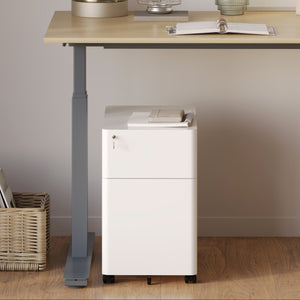






















Filing Cabinet Choices for Cleaner Workstation Planning
Cleaner workstation planning starts with filing storage that matches the desk, document volume, security needs, and daily workflow. Explore how cab...
Learn more
Visit quiz page to see how we makes it easy to create an inspiring workplace


Choosing a chair is often framed as a question of comfort, but spinal health is shaped far more by structure than softness. A chair that feels pleasant for a few minutes can quietly place the spine under strain for hours. From a design perspective, true spinal support depends on how a chair interacts with the body’s skeletal alignment, not how plush it feels at first contact.
Soft cushions that compress unevenly encourage the pelvis to roll backward, flattening the lower back and forcing spinal muscles to work harder just to keep the torso upright. Over time, this muscular compensation leads to fatigue and stiffness that are frequently blamed on long workdays rather than inadequate seating. Structural design, not immediate comfort, determines whether a chair helps the spine maintain balance or slowly pulls it out of alignment.
Everyday seating options vary widely in how they address this issue. Dining chairs, lounge chairs, and task chairs are built for different purposes, and understanding these differences begins with recognizing how various chair styles designed for different uses approach posture and support.
A supportive chair works with the spine’s natural shape rather than forcing it into an artificial position. The human spine is not straight. It consists of three primary curves that must be respected even when seated.
The lower back has a natural inward curve known as lumbar lordosis. Maintaining this curve depends heavily on pelvic position. When the pelvis tilts backward, the lumbar spine flattens, increasing pressure on spinal discs.
A neutral pelvis allows the spine to stack naturally with minimal muscular effort. Chairs that lack proper lower-back contact encourage a posterior pelvic tilt, especially when the seat is too soft or too deep. Over time, this posture places sustained stress on the lower spine. A well-designed chair supports the lumbar region gently, encouraging the pelvis to remain upright without forcing it.
The mid-back, or thoracic spine, curves outward naturally. While lumbar support receives the most attention, thoracic support is equally important. Without it, the upper back collapses forward, leading to rounded shoulders and increased neck tension.
Backrests that provide gradual contact through the mid-back help distribute weight more evenly across the spine. This reduces the tendency to hunch forward and allows the shoulders to rest in a more neutral position.
Neck discomfort often originates lower in the spine. When the lower and mid-back lack support, the head compensates by drifting forward. Even chairs without headrests can support cervical alignment if seat height, backrest angle, and upper-back support are correctly balanced.
Some of the most influential factors affecting spinal support are also the least visible. Seat height, depth, and shape quietly dictate how the body settles into a chair.
Proper seat height allows the feet to rest flat on the floor with knees roughly level with or slightly below the hips. When a seat is too high, the pelvis tilts forward excessively. When it is too low, the pelvis rolls backward. Both scenarios disrupt spinal alignment and increase muscular effort.
Seat depth determines whether the backrest can actually support the spine. If a seat is too deep, users tend to slide forward to avoid pressure behind the knees. This movement pulls the lower back away from the backrest, eliminating lumbar support entirely. A seat that allows a small gap behind the knees helps maintain consistent back contact.
The angle of the seat pan influences pelvic orientation. A completely flat seat can encourage slouching, while a subtle downward slope toward the knees can help maintain a neutral pelvis. This detail plays a meaningful role in how pressure is distributed across spinal discs during extended sitting.
A supportive chair does not lock the body into a single rigid position. Instead, it accommodates natural movement while preserving alignment.
The spine relies on small, frequent movements to stay healthy. Chairs with rigid backrests discourage this movement, leading to stiffness and fatigue. Backrests that allow gentle rocking or flexing enable micro-movements that reduce sustained pressure on any one spinal area.
Sitting perfectly upright places more stress on the spine than a slight recline. A modest backward angle reduces disc pressure and allows the backrest to share the load with spinal muscles. The goal is controlled recline that supports focus without encouraging collapse.
Recline tension affects how much effort the body must exert to stay balanced. Too little resistance allows slouching, while too much forces muscles to remain engaged constantly. Balanced tension helps distribute weight evenly across the backrest, reducing strain on the lower spine.
Materials play a long-term role in whether a chair continues to support the spine as intended.
Very soft foam may feel inviting initially, but it often compresses unevenly with use. As foam loses shape, it stops supporting the spine in a consistent way. Denser, well-structured cushioning maintains its form longer, preserving the original support profile of the chair.
Fabric tension contributes to how the backrest interacts with the body. Upholstery that is too loose allows excessive sinking, while overly tight materials can feel unforgiving. Balanced tension helps maintain steady contact along the spine without creating pressure points.
Ergonomic chairs are designed around the idea that bodies move and that no single posture suits every task.
Ergonomic design focuses on adjustability and structural defaults. Adjustable seat height, backrest angle, and lumbar positioning allow the chair to adapt to different users and activities. At the same time, the underlying shape should support neutral posture even before adjustments are made.
Active sitting encourages subtle movement throughout the day. Task chairs developed with this philosophy prioritize balance, controlled recline, and responsive support. A practical example is a task chair designed for adjustable everyday posture, which emphasizes adaptability without relying on exaggerated features.
Evaluating spinal support does not require technical measurements. The body provides clear feedback when a chair works with it rather than against it.
Sit with feet flat on the floor and allow the back to rest naturally against the backrest. The pelvis should feel upright, not tucked under. Shoulders should relax without effort. If this position feels balanced rather than forced, the chair is likely supporting the spine effectively.
Good support reduces the urge to constantly shift or fidget. Pressure feels evenly distributed rather than concentrated at the tailbone or shoulders. Over time, muscles feel less fatigued, even during focused tasks.
Discomfort that appears quickly, especially in the lower back or between the shoulders, often signals structural issues. If relief only comes from leaning forward or perching at the edge of the seat, the chair is not providing adequate spinal support.
Different seating categories serve different purposes, and each comes with trade-offs for spinal health.
Task chairs typically offer the most adaptability, supporting upright work and movement. Dining chairs encourage shorter periods of upright sitting but usually provide minimal contouring. Accent and lounge chairs prioritize relaxation, often at the expense of lumbar support.
Some upholstered chairs rely on their shape to offer passive support rather than adjustments. A dining-style option such as an upholstered chair with a structured silhouette can support posture during meals or brief seated tasks but is not intended for extended work sessions.
Sculptural chairs emphasize form and visual presence. While they may cradle the body in a relaxed posture, their focus is rarely long-term spinal alignment. A visually distinctive option like a sculptural chair focused on form and aesthetics highlights how design intent shapes support expectations.
Spinal support does not exist in isolation. The relationship between chair and desk determines how the upper body interacts with the workspace.
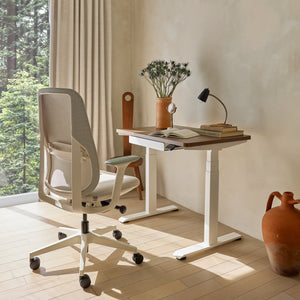
When a desk is too high or too low, the spine compensates. Elevated shoulders increase tension through the neck and upper back, while low work surfaces encourage slouching. Chairs perform best when paired with desks suited to varied work setups that allow arms to rest comfortably while keeping the spine upright.
Minimalist design does not automatically mean poor support. The difference lies in what is simplified.
Some chairs remove visual bulk while retaining internal shaping that supports the spine. Others strip away both form and function. Understanding this distinction helps set realistic expectations for minimalist seating.
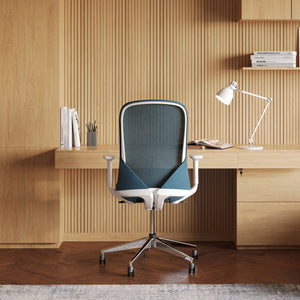
Streamlined task chairs demonstrate how spinal support can be delivered without excessive visual complexity. A low-profile option such as a streamlined ergonomic task chair with a compact frame shows how thoughtful engineering can support posture while fitting into modern interiors.
Short trials rarely reveal how a chair performs over time. The true measure of support emerges during extended use.
After prolonged sitting, the body reveals whether the chair is sharing the workload or leaving muscles to compensate. Gradual discomfort often indicates insufficient structural support rather than a brief adjustment phase.
When a chair works well, posture feels stable without constant effort. Movement feels natural, and fatigue builds more slowly. These signals suggest the spine is being supported structurally rather than held upright by muscle tension alone.
Showroom comfort can be misleading. Chairs are often tested briefly and without context.
Initial impressions emphasize softness and visual appeal. Long-term performance depends on how the chair interacts with daily habits, work surfaces, and movement patterns.
Flooring, desk height, and duration of use all affect how a chair supports the spine. Professional guidance focused on real work environments, such as workspace furniture planning and design support, helps ensure seating choices align with actual needs rather than momentary impressions.
Spinal health is shaped by systems, not single products. Chairs, desks, and movement habits work together to influence posture over time. When seating is chosen with an honest understanding of how it will be used, it becomes part of a supportive environment that respects the body’s structure and supports everyday well-being.


You have unlocked free shipping!
You're saving $29 and unlocked free shipping!
Leave a comment