









Corner Desk vs Straight Desk for Dual Monitors

Dual Monitors Redefine How a Desk Performs
Using two monitors changes far more than screen space. It reshapes how the desk supports posture, movement, and focus throughout the workday. With a single display, almost any flat surface can feel adequate. With dual monitors, desk geometry becomes a functional decision that directly affects comfort, efficiency, and long-term usability.
How Dual Displays Change Visual and Physical Demands
Two monitors widen the visual field and increase horizontal eye movement. This requires more deliberate alignment between screen position, seating posture, and desk depth. A desk that works well for one screen can easily become restrictive once a second display is added, especially if both monitors are used actively rather than one serving as a passive reference.
Desk Shape as an Ergonomic Variable
Desk shape determines how screens can be angled, how far the keyboard sits from the displays, and how arms rest during extended sessions. The difference between a corner desk and a straight desk is not cosmetic. It influences how naturally the body settles into a neutral posture over hours of use.
Why Surface Orientation Matters More Than Square Footage
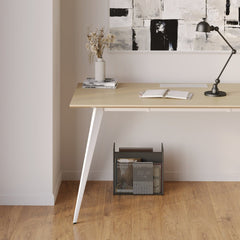
Many buyers focus on total desk size, but orientation and usable depth often matter more for dual monitors. A desk that provides depth where the user actually sits can reduce neck strain and eye fatigue more effectively than a wider but shallower surface. This is why exploring collections of office desks designed for modern workspaces can be a practical starting point when planning a dual-monitor setup.
Corner Desks for Dual Monitors and Immersive Workflows
Corner desks, often L-shaped, introduce a wraparound environment that supports focused, multi-screen work without forcing awkward posture.
Natural Monitor Angling on L-Shaped Surfaces
Corner desks allow monitors to angle inward toward the user. This inward positioning reduces excessive head rotation and supports a centered line of sight, particularly when one monitor is used more frequently than the other.
Primary and Secondary Screen Hierarchies
Many professionals rely on a dominant screen for active tasks and a secondary screen for reference. Corner desks make it easier to keep the primary display directly in front while positioning the secondary screen slightly off-axis without strain.
Centralized Input Zones with Peripheral Work Areas
The corner intersection creates a natural central zone for keyboard and mouse placement. This keeps arms closer to the body while leaving the side surfaces available for documents, tablets, or control devices without crowding the main work area.
Depth Advantages for Larger or Curved Monitors
Depth becomes critical as monitor sizes increase. Corner desks often provide additional depth at the seated position, helping maintain proper viewing distance and allowing monitor arms to be used without pushing screens too close.
Where Corner Desks Perform Best
Corner desks are particularly effective in home offices where unused corners can be converted into productive zones. They also suit roles that benefit from task separation, such as design, engineering, or analysis, where visual immersion supports concentration.
Straight Desks for Dual Monitors and Balanced Layouts
Straight desks remain a popular choice for their simplicity and adaptability. When paired thoughtfully with dual monitors, they can support clean and symmetrical setups.
Side by Side Monitor Alignment and Visual Balance
Straight desks allow dual monitors to sit evenly across the surface, making them well suited for users who interact with both screens equally. This balance can reduce cognitive friction when attention shifts frequently between displays.
Linear Desk Layouts and Spatial Flexibility
Straight desks integrate easily into many room layouts. They work well against walls, align neatly in rows, and adapt more easily if the workspace needs to be rearranged. A rectangular office desk with a simple work surface provides a neutral foundation that supports dual monitors without imposing a fixed workflow.
Limitations to Consider with Straight Desks
Straight desks often offer less depth than corner desks, which can be a constraint with larger monitors or extended monitor arms. Cable management also requires planning to avoid clutter along the back edge of the desk.
Ergonomic Considerations That Separate Desk Shapes
Desk shape directly affects how the body moves and rests during long work sessions.
Neck Rotation and Eye Travel
Corner desks can reduce extreme head turns by positioning monitors along a gentle curve around the user. Straight desks support balanced movement when both monitors are used equally but may increase neck rotation if one screen becomes dominant.
Arm Reach and Wrist Alignment
Keeping the mouse and keyboard close to the body helps reduce shoulder tension and wrist strain. Corner desks often centralize these tools naturally, while straight desks require more intentional placement.
Sitting and Standing with Dual Monitors
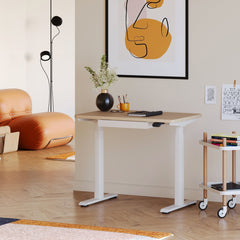
For users who alternate between sitting and standing, stability and weight distribution become critical. Dual monitors add leverage that can amplify movement if the desk frame is not designed to handle it. An electric standing desk for adjustable height work supports posture changes while maintaining stability for mounted displays.
Space Constraints and Floor Plan Realities
Room size and layout often determine which desk shape integrates best.
Small Rooms and Compact Offices
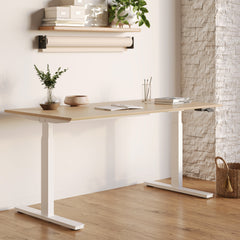
In limited spaces, corner desks can make efficient use of areas that might otherwise go unused. Straight desks, however, can feel visually lighter in narrow rooms and may leave more open floor space. For especially tight environments, a small adjustable desk for limited spaces can support dual monitors without overwhelming the room.
Shared Offices and Collaborative Settings
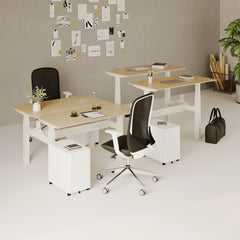
In shared environments, desk placement affects sightlines, noise levels, and access to power. Straight desks are easier to align in rows, while corner desks can provide subtle separation. A shared standing desk for two users allows dual-monitor setups while preserving individual work zones.
Desk Stability and Monitor Support
Dual monitors place additional demands on desk construction.
Load Distribution and Structural Stress
Monitor arms concentrate weight at specific points. Corner desks distribute this load across multiple planes, while straight desks rely on the strength of a single span.
Materials and Frame Design
Thicker surfaces and well-designed frames reduce flex, which becomes more noticeable when monitors are elevated. Stability matters even more for users who type heavily or adjust desk height frequently.
Cable Routing and Desk Organization
Corner desks often route cables along inner seams, while straight desks typically manage cables along the rear edge. Both approaches can be effective when planned intentionally.
Matching Desk Shape to Professional Use Cases
Different roles place different demands on dual-monitor setups.
Creative and Technical Roles
Developers, designers, and editors often benefit from immersive layouts that emphasize a primary screen. Corner desks support this focus while keeping secondary tools within reach.
Administrative and Data-Focused Work
Roles that involve constant comparison between spreadsheets or dashboards may favor the balanced symmetry of a straight desk, where both monitors share equal prominence.
Multi-User and High-Density Workstations
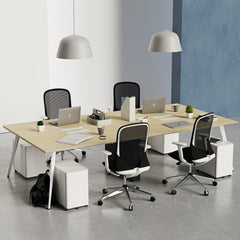
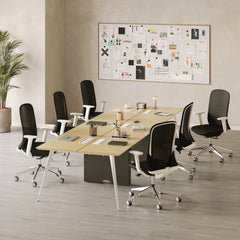
In environments where multiple people work side by side, durability and access become priorities. A four-person workstation desk system supports dual monitors for each user while maintaining a consistent layout.
Corner Desk vs Straight Desk Comparison for Dual Monitors
| Feature | Corner Desk | Straight Desk |
|---|---|---|
| Monitor viewing angle | Inward, immersive orientation | Flat, symmetrical alignment |
| Desk depth at seating position | Typically deeper | Often shallower |
| Cable management approach | Centralized routing | Rear-edge routing |
| Ergonomic flexibility | Strong for primary screen focus | Strong for equal screen use |
| Best room layouts | Corners and dedicated offices | Walls, rows, shared spaces |
| Standing desk compatibility | Excellent with stable frames | Excellent with proper depth |
Decision Factors That Clarify the Right Choice
Monitor Size and Mounting Style
Larger or curved monitors benefit from additional depth, while smaller displays adapt more easily to straight surfaces.
Room Geometry and Power Access
Wall placement, outlet locations, and circulation paths influence which desk shape integrates smoothly.
Sitting Only or Sit Stand Workstyles
Frequent posture changes increase the importance of frame stability and thoughtful layout.
Planning for Future Changes
A desk that supports future monitor upgrades or evolving roles reduces the need for replacement.
Supporting the Desk with Thoughtful Office Design
A desk works best when integrated into a cohesive office environment.
Lighting Placement Relative to Screens
Proper lighting minimizes glare and supports visual comfort, especially when monitors are angled.
Chair Clearance and Movement Zones
Adequate space for movement encourages healthy posture shifts throughout the day.
Coordinated Furniture Planning
Aligning desks with storage, power access, and circulation paths creates a more functional workspace. Many organizations rely on professional office furniture planning services to ensure these elements work together effectively.
Choosing a Desk That Grows with Dual-Monitor Work
Both corner desks and straight desks can support productive dual-monitor setups. The best choice aligns desk shape with workflow, space constraints, and long-term needs, allowing the workspace to evolve naturally as work demands change.
Related Articles
-
 Desk Setup With Laptop and 2 Monitors Needs Better Height
-
 Desk Width Requirements for Dual Monitor Setups That Still Fit Small Rooms
-
 How Deep Should a Desk Be for 2 Monitors to Prevent Neck and Eye Strain
-
 Flexible Living: Why Modular Furniture Is Changing Modern Homes
-
 Where the Right Desk Design Makes Work Flow
-
 Computer desk for dual monitors that supports monitor arms without wobble


