





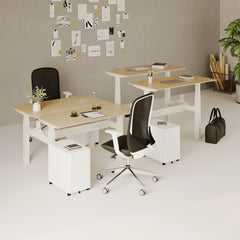
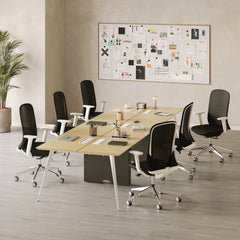





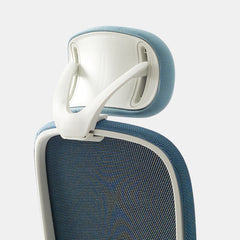

How Team Desks and Panels Create Better Daily Work Zones
Team desks and workstation panels do more than organize seating. Together, they define personal work areas, manage sightlines, support smoother cir...
Learn more

Visit quiz page to see how we makes it easy to create an inspiring workplace


Desk clutter rarely appears all at once. It begins with a document placed beside the keyboard, a receipt saved for later, a notebook left open after a call, or a folder kept nearby because it may be needed again. Each item seems reasonable on its own. Together, they reduce usable space and make routine tasks feel more complicated than they should.
A filing cabinet can restore order, but only when it is treated as part of the working process. Simply moving papers into drawers may create a cleaner surface for a few days, yet clutter will return if documents do not have clear categories, retrieval rules, and next steps.
Effective filing cabinet storage creates a dependable connection between active work and stored information. The desk remains available for the task at hand, while documents that still matter stay organized, protected, and close enough to retrieve without disrupting concentration.
A desk can be cleaned in a few minutes, but lasting organization depends on understanding why objects accumulated there in the first place. Most recurring clutter is not a space problem. It is a decision problem.
Every loose paper represents an unresolved question. Does it require action? Should it be filed for reference? Does another person need it? Can it be scanned, archived, recycled, or shredded? When these decisions are delayed, the desktop becomes a temporary holding area.
Visual clutter makes a workspace feel crowded. Functional clutter directly interferes with work.
A decorative object or neatly stacked notebook may add visual density without affecting productivity. A folder covering the writing area, however, forces the user to rearrange the desk before completing a task. Loose papers near a keyboard may make it harder to type comfortably. Documents mixed together can also increase the time needed to locate a contract, invoice, project note, or reference sheet.
The distinction matters because a desk does not need to look empty to function well. It needs enough clear surface for focused activity, with every nonessential item placed somewhere that supports retrieval.
A practical desktop usually needs only the equipment, tools, and documents required for the work being completed now. Materials connected to other projects should remain accessible without occupying the active work zone.
This approach creates a simple boundary:
Current work stays on the desk.
Pending work moves into a clearly defined action area.
Reference material goes into organized storage.
Completed records move to an archive or disposal process.
Unnecessary duplicates leave the workspace.
The goal is not a permanently empty desk. The goal is a surface that can return to order without requiring a full cleanup each time priorities change.
A filing cabinet works best when its contents have a clear purpose. It should not become a hidden version of the same clutter that once covered the desk.
Documents placed inside should be worth retaining, easy to categorize, and likely to be retrieved according to a recognizable pattern.
Active records may include current client documents, project files, signed forms, purchase records, receipts, reference materials, or paperwork connected to ongoing operations. These documents are still useful, but they do not need to remain visible throughout the day.
Keeping them in a nearby cabinet allows the user to retrieve them when needed and return them when the task is complete.
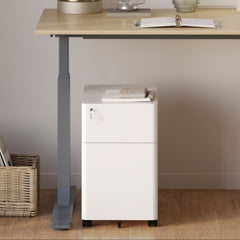
A lockable mobile filing cabinet can support this type of workflow by providing compact drawer storage that can be positioned near a desk and secured when appropriate. Mobility can also make it easier to adjust the layout of a home office, studio, or shared workspace without treating the cabinet as a permanent obstruction.
Some papers should not remain exposed on an open desk. Contracts, financial records, personnel documents, private client information, and other confidential materials need a more deliberate storage location.
A lock can create a useful boundary, but it should not be mistaken for a complete information security system. Access rules, document handling practices, and disposal procedures still matter. The cabinet provides physical control, while the organization determines who should use it and how records should be managed.
Not every paper deserves drawer space. Filing documents without reviewing them can fill a cabinet with outdated forms, duplicate copies, expired information, and items that no longer support current work.
Unread mail, unsigned forms, and documents awaiting an immediate response should not disappear into a general file. They need an action category that keeps the required next step visible.
Placing a document in a drawer should mean that its purpose is understood. A completed filing decision answers three questions:
Why is the document being kept?
Where will someone expect to find it?
What event will eventually trigger archiving or disposal?
When those questions remain unanswered, storage becomes postponement rather than organization.
No single storage product can manage every object in a workspace. Paper, stationery, personal items, technology accessories, and inactive records require different solutions.
| Storage method | Best use | Typical access | Main advantage | Common risk |
|---|---|---|---|---|
| Desktop tray | Papers requiring immediate action | Several times daily | Keeps urgent work visible | Can become a permanent pile |
| Desk drawer | Small tools and personal items | Daily | Fast access without surface clutter | Categories may become mixed |
| Filing cabinet | Active files and protected records | Daily to monthly | Organized document storage | Poor labels reduce retrieval |
| Archive box | Inactive records with retention value | Occasional | Separates long-term material | Obsolete papers may be kept |
| Digital storage | Searchable copies and shared files | As needed | Supports access and duplication control | Inconsistent naming causes confusion |
The strongest system gives each storage method a defined role. A desktop tray should not replace a filing cabinet, and a filing cabinet should not become a container for chargers, snacks, spare cables, and unrelated personal items.
Filing cabinet organization begins before a document reaches the drawer. A consistent paper flow determines how information enters the workspace, what happens next, and where it belongs after use.
A practical filing process can organize papers according to their current status:
Incoming: Newly received papers that still require review.
Action: Documents connected to a task, deadline, approval, or response.
Reference: Information that may be needed again but does not require immediate action.
Archive or disposal: Completed material that must be retained elsewhere or removed responsibly.
The incoming stage should remain temporary. Once a paper has been reviewed, it should move to action, reference, archive, or disposal. Allowing incoming material to accumulate creates a new version of the original desk pile.
Filing systems are most reliable when they match how people search for information.
A consultant may think in terms of clients. A design team may organize by project. An administrative group may retrieve records by department, date, or document type. A finance team may need categories based on vendor, month, or payment status.
The best method is not necessarily the most elaborate. It is the one that allows a person to predict where a document will be before opening the drawer.
The most accessible drawer should hold records retrieved most often. Less active reference material can occupy lower or less convenient storage.
Confidential files should remain separate from communal stationery. Completed projects should not crowd active records. Some open capacity should also remain available so new documents can be filed without forcing an immediate reorganization.
Broad labels often fail because they do not communicate enough information. A folder marked “Financial” may contain receipts, unpaid invoices, bank records, or tax documents. The user still has to search through the entire category.
More precise labels reduce uncertainty:
Vendor Invoices Awaiting Payment
Current Client Agreements
Equipment Receipts for the Current Year
Projects Pending Approval
Completed Forms for Archive
Reference Material for Active Accounts
A useful label explains both what the documents are and why they are being kept together.
A cabinet can have suitable storage capacity and still create frustration if it is placed poorly. Position affects reach, movement, legroom, visibility, and the ability to open drawers fully.
Placing a cabinet beneath the desk can preserve floor area, especially in a compact office. The cabinet should not reduce comfortable legroom or interfere with a sit-stand mechanism.
The user also needs enough space to open the drawers without hitting the chair, desk frame, wall, or nearby equipment. Measurements should include the drawer in its open position, not only the cabinet body.
A cabinet beside the desk can keep active files within reach while preserving the surface for current work. Placement on the user’s dominant side may make regular access more comfortable, provided the open drawer does not block movement.
This arrangement works well when the cabinet height, desk width, and chair position are considered together.
Urbanica’s collection of workspace desks for individual and shared setups offers a useful reference point when comparing compact workstations, standing desks, standard office desks, and multi-person layouts. Storage planning becomes easier when the desk footprint and cabinet position are evaluated as one system.
A cabinet positioned behind the chair may keep the area beside the desk open, but it requires enough room for the user to turn, stand, and access drawers safely.
This setup may work in a larger office where reference files are needed occasionally. It is less suitable when constant retrieval forces repeated twisting or when open drawers interrupt the walking path.
A filing cabinet can remove documents from the desktop, yet the workspace may still feel disorganized if chargers, adapters, extension cords, and device cables occupy the same area.
Paper clutter and technology clutter have different causes. They need separate rules.
Loose charging equipment often travels across the desk because there is no designated connection point. A defined power area keeps devices from competing with the main writing or computer zone.
A setup with built-in AC and USB power access can centralize common connections at the work surface. This may reduce the need to move chargers across the desk whenever a phone, laptop accessory, or other compatible device needs power.
The power module should still be paired with thoughtful cable routing below or behind the desk. Surface access and full cable management are related, but they are not the same function.
Documents belong in the paper workflow. Chargers belong near the power area. Pens, clips, and small tools belong in a utility drawer or organizer. Personal items need their own limited space.
When unrelated objects share the same drawer, the filing system becomes harder to use. A clear desk depends on separating categories rather than hiding everything together.
Small offices require more deliberate planning because each furniture piece affects circulation, storage, and the room’s ability to serve other purposes.
A cabinet that works in a dedicated office may feel intrusive in a bedroom workspace, studio apartment, guest room, or shared living area.
A movable cabinet can shift when the room changes function. It may sit beside the desk during work hours and move away when the space is needed for another activity.
Mobility also helps with cleaning, outlet access, and occasional furniture rearrangement. The cabinet still needs a stable working position so drawers can be opened safely and documents remain easy to retrieve.
Desk size, chair movement, cabinet clearance, lighting, power access, and walking paths should be evaluated together. Isolated furniture decisions often create conflicts that only become obvious after installation.
A collection of adaptable office furniture for evolving workspaces can help users think beyond a single storage item by considering how desks, chairs, accessories, and coordinated furniture pieces function within the same environment.
The location page serves a regional audience, but the planning principle applies broadly. Furniture should support the actual dimensions, work patterns, and flexibility needs of the room.
A floor plan should account for movement, not only furniture dimensions.
Measure the space needed to pull out the chair, open cabinet drawers, access wall outlets, pass through doorways, and move around nearby furniture. Baseboards, desk frames, and door swings can reduce usable clearance even when the cabinet appears to fit on paper.
Meeting tables often become secondary filing surfaces because they provide open space close to the main work area. Agendas, printed reports, presentation notes, and project folders are placed there temporarily and remain after the meeting ends.
The solution is not simply to clear the table. Meeting documents need an assigned return path.
A round meeting table for compact collaboration is most useful when the surface remains available for conversation, review, and decision-making.
Documents should occupy the table only while participants are using them. At the end of the discussion, each paper should return to an owner, action folder, reference file, or disposal process.
A clear-after-use rule prevents shared surfaces from becoming unassigned storage.
Storage should not block chairs or force participants to step around open drawers. Cabinet placement must account for how people enter the room, sit down, rotate, stand, and leave.
Pairing organized storage with ergonomic conference seating supports a meeting environment where furniture can serve its intended purpose without competing for the same movement space.
Each physical record should have a clear destination:
Approved copies return to the appropriate file.
Documents requiring follow-up move to an action folder.
Reference material returns to its labeled category.
Duplicate handouts are removed.
Confidential papers go directly into controlled storage.
This simple decision process keeps meeting clutter from migrating back to individual desks.
A smaller table can provide a useful place for informal discussions, short laptop sessions, document reviews, or a temporary change of setting. It can also become another landing zone for mail and unfinished work.
A compact bistro table for casual work sessions can support brief collaborative or individual activities without replacing the primary workstation.
The table should remain available for its intended use. Papers brought there should return to the desk, filing cabinet, or disposal process when the session ends.
Every document leaving the secondary surface should follow a clear route:
Active work returns to the main task area.
Reference material goes back into its labeled folder.
Completed records move to storage or archive.
Confidential documents return to secured space.
Unnecessary papers are recycled or shredded appropriately.
Extra surfaces improve flexibility only when they do not create additional storage problems.
A well-designed cabinet can still become disorganized when papers are returned inconsistently. Small maintenance habits protect the system from gradual decline.
The most useful time to file documents is often when a task ends, not only at the end of the day.
Return reference materials before opening an unrelated project. Move pending papers into the correct action folder. Remove duplicate notes. Place tools and cables back in their assigned locations.
This creates a clean transition between activities and prevents one task from leaving residue across the next.
Folders should be easy to browse and drawers should open without resistance. When files become crowded, users are more likely to place new documents on top of the cabinet or leave them on the desk.
A regular review can identify completed projects, expired materials, duplicate records, and categories that have become too broad. Retention and disposal decisions should follow the organization’s actual requirements rather than arbitrary assumptions.
The storage structure may need to change when:
Papers regularly collect on top of the cabinet.
Several folders contain overlapping document types.
Users cannot predict where another person filed a record.
Active and completed projects remain mixed together.
Sensitive information sits beside communal supplies.
Routine documents take too long to locate.
New papers have no obvious destination.
These signs do not always mean more storage is needed. They may indicate unclear labels, unnecessary retention, poor placement, or categories that no longer match the work.
Filing cabinet storage creates lasting value when it supports real decisions. Papers enter through a controlled intake point, move through action or reference stages, and finish in an appropriate file, archive, or disposal process.
The desk remains available because stored documents are not forgotten. They are organized according to how people work, positioned according to how the room moves, and separated from technology and supply clutter.
As projects, teams, and routines change, the filing structure should change with them. A functional system is not defined by how empty the desk looks. It is defined by how quickly the right document can be found, used, and returned to its proper place.


You have unlocked free shipping!
You're saving $29 and unlocked free shipping!
Leave a comment