











Filing Cabinet Organization Tips That Keep Workspaces Clutter-Free Longer

A clutter-free workspace rarely happens by accident. It comes from a practical system that gives every document a clear place to land, move, and stay. A filing cabinet can support that system beautifully, but only when it is organized around real work habits rather than wishful thinking.
The most effective filing cabinet organization tips do not begin with buying folders or making labels. They begin with understanding how paper enters the workspace, why it piles up, and what kind of storage rhythm makes cleanup easy to repeat. When a cabinet is treated as part of the daily workflow, papers stop drifting across desks, shelves, dining tables, and countertops. The workspace feels calmer because decisions are no longer delayed.
A well-organized filing cabinet should answer three questions quickly: What needs action now? What needs to be saved? What no longer belongs here? Once those answers are built into the cabinet layout, clutter has fewer chances to return.
Paper Clutter Begins With Workflow, Not Storage Capacity
Most workspaces do not become cluttered because people lack storage. They become cluttered because papers arrive faster than decisions are made. Mail, receipts, contracts, forms, notes, warranties, and printed drafts all compete for attention. Without a clear workflow, the desk becomes a waiting room for unfinished decisions.
A filing cabinet works best when it is connected to the surrounding workspace. The desk handles active thinking and daily tasks. The cabinet holds documents with a defined purpose. The recycling bin, shredder, and scanner handle anything that should not remain in physical form. When these roles are unclear, every surface becomes storage.
The Desk Surface Should Not Become a Second Filing Cabinet
A desk covered in paper usually signals that the filing system is too far away, too complicated, or too vague. The longer documents sit in plain view, the more they blend into visual noise. A bill hides under a meeting note. A signed form disappears behind a product manual. A receipt becomes part of a pile labeled mentally as “later.”
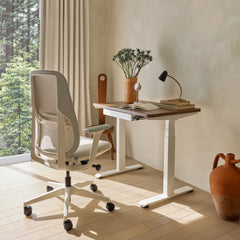
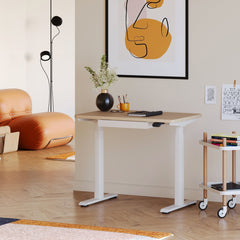
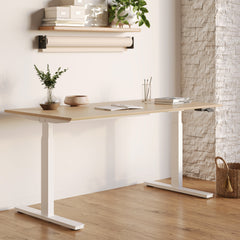
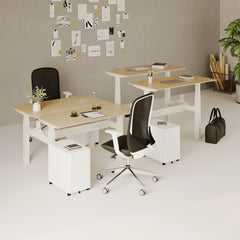
The goal is not to keep the desk empty at all times. A working desk should support work. But papers should only stay on the desk while they are being used, reviewed, signed, scanned, or sorted. Supportive surfaces, such as adjustable office desks, make it easier to separate active work from stored paperwork because the desktop can remain focused on current tasks rather than long-term holding.
A Paper Landing Zone Creates the First Point of Control
Every workspace needs one controlled place where new documents arrive. This could be a shallow tray, a standing file, or a clearly labeled intake folder. The key is restraint. One landing zone creates order. Three landing zones create confusion.
A strong paper landing zone holds only unprocessed items. It is not for documents already filed, papers already scanned, or forms that have been ignored for weeks. Once the landing zone fills, the system is asking for a decision. That visual limit prevents the slow spread of clutter across the workspace.
What Belongs in the Landing Zone
The landing zone should hold documents that have arrived but have not yet been categorized. Examples include incoming mail, meeting handouts, receipts from the day, forms that need review, and notes waiting to be transferred into a project folder. Anything that already has a defined home should skip the landing zone and move directly there.
Filing Cabinet Zones Should Match the Way Work Actually Happens
A filing cabinet becomes easier to maintain when each drawer or section has a job. Random storage leads to random retrieval. Clear zones create faster decisions.
The most reliable filing cabinet structure includes four categories: active, reference, archive, and exit. These categories are broad enough for most workspaces, but specific enough to prevent the cabinet from becoming a catchall.
Active Files Keep Current Work Within Reach
Active files are documents needed now or soon. These might include current client papers, forms awaiting signatures, bills scheduled for payment, meeting notes from the current week, or project documents still in use.
Active files belong in the easiest drawer to reach. If someone has to bend, move a chair, or dig behind unrelated supplies, the paper will probably stay on the desk instead. Convenience matters because filing is a habit, not a one-time event.
Reference Files Support Repeated Use Without Daily Clutter
Reference files are useful but not urgent. Examples include insurance policies, vendor records, lease documents, home maintenance information, office procedures, warranties, and recurring account information.
These files should be labeled clearly and stored behind active files or in a middle drawer. They should be easy to access, but they do not need the prime position reserved for current work.
Archive Files Preserve Long-Term Records Without Crowding Daily Work
Archive files include older tax documents, closed project records, completed contracts, historical business documents, and records that must be retained but are rarely opened. These papers should not compete with active documents.
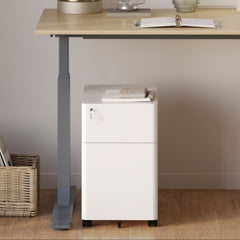
A lower drawer often works well for archives because it keeps less-used materials out of the daily flow. A file storage cabinet is most useful when long-term papers are separated from documents that require regular attention.
Exit Files Prevent Unwanted Paper From Lingering
Exit files are temporary categories for documents leaving the workspace. These include papers to shred, scan, recycle, return, or hand off. This category is important because many piles form from papers people do not intend to keep but have not yet removed.
Exit files should be cleared often. They are not storage. They are a short bridge between decision and removal.
A Five-Decision Intake System Stops Clutter Before It Spreads
The fastest way to prevent paperwork buildup is to reduce the number of choices. Every incoming document should move through one of five decisions: act, file, scan, shred, or recycle.
This simple structure prevents the common habit of moving paper from one temporary pile to another. A document should not travel from mail stack to desk corner to drawer top to cabinet. Each move without a decision increases clutter.
The Five Decisions for Incoming Paper
1. Act on it: Sign it, pay it, review it, respond to it, or complete the task attached to it.
2. File it: Place it in the correct active, reference, or archive folder.
3. Scan it: Create a digital copy when the physical version is not necessary.
4. Shred it: Destroy sensitive documents that no longer need to be kept.
5. Recycle it: Remove paper that has no ongoing value and contains no sensitive information.
This structure works because it is simple enough to use during a busy day. The more complicated the process, the more likely papers will wait on the desk.
Weekly Holding Folders Should Stay Temporary
Some documents cannot be handled immediately. A weekly holding folder gives those papers a controlled home without letting them disappear into a pile. It can hold forms awaiting signatures, bills due soon, current meeting notes, receipts waiting to be entered, and documents that need to be uploaded.
The holding folder should be reviewed at least weekly. If it becomes too full, it has stopped being a temporary tool and has become an unorganized filing system.
Keep Paperwork and Digital Tools From Competing for Space
Modern workspaces often ask one surface to hold a laptop, monitor, notebook, phone, charger, coffee, documents, and office supplies. When the surface becomes crowded, papers get pushed to the edges and forgotten.
Lifting digital tools off the main work surface can create a clearer sorting area. A slim laptop stand can help separate screen work from paper review, making the desk feel less crowded while leaving room to sort documents intentionally.
Labels Should Make Retrieval Obvious, Not Decorative
Labels are the language of the filing cabinet. If they are vague, the whole system becomes harder to trust. A folder labeled “Important” may feel useful in the moment, but it gives no clue about what belongs inside or when to remove it.
Strong labels describe the document category in plain language. They should match the way someone would naturally search for the paper later.
Replace Vague Labels With Search-Friendly Categories
The best labels are specific without becoming overly narrow. For example:
| Weak Label | Stronger Label | Why It Works Better |
|---|---|---|
| Important | Insurance Policies | Names the document type clearly |
| Money | Business Receipts 2026 | Adds category and year |
| House | Home Maintenance Records | Identifies the purpose |
| Clients | Active Client Agreements | Clarifies status and content |
| Taxes | Tax Documents 2026 | Keeps yearly records separate |
| Miscellaneous | Office Equipment Records | Removes uncertainty |
“Miscellaneous” deserves special caution. It often becomes a folder for delayed decisions. If a document does not fit anywhere, the system may need a better category, not a catchall.
Use Broad Categories Before Creating Subfolders
Too many folders can slow filing down. If every paper requires a detailed judgment, people avoid the task. A workspace with light paper volume may only need broad categories such as finance, clients, household, legal, warranties, and active tasks.
Subfolders become useful when a broad category grows too large. For instance, “Finance” may eventually need “Receipts,” “Invoices,” “Tax Documents,” and “Bank Records.” But those subfolders should be created because the volume requires them, not because a perfect system looks impressive.
Color Coding Should Reduce Decisions
Color coding can help, but only when it stays simple. A useful approach is to assign colors to broad categories:
-
Green for finance
-
Blue for projects or clients
-
Yellow for household records
-
Red for legal or urgent documents
-
Gray or neutral folders for archives
Color should act as a quick visual cue, not a second labeling system that must be memorized.
Filing Cabinet Organization Should Adapt to Different Workstyles
A filing cabinet used by a remote professional will not look the same as one used by a family household or a creative studio. The best filing cabinet organization tips are flexible enough to match the way people actually work.
The Low-Paper Professional System
Many professionals handle most documents digitally but still need a place for originals. In that case, the filing system should stay lean. A low-paper cabinet might include folders for tax documents, contracts, identification records, business registration, insurance, and a short-term action folder.
The main habit is frequent removal. Receipts get scanned. Temporary printouts get recycled. Completed forms are stored only when the original matters. This system protects the cabinet from filling with documents that already exist digitally.
The Project-Based System for Creative and Service Teams
Project-based work needs a different structure. Designers, consultants, contractors, and service teams often handle client agreements, estimates, printed notes, vendor documents, receipts, and project references.
A project-based cabinet can be organized by active projects, closed projects, client agreements, vendor information, purchasing records, and design or planning references. The active section should be reviewed often so completed projects move out of prime space.
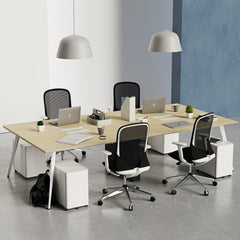
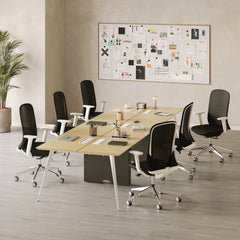
For teams shaping a more polished workspace, storage works best when it is considered alongside desks, seating, lighting, and movement. Thoughtful modern office furniture planning can help reduce the need for visible paper piles by giving each task area a clear purpose.
The Household Command-Center System
Home offices often carry more than work documents. They collect school forms, medical records, insurance papers, pet records, vehicle documents, tax files, home maintenance receipts, warranties, and personal identification documents.
A household filing system should be simple enough for more than one person to use. Shared labels matter. A folder called “Kids” may not help much. “School Forms,” “Medical Records,” and “Activity Receipts” are easier to understand. The more intuitive the labels, the less likely paperwork depends on one person’s memory.
What to Keep, Scan, Remove, or Review Regularly
Filing cabinet clutter often comes from uncertainty. People keep papers because they are unsure whether discarding them is safe. A practical retention framework helps reduce hesitation without making unrealistic promises.
Some documents may need to be kept for legal, financial, tax, business, or personal reasons. Requirements vary by situation, so important records should be handled carefully. The goal is not to discard aggressively. The goal is to stop keeping duplicates, expired papers, and low-value documents that crowd out what matters.
Practical Document Sorting Framework
| Document Type | Best Storage Choice | Review Rhythm | Filing Tip |
|---|---|---|---|
| Current project notes | Active drawer | Weekly | Keep current versions near the front |
| Tax-related documents | Archive drawer and digital backup | Annually | Label by year and category |
| Receipts | Scan or short-term folder | Monthly | Separate personal and business receipts |
| Product manuals | Digital folder when practical | Twice yearly | Keep paper only when useful |
| Legal records | Secure labeled section | Annually | Use clear dates and protective folders |
| Expired drafts | Recycle or shred as appropriate | Immediately | Avoid duplicate versions |
| Warranties | Reference drawer | Twice yearly | Remove expired coverage documents |
| Medical records | Clearly labeled personal section | Annually | Keep sensitive documents protected |
| Vendor documents | Reference or project drawer | Quarterly | Separate active vendors from past vendors |
This kind of framework turns filing into a decision process. It also keeps the cabinet from becoming a place where paper goes simply because no one wants to decide.
Digital Backups Should Mirror the Physical Cabinet
Digital storage should make the filing cabinet lighter, not more confusing. When paper files and digital folders use completely different categories, retrieval becomes harder.
A practical digital file name might include the year, category, and document type. For example: “2026 Tax Receipt Office Supplies” or “2026 Home Warranty Dishwasher.” Consistent naming helps users find documents without opening multiple files.
Physical and digital systems should share the same logic. If the cabinet has a folder for “Home Maintenance Records,” the digital system should use similar wording. That consistency reduces mental effort.
Use the Duplicate Test Before Keeping Paper
Before filing a document, ask three questions:
1. Is the original required for legal, financial, warranty, or personal reasons?
2. Is there a reliable digital copy that would be easy to find?
3. Will this paper still matter in the near future?
If the answer is no, the document may not deserve physical space. Sensitive papers should be shredded rather than tossed.
Workspace Layout Makes Filing Easier or Harder to Repeat
A filing cabinet does not work alone. Its success depends on where it sits, how easy it is to open, whether labels are visible, and whether the surrounding workspace supports small administrative tasks.
If the cabinet is blocked by boxes, hidden in a closet, or placed too far from the desk, papers will stay on the surface longer. If the room feels dim or uncomfortable, people will delay sorting. Small friction points create big clutter patterns.
Cabinet Placement Should Reduce Movement
The best cabinet location is close enough to use during normal work but not so prominent that it overwhelms the room. A cabinet beside or near the desk often works well for active files. Archive storage can be farther away because it is accessed less often.
Drawer clearance matters. If opening a drawer requires moving a chair, bag, trash bin, or stack of supplies, filing becomes annoying. That annoyance is enough to bring back paper piles.
Task Lighting Helps With Sorting and Label Reading
Paper organization involves reading details, checking dates, reviewing labels, and making decisions. Poor lighting makes these tasks feel heavier than they are. A clear light source near the sorting area can make filing more comfortable, especially during early mornings, late afternoons, or evening resets.
A multi-use LED lamp can support paperwork review because lighting becomes part of the workflow rather than an afterthought. When labels are easier to read and documents are easier to inspect, filing feels less like a chore.
Softer Lighting Can Support an End-of-Day Reset
Not every workspace reset needs bright overhead light. Some people maintain organization more consistently when the end of the day has a calmer rhythm: clear the desk, review the holding folder, file what belongs in the cabinet, and remove what should leave the workspace.
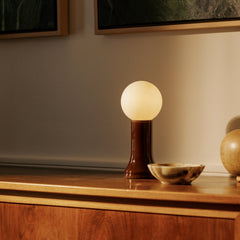
A recycled glass table lamp can fit into a quieter reset area where paperwork is reviewed without making the workspace feel harsh or clinical. The purpose is simple: make the closing routine feel approachable enough to repeat.
Seating Affects Small Administrative Habits
Filing does not take much physical effort, but uncomfortable seating can still make people avoid it. If the chair makes short administrative tasks feel irritating, papers are more likely to remain on the desk.
Supportive ergonomic office chairs belong in the broader filing conversation because organization depends on repeated behavior. When the workspace is comfortable, quick filing tasks feel easier to complete before clutter spreads.
Maintenance Habits Keep the Cabinet From Filling Up Again
A filing cabinet can look perfect after a major reset and still become cluttered again within weeks. The difference between temporary organization and lasting order is maintenance.
The most reliable routines are short, specific, and tied to natural work rhythms. A weekly reset handles active clutter. A monthly audit prevents slow buildup. A seasonal refresh keeps larger categories current.
The 10-Minute Weekly Filing Reset
A weekly reset should be simple enough to complete without turning into a full organizing project.
1. Clear loose paper from the desk.
2. Sort each document into act, file, scan, shred, or recycle.
3. Empty the weekly holding folder.
4. Return pulled files to their correct drawers.
5. Remove duplicates and outdated printouts.
6. Check whether active folders still reflect current work.
7. Leave the landing zone empty or nearly empty.
The point is not perfection. The point is preventing paper from settling permanently in the wrong place.
The Monthly Drawer Audit
A monthly audit looks deeper than the weekly reset. Open each drawer and check whether the categories still match current needs. Completed projects should move out of the active zone. Expired warranties should leave the cabinet. Old drafts should be removed. Receipts should be scanned or grouped properly.
This habit prevents the common problem of active drawers becoming archives by accident.
Seasonal Filing Adjustments
Filing needs change throughout the year. Tax-related documents may become more active during financial preparation. Business records may need a year-end refresh. Household warranties, insurance records, and maintenance documents may need periodic cleanup.
Seasonal adjustments keep the cabinet aligned with life and work instead of freezing it in the moment it was first organized.
Common Filing Cabinet Mistakes That Bring Clutter Back
Even a well-planned filing cabinet can fail if the habits around it are unclear. Most mistakes come from over-saving, overcomplicating, or allowing unrelated items to take over file space.
Keeping Every Paper “Just in Case”
Fear-based saving is one of the fastest ways to overload a cabinet. Some documents absolutely deserve careful storage, but not every paper has long-term value. Duplicate printouts, expired notices, outdated drafts, old envelopes, and unnecessary packaging can crowd out important records.
A safer approach is value-based saving. Keep documents with legal, financial, operational, warranty, medical, or personal significance. Remove papers that no longer serve a clear purpose.
Creating Too Many Folder Categories
A cabinet with too many folders can become harder to use than a cabinet with too few. When categories are too narrow, every document requires extra thought. That friction slows filing and encourages temporary piles.
A better system starts broad and becomes detailed only where needed. “Business Receipts 2026” may be enough for a small paper volume. Separate folders for meals, supplies, travel, and equipment may only be useful when the volume justifies them.
Turning the Cabinet Into a General Storage Drawer
Filing cabinets often become homes for chargers, notebooks, office supplies, packaging, cords, old badges, spare keys, and random objects. Once unrelated items enter the cabinet, files become harder to reach and the cabinet loses its purpose.
Office supplies can live elsewhere. The filing cabinet should primarily hold documents and document-related tools such as folders, labels, and a small amount of filing supplies.
Ignoring the Archive Drawer
Archive drawers tend to collect papers because they are opened less often. That makes them easy to ignore. Over time, they can become dense with outdated documents.
An archive drawer still needs review. It may not need weekly attention, but it should not become permanent storage for everything that feels hard to decide.
A Filing Cabinet System That Keeps Workspaces Clear Through Everyday Use
The strongest filing cabinet system is not the most elaborate one. It is the one people can maintain during a busy week. Clear zones, plain-language labels, easy cabinet access, practical lighting, comfortable seating, and a consistent paper intake process all work together to keep clutter from returning.
A filing cabinet should not be a place where paper disappears. It should be a working part of the workspace, supporting decisions and protecting focus. When active files are easy to reach, reference files are easy to understand, archives stay separate, and exit papers leave quickly, the workspace stays clearer for longer.
Clutter-free filing is ultimately about reducing friction. The less effort it takes to decide, sort, retrieve, and remove documents, the more naturally the system holds. A cabinet organized around real behavior gives every paper a purpose, every drawer a role, and every workspace a better chance of staying calm, functional, and ready for focused work.
Related Articles
-
 How Filing Cabinet Storage Supports Office Desk Must Haves
-
 Filing Cabinet Ideas for Better Office Furniture Accessories
-
 Best File Cabinet for Home Office Storage That Feels Easy
-
 Better Multiple Monitor Desk Setup Starts With One Stand
-
 Make Laptop and 2 Monitor Setup Work With Better Stands
-
 Why Dual Monitor Comfort Needs a Monitor and Laptop Stand


