























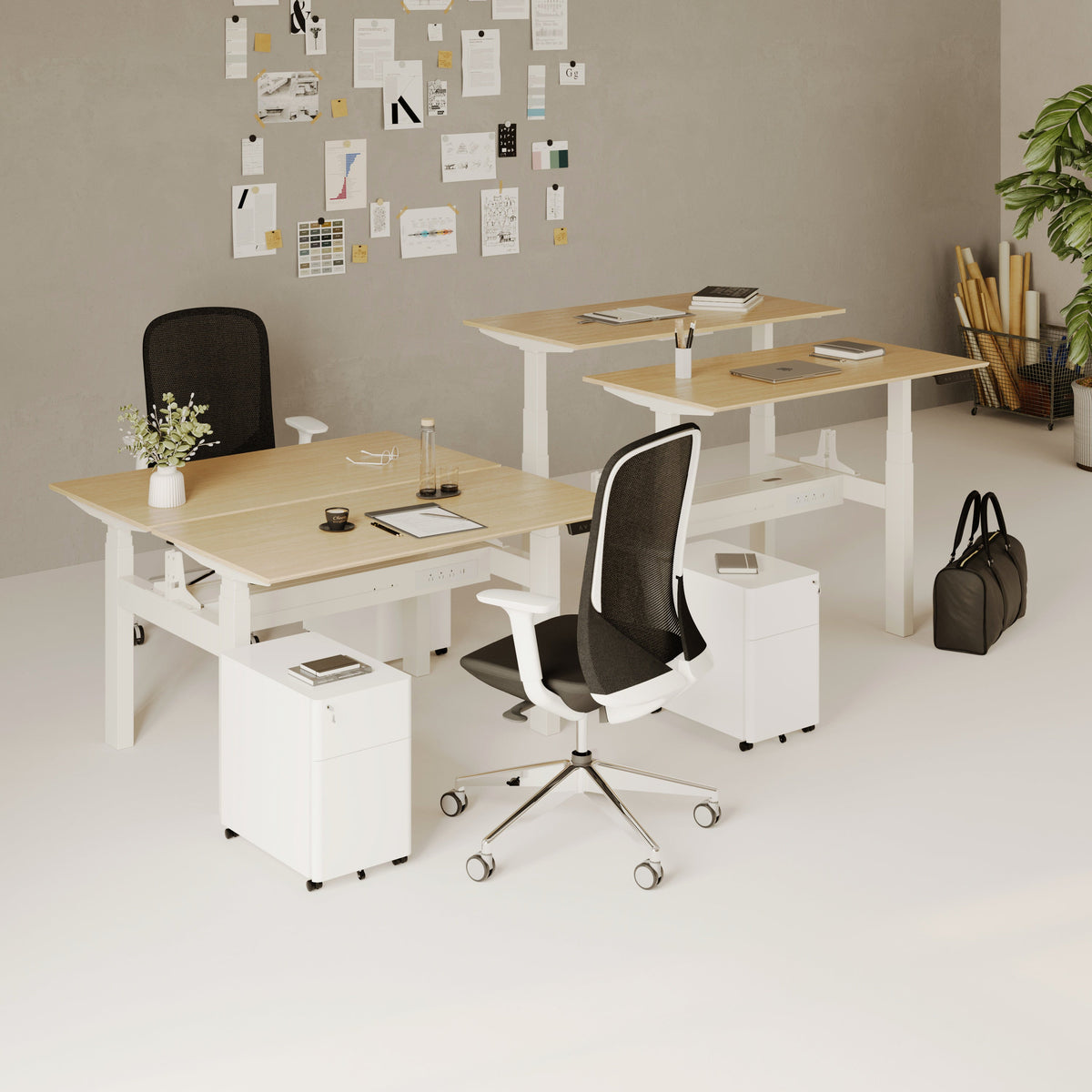
Filing Cabinet Ideas for Better Office Furniture Accessories

A filing cabinet can influence far more than document storage. Its size, location, drawer layout, mobility, and relationship to surrounding furniture all affect how comfortably and efficiently an office functions.
When storage is treated as an afterthought, files collect on desktops, supplies migrate between work areas, cables become harder to manage, and furniture begins competing for limited floor space. A better approach is to plan filing storage as part of the complete workstation.
The most useful filing cabinet ideas begin with real daily behavior. Consider what needs to be stored, how often each item is retrieved, who requires access, and how the cabinet will interact with the desk, chair, power accessories, and nearby collaboration spaces. A lockable mobile filing cabinet can provide compact drawer storage while supporting workspaces that may need to be rearranged over time.
Filing Cabinets as Functional Office Furniture Accessories
A filing cabinet should not be viewed as an isolated container placed wherever space happens to remain. It is an office furniture accessory that supports the desk, protects usable work surfaces, and keeps recurring materials within an appropriate reach.
The strongest storage layouts solve several problems at once. They reduce visible clutter, create predictable locations for documents and supplies, preserve movement around the workstation, and support a consistent visual language across the office.
Why Physical Storage Still Matters in a Digital Workplace
Digital systems have reduced certain types of paperwork, but they have not eliminated physical storage needs. Many offices still manage signed documents, notebooks, receipts, printed reference material, presentation supplies, product samples, access cards, personal belongings, and technology accessories.
The contents of a filing cabinet do not need to be limited to hanging folders. A well-organized cabinet may hold:
-
Active project documents
-
Confidential records
-
Frequently used stationery
-
Spare cables and adapters
-
Small computer accessories
-
Personal items that should remain off the desktop
Each category should have a defined location. Mixing unrelated objects in the same drawer makes retrieval slower and increases the likelihood that important records will be damaged or misplaced.
Storage Frequency Should Determine Drawer Placement
Items used every day belong in the easiest drawer to reach. Reference materials that are opened occasionally can sit lower or farther from the primary work position. Archived records should be removed from the immediate workstation whenever possible.
This creates three practical storage zones:
-
Active storage: Documents and accessories used daily or weekly
-
Reference storage: Material consulted occasionally
-
Archive storage: Records retained for future access but rarely opened
Separating these zones prevents active drawers from becoming crowded with material that does not support current work.
Closed Storage Protects the Usable Desk Surface
A desk performs best when its surface supports active tasks rather than permanent storage. Papers stacked beside a monitor, loose chargers, stationery containers, and personal belongings can gradually reduce the area available for focused work.
Closed drawers keep those items accessible without allowing them to dominate the workstation. This is especially important in reception areas, private offices, and other spaces where clients or visitors may see the furniture throughout the day.
Filing Cabinet Configurations for Different Office Layouts
The right cabinet format depends on the room, the desk, and the volume of stored material. A compact workstation may benefit from a mobile pedestal, while a shared administrative area may require wider or taller storage.
Choosing the largest available cabinet is not automatically the best decision. Capacity only adds value when employees can open drawers comfortably, scan labels clearly, and return material consistently.
Mobile Pedestals for Flexible Workstations
A mobile pedestal is a compact cabinet that can usually be positioned beside or beneath a desk. Casters make it easier to adjust the layout when employees change workstations or when a room needs to support different activities.
Mobility is especially useful in hybrid offices, shared work areas, and small rooms where furniture may serve more than one purpose. The cabinet should still remain stable during normal use. Lockable casters, balanced drawer loading, and a level floor can help prevent unintended movement.
Under-Desk Placement
Placing a cabinet under a desk can conserve floor space, but it should not reduce the user’s natural sitting area. The cabinet must leave enough room for the knees, feet, chair base, and normal posture.
A narrow cabinet may fit physically beneath a work surface while still forcing the user to sit off-center. That arrangement can make the workstation feel cramped and may cause repeated twisting when reaching for files.
Desk-Side Placement
A cabinet beside the desk often provides better legroom and easier drawer access. It can also create a small secondary surface for a printer, document tray, or temporary project materials.
That top surface should have a defined purpose. Without limits, it can quickly become another place for unmanaged paper piles.
Vertical Cabinets for Narrow Rooms
Vertical filing cabinets use height rather than width to expand storage capacity. They can work well along walls or in offices with limited floor area.
Accessibility should guide drawer assignments. Frequently used files should not be placed so low that employees repeatedly bend or so high that labels are difficult to view. Heavier material generally belongs in lower drawers to support stability.
Lateral Cabinets for Shared Records
Lateral cabinets provide wider drawers and can support departmental files, project collections, or records accessed by several employees. Their broad format is usually better suited to a wall or shared filing zone than to a compact individual desk.
The full drawer projection must be considered during planning. A cabinet that appears to fit against a wall may still interfere with an aisle when its drawers are open.
Comparing Filing Cabinet Placement Options
| Cabinet setup | Suitable office use | Main advantage | Key planning concern |
|---|---|---|---|
| Mobile pedestal | Individual or hybrid workstation | Easy to reposition | Legroom and caster stability |
| Desk-side cabinet | Dedicated desk or private office | Convenient daily access | Full drawer clearance |
| Vertical cabinet | Narrow room or wall storage | Higher capacity in less floor width | Reach and stability |
| Lateral cabinet | Shared administrative records | Broad file visibility | Aisle space |
| Central filing station | Team-based workplace | Reduces duplicated storage | Access and labeling rules |
Matching Filing Cabinets With Office Desks
A filing cabinet and desk do not need to match exactly, but they must work together physically and visually. Measurements should be confirmed before furniture is placed, particularly when the desk includes a moving frame, cable tray, control box, or structural crossbar.
Reviewing different office desk configurations can help clarify how storage requirements change between compact desks, standard work surfaces, standing desks, and multi-person workstations.
Measurements That Prevent a Crowded Workstation
The phrase “under-desk cabinet” does not guarantee compatibility with every desk. The open space beneath the actual work surface is more important than the product category.
Before choosing a cabinet, measure:
-
Floor-to-desktop clearance
-
Open width between legs or supports
-
Available depth beneath the desk
-
Cabinet depth with drawers fully extended
-
Chair base and movement area
-
Distance from power outlets and cable routes
Measurements should be taken where the cabinet will actually sit. Decorative edges, support bars, and lifting components can reduce the usable opening.
Filing Storage Around a Standing Desk
A standing desk changes height, so the cabinet must remain clear of every moving part. Placement should be tested with the desk at its lowest and highest positions.
A freestanding cabinet should not support the desktop or restrict the lifting frame. Cables must also remain clear of handles, wheels, and drawer paths. A setup that works at seated height may create interference when the desk rises.
Desk-side placement is often more adaptable because the cabinet remains independent from the lifting mechanism.
Coordinating Finishes Without Creating a Furniture Set
Visual cohesion does not require every piece to use the same material. A filing cabinet can coordinate with a desk through repeated colors, hardware finishes, or proportions.
Reliable combinations include:
-
A dark cabinet paired with a dark desk frame
-
A neutral cabinet that repeats the room’s accessory color
-
A metal cabinet contrasted with a wood-toned desktop
-
Matching handle, caster, and chair-base finishes
The goal is intentional repetition. Too many unrelated finishes can make practical accessories appear added at random.
Coordinating Filing Storage With Power and Cable Accessories
Storage, cables, and power equipment often compete for the same area beneath a desk. Planning them separately can lead to blocked outlets, cords under cabinet wheels, or drawers that cannot open without pulling on a cable.
Power routes should be mapped before the filing cabinet receives its final position.
Separate Active Connections From Stored Accessories
Disconnected chargers, presentation remotes, spare adapters, and small peripherals can be stored in a labeled drawer. Active power strips and energized devices should not be buried among paper files or enclosed without considering ventilation and access.
A shallow organizer can prevent cords from tangling. Labels based on device type or workstation assignment make unused accessories easier to identify.
Preserve Accessible Charging at the Work Surface
A built-in desk power module can keep frequently used connections accessible from the desktop, reducing the need to route charging cords across cabinet tops or through drawer paths. The linked accessory provides AC and USB connections within an in-desk format.
The cabinet should remain far enough from the power cord to prevent pinching or abrasion. It should also be possible to move the cabinet when electrical connections require inspection or adjustment.
A Practical Storage and Cable Planning Checklist
-
Identify wall outlets and data connections.
-
Position the desk around safe access to those connections.
-
Route permanent cables away from chair and caster paths.
-
Open every cabinet drawer fully to test clearance.
-
Raise and lower adjustable desks through their complete range.
-
Keep spare accessories in labeled compartments.
-
Confirm that the cabinet can be moved without pulling cables.
Filing Cabinet Ideas for Meeting and Collaboration Areas
Conference rooms and informal meeting spaces need storage, but they should not become overflow archives. The cabinet should support the activities that occur in the room and keep shared surfaces clear.
Useful meeting-area storage may include printed agendas, whiteboard supplies, adapters, remote controls, notebooks, and documents awaiting secure return.
Protecting Movement Around Conference Chairs
A cabinet placed near a meeting table must account for chairs in several positions. There should be room for a person to sit, pull the chair back, stand, and walk behind another participant.
Storage drawers should not open directly into this circulation path. Pairing cabinet placement with the dimensions and movement needs of conference room seating helps create a layout that remains functional when the room is occupied, not only when the chairs are neatly pushed in.
Low storage along a wall may preserve sightlines better than a tall cabinet. It can also keep materials nearby without drawing attention away from the meeting area.
Supporting Small Meetings Without Crowding the Table
A filing cabinet near a compact round meeting table can hold shared documents, presentation accessories, and stationery that would otherwise remain on the tabletop. The round format is intended for smaller meetings and huddle spaces, making careful circulation planning particularly important.
The cabinet should serve the room rather than the nearest individual desk. Clear drawer labels help participants return supplies after use.
Storage for Informal Collaboration Zones
Casual gathering spaces usually require lighter storage than formal conference rooms. A small cabinet can hold workshop supplies, shared notebooks, charging accessories, or materials used during brief discussions.
When placed near a collaborative bistro table, storage should preserve the compact, open character of the area. The purpose is to keep the table available for conversation and short work sessions, not to turn the surrounding space into a document archive.
Filing Systems That Improve Retrieval and Accountability
A good cabinet cannot compensate for an unclear filing system. Employees need predictable folder names, logical categories, and a return process that prevents documents from accumulating outside the drawers.
The structure should reflect how people actually search for information.
Choose Categories Based on Retrieval Behavior
Files may be organized by client, project, department, date, or action status. The best method depends on what users are most likely to remember first.
A project-based office may retrieve documents by project name, while an accounting team may rely more heavily on document type and date. Combining too many systems can make labels inconsistent.
Build Clear Folder Names
Vague labels such as “General,” “Other,” or “Miscellaneous” provide little guidance. A stronger label combines the subject, document category, and status or date.
Useful patterns include:
-
Client name, contract, active
-
Department, invoices, current year
-
Project name, approvals, pending
-
Employee name, onboarding, complete
Consistent terminology also helps new employees understand the filing system without relying on personal memory.
Create a Defined Return Process
Documents often become disorganized after they leave the cabinet. A temporary “to file” tray can help, but it should be processed regularly rather than becoming permanent storage.
Shared records also need clear ownership. Employees should know who maintains the folders, who can remove documents, and where files must be returned.
Locking, Loading, and Access Control for Office Files
Lockable storage can reduce casual access to confidential material, but a key is only one part of a responsible records process.
Personnel information, signed agreements, financial documents, access materials, and sensitive client records may require controlled physical storage. The appropriate handling procedure depends on the organization and the type of information involved.
Manage Keys and Permissions Deliberately
Key access should be limited to people who genuinely need it. Spare keys need a known location, and access should be reviewed when responsibilities change.
A basic access plan should address:
-
Who may open the cabinet
-
Who controls spare keys
-
How files are checked out
-
Where documents are returned
-
How obsolete records are handled
A cabinet lock should not be described as fireproof, waterproof, or suitable for specialized security unless the manufacturer explicitly provides that information.
Load Drawers for Stability and Easy Use
Heavy folders and supplies should generally be placed in lower drawers. Only one loaded drawer should be opened at a time, particularly on a mobile cabinet.
Casters should be secured before drawers are opened. Assembly, placement, and loading instructions provided by the manufacturer should always take priority over general furniture advice.
Space-Saving Filing Cabinet Ideas for Hybrid and Compact Offices
Small offices benefit from furniture that performs a clear function without overwhelming the room. The best storage plan often begins by reducing duplicate supplies and removing inactive records before adding another cabinet.
Use Mobile Storage to Support Changing Work Patterns
Rolling cabinets can move between dedicated desks, shared stations, and temporary project areas. This flexibility can help a room accommodate different users without installing permanent partitions.
Mobility still requires boundaries. Cabinets should not narrow walkways, block doors, or create obstacles near frequently used equipment.
Adapt Storage to Creative and Professional Workspaces
Compact studios, converted rooms, shared offices, and creative environments often combine individual work, meetings, and project activity within the same floor area. Exploring adaptable office furniture solutions can provide context for coordinating desks, seating, storage accessories, and collaborative furniture within varied workspace layouts.
In a hybrid setting, personal storage should remain separate from shared departmental records. A mobile cabinet may follow an assigned employee, while commonly accessed files remain in a central location.
Give the Cabinet Top One Defined Purpose
A low cabinet can support a printer, a single document tray, or a compact supply organizer. It should not become a second desktop covered with unrelated objects.
Keep ventilation openings clear, avoid unstable stacks, and preserve enough open surface to access the cabinet safely.
Filing Cabinet Materials and Features That Affect Daily Use
Material and appearance matter, but they should be considered alongside capacity, maintenance, and frequency of use.
Steel cabinets can coordinate with modern desk frames and provide a visually streamlined form. Wood cabinets may fit offices with warmer, residential-style finishes. Mixed-material designs can bridge metal furniture and wood-toned work surfaces.
Compare Exterior Dimensions With Usable Drawer Space
Exterior measurements do not reveal the full filing capacity. Drawer hardware, internal dividers, and file orientation can reduce usable space.
Confirm whether the cabinet supports the required document size and whether folders run from front to back or side to side. The best orientation is the one employees can scan, remove, and return consistently.
Leave Room for Active Files to Grow
Overfilled drawers make labels harder to read and folders harder to return. Extra capacity should be intentional rather than excessive.
A practical cabinet leaves some expansion space within active categories. Archived material should be reviewed separately instead of compressing every document into the workstation.
Evaluate the Complete Storage Fit
Before selecting a cabinet, consider:
-
Available floor area
-
Desk clearance
-
Drawer projection
-
Document dimensions
-
Storage volume
-
Retrieval frequency
-
Locking requirements
-
Mobility needs
-
Finish coordination
-
Expected growth
No single feature determines whether a cabinet is suitable. The complete relationship between furniture, workflow, and stored material matters more.
Building an Office Storage System That Can Evolve
A filing cabinet works best when placement follows workflow. Frequently used material should remain accessible, sensitive documents should have appropriate controls, and surrounding furniture should preserve comfortable movement.
Visual coordination can be achieved through repeated colors, materials, and hardware without forcing every piece into an identical set. More importantly, each accessory should have a defined purpose.
As documents, teams, and technology needs change, modular storage and flexible layouts make adjustments easier. Thoughtful filing cabinet ideas create more than orderly drawers. They protect usable work surfaces, support faster retrieval, improve furniture coordination, and help the entire office remain practical as its needs develop.
Related Articles
-
 How Filing Cabinet Storage Supports Office Desk Must Haves
-
 Best File Cabinet for Home Office Storage That Feels Easy
-
 Better Multiple Monitor Desk Setup Starts With One Stand
-
 Make Laptop and 2 Monitor Setup Work With Better Stands
-
 Why Dual Monitor Comfort Needs a Monitor and Laptop Stand
-
 How a Monitor and Laptop Stand Fixes Screen Height Issues


