








Filing Cabinet Mistakes That Make Home Offices Feel More Cluttered Than Organized

A filing cabinet should make a home office feel calmer, easier to use, and more intentional. Yet in many homes, it becomes the opposite: a heavy-looking box of half-sorted papers, forgotten folders, unopened mail, cords, notebooks, and “I’ll deal with it later” decisions. The cabinet may technically hold documents, but the room still feels crowded because the system around it is not working.
The real issue is rarely the cabinet alone. Home office clutter grows when storage, desk habits, lighting, seating, and paper routines are treated as separate problems. A filing cabinet can only organize what has already been given a clear place and purpose. Without that structure, drawers become hiding places, the top surface becomes another desk, and the office starts to feel visually busy even when everything is technically “put away.”
A better filing setup starts with a simple idea: every document should have a reason to stay, a place to live, and a rhythm for review. When the cabinet supports daily work instead of storing postponed decisions, it becomes part of a cleaner, more focused workspace.
Why Filing Cabinets Can Make a Home Office Feel More Cluttered
Filing cabinets are often purchased as a reaction to paper clutter. The desk gets crowded, mail piles up, receipts scatter, and the fastest solution seems obvious: buy storage. But storage without a system can make clutter less visible without making it less stressful.
A cabinet can hide mess in the short term, but the home office still feels disorganized when documents are hard to find, drawers are overfilled, or the surrounding furniture blocks the way people actually work. Clutter is not just what sits in plain sight. It is also the friction that appears when every small task takes more effort than it should.
Storage Is Not the Same as Organization
Storage answers one question: where can this go? Organization answers a better one: where will this be easy to find, use, and return?
That difference matters. A drawer full of folders may look organized at first glance, but if the labels are vague or outdated, the cabinet becomes a delay machine. Every search requires opening multiple folders, flipping through papers, and deciding again where things belong. Eventually, documents stop going into the drawer because using the drawer feels inconvenient.
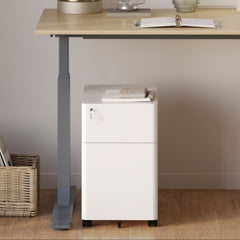
A well-chosen lockable filing cabinet can support a cleaner home office when it is treated as a focused storage tool rather than a container for every loose paper in the room. The cabinet should protect and organize important documents, not absorb every unfinished task.
Visual Clutter Builds Around Poor Filing Habits
Even if paperwork is hidden inside drawers, the cabinet can still add clutter visually. A bulky placement, crowded surface, blocked walkway, or poorly lit corner can make the office feel heavier. The cabinet may be functional, but the room does not feel lighter.
This is especially true in compact home offices, guest room workspaces, bedroom corners, and apartment layouts. When every furniture piece is visible at once, scale and placement matter. A filing cabinet should sit in the room like part of the workflow, not like an afterthought pushed wherever it fits.
Mistake 1: Buying a Cabinet Before Understanding Your Paper Flow
A common mistake is choosing a filing cabinet based only on size. More drawers seem like more organization, but extra capacity can invite extra clutter if the paper system is unclear.
Before assigning drawers, it helps to understand how paperwork moves through the home office. Some documents need daily access. Some need occasional reference. Some should be archived. Others should leave the office completely through scanning, shredding, or recycling.
The Touch-Frequency Test
The easiest way to organize paperwork is to sort it by how often it is touched. Documents used frequently should be easy to reach. Documents rarely needed should not occupy prime drawer space.
A simple paper-flow audit might look like this:
1. Active paperwork: Bills to pay, forms to complete, documents waiting for signatures, current project notes.
2. Reference paperwork: Insurance documents, household records, current school or medical paperwork, business reference materials.
3. Archive paperwork: Tax records, closed contracts, old financial statements, documents kept for recordkeeping.
4. Sentimental paperwork: Cards, children’s artwork, personal letters, keepsakes.
5. Exit paperwork: Expired coupons, outdated manuals, duplicate statements, envelopes, junk mail, unnecessary receipts.
When these categories are mixed together, every filing task becomes slower. Active papers get buried under archives. Sentimental papers take up space meant for current needs. Outdated papers remain because no one has decided what should leave.
Drawer Count Should Match Behavior, Not Anxiety
A larger cabinet may feel reassuring, but it does not solve unclear decision-making. A smaller, better-managed filing system often feels more organized than a large cabinet full of vague folders. The goal is not to store the most paper. The goal is to reduce the amount of paper competing for attention.
A practical cabinet setup gives active documents the easiest access, reference documents the next-best space, and archive documents the least prominent location. That structure supports real habits instead of relying on motivation.
Mistake 2: Placing the Cabinet Outside the Desk Workflow
Cabinet placement shapes filing behavior more than most people realize. If the cabinet is too far from the desk, filing feels like a separate chore. If it is too close or poorly positioned, it blocks movement and makes the office feel cramped.
The best location depends on how often the documents are used. Weekly paperwork should be within easy reach from the chair or just one step away. Long-term records can live farther from the primary work surface.
The Reach-Zone Rule
A filing cabinet belongs inside the natural workflow when it holds active or reference documents. That means the user can open a drawer without moving furniture, twisting awkwardly, or walking across the room for every small task.
A good reach zone supports three actions:
-
Pull a document quickly.
-
Return it without delay.
-
Keep the desk surface clear after the task is finished.
When the cabinet sits outside that zone, papers often pile up on the desk “for now.” Those temporary piles become the visible clutter that makes a home office feel unfinished.
Desk Size and Cabinet Placement Should Work Together
The filing cabinet should not compete with the desk. It should support it. A desk that is too small may force paperwork onto the cabinet top. A desk that is too large for the room may leave no comfortable space for drawer access.
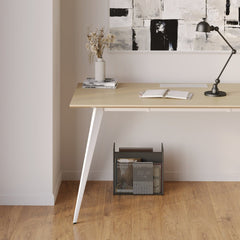
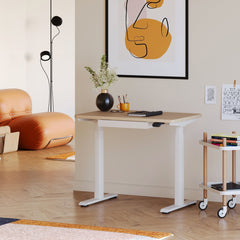
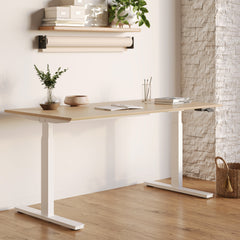
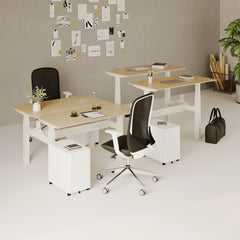
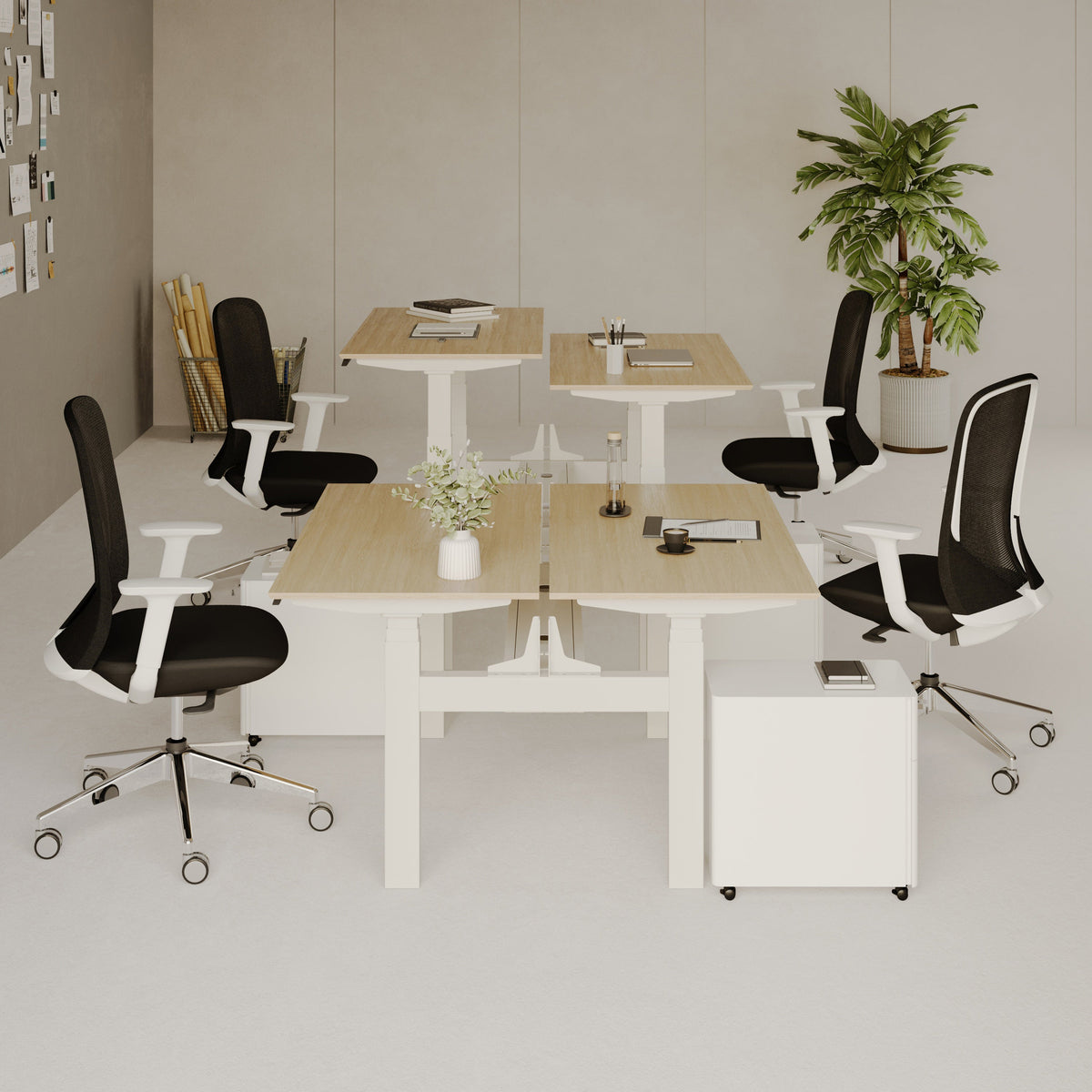
Choosing appropriately scaled adjustable office desks can help create a workstation where writing space, laptop placement, documents, and storage all work together. The cabinet becomes part of the office rhythm instead of a separate storage obstacle.
Mistake 3: Letting the Cabinet Top Become a Second Desk
The top of a filing cabinet is one of the most common clutter zones in a home office. It starts with one envelope, one charger, one receipt, or one notebook. Soon, it becomes a second desk without any clear purpose.
This happens because flat surfaces invite unfinished decisions. The cabinet top feels convenient, especially when the actual desk is full. But once the top surface collects random objects, the cabinet begins to look messy even if the drawers are organized.
What Belongs on the Cabinet Surface
A filing cabinet surface should have a clear role. If it supports daily workflow, that role should be limited and intentional.
| Cabinet Top Item | Better Decision | Why It Helps |
|---|---|---|
| Unopened mail | Sort immediately into action, file, recycle, or shred | Prevents paper stacks from forming |
| Loose receipts | Place in one labeled folder or tray | Keeps financial papers searchable |
| Chargers and cords | Move to a charging zone or cable organizer | Reduces visual noise |
| Decorative objects | Limit to one intentional accent | Keeps the surface calm |
| Active documents | Use a small inbox only if cleared regularly | Avoids permanent piles |
The goal is not to make the cabinet look empty at all times. The goal is to prevent the top from becoming a decision-storage surface.
The Keep, Move, Remove Rule
A simple surface rule can prevent cabinet-top clutter:
-
Keep one useful or visually calming item.
-
Move anything related to another task zone, such as charging, mailing, or reading.
-
Remove anything outdated, duplicate, or no longer needed.
When the top stays clear, the cabinet reads as organized furniture rather than another pile in the room.
Mistake 4: Using Labels That Are Too Vague to Be Useful
A filing cabinet becomes frustrating when labels do not match how people search for documents. Labels like “miscellaneous,” “important,” “house,” or “stuff” may feel useful in the moment, but they create confusion later.
Strong labels reduce decision fatigue. They help documents return to the same place every time. They also prevent duplicate folders from forming because the correct category is obvious.
Strong Labels Are Searchable Labels
A label should answer one of two questions: what is this document about, or what action does it need?
Topic-based labels work well for stable categories, such as taxes, insurance, warranties, medical records, school documents, and home records. Action-based labels work well for documents that are still moving through a process, such as to pay, to sign, to scan, or to review.
| Weak Label | Stronger Label | Why It Works Better |
|---|---|---|
| Important | Tax Records | Names the actual document type |
| House | Mortgage and Home Records | Clarifies the category |
| Miscellaneous | Receipts to Review | Adds an action |
| Work Stuff | Client Contracts | Makes retrieval faster |
| Personal | Medical Records | Reduces guesswork |
Avoid the “Miscellaneous” Folder Trap
A miscellaneous folder usually becomes a place for decisions that were never made. Over time, it collects unrelated documents that are difficult to retrieve. If something does not fit an existing category, it is better to ask whether a new category is needed or whether the document belongs in the cabinet at all.
Useful labels should feel boring, clear, and repeatable. Clever labels may look nice, but clarity wins when someone needs to find a document quickly.
Mistake 5: Mixing Active, Archived, and Sentimental Papers
One overfilled drawer can make an entire filing cabinet feel chaotic. This usually happens when active documents, long-term records, and sentimental papers are stored together.
These categories behave differently. Active documents need visibility and quick access. Archive documents need safe storage but not daily attention. Sentimental papers need curation, not constant mixing with bills or tax records.
The Three-Zone Drawer Method
A cleaner cabinet setup uses zones:
| Zone | What Goes There | Review Habit |
|---|---|---|
| Active Zone | Current bills, forms, project papers | Weekly |
| Reference Zone | Current policies, household records, medical documents | Monthly or as needed |
| Archive Zone | Older tax records, closed contracts, retained documents | Seasonally or annually |
Sentimental papers should usually live outside the main filing flow unless they are part of an active household task. Keepsakes deserve a separate box, binder, or memory storage system so they do not crowd out working documents.
Archive Space Should Not Take Over Active Space
When old records fill the easiest drawers, current papers end up on the desk. That creates the exact clutter the cabinet was supposed to prevent. Prime cabinet space should belong to the paperwork that affects current decisions.
Mistake 6: Choosing Furniture That Makes the Cabinet Feel Visually Heavy
A filing cabinet can be perfectly organized inside and still make the home office feel crowded if the surrounding furniture is poorly scaled. Visual weight matters, especially in small rooms.
A cabinet placed beside a bulky desk, dark corner, oversized chair, and crowded floor area can make the office feel compressed. The solution is not always removing the cabinet. Often, it is balancing the workspace with cleaner surfaces, better proportions, and fewer competing objects.
Desk Accessories Can Reduce Surface Pressure
When laptops, notebooks, papers, and accessories all sit flat on the desk, the workspace starts to feel layered and crowded. Raising a screen or laptop can create more usable surface area and make the desk look more intentional.
A slim laptop stand can support a tidier desk arrangement by lifting the laptop footprint and helping the work surface feel less crowded. That matters because the less pressure placed on the desk, the less likely papers are to migrate onto the filing cabinet top.
Match Cabinet Height to the Room’s Furniture Lines
A cabinet that sits awkwardly above or below nearby furniture can draw attention in the wrong way. A lower cabinet may feel calmer beside a desk, while a taller cabinet may work better when placed against a wall with enough breathing room.
The key is to avoid making the cabinet the heaviest visual object in the office. Leave space around it, keep the top surface edited, and avoid stacking boxes or extra supplies above it.
Mistake 7: Treating Lighting as Decoration Instead of Organization Support
Poor lighting makes a filing cabinet less useful. Dim drawers, shadowed labels, and dark corners make document retrieval feel harder than it needs to be. When filing feels annoying, papers stay on the desk longer.
Lighting is not only about atmosphere. It supports behavior. A well-lit filing area makes labels easier to read, surfaces easier to maintain, and the whole workspace feel cleaner.
Task Lighting Helps Filing Feel Less Tedious
A cabinet placed near a desk can benefit from lighting that supports both work and storage. The goal is not to flood the room with brightness. The goal is to reduce shadows in the areas where people read, sort, file, and retrieve papers.
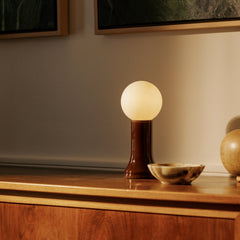
An Alumina LED lamp can fit naturally into a workspace where lighting needs to support practical tasks while keeping the office visually composed. When the filing area is easier to see, the system is easier to maintain.
Layered Lighting Reduces the “Storage Corner” Effect
A filing cabinet shoved into a dark corner often feels like forgotten utility furniture. Layered lighting helps it feel integrated with the room. A desk lamp, nearby table lamp, or soft ambient light can make the storage zone feel intentional rather than neglected.
That sense of care matters. People are more likely to maintain spaces that feel pleasant to use.
Mistake 8: Keeping Outdated Documents Because There Is Drawer Space
Empty drawer space can be useful, but it can also create a storage trap. When people see open space, they often keep documents they no longer need because there is room. Over time, the cabinet fills with papers that create no value.
A filing cabinet should not become a museum of every document that ever entered the home. It should hold what still serves a purpose.
What Should Leave the Cabinet
Papers that are expired, duplicated, irrelevant, or easily accessible elsewhere may not deserve cabinet space. Some documents should be shredded. Some can be scanned. Some can be recycled. Some should be archived away from the active work area.
A safe cleanout routine focuses on categories rather than random piles:
-
Review active folders weekly so unfinished paperwork does not become stale.
-
Check reference folders monthly for expired documents.
-
Remove outdated manuals when the item is no longer owned.
-
Separate sentimental papers from functional filing.
-
Shred sensitive documents that no longer need to be retained.
-
Keep important records in clearly labeled folders with consistent placement.
The exact documents a household keeps will vary, especially for financial, legal, medical, or business needs. When unsure, it is better to confirm retention requirements with a qualified professional rather than rely on guesswork.
Mistake 9: Designing the Office Around Storage Instead of Focused Work
A home office should be designed around work first, then storage. When storage dominates the layout, the room can feel like a supply closet with a laptop in it.
The filing cabinet should support the office’s primary purpose. That may be focused computer work, creative planning, household administration, remote meetings, or a mix of tasks. The storage plan should make those activities easier, not take over the space.
Create Zones That Match Real Tasks
A functional home office usually needs several small zones:
-
A focused work zone for computer tasks and writing.
-
A paper-processing zone for sorting, signing, scanning, and filing.
-
A reference zone for frequently used documents.
-
A charging zone for devices and cords.
-
A storage zone for supplies that do not need daily access.
When these zones overlap without intention, clutter appears. Mail lands beside the laptop. Chargers sit on top of folders. Archive papers mix with current notes. The filing cabinet becomes one part of a larger confusion.
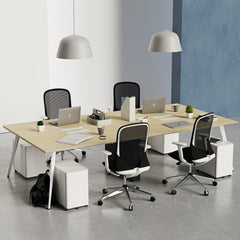
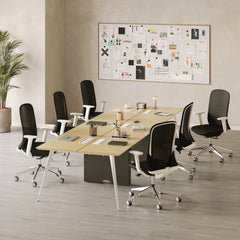
For a more cohesive setup, modern workspace furniture planning can help frame the office as a complete environment where desks, seating, storage, and lighting support the same daily rhythm.
Let the Cabinet Serve the Room
The cabinet should be close enough to support paperwork but not so central that it becomes the room’s focal point. When storage supports the flow of work, the office feels calmer because each zone has a clear job.
Mistake 10: Ignoring the Chair-to-Cabinet Relationship
Seating affects filing habits. If the chair is uncomfortable, hard to move, or poorly positioned, people are less likely to file documents immediately. They are more likely to place papers on the desk and deal with them later.
The relationship between chair, desk, and cabinet should make small movements easy. Opening a drawer should not require pushing the chair into a wall, twisting awkwardly, or standing up every time.
Movement Makes Organization Easier
A filing-friendly office allows smooth transitions between tasks. Sit, work, pull a document, return it, and reset the surface. That sequence should feel natural.
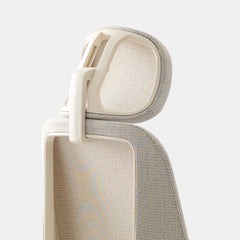
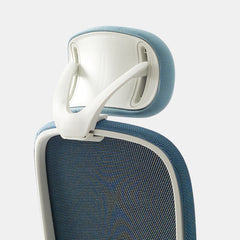
Well-positioned ergonomic office chairs can support the movement and comfort needed for daily office habits, including the small filing routines that prevent clutter from building up. A comfortable chair does not organize paperwork on its own, but it helps remove one source of resistance.
Drawer Clearance Should Be Planned Before Clutter Appears
A cabinet drawer needs room to open fully. If the chair base, desk leg, rug, wall, or storage bin blocks the drawer, the filing system becomes annoying to use. Once access feels inconvenient, papers stop returning to their folders.
Before finalizing a cabinet location, open every drawer and move the chair through its normal range. The office should support the way people actually move, not just the way furniture looks when everything is still.
Mistake 11: Making the Filing Area Feel Too Harsh to Maintain
Organization is easier to maintain when the workspace feels good to use. A filing cabinet does not need to look decorative, but it should feel integrated with the rest of the office. When the area feels cold, dim, or purely utilitarian, people tend to avoid it.
Small design choices can make the filing area feel less like a chore zone. Better lighting, edited surfaces, thoughtful furniture placement, and one or two warm accents can make the home office feel more finished.
Soft Details Can Support Practical Habits
A lamp, plant, tray, or carefully chosen object can create a visual cue that the cabinet area is cared for. The trick is restraint. Too many decorative items create clutter. One useful or calming detail can make the storage zone feel intentional.
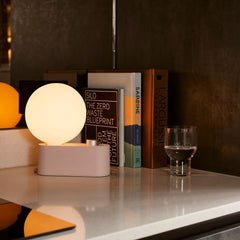
A recycled glass table lamp can bring a softer lighting element into a workspace where the filing cabinet needs to feel connected to the room rather than isolated as pure storage. The goal is not decoration for its own sake. It is a workspace that people want to reset at the end of the day.
A Finished Workspace Encourages Better Resets
When a home office feels unfinished, clutter becomes easier to tolerate. When the room feels composed, small messes stand out sooner and are easier to correct. That is why filing cabinet organization is partly practical and partly environmental.
A pleasant office does not require perfection. It requires enough clarity that every paper, tool, and surface has a purpose.
A Filing Cabinet Works Best as Part of a Calmer Daily Office Rhythm
A filing cabinet makes a home office feel organized only when it supports the way people actually work. The cabinet should not become a storage shortcut for delayed decisions. It should help documents move through clear stages: active, reference, archive, or exit.
The most effective home office filing systems are simple enough to maintain on an ordinary day. Labels are clear. Drawers are not overstuffed. Active documents are easy to reach. Archive papers do not crowd current work. The cabinet top stays edited. Lighting makes filing easier. The desk has enough surface space. The chair supports comfortable movement.
When those pieces work together, the filing cabinet stops feeling like another bulky object in the room. It becomes a quiet support system for better focus, cleaner surfaces, and faster daily resets. A home office feels less cluttered not because every paper disappears, but because every paper has a clear place to go.
Related Articles
-
 How Filing Cabinet Storage Supports Office Desk Must Haves
-
 Filing Cabinet Ideas for Better Office Furniture Accessories
-
 Best File Cabinet for Home Office Storage That Feels Easy
-
 Better Multiple Monitor Desk Setup Starts With One Stand
-
 Make Laptop and 2 Monitor Setup Work With Better Stands
-
 Why Dual Monitor Comfort Needs a Monitor and Laptop Stand


