











Better Guest Seating Ideas Around a Round Meeting Table
Better guest seating around a round meeting table starts with more than adding chairs. The right layout supports comfort, conversation, sight...
Learn more
Visit quiz page to see how we makes it easy to create an inspiring workplace


Lighting changes the way a workspace feels, but more importantly, it changes how easily the eyes, body, and mind can stay engaged with work. A bright room can still feel tiring if the light hits the screen at the wrong angle. A beautiful desk lamp can still be unhelpful if it creates shadows across a notebook or shines directly into the eyes. The real question is not whether a desk lamp or overhead light is brighter. The better question is which type of lighting gives the right visibility for the task in front of you.
For focused work, a desk lamp often has the advantage because it places light exactly where the work happens. It can support reading, writing, sketching, reviewing documents, or working beside a laptop without forcing the entire room to become brighter. Overhead lighting still matters, especially for general visibility, shared workspaces, filing, cleaning, and moving comfortably through the room. The most productive workspace usually uses both: soft overhead light for the room and a well-positioned desk lamp for precision.
Light affects work before most people consciously notice it. When a workspace is too dim, the eyes work harder to distinguish details. When a room is too bright, reflections and glare can compete with the screen. When the light source is poorly placed, shadows fall across the very surface that needs to be visible.
A better lighting setup reduces friction. The screen is easier to read. Paperwork is clearer. The keyboard, notebook, and surrounding desk surface feel more usable. Good lighting does not demand attention. It quietly supports the task.
A desk lamp provides task lighting. It is meant to illuminate a specific area, such as a notebook, keyboard, document, planner, or reading surface. Because it is local, it gives more control over direction and intensity.
Overhead light provides ambient lighting. It helps the whole room feel visible. It supports movement, orientation, and shared use. Ambient light is useful, but it is not always ideal for close-focus work because it is usually fixed in place and less responsive to the exact position of the desk.
The strongest work environments avoid treating one light source as the full solution. They layer light according to function.
A workspace can have plenty of light and still feel visually uncomfortable. The problem is often contrast. A laptop screen in a dark room creates one kind of contrast. A bright ceiling fixture reflecting on a monitor creates another. A desk lamp that lights one half of the page while leaving the other half in shadow can also make work feel harder.
Better visibility comes from balance. The goal is to reduce harsh differences between the screen, desk surface, and surrounding room while keeping the active work area clear.
A desk lamp is usually the stronger choice for tasks that happen directly on the work surface. Reading printed pages, writing notes, reviewing drawings, checking forms, comparing samples, or working through a physical planner all benefit from light that lands where the eyes are focused.
The practical advantage is control. A desk lamp can often be moved, angled, dimmed, or repositioned as the task changes. That control matters more than simply adding more light to the room.
Overhead light spreads across the room. A desk lamp concentrates light over the work zone. That makes it especially useful when the task involves small text, fine lines, handwriting, paper texture, or physical materials.
A lamp can also help separate active work from the rest of the desk. Instead of lighting every object equally, it highlights the surface that matters most. For deep work, that visual boundary can make the workspace feel more intentional and less visually scattered.
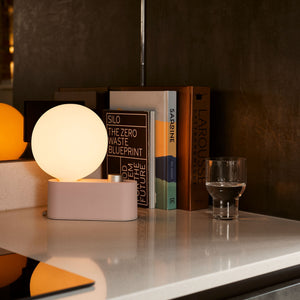
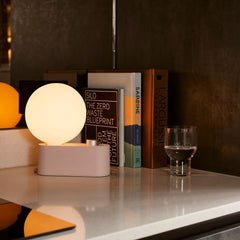
A design like the Alumina Lamp belongs naturally in this conversation because it is presented as a lamp that can function in a desk setting, giving the work surface its own dedicated source of light without depending entirely on the ceiling fixture.
For writing, sketching, and reviewing paperwork, lamp placement matters as much as lamp style. A right-handed person often benefits from placing the lamp on the left side of the desk. A left-handed person often benefits from placing it on the right. This helps keep the hand from casting a shadow across the page.
That rule can change depending on monitor position, window direction, and desk shape, but the principle stays the same: the light should support the active surface without blocking the view or creating a moving shadow.
Small desks, apartment workstations, bedroom offices, and shared living spaces often need lighting that does not dominate the whole room. A desk lamp can make a compact setup feel useful without turning every corner of the room into a workspace.
That matters for people who work in multipurpose environments. A lamp can create a focused work area in a larger room, then fade into the background when the workday ends.
Overhead light is essential for general function. It helps people enter the room safely, find supplies, clean surfaces, organize materials, and see the larger workspace. It also helps prevent the uncomfortable feeling of working in a dark room with only a glowing screen.
But overhead light is not always the best main light for detailed desk work. Because it is fixed above the room, it may not align with the desk, screen, or body. It can create shadows, reflections, and uneven brightness depending on where the workstation sits.
Overhead lighting works well when the whole room needs to be visible. In a shared office, it keeps pathways, storage zones, meeting corners, and surrounding furniture usable. It also helps when several people use the same room for different tasks.
This is where full-room planning becomes important. A workspace is not only a desk and a chair. Storage, power access, task lighting, movement paths, and furniture scale all influence how well the room works. Thoughtful workspace furniture planning support can help connect lighting decisions with the broader layout rather than treating the lamp or ceiling fixture as an isolated choice.
Computer work changes the lighting equation. The screen is already a light source, so additional light must be controlled carefully. A ceiling fixture above or behind the user can reflect on the monitor, especially if the screen is glossy or angled upward.
Glare does not always look dramatic. Sometimes it appears as a faint reflection, a pale wash over dark areas of the screen, or a bright spot that makes the eyes keep adjusting. Over time, that small visual conflict can make work feel less comfortable.
Overhead lighting is less personal than a desk lamp. One ceiling fixture has to serve the entire room. It cannot easily respond to whether someone is reading a printed report, joining a video call, writing notes, or using two monitors.
That is why overhead light works best as a foundation. It should make the room feel usable, not replace the task lighting needed at the desk.
For computer-based work, the winner is not simply the brighter option. The better choice is the one that reduces glare, balances screen brightness, and keeps the desk surface visible without reflecting into the display.
A desk lamp can help computer work when it is positioned correctly. It can light the keyboard, notebook, and surrounding desk surface while leaving the monitor free from direct reflection. Overhead light can help by preventing the room from becoming too dark, but it should be soft enough that it does not compete with the screen.
Working in a dark room with a bright screen can feel intense because the eyes constantly respond to the contrast between the monitor and the surroundings. A low level of ambient light can make the environment feel more balanced.
This does not mean the overhead light should be harsh. Soft room light is usually more comfortable than a bright ceiling fixture directly above the workstation. The goal is to make the screen feel integrated into the room, not isolated from it.
A useful lamp angle sends light across the desk surface rather than straight toward the monitor or face. If the lamp creates a reflection on the screen, it should be repositioned. If the bulb is visible from the seated position, the shade or angle may need adjustment.
For laptop users, this can be especially important because the screen, keyboard, and documents often occupy a compact area. Raising the screen with a lightweight laptop stand can make the viewing position more comfortable while leaving more room to plan lamp placement around the keyboard and notes.
Video calls introduce another lighting challenge. Overhead light alone can cast shadows under the eyes and chin. A desk lamp placed too low or too close can create uneven highlights. A softer light source from the front or side usually looks more natural.
For workers who move between calls, writing, and screen tasks, adjustable lighting becomes valuable. The same lamp position may not work equally well for every activity.
A desk lamp is most useful when the task is close, detailed, and surface-based. It supports work that happens within arm’s reach. It can also create a calmer environment for evening productivity, especially when full overhead brightness feels unnecessary.
Contracts, reports, forms, sketches, handwritten notes, and books are easier to use when light falls directly on the paper. Ceiling light may brighten the room, but it can still leave a document in shadow if the body or monitor blocks the path of light.
A lamp gives the page its own visibility. That makes it easier to shift between screen work and paper work without straining to read small print or handwritten details.
During evening work, the goal is often not maximum brightness. It is usable light with a calmer feel. A desk lamp or nearby table lamp can make the workspace feel less harsh while keeping the active surface functional.
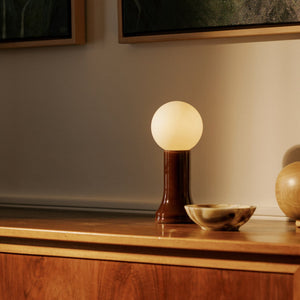
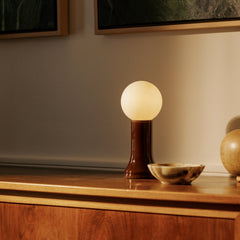
A piece such as a mouth-blown recycled glass table lamp fits this softer lighting role because the product page presents it as a table lamp with a material story that belongs in a considered workspace or surrounding room setting.
Sketching, reviewing material samples, arranging mood boards, comparing colors, or working with textured objects can benefit from directional light. The right shadow can reveal depth and surface detail. The wrong shadow can hide the work.
A desk lamp gives more control over that relationship. It can be moved closer, shifted to the side, or angled across the surface depending on what the work requires.
Overhead light becomes more useful when the task expands beyond the desktop. If the work involves moving around, filing, sorting, cleaning, setting up equipment, or sharing the room with others, a single desk lamp may not provide enough context.
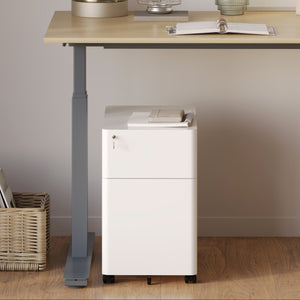
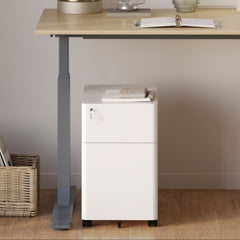
Document-heavy work often moves between the desk, drawers, shelves, and storage pieces. A lamp can help with the active paperwork, but overhead light helps the entire room remain visible. This matters when sorting folders, checking labels, or moving between the desk and a compact filing cabinet during administrative tasks.
In this situation, overhead light supports movement while the desk lamp supports the immediate document surface.
In a shared office or multipurpose room, overhead lighting creates a common level of visibility. It helps everyone understand the room, move safely, and use shared surfaces. Individual lamps can then provide personal control at each workstation.
This layered approach avoids forcing one person’s preferred brightness level onto the entire room.
At the beginning or end of a work session, people often adjust devices, clear the desk, check cables, move papers, or reorganize supplies. These tasks are easier when the whole room is visible. A desk lamp may be too narrow for that kind of visual scanning.
Overhead light is strongest when it supports the practical routines around work, not just the work surface itself.
The desk lamp versus overhead light debate has a practical answer: both matter, but they should not do the same job. Overhead light should support the room. A desk lamp should support the work.
Layered lighting gives the workspace flexibility across changing tasks and daylight conditions. Morning work may need only natural light and a little task lighting. Afternoon screen work may need glare control. Evening paperwork may feel better with a desk lamp and low ambient light.
A productive workspace can be planned through three light layers:
1. Ambient light for general room visibility and movement.
2. Task light for reading, writing, typing, reviewing, or detail work.
3. Accent or surrounding light for visual comfort and atmosphere.
Not every workspace needs a complex lighting plan, but every workspace benefits from knowing which light is responsible for which job.
The best lamp position is not always the position closest to the outlet. If a lamp has to sit in the wrong place because of power access, it may create glare, shadows, or cord clutter.
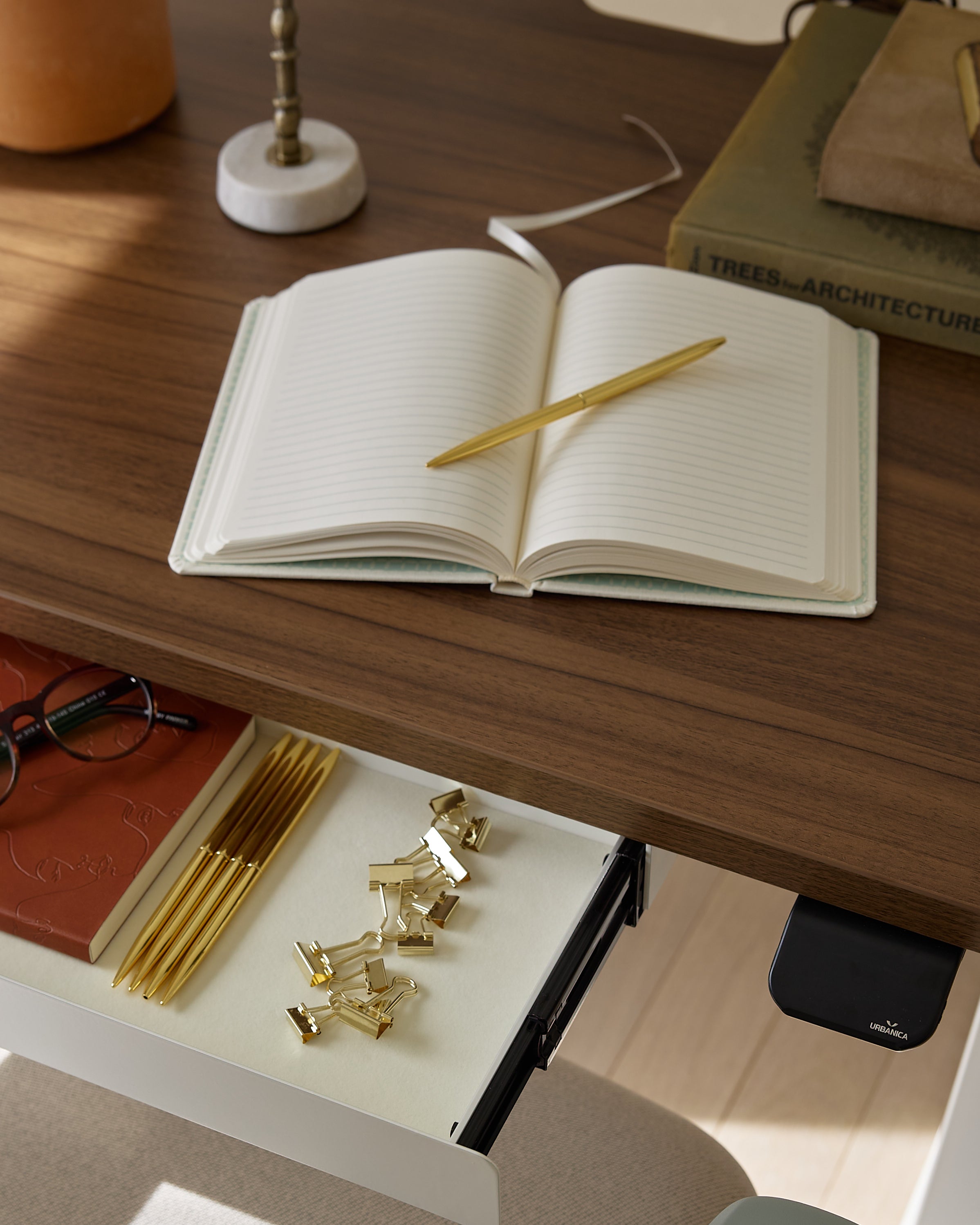
Desk-integrated access, such as an in-desk power module, can help keep power closer to the work surface so lighting and devices can be arranged around comfort rather than outlet location.
Even good lighting can struggle on a cluttered desk. Loose cables, stacked papers, oversized accessories, and crowded devices create shadows and visual distraction. When the surface is organized, light spreads more predictably and the active work zone becomes easier to use.
Lighting and organization work together. A lamp cannot fully solve a desk that has no clear place for the task.
Small lighting adjustments can make a workspace feel noticeably better. The goal is to direct light where it helps and remove it from places where it distracts.
For handwriting and note-taking, place the lamp on the side opposite the dominant hand whenever possible. This reduces the chance of the hand casting a shadow over the page.
For screen-heavy work, the lamp should also be checked from the seated position. If the light reflects in the monitor, move it farther to the side, lower the beam, or change the angle.
A visible bulb can be distracting even when the desk itself is well lit. The shade, arm, and lamp height should prevent direct glare from reaching the eyes. Light should land on the surface, not compete with the screen or face.
This becomes especially important in compact workstations where the lamp sits close to the user.
Some workdays involve typing. Others involve reading, sketching, calling, charging devices, or spreading out paperwork. When the desk layout changes, lighting and power needs can shift too. A solution such as clamp-on desk power access fits naturally into setups where reachable power matters but the desk surface still needs to stay flexible.
The cleaner the power arrangement, the easier it is to place the lamp for comfort instead of compromise.
Choosing between a desk lamp and overhead light is only part of the decision. The bulb, brightness level, shade, surface material, and room finish all influence how the light behaves.
Too little light makes details harder to see. Too much light can create glare and visual fatigue. The best brightness level depends on the task, the time of day, the screen, and the surrounding room.
Dimmable lighting can be helpful because it allows the workspace to adapt. Reading a printed document may need more direct light than answering emails. Evening planning may need less room brightness than daytime project work.
Warm light often feels more relaxed and comfortable for reading or evening work. Neutral light is often practical for everyday desk tasks because it keeps the space clear without feeling too sharp. Cooler light can feel crisp for detail-oriented work, although it may not be ideal for every person or every room.
The safest choice is to match the light to the task and adjust based on comfort. No single color temperature guarantees better work for everyone.
Glossy desks, shiny accessories, glass surfaces, and reflective monitor edges can all bounce light back toward the eyes. Matte surfaces tend to make lighting easier to control because they reduce sharp reflections.
This matters for both desk lamps and overhead lights. A lamp may be perfectly positioned on one desk but create glare on another because of the surface finish.
Different tasks call for different lighting priorities. The table below shows how the better choice changes depending on what the work requires.
| Work Scenario | Better Primary Light | Best Supporting Light | Why It Works |
|---|---|---|---|
| Laptop work | Soft overhead light | Angled desk lamp | Balances screen brightness with desk visibility |
| Printed reading | Desk lamp | Low ambient light | Places light directly on the page |
| Handwriting | Desk lamp | Soft overhead light | Reduces shadows when positioned correctly |
| Filing and organizing | Overhead light | Desk lamp near active papers | Keeps storage areas and the desk visible |
| Video calls | Soft front or side light | Gentle overhead light | Reduces harsh top-down shadows |
| Evening focus work | Desk lamp | Dim room light | Creates a calmer, more controlled work zone |
| Shared office work | Overhead light | Individual desk lamps | Gives the room baseline visibility with personal control |
If the main task is reading, writing, drawing, reviewing, or sorting items on the desk, task lighting usually gives better control. The lamp can follow the work.
If the main task involves moving through the space, finding supplies, rearranging materials, or using storage, overhead light becomes more important. It gives the whole room enough visibility to function.
Computer work is the middle ground. A desk lamp can help with notes and keyboard visibility, but it must stay out of the screen. Overhead light can help the room feel balanced, but it should not create reflections. The best answer is usually soft ambient light plus a controlled task lamp.
The better choice between a desk lamp and overhead light depends on the work being done, but the pattern is clear. A desk lamp usually helps more with focused, detailed, surface-level tasks. Overhead light helps more with room awareness, shared use, filing, setup, and movement.
The most effective workspace does not force one fixture to solve every lighting problem. It uses overhead light to make the room comfortable and a desk lamp to make the task clear. That combination supports a desk that feels visible, calm, and easier to control throughout the day.


You have unlocked free shipping!
You're saving $29 and unlocked free shipping!
Leave a comment