








Chair and Desk Height Guide for Students Who Sit All Day

Students who spend hours at a desk rarely struggle because they lack discipline. More often, the problem begins with furniture that does not fit the body well enough to support long periods of reading, typing, reviewing notes, attending classes, and switching between tasks. A chair that sits too high can leave feet unsupported and create pressure under the thighs. A desk that sits too high can force the shoulders upward and make wrists work harder than they should. A screen placed too low can pull the head forward until the neck, upper back, and eyes feel tired long before the study session is over.
That is why chair height and desk height are not small setup details. They shape how a student sits, how easily the arms move, how the lower back is supported, and how long focus can be sustained without constant fidgeting. The best study setup is not about chasing a rigid idea of perfect posture. It is about creating a position that feels natural enough to repeat day after day.
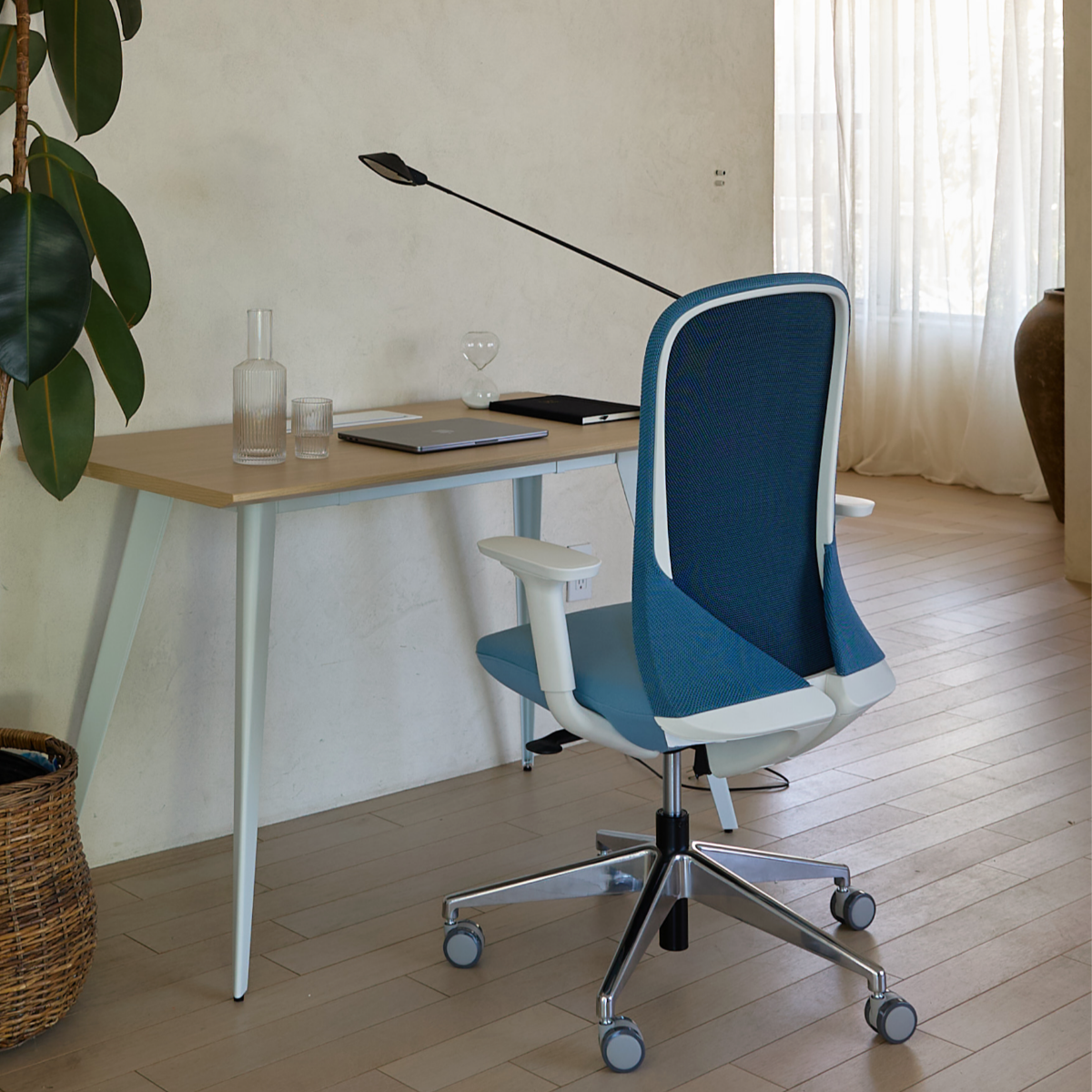
For students who sit all day, the goal is simple. The chair should support the lower body well enough that the feet feel grounded and the hips stay stable. The desk should meet the arms at a height that allows the shoulders to relax. The screen should be high enough to reduce the urge to lean forward. When those parts work together, studying becomes less physically distracting and far easier to maintain.
Why chair and desk height affect more than posture
Students often notice discomfort in the neck, shoulders, or lower back and assume the body is the problem. In many cases, the real issue is a mismatch between the body and the workspace. Height is one of the first things to check because even a small mismatch can multiply over several hours.
Small setup errors become big problems over long study sessions
A chair that feels acceptable for twenty minutes may become frustrating after three hours. Slight shoulder lifting, a mild wrist bend, or a subtle forward lean can seem harmless at first. Over time, those positions become tiring because the body has to keep compensating. This is especially common during exam periods, remote classes, and late-night study blocks when students sit longer and move less.
Fit matters more than furniture labels
A setup is not supportive just because it looks modern or ergonomic. A chair can have useful features and still be adjusted poorly. A desk can appear clean and practical but sit too high for the person using it. Students benefit most when the setup is built around body position first, then adjusted around the task.
Long-term comfort supports concentration
When the body stops negotiating with the furniture, attention shifts back to the work. That does not mean students need a complicated space. It means the chair, desk, and screen should reduce strain instead of creating it.
How to find the right chair height before adjusting anything else
Chair height should be set before desk height is judged. This gives the body a stable base and makes the rest of the setup easier to assess accurately.
Start with feet, knees, and hips
The first check is simple. Sit all the way back in the chair so the backrest can actually support the body. Then adjust the seat height so the feet rest flat on the floor. The knees should feel relaxed, usually around a right angle, and the hips should be level with or slightly higher than the knees. This position usually helps the lower body feel grounded without forcing the student to perch forward.
If the chair is too high, the feet may dangle or only touch the floor lightly. If the chair is too low, the knees may rise higher than the hips and the upper body may collapse toward the desk.
Look for pressure under the thighs
One of the clearest signs of a chair that is too high is pressure along the underside of the thighs near the front edge of the seat. Students often ignore this at first, but it can make the legs restless and reduce comfort over longer sessions. A well-set chair height should allow the thighs to rest without feeling squeezed.
Use the backrest instead of hovering forward
Students frequently sit on the front half of the seat when they are focused. That habit can make any chair feel less supportive. The better approach is to adjust the chair so it encourages full contact with the backrest during typing, reading, and note review. When a chair supports the body properly, it becomes easier to stay back in the seat instead of drifting forward.
Students comparing seating options for longer study hours often start by exploring ergonomic office chairs that allow more useful adjustment for height, back support, and all-day comfort.
How desk height should match the seated student
Once chair height is set, the desk can be evaluated properly. This is where many study setups fail. Students often work at a desk that looks standard but does not actually match their seated elbow height.
The desk should meet the arms, not the other way around
When the hands rest on a keyboard or writing surface, the shoulders should remain relaxed. The elbows should sit close to the body, and the forearms should reach the desk naturally without forcing the shoulders upward. If the desk is too high, the shoulders tend to lift and the wrists may bend backward. If the desk is too low, the student may round the upper back and lean down into the work.
This is why desk fit should be judged in a seated working position, not while standing beside the desk or estimating from room dimensions.
Shorter and taller students face different desk problems
Shorter students often raise the chair to meet a desk that feels too tall. That may solve arm position temporarily, but it can remove foot contact with the floor and create strain lower down. In those cases, a footrest often solves more than another chair adjustment.
Taller students may face the opposite issue. The desk height may be usable for the arms, but knee clearance may feel tight or the work surface may sit too close if the desk is shallow. Good fit depends on the whole seated posture, not just one measurement.
Shared study spaces benefit from flexibility
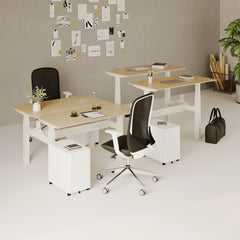
A single fixed desk can feel reasonable for one student and awkward for another. In shared apartments, bedrooms, and family study zones, adaptability matters. Students who need more range between reading, typing, and different seated tasks often do better with ergonomic office desks that allow the work surface to support the body more naturally.
The measurement sequence that prevents common setup mistakes
When students change everything at once, it becomes hard to tell what actually improved the setup. A better approach is to work in order.
Follow this fitting sequence
1. Set chair height first so the feet are supported and the knees feel stable.
2. Check thigh comfort and make sure the front edge of the seat is not pressing upward.
3. Compare elbow height to the desktop while the shoulders stay relaxed.
4. Correct the mismatch with the simplest fix, whether that means adjusting the desk, changing the chair height slightly, or using a footrest.
5. Raise the screen last so it supports the head and neck without disrupting keyboard position.
6. Fine-tune armrests and back angle only after the main body position feels right.
Why this order works
The chair controls the lower body. The desk controls the arms and shoulders. The screen influences the head and neck. When students skip that order and start with the monitor, they often create a new problem while trying to solve the old one.
Laptop setups need a different strategy than desktop setups
Most students use laptops, and laptop use creates a built-in compromise because the keyboard and screen are attached.
A laptop on the desk is usually too low for the eyes
When a laptop sits directly on the desk, the screen often pulls the head downward. Students lean forward to read, especially during long lectures, writing sessions, and research tasks. This can make the neck and upper back work harder than they should.
Raising the laptop can create a second issue
Students sometimes solve the low-screen problem by placing the laptop on books or a stand. That helps eye level, but it also raises the keyboard too high for comfortable typing. Wrists may bend awkwardly, and elbows may no longer align with the desk surface.
Separate screen height from typing height
The most practical fix is to treat viewing height and typing height as separate needs. A laptop stand or riser can help place the screen higher, while an external keyboard and mouse keep the hands in a better position. This approach is especially useful for students who write for long periods or attend online classes daily.
Chair types that suit different study habits
Not every student needs the same kind of chair. The best choice depends on how long the student sits, how often tasks change, and how much adjustability is actually needed.
Seating options for long daily study blocks
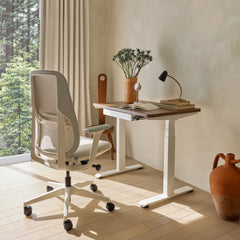
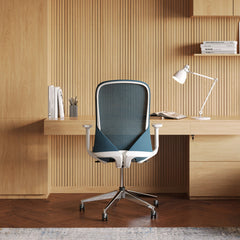
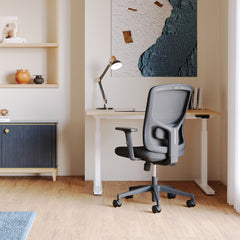
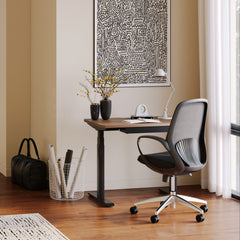
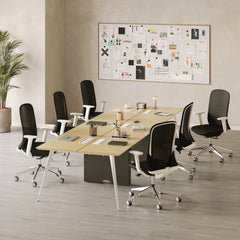
Students who spend much of the day typing, reading, and attending classes often benefit from chairs designed for more consistent support. In those cases, options like the Novo Chair and the Onyx Chair fit naturally into a discussion about sustained seated work, since both belong in a category of seating intended to support longer work or study sessions.
Seating options for lighter or mixed-use spaces
Some students need a chair that works across study time, personal tasks, and shared room use. For those situations, the Muse Chair and the Seashell Chair make more sense to discuss in the context of flexible everyday seating that still belongs in a productive workspace.
Compare support needs by study pattern
| Study pattern | What matters most | Setup priority |
|---|---|---|
| Long writing or research sessions | Stable support, good chair fit, relaxed shoulders | Chair height and back support |
| Online classes with note-taking | Screen position, elbow comfort, easy task switching | Desk height and screen placement |
| Small-room multitasking | Compact footprint, movement space, practical adjustments | Knee clearance and chair mobility |
| Shared study spaces | Flexible fit for different users | Adjustable desk and easy chair settings |
Small student rooms require smarter ergonomic choices
A compact room does not remove the need for good setup decisions. It makes them more important. When a desk is tucked against a wall, squeezed beside a bed, or placed in a narrow corner, poor fit becomes even more noticeable because there is less room to compensate.
Protect knee clearance before anything else
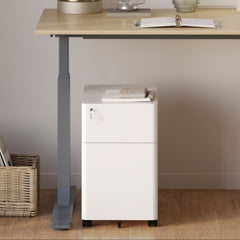
Students often focus on desktop size and forget the space underneath. Knee clearance matters because cramped legroom can force awkward sitting positions. Support bars, drawers, and decorative panels can all interfere with comfort if they reduce usable space under the desk.
Make sure the chair can actually be used properly
A chair needs enough room to slide in, move back slightly, and let the student sit fully against the backrest. If the bed frame, wall, or storage unit traps the chair in place, even a good chair becomes hard to use well.
Improve the current setup before replacing everything
When students cannot overhaul the whole room, the best results usually come from solving the biggest mismatch first. That may mean adding foot support, improving screen height, or replacing a chair that never really fits. Practical changes often matter more than a complete redesign.
For readers exploring broader workspace ideas and product categories related to study-friendly environments, modern office furniture solutions can help frame how different furniture pieces work together without turning the setup into something overcomplicated.
The most common mistakes students make when they sit all day
Many students live with discomfort simply because the setup problem develops gradually. The body adapts until the strain becomes hard to ignore.
Raising the chair and forgetting the feet
This is one of the most common problems. The chair goes up to meet a tall desk, but the feet lose stable contact with the floor. The upper body may feel better briefly, while the lower body becomes less supported.
Letting the desk carry too much body weight
Students often lean heavily into the desk during intense work. That can create tension in the shoulders and forearms while reducing support from the chair itself. The desk should support the task, not replace the chair.
Sitting near the screen instead of adjusting the screen
When the screen is too low or too far away, students tend to move themselves rather than move the setup. Over time, this pulls the head forward and rounds the upper back.
Assuming discomfort is normal for serious studying
Long academic hours can be demanding, but regular discomfort should not be treated as a sign of hard work. A better fit usually reduces strain and helps students stay more consistent.
Building a study setup that supports all-day focus
A useful student workspace is not defined by trend-driven features or dramatic promises. It is built on fit, repeatability, and honest practicality. The chair should support the body without forcing constant adjustment. The desk should allow the arms to work without lifting the shoulders. The screen should sit high enough to reduce forward leaning. The room should give the chair enough space to function properly.
When those basics are handled well, studying feels less like a physical balancing act. Students can move between classes, assignments, review sessions, and focused work with fewer interruptions from discomfort. That makes the setup valuable not because it looks impressive, but because it quietly supports concentration for the kind of long sitting that student life often demands.
Related Articles
-
 How to Arrange Two Monitors and a Laptop Without Clutter
-
 How to measure a chair and choose the right office chair height
-
 The Desk Height Factor Most Workspaces Get Wrong
-
 Desk for two monitors: what matters most for daily comfort
-
 Ergonomic Furniture That Pays Off Every Day
-
 How Ergonomic Furniture Shapes Health and Focus


