



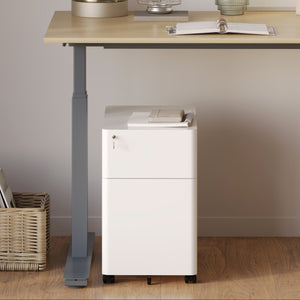






















Filing Cabinet Choices for Cleaner Workstation Planning
Cleaner workstation planning starts with filing storage that matches the desk, document volume, security needs, and daily workflow. Explore how cab...
Learn more
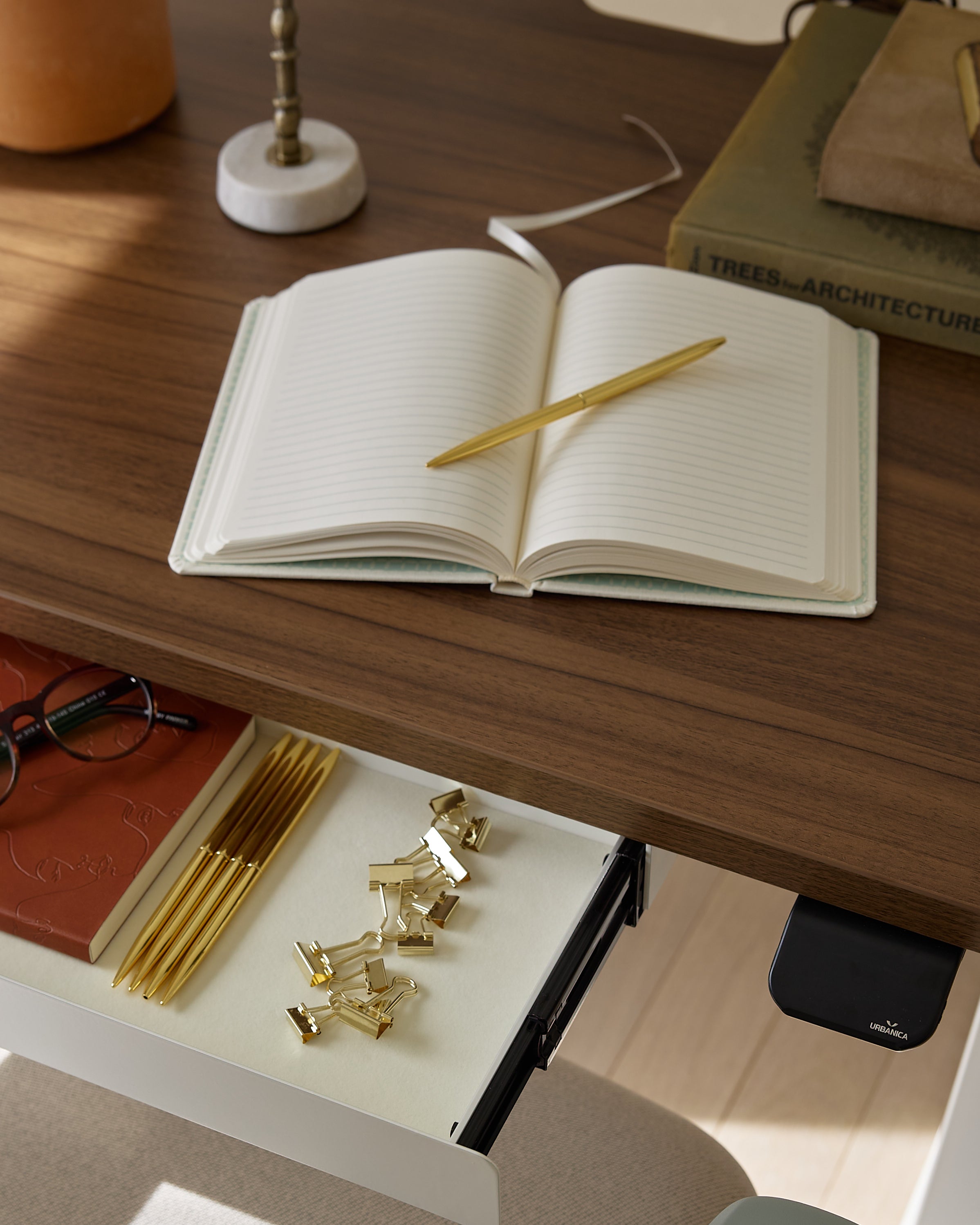
Visit quiz page to see how we makes it easy to create an inspiring workplace


Modern desks support a growing mix of devices that remain connected for extended periods of time. Laptops, monitors, charging cables, task lights, and personal electronics all depend on reliable access to power. When power placement is poorly considered, it introduces friction through tangled cords, awkward reach, and visual clutter. When planned correctly, desk power becomes a quiet enabler, supporting focus and efficiency without interrupting how the workspace feels or functions.
A desk performs best when all of its elements work together. Surface layout, leg clearance, storage, accessories, and cable routing are interconnected. Power should never be treated as an isolated add-on. Choosing from well-designed office desks that account for accessories and infrastructure makes it easier to integrate power in a way that feels intentional rather than improvised.
Built-in desk power refers to electrical modules installed directly through the desktop surface. These modules typically provide standard outlets and USB connections that sit flush or nearly flush with the desk. By passing through the surface, built-in power creates a direct vertical path for cables, keeping the work surface clear and reducing the need for excess cable length above the desk.
Unlike surface-mounted power strips, built-in solutions become part of the desk itself. Once installed, the module remains fixed in place and does not shift during daily use. This integration preserves usable surface area and maintains consistent access to power regardless of how the desk is used throughout the day.
Built-in power works best when selected during the desk planning stage. Desk material, thickness, and internal structure determine whether installation is appropriate. Because the module becomes part of the surface, relocation later is limited. This makes built-in power especially suitable for desks that are expected to remain in a consistent location and configuration.
Dedicated workstations, private offices, and long-term installations benefit most from built-in solutions. In these environments, an in-desk power module supports clean cable routing and a refined surface appearance, reinforcing a sense of permanence and order.
Clamp-on desk power mounts to the edge of the desktop using a pressure-based clamp that secures the unit from below. This approach avoids drilling or permanent modification, allowing the power unit to be installed or removed as needed.
Because clamp-on power remains external, it can be repositioned to suit changing layouts. Outlets are typically oriented along the desk edge, while cables exit from the rear or underside of the unit. This makes clamp-on power easy to adapt, though it introduces more visible cabling than built-in alternatives.
Clamp-on solutions are well suited for shared desks, temporary offices, and environments where layouts change frequently. A clamp-on desk power unit provides accessible power without committing the desk to a fixed configuration.
Built-in power assumes long-term use. Once installed, it becomes part of the desk’s structure. Clamp-on power assumes change, prioritizing reversibility and flexibility. The decision reflects how permanent the workspace is intended to be rather than which option is technically superior.
Built-in power minimizes visual interruption by sitting flush within the desk surface. Clamp-on power accepts visibility as part of its function. In visually restrained environments, integrated power often aligns better. In adaptive or collaborative spaces, exposed hardware may be an acceptable and even intentional choice.
Built-in power encourages vertical cable paths that drop directly below the desk. Clamp-on power creates horizontal runs before cables descend. These differences affect how cables are managed and how much effort is required to keep the workspace visually organized.
With built-in power, cables naturally fall into a vertical grouping beneath the desk. This simplifies organization and keeps cords away from leg space, contributing to both comfort and cleanliness.
To manage cables below the surface, a dedicated under-desk cable management tray provides a structured place to store excess length and power adapters. When paired with built-in power, trays help maintain a controlled and unobtrusive cable layout over time.
Clamp-on power introduces exposed cable paths along the desk edge. Without guidance, cables may sway or shift, especially on height-adjustable desks. The challenge lies in maintaining order while preserving flexibility.
A vertical cable management spine channels cables from the desk edge down to the floor in a single, organized line. This solution reduces visual distraction while allowing the desk to move freely.
Power access that falls outside natural reach zones can encourage repeated leaning or twisting. Over time, these movements create unnecessary strain. Thoughtful placement of both built-in and clamp-on power supports neutral posture and more comfortable daily use.
As desks move between seated and standing heights, power cables must accommodate that motion. Built-in power simplifies this transition by keeping cables aligned vertically. Clamp-on power requires additional attention to slack and routing to avoid tension.
Elevating a laptop improves screen ergonomics but changes how charging cables enter the workspace. An adjustable laptop stand raises the device while allowing cables to route downward in a controlled way when power access is positioned thoughtfully nearby.
Built-in power allows the desk material to remain visually dominant. Finishes, grain patterns, and proportions stay uninterrupted, supporting a cohesive design language that feels intentional and refined.
Clamp-on power makes no attempt to disappear. In creative studios and technical workspaces, visible hardware can communicate adaptability and honesty in design, reinforcing that the desk is meant to evolve.
Desks often remain in use far longer than the devices placed on them. Built-in power aligns with desks intended to serve a consistent role for years, while clamp-on power allows hardware to be updated independently as needs change.
No power solution eliminates the need for planning. Built-in power still benefits from proper cable management, and clamp-on power still requires intentional routing. Realistic expectations lead to better long-term outcomes.
Home offices often balance aesthetics, flexibility, and limited space. Clamp-on power supports rearrangement, while built-in power works well when the desk is a permanent fixture within the room.
In professional settings, consistency and planning are essential. Standardized desk layouts benefit from integrated power that supports predictable cable routing and visual uniformity. Evaluating furniture, power placement, and accessories together through an in-person workspace design experience helps ensure decisions align with real-world use.
Choosing between built-in desk power and clamp-on power reflects how a workspace is expected to function over time. Integrated solutions support permanence and visual order, while clamp-on solutions support adaptability and change. When power decisions are made with clarity and restraint, they quietly reinforce comfort, organization, and confidence throughout the workday.


You have unlocked free shipping!
You're saving $29 and unlocked free shipping!
Leave a comment