










Filing Cabinet Choices for Cleaner Workstation Planning
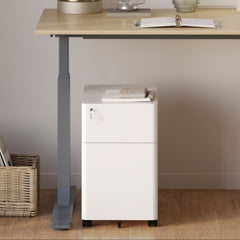
Cleaner workstation planning starts with filing storage that matches the desk, document volume, security needs, and daily workflow. Explore how cab...
Learn more
Visit quiz page to see how we makes it easy to create an inspiring workplace


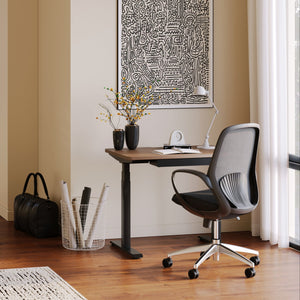
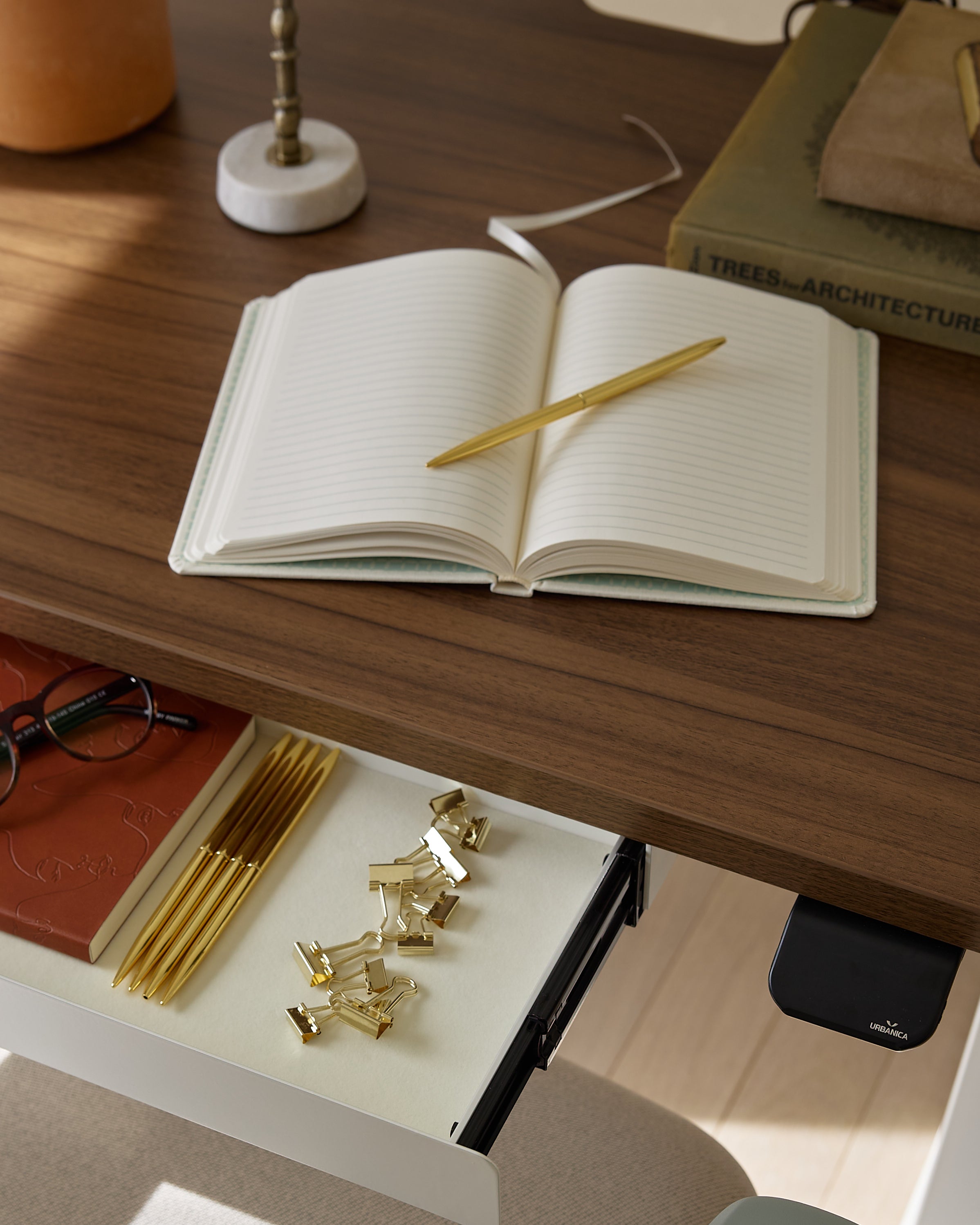
Wood and metal work so well together because they solve different visual problems at the same time. Wood brings warmth, grain, and an organic rhythm that makes a home office feel lived-in. Metal brings clarity, crisp edges, and structure that keeps the setup from drifting into “spare furniture pushed together.”
In our design language at Urbanica, mixed materials are most successful when each material has a clear job. Wood handles the emotional layer: comfort, approachability, and depth. Metal handles the architectural layer: clean lines, lift, and an engineered feel that reads modern even in older homes.
A simple way to spot whether the mix is working is to stand at the doorway of the room. If your eye reads one calm silhouette first, and then discovers grain and details second, you have a cohesive wood-and-metal relationship. If your eye bounces between competing finishes, the mix needs refinement.
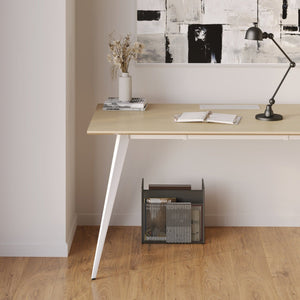
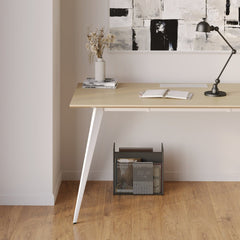
Metal frames often create more negative space under and around a desk. That open air matters in home offices because it reduces visual heaviness and keeps the room feeling flexible. When you combine a wood top with metal legs, the space around the legs becomes part of the design.
When negative space is doing its job, the desk looks lighter, cords are easier to organize, and chairs slide in cleanly. When negative space is ignored, a desk can look boxed-in and mechanical, even if the materials are high quality.
The fastest way a wood-and-metal desk can look accidental is when the materials feel like they belong to different decades. For example, a very rustic, heavily distressed wood tone paired with a shiny, mirror-like metal finish can feel disjointed. The fix is not to avoid contrast, but to match the mood.
Aim for harmony in one of these ways:
Keep the wood grain expressive and choose a quieter, matte metal.
Keep the metal visually strong and choose a wood tone with a cleaner, more uniform look.
Keep both materials understated and let lighting and textiles carry the personality.
Choosing “wood plus metal” is only the first decision. The deeper decision is undertone and sheen. Those two factors control whether the desk feels soft and residential or sharp and commercial.
Wood tones usually lean warm (golden, honey, walnut) or cool (ash, gray-washed, pale oak). Metal finishes can also lean warm or cool. Brushed metals often read warmer than bright chrome. Matte black is visually neutral, but it amplifies contrast, so it can feel cooler in rooms with cool paint and lighting.
A reliable method is to pick a dominant undertone for the room and keep it consistent:
Warm room: warm wood + warm or neutral metal
Cool room: cool wood + cool or neutral metal
Mixed room: one dominant undertone, one subtle counterpoint in accessories
Home offices have monitors, chargers, lamps, and often glossy plastics. Too much shine makes a workspace feel busy. Matte or satin finishes tend to keep the mix grounded and easier on the eyes over long work sessions.
Metal sheen is the first thing you notice when sunlight hits the desk. Wood sheen is the first thing you notice when your hands move across the surface. If your workspace already has reflective elements (glossy monitor bezels, glass frames, bright lamp shades), a matte metal frame and a low-sheen wood surface usually feel more balanced.
Hold a plain white sheet of paper near the wood tone. If the wood suddenly looks yellow or orange, you are in warm territory. If it looks gray or slightly greenish, you are in cool territory. Then choose metal accordingly.
Check the desk finish under both daylight and your evening lighting. Many home offices are used early and late, and wood tones can shift dramatically under warm bulbs.
| Room palette | Wood direction | Metal direction | Why it works |
|---|---|---|---|
| Warm whites and creams | Walnut or warm oak | Matte black or warm brushed metal | Warmth stays present, metal adds structure |
| Cool whites and light grays | Pale oak or ash | White or brushed cool metal | Keeps the room crisp and airy |
| Deep green or navy walls | Medium to dark wood | Matte black | Strong contrast without feeling flashy |
| Greige and natural textiles | Neutral oak tones | Matte black or white | Lets textures do the work, desk stays clean |
Wood-and-metal desks succeed when proportions are considered, not just finishes. Visual weight affects how the desk “sits” in a room, especially in small home offices.
A very thick top with very thin metal legs can look top-heavy. Very thick legs with a very thin top can look industrial in a way that overwhelms a home setting. The goal is a believable relationship: the base should look like it supports the top confidently, but without becoming the main event.
Straight legs and clean right angles tend to read modern and minimal. Sled bases and continuous metal lines can read more architectural. Crossbars add stability and can become a visual feature, so they should be chosen deliberately rather than tolerated.
A desk edge is where your body meets the materials. A sharp edge can look sleek but feel harsh over long sessions. A softened radius or subtle chamfer often keeps the modern look while improving comfort.
In tight home offices, rounded corners reduce bump points and improve walk paths. They also soften a metal-heavy room and help the desk feel more residential.
A beautiful wood-and-metal desk still fails if it does not support how you work. We always recommend choosing function and footprint first, then choosing finishes that make that function feel natural in the room.
Consider what actually lands on the desk each day:
Laptop-only setups need less width, but still benefit from depth for comfortable screen distance.
Dual-monitor setups need more width and often a plan for monitor arms.
Creative work needs elbow room and “parking” space for tools and notebooks.
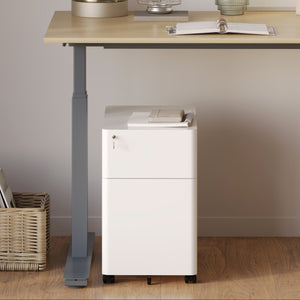
Paperwork-heavy work needs open surface plus a nearby landing zone (tray, shelf, or cabinet).
A wall desk can feel calm and focused. A floating desk can feel executive and flexible but needs cleaner cable planning. Corner setups save space but can look cramped if the desk is visually heavy.
To compare shapes, footprints, and styles without locking into one look too early, start with the Urbanica office desks collection. It helps you see the range of desk formats first, then narrow down which material mix best fits the room.
Measure three things before choosing a desk size:
1. Chair clearance behind you when seated
2. Walkway space past the desk edge
3. Depth needed for keyboard, mouse, and comfortable monitor distance
These measurements prevent the most common regret: choosing a desk that fits the wall but fights the way you move.
A sitting desk is often the easiest starting point for mixing wood and metal because it has fewer mechanical cues than height-adjustable bases. The design can stay calm while the materials carry the personality.
A mixed-material desk should define two anchors for the space:
The wood tone becomes the room’s warm reference point.
The metal finish becomes the room’s line and hardware reference point.
Once those anchors are set, everything else becomes easier. Your lamp, shelf brackets, picture frames, and drawer pulls can quietly echo the metal. Your shelves, trays, and small decor pieces can echo the wood without matching perfectly.
A cleaner silhouette leaves room for texture layering. That is why many home offices look best when the desk is visually simple and the surrounding pieces add depth through fabric, light, and storage.
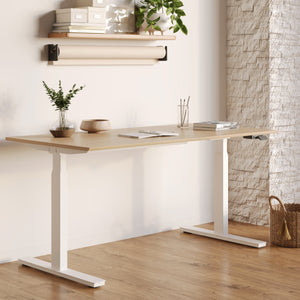
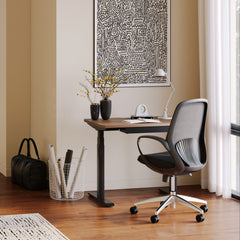
If you want a straightforward foundation that pairs naturally with both wood accents and metal details, the Office Desk is a solid reference point for a modern home office silhouette. Build around the desk with intentional repeats of wood tone and metal finish rather than adding multiple competing materials.
When wood and metal feel slightly too stark together, add a “bridge material” that touches both:
Felt or leather desk mats soften the edge line.
Woven baskets add warmth without introducing a new hard finish.
Upholstered chairs reduce the perceived hardness of metal frames.
A mixed-material desk can look incredible in photos and feel chaotic in daily life if cables are not planned. In our experience, cable management is not a hidden detail. It is part of the design.
Think in zones rather than chasing individual cords:
Desktop zone: only the essentials should be visible
Under-desk zone: power strip and cable slack live here
Wall-to-floor zone: a single, neat route to the outlet
This approach keeps the metal base from looking “technical” and keeps the wood surface from feeling crowded.
1. Decide where power will live under the desk (not on it).
2. Group cords by function (computer, monitor, charging).
3. Create one main drop line to the outlet.
4. Keep slack in the under-desk zone, not on the floor.
5. Protect the wood surface where chargers and mugs naturally land.
Wood surfaces age with use. That is normal and often beautiful. The goal is to prevent avoidable damage, especially from heat, moisture, and repetitive friction in one spot. A mat under your keyboard and mouse, coasters for drinks, and mindful placement of warm chargers go a long way without changing the style.
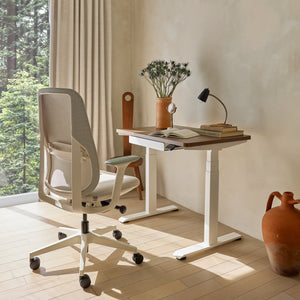
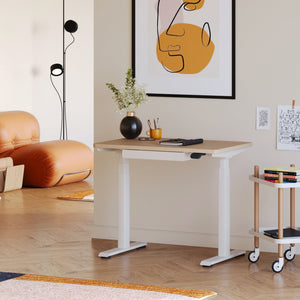
Standing desks tend to read more modern because the base is engineered and visually present. The good news is that wood and metal can make a standing desk feel warm and home-friendly when the surrounding choices are intentional.
A standing desk introduces a “movement zone” around it. Keep that zone visually calm:
Leave leg space open.
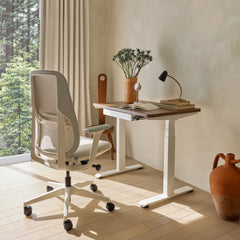
Use one vertical element nearby, such as a lamp or plant.
Avoid crowded storage directly under the desk where cables and bins compete with the base.
In real homes, desks see fingerprints, scuffs, and moving chairs. Matte finishes often hide day-to-day marks better than high-gloss surfaces, and they keep attention on the overall silhouette rather than small reflections.
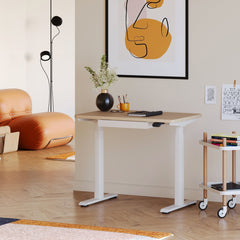
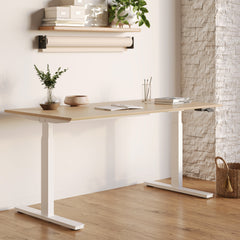
For a sit-stand centerpiece that can carry a mixed-material room, the Standing Desk is a helpful reference for pairing a warm top with a structured base. The styling win comes from echoing the metal finish elsewhere in small, consistent ways, so the desk looks like it belongs rather than standing alone as a gadget.
Choose an anti-fatigue mat that looks like a textile, not a workshop tool. Neutral tones and subtle texture help the mat feel like part of the room rather than an afterthought.
Small spaces benefit from mixed materials because metal frames can feel lighter than full panels, while wood keeps the space from feeling cold.
Even when the desk footprint is the same, a more open base makes the room feel larger. You see more of the floor, more light passes through, and the desk reads as a structure rather than a block.
Metal can bounce light. That is helpful when it brightens a dark corner, but distracting when it creates glare near screens. Position the desk so direct sunlight does not hit the monitor, and choose finishes that reduce sharp reflections.
When a room is tight, every inch matters, but so does the feeling of openness. A compact desk can keep the home office flexible, especially in multi-use rooms.
The Mini Standing Desk is a practical reference for small-space sit-stand needs where you want the benefits of movement without requiring a large footprint. The key is to pair it with vertical storage and a chair that tucks fully under, so the space can breathe.
If the desk must go in a corner, keep one side visually quieter. For example, use a single wall shelf on one side and leave the other wall open with artwork. That keeps the corner from feeling like a storage pile.
Two people sharing a workspace need both harmony and personal territory. Wood and metal help because you can repeat finishes for unity while changing accessories for individuality.
If the room is small, symmetry usually wins. Matching desk finishes and similar lighting reduce visual noise. If the room is larger, zoning can help, such as one person near a window and the other near storage, while keeping the same metal finish across both setups.
Metal and hard floors can make a space feel loud, even when it is quiet. Rugs, curtains, and upholstered chairs reduce echo and make the room feel calmer. These soft layers also help the wood-and-metal mix feel more residential.
If both people want the ability to alternate sitting and standing, a single shared surface can reduce clutter and keep the visual story clean.
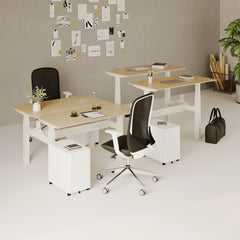
The Two-Person Standing Desk is a helpful reference point for a shared layout where consistency is built into the structure. The styling approach stays the same: repeat the metal finish across two or three supporting items, repeat the wood tone in one or two small accents, and keep desktop storage minimal so the surface still reads as a designed object.
Use matching trays or organizers, then choose different contents. This keeps the room coherent while allowing each person to work the way they naturally do.
When a home setup expands into multiple seats or a shared studio, mixed materials can look either exceptionally clean or overwhelmingly busy. The difference is repetition and restraint.
Large setups need consistent geometry. Keep metal finishes the same across the whole system. Keep wood tones in the same family. Then introduce contrast through textiles and lighting rather than adding more hard finishes.
Workstation-style layouts help when a household needs more than one dedicated work area, such as a creative corner plus a study zone. A consistent wood-and-metal language across the whole setup makes the space feel like one environment rather than multiple unrelated desks.
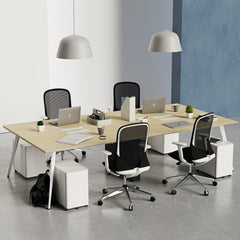
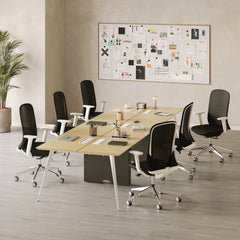
For a multi-seat configuration that is designed to coordinate visually, the Quad Workstation Desk is a strong reference for how repeating structure and finish can keep a larger footprint looking orderly. In practice, the design win comes from keeping accessories uniform and controlling cables so the workstation reads as architecture, not equipment.
A wood-and-metal desk should feel stable and composed. A few practical checks help prevent disappointment and make the desk feel right in your home office for the long run.
Confirm chair clearance and legroom, especially if you like to cross your legs or move around.
Confirm surface depth for your screen distance and keyboard comfort.
Confirm how you will mount or place monitors, especially if you use clamp-style arms.
Confirm stability on your actual floor type, since some floors need leveling feet adjustments.
Confirm where cables will route before the desk arrives, not after it is in place.
Sometimes the most important “feature” is clarity: knowing how to get help, where to find answers, and who to contact if you are deciding between options. For brand guidance and common questions about ordering and setup, our office furniture help and FAQs page is designed to keep decisions straightforward without guesswork.
Mixed materials age differently. Wood can develop character. Metal can show scratches if it is hit repeatedly. The goal is not to keep a desk frozen in time, but to keep it looking intentional as it lives with you.
Treat the desk surface like a working surface, not a display shelf. Use a desk mat where your hands and tools spend the most time. Wipe spills quickly. Consider how direct sunlight lands across the top, since consistent sunlight can shift tone over time.
Avoid abrasive cleaners. Use soft cloths. Protect corners and edges during moves. Metal frames do best when they are not constantly bumped by rolling chair arms or stored objects under the desk.
At Urbanica, we think of a home office as two layers:
Base layer: desk, chair, and primary light. These stay consistent and define the room’s design language.
Swap layer: art, rug, desk accessories, and small storage pieces. These change with seasons, projects, and life shifts.
When the base layer is wood-and-metal done well, the swap layer can evolve without the room losing its identity. That is the core advantage of this material mix: it feels grounded, modern, and adaptable, while still reading like home.


You have unlocked free shipping!
You're saving $29 and unlocked free shipping!
Leave a comment