



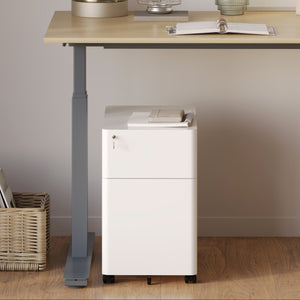






















Filing Cabinet Choices for Cleaner Workstation Planning
Cleaner workstation planning starts with filing storage that matches the desk, document volume, security needs, and daily workflow. Explore how cab...
Learn more
Visit quiz page to see how we makes it easy to create an inspiring workplace


At Urbanica, we see every desk as the engine room of a workflow. Power is the quiet infrastructure behind that engine. When outlets are thoughtfully integrated into the desk, tasks feel smoother, equipment is easier to handle, and the workspace becomes calmer and more focused. When power is ignored or treated as an afterthought, the opposite happens: clutter creeps in, cables tangle, and the user spends more time managing wires than doing meaningful work.
Built in desk power is not just about adding more outlets. It is about placing power where hands naturally reach, where devices naturally sit, and where cables can be guided safely and cleanly. That is what transforms a desk from a flat surface into a dependable tool that supports deep work, collaboration, and everyday routines.
Most workspaces start with a simple solution: a power strip under the desk or a tangle of chargers running to the nearest wall outlet. Over time, more devices get added. A second monitor, a charger for a phone, then a tablet, speakers, a camera, maybe a task light. The result is familiar: a cluster of plugs on the floor and cables that feel like they are trying to escape in every direction.
Built in desk power flips this pattern. Instead of dragging cables across the room, the outlets come to the user. Power modules in the desktop, along the front edge, or just beneath the work surface allow users to plug in at the point of use. This shortens cable runs, reduces visual noise, and makes it easier to add or remove devices without crawling under the desk.
When we design workstations, we pay close attention to how reach and posture affect comfort. If a user has to twist, lean forward, or slide their chair away from their neutral sitting or standing position just to plug something in, the desk is not supporting the workflow properly.
Well placed outlets allow the user to:
Keep a neutral posture while connecting or disconnecting devices
Avoid dragging equipment closer just to reach a distant socket
Arrange chargers and adapters in a way that does not block their view or workspace
Integrated power also supports mental focus. The absence of dangling cords and improvised power solutions reduces visual distraction and helps the user feel that their environment is intentional, not improvised.
When power is not planned intentionally, we often see:
Overloaded strips sitting on the floor
Cords crossing walkways or trailing under chairs
Strain on cables where they bend sharply around furniture edges
Outlets that are blocked by storage units or wall placement
These issues are not just inconvenient. They can shorten the life of devices, create small daily annoyances, and in some cases introduce safety concerns. By integrating power directly into the desk, we reduce these risks and support a consistently functional setup.
Every good power plan starts with the way someone actually works. The same desk will serve very different roles for a software engineer, a video editor, a sales leader, or a student. Our goal is to design power access that matches the rhythm of that work, rather than forcing everyone into the same pattern.
Before deciding where outlets should live, it helps to answer a few core questions:
Is this desk used mostly for deep, focused work or frequent collaboration?
How many screens are active most of the time, not occasionally?
Which devices move on and off the desk constantly, and which stay parked?
Does the user sit all day, stand part of the day, or adjust height often?
Once these questions are clear, the pattern of power use starts to emerge, and we can begin building a layout that supports it.
We often break a workstation into three power zones that align with how devices are used.
The primary zone includes the laptop or desktop computer, the main monitor, and possibly a task light. These devices typically stay connected throughout the day. Outlets for this zone work best in stable locations, either recessed into the desktop or positioned just beneath it. When we know where this zone lives, we can keep its cabling permanently organized and out of the way.
The secondary zone covers items such as phones, tablets, headphones, and small tools that cycle on and off the desk. This zone benefits from outlets and ports that are within easy reach but do not dominate the main work area. Built in power surfaces with USB charging and easy-access sockets are ideal here, helping users plug in quickly without adding clutter to the primary zone.
Printers, external storage units, speakers, and other long term accessories often live at the edge of the workspace or on adjacent surfaces. Outlets for these devices do not need to be visible on the desktop. Under surface power strips and wall adjacent modules handle them effectively, while cable management keeps everything tidy.
Desk form has a major influence on how integrated power should be structured.
When a desktop moves, power needs to move with it in a predictable and safe way. A solution such as a full-size sit-stand desk design benefits from power modules placed close to where devices sit, combined with flexible cable routing that can extend and retract without strain. We focus on keeping enough slack for motion without leaving long loops that get in the way.
In small rooms or multi purpose spaces, every centimeter of surface and legroom matters. For these environments, we often favor streamlined solutions with reduced visual weight, such as a compact sit-stand workstation. Integrated or edge mounted power avoids having large power strips on the floor, which can dominate an otherwise minimal footprint.
Not all power outlets serve the same role. Choosing the right style has a significant impact on how natural the desk feels during daily use.
Flush power assemblies sit within the desktop, usually in a grommet or similar opening. They are ideal for users who keep a predictable set of devices plugged in and prefer a clean look. A solution like an in-desk power module with grommet fit aligns well with this use case, because it keeps power close to hand while preserving a flat, usable work surface around it.
These modules are especially suited for:
Primary device clusters in focused workstations
Conference tables where cords need to drop down neatly
Creative studios that want tools powered without visual clutter
Because the outlets are fixed in place, they encourage a stable layout that users can return to every day.
Some desks cannot be drilled or modified. Others are shared between multiple people, or reconfigured often. In these cases, non permanent solutions are essential.
A clamp-on power unit for flexible desks attaches to the edge of the work surface and can be repositioned or removed without damage. This format is well suited to:
Rental offices where furniture must remain unaltered
Home workstations that occasionally convert back to dining tables
Hot desk environments where each person needs accessible power during their session
Clamp units bring outlets forward, so users do not have to reach under the desk to plug in. They also make it simple to experiment with placement until the most comfortable location is found.
Some users want power integration that is present but visually quiet. Under surface and edge mounted strips accomplish this by placing outlets just beneath the desktop, close enough to access with one hand while seated or standing. They are practical solutions for secondary and peripheral zones, pairing effectively with cable management to keep everything secure.
Power is only half the story. The way cables move, bend, and disappear into the workstation determines whether integrated outlets feel like magic or like yet another source of clutter. Thoughtful cable management is the backbone of a clean, safe, and reliable power setup.
Without structure, cables tend to sag and accumulate under the desk. Adapters rest on the floor, gathering dust and creating obstacles for feet and chairs. Under surface trays give cables a dedicated home, supporting both safety and aesthetics.
A solution such as an under-desk cable tray for cord organization gathers power strips, adapters, and excess cable length into one controlled zone. This not only improves the look of the workstation, it also:
Reduces trip hazards and accidental unplugging
Makes it easier to vacuum or clean around the desk
Protects cables from being crushed by chair legs or stored items
By lifting the cable network off the floor, the desk feels more intentional and much easier to maintain.
For sit stand or height adjustable desks, the path between the underside of the desktop and the floor must be handled carefully. Cables need to move smoothly as the height changes, without pulling tight or forming large loops.
A vertical cable spine for organized routing provides a structured path for cords, guiding them in a controlled column that expands and contracts with the desk. This approach:
Prevents strain on device ports
Keeps cables from swinging into the user’s legs
Gives the entire workstation a more cohesive, technical look
Good vertical routing is one of the most effective ways to turn a height adjustable desk into a stable, long term solution rather than a constant source of cable friction.
Even with great under surface and vertical organization, what happens on top of the desk still matters. We encourage simple habits such as:
Parking charging cables at the rear or side edge of the desk
Using low profile clips to prevent cables from sliding onto the floor
Assigning a consistent resting place for each device when charging
These patterns reduce the number of times a user has to hunt for a connector or untangle a lead before plugging in. Over time, small conveniences like this make a noticeable difference in how effortless a workspace feels.
Different environments call for different power strategies. By walking through a few realistic scenarios, we can see how built in solutions support both structure and flexibility.
In a dedicated office, most users want a steady, predictable layout that does not distract from their work. A clear surface with just the right number of tools encourages focus. At the same time, computers, monitors, and lighting all need reliable power.
A furniture piece that supports this style, similar to modern office desk layout inspiration, pairs well with a combination of in-desk power and under surface organization. Primary devices plug in close to where they sit, while secondary chargers can be placed in less visible zones. Cables drop neatly into trays instead of spreading across the floor.
In this type of environment, users benefit from:
Stable device placement that rarely needs to change
Power modules that blend visually with the desk finish
Cable paths that remain consistent and predictable over time
The result is a calm, efficient workspace that does not advertise its power network, but depends on it every day.
Many home offices are carved out of shared rooms: corners of bedrooms, small alcoves, or multi purpose living spaces. Here, integrated power needs to support real work while allowing the room to function in other roles outside working hours.
We typically prioritize:
Clamp or under surface power that does not dominate the visual field
Cable management that keeps the floor clear and easy to clean
Desk surfaces that can be cleared quickly, with minimal unplugging
Rather than building a fixed, complex power network, the goal in these spaces is a reliable backbone that can adapt to new devices or occasional rearrangements without turning into a mess.
In shared spaces, different people bring different devices, but the desk remains constant. Integrated power is one of the strongest tools for making these spaces feel fair and usable for everyone.
Key choices include:
Placing outlets so that multiple people can reach them comfortably
Ensuring enough spacing between sockets to handle larger adapters
Routing cables so that nothing interferes with chairs or legroom
When done well, these workstations feel ready and welcoming to each new user, without requiring them to fight for an outlet or navigate a maze of old charging cables.
No integrated power conversation is complete without addressing safety and comfort. We design with a long view, aiming for workstations that remain reliable and comfortable through years of everyday use.
Although modern power hardware is robust, every outlet and circuit has a limit. Grouping too many high draw devices on a single strip or module is not advisable. We encourage users to:
Separate heavy loads when possible
Avoid daisy chaining multiple power strips together
Inspect cables periodically for damage, especially at bend points
These habits support both safety and device longevity.
Power placement should never force awkward posture. Users should be able to plug and unplug devices while maintaining neutral wrist and shoulder positions. Guidelines outlined in ergonomic guidance for healthy workstation setups reinforce the value of comfortable reach distances, appropriate screen positioning, and reducing unnecessary strain during routine tasks.
When we integrate outlets near natural reach zones and keep cables from pulling on devices, we are not only organizing the desk, we are protecting the body that uses it.
Good integrated power is not a futuristic promise, it is a practical framework. Outlets will still wear over time. Cables need occasional replacement. Devices will change. Our goal is to create a system that accepts these realities gracefully.
That means:
Designing access that is easy to service or adjust
Choosing solutions that work with a wide range of common devices
Avoiding overly complex or fragile mechanisms that could fail under everyday use
The more grounded and honest the solution, the more confidence users have in their workspace.
As work continues to evolve, built in desk power will remain central to how people organize their days. New tools will appear, but the fundamentals will stay consistent: people will still need reliable outlets, safe cable routing, and surfaces that feel calm rather than chaotic.
By planning around real workflows, matching power solutions to desk forms, and respecting safety and ergonomics, we can create workstations that stay relevant for years. For us, the goal is not to chase novelty, but to help people build desks that quietly keep up with their work, day after day, without demanding attention.


You have unlocked free shipping!
You're saving $29 and unlocked free shipping!
Leave a comment