

Skip to content
For Teams
Upgrade Your Workspace This Spring with Our Premium Ergonomic Office Furniture | Free Shipping on Orders $65+
FAQ
need to know

Useful articles

Best Desk Sizes for Dual Monitors in Small Offices

Best Desk Sizes for Dual Monitors in Small Offices

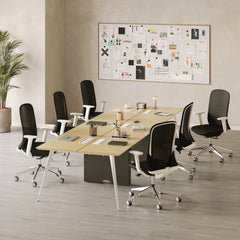
Urbanica six person office workstation desk setup in a modern workspace featuring a light wood collaborative table and six ergonomic black mesh swivel chairs on casters

Why Desk Size Shapes the Entire Dual-Monitor Experience in Small Offices

Designing a small office that supports dual monitors is less about fitting two screens and more about creating a balanced workstation that feels stable, comfortable, and sustainable over long workdays. Desk size becomes the foundation that everything else depends on. When dimensions are off, even by a few inches, the result is often physical strain, visual clutter, and a workspace that feels smaller than it actually is.

Dual monitors increase not only horizontal requirements, but also depth, weight distribution, and cable complexity. In compact rooms, these factors interact quickly. A desk that is technically wide enough may still fail if depth is insufficient or if the frame design steals legroom. From our perspective as a furniture brand focused on real-world use, desk sizing is one of the most overlooked causes of dissatisfaction in small offices.

Starting with thoughtfully designed office desk collections makes it easier to evaluate proportions rather than forcing oversized setups into undersized furniture.

Baseline Desk Dimensions That Support Dual Monitors Comfortably

Desk Width Requirements for Dual Screens

Desk width determines whether monitors can sit naturally in front of the user or must be angled inward in a way that stresses the neck and shoulders.

Why 48-Inch Desks Often Fall Short

A 48-inch desk may technically hold two monitors, but it leaves little room for adjustment. Monitor stands overlap usable space, peripherals are compressed, and users tend to angle screens aggressively inward. In small offices, this often leads to asymmetrical posture and fatigue over time.

The Practical Starting Point at 55 to 60 Inches

For most dual-monitor setups using standard 24-inch displays, a desk between 55 and 60 inches wide provides enough surface to center the primary viewing area. This width allows space for keyboards, pointing devices, and basic desk accessories without forcing clutter to the edges.

When 63 to 72 Inches Makes Sense

Larger widths within this range are ideal when the room allows it. They provide flexibility for future monitor upgrades and reduce the need to push screens against walls. The key is that added width should not compromise walkways or chair clearance in the room.

Desk Depth and Viewing Distance

Why Depth Matters as Much as Width

Desk depth determines how far monitors sit from the eyes. Shallow desks push screens too close, increasing eye strain and encouraging users to lean back unnaturally.

The 27 to 30-Inch Depth Sweet Spot

Depths in this range allow monitors to sit at a comfortable viewing distance while leaving space for keyboards and wrists. This becomes even more important when using monitor arms, which require rear clearance for clamps and movement.

Structural Stability for Dual-Monitor Loads

Two monitors and their mounting hardware introduce torque and uneven weight distribution. A desk designed with a rigid frame and balanced support feels noticeably more secure, especially in small rooms where vibration is amplified.

Desk Size Strategies Based on Small Office Room Dimensions

Desk Sizing for 8 by 8 and 8 by 10 Rooms

In square rooms under 100 square feet, desk size must respect circulation. Desks between 55 and 63 inches wide typically offer the best compromise. They support dual monitors while leaving room to move the chair freely and maintain visual openness.

Narrow Rooms and Converted Alcoves

Choosing Depth Over Excess Width

In narrow spaces, deeper desks often outperform wider ones. Additional depth improves ergonomics without blocking pathways.

Wall Placement Without Sacrificing Function

Desks that can sit close to the wall while still allowing cable routing help preserve usable floor space. Rear clearance planning is critical here.

Clearance Rules That Preserve Comfort

A well-sized desk also accounts for chair movement. Adequate space behind the chair allows users to stand, sit, and rotate without obstruction. Ignoring this detail often makes even a well-proportioned desk feel intrusive.

Fixed Desks Versus Standing Desks in Compact Offices

How Height Adjustability Changes Space Planning

Height-adjustable desks introduce vertical movement, which can reduce the need for secondary surfaces. This flexibility is especially valuable in small offices where every piece of furniture must justify its footprint.

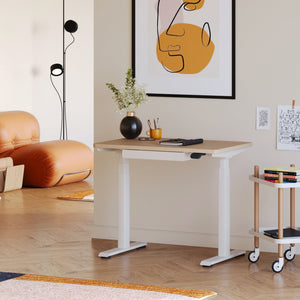
An electric height-adjustable standing desk allows users to alternate positions without expanding the workspace horizontally. From a brand perspective, this adaptability often extends the usable life of the desk as work habits evolve.

Compact Standing Desk Designs for Small Rooms

Narrow Frames With Reinforced Stability

Compact standing desks are most effective when their frames remain slim but rigid. This ensures stability even when monitors are elevated.

Integrated Cable Management

In small offices, visible cables quickly add visual noise. Desks designed with internal routing help maintain a clean appearance when placed close to walls.

A compact sit-stand desk for small spaces is often a practical solution for users who need dual monitors but cannot accommodate larger frames.

Monitor Mounts, Desk Depth, and Space Optimization

How Monitor Arms Affect Desk Size Needs

Monitor arms free surface space but do not eliminate depth requirements. They often extend behind the desk, requiring clearance from walls. Choosing the right desk depth ensures that arms can move freely without forcing awkward desk placement.

Horizontal Versus Vertical Monitor Configurations

Horizontal Side-by-Side Layouts

This is the most common configuration and benefits most from wider desks. It provides a natural viewing arc and simplifies task switching.

Vertical Stacking in Tight Spaces

Vertical arrangements can work in very narrow rooms, but they introduce neck movement considerations. Desk depth becomes even more important to maintain proper viewing angles.

Matching Desk Size With Ergonomic Seating

Chair and Desk Compatibility in Small Offices

Desk size does not exist in isolation. Chair dimensions influence how much usable space remains under the desk and how comfortably users can position themselves.

Selecting from ergonomic seating options for home offices helps ensure that armrests, seat depth, and back support align with compact desk designs rather than competing with them.

Slim-Profile Chairs That Complement Compact Desks

Balanced Support Without Visual Bulk

In small offices, chairs with streamlined profiles preserve openness while still supporting posture.

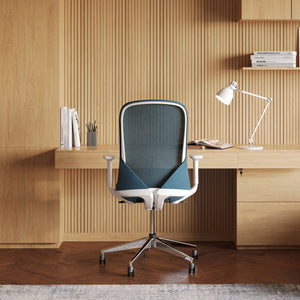
The Novo ergonomic office chair pairs well with smaller desks due to its clean form and balanced support characteristics.

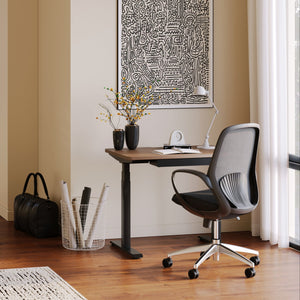
Similarly, the Onyx ergonomic task chair offers structured support without occupying unnecessary visual or physical space.

Desk Size Mistakes That Make Small Offices Feel Smaller

Prioritizing Width While Ignoring Depth

Oversized width paired with shallow depth creates awkward viewing distances and cramped input zones. Balanced proportions are more effective than maximum measurements.

Choosing Bulky Desk Frames

Thick aprons and oversized legs reduce knee clearance and make a desk feel heavier in the room. Slim frames often perform better in compact environments.

Overlooking Rear Clearance and Cable Paths

Desks pushed flush against walls without planning for cables or mounts often end up pulled forward later, wasting space and disrupting layouts.

Dual-Monitor Desk Size Comparison for Small Offices

Desk Width Desk Depth Dual Monitor Support Ideal Room Size Space Efficiency
48 inches 24 inches Limited Very small Low
55–60 inches 27 inches Good Small High
63–72 inches 30 inches Excellent Small to medium Moderate


This comparison highlights that effective desk sizing is about proportional balance rather than simply choosing the largest option available.

Design Considerations for Apartment and Urban Offices

Multi-Use Rooms and Shared Spaces

In apartments, offices often share space with living or sleeping areas. Desk sizes that feel visually light integrate more naturally into these environments.

Inspiration From Physical Showrooms

Seeing furniture in context helps users understand scale and proportion. Visiting a modern workspace furniture showroom can clarify how dual-monitor desks interact with real room dimensions and lighting conditions.

Future-Proofing Desk Size for Evolving Work Needs

Anticipating Monitor and Accessory Growth

Monitor sizes tend to increase gradually, and additional peripherals often follow. Choosing a desk with a modest buffer in width and depth helps accommodate these changes without forcing replacement.

Investing in Proportions That Adapt

From a brand perspective, the most successful desks are those that continue to serve users as their workflows evolve. A well-sized desk supports not only today’s dual monitors, but tomorrow’s adjustments without overwhelming a small office.

Designing a small office around the right desk size creates a foundation that supports comfort, productivity, and longevity. When dimensions are chosen with intention, dual monitors become an asset rather than a compromise.

Previous article Smarter Upgrades for a Better Workday

Leave a comment

* Required fields

Get 10% off your first order

Find the office furniture that’s designed to match your style, comfort, and needs perfectly. Subscribe

My Office

You have unlocked free shipping!

You're saving $29 and unlocked free shipping!


Your cart is empty.
Start Shopping

Contact Us