



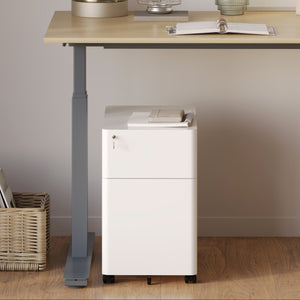






















Filing Cabinet Choices for Cleaner Workstation Planning
Cleaner workstation planning starts with filing storage that matches the desk, document volume, security needs, and daily workflow. Explore how cab...
Learn more
Visit quiz page to see how we makes it easy to create an inspiring workplace


In the era of remote work, your video background has become the new professional facade. Whether you are conducting a crucial client pitch or leading a team meeting, the visual environment behind you instantly communicates organization, professionalism, and taste. For those without a dedicated home office, this presents a unique challenge: how do you create a clean, intentional, and non-distracting visual backdrop when your workstation might be in a living room, bedroom, or a quiet corner of the kitchen?
The secret lies not in buying more furniture, but in strategic placement and selection. By understanding the camera's perspective, controlling light, and choosing a few high-impact, minimalist pieces, you can turn any small, multi-purpose space into a polished, high-definition professional backdrop. This guide provides the complete blueprint for mastering your video presence, regardless of the size of your home.
The human eye is drawn to clutter and imbalance. A clean, intentional background signals order and competence, allowing your audience to focus solely on your message.
Depth and Separation: Create distance between yourself and the background.
Controlled Light: Ensure the primary light source illuminates your face, not the backdrop.
Intentional Clutter: Use a few curated objects, not random possessions.
The biggest mistake is setting up your desk directly against a wall. This flattens the image and highlights any imperfections in the backdrop.
Even two or three feet of distance between your desk and the wall can make a dramatic difference. This distance allows the camera to use a shallow depth of field, naturally blurring the background slightly and making you the clear focus.
In a compact space, a refined desk model allows you to create this crucial separation without overwhelming the room.
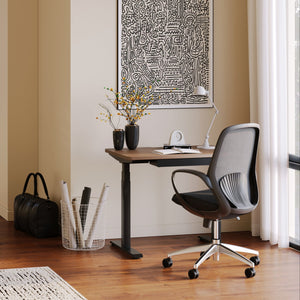
Your desk is the primary item visible to the camera. It must look clean, sturdy, and proportional to the space it occupies.
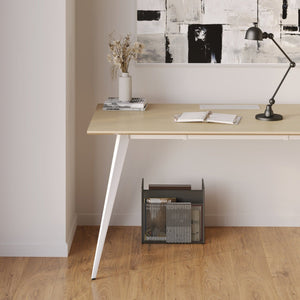
A minimalist office table with clean lines is highly effective. It avoids visual busyness and conveys organization. For those operating in demanding markets, prioritizing aesthetic quality is essential. A high-quality Office Table Los Angeles piece is often sought for its blend of architectural design and structural integrity.
Clear Surface: The surface visible to the camera should be entirely clear of papers and wires.
Proportionality: Choose a desk that doesn't look overly bulky for the background setting.
Poor lighting can sabotage the most organized background. The goal is to illuminate your face, not the wall behind you.
Key Light: Primary light source (a lamp or natural light) positioned to shine directly on your face, slightly off-center.
Fill Light: A secondary, softer light source used to soften shadows on the opposite side of your face.
Backlight (or Hair Light): Optional, but highly effective. A subtle light placed behind you and aimed at the back of your head or shoulders to separate you from the background and create dimension.

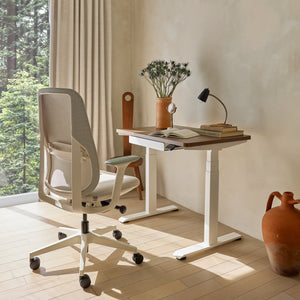
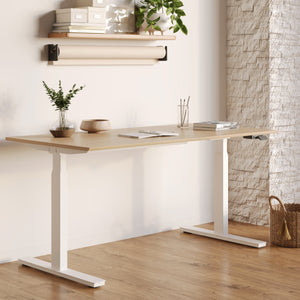
Using an adjustable desk provides a major visual and physical benefit for video conferencing.
Standing naturally elevates your energy, which translates better on video. Furthermore, raising your desk slightly can provide a better camera angle, which should always be level with your eyes or slightly above them.
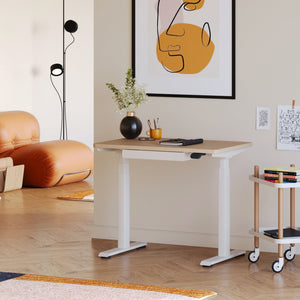
The transition to a standing posture is made easy and elegant by a high-quality stand up desk.
When space is tight, use vertical elements in your background to draw the eye upward, making the space feel taller and less confined.
A simple, uncluttered shelf or a tall, framed piece of art works perfectly. Avoid placing items too close together. The background should contain only three to five curated items that convey a clean, professional personality.
This is a crucial element of setting up an ergonomic workstation, as noted in expert advice on workstation design, which emphasizes intentionality in the visual field.
Nothing ruins a professional look faster than visible wires, charging cables, or a cluttered surface. The camera is ruthless when it comes to visual noise.
Wires must be routed away from the camera’s view, typically down the back of the desk leg or secured with cable ties along the underside of the desktop.
Clutter Elimination Checklist:
☐ Digitalize Notes: Keep paper minimal and out of frame. ☐ Hide Charging: Use a single, integrated charging hub concealed under the desk. ☐ Secure Cables: Ensure no wires are hanging visibly from the monitor or laptop.
The camera should meet your eyes. Looking down into a laptop camera creates an unflattering and unprofessional view.
Use books or a monitor arm to raise your laptop or external camera. The camera lens should be perfectly horizontal with your eye line.
An articulating desk accessory is ideal for this, allowing you to quickly fine-tune the camera angle for both sitting and standing video calls.
While the desk and background get the most attention, the chair can disrupt the visual flow if it's too large, colorful, or distracting.
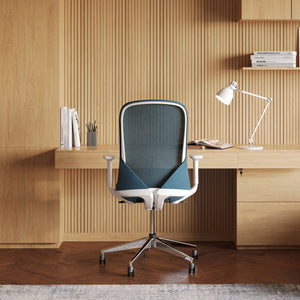
Select an ergonomic chair that is proportional, comfortable, and features a neutral color (like black, gray, or white) that allows it to blend into the professional setting.
A high-performance ergonomic chair should be an investment in comfort and health, but visually, it should support the overall minimal aesthetic of the backdrop.
The act of setting up a specific "video corner" in a multi-purpose room creates psychological separation, helping you step into the professional mindset for video calls.
Even if you only use the "video corner" for important calls, that ritual of moving to space cues your brain to switch into focused communication mode. This boundary reinforces professionalism and reduces home distractions.
The most professional video presence is a consistent one. Your background should look the same today as it does next week, reinforcing reliability.
Once you find the ideal combination of light, angle, and backdrop elements, take a photo. Use this photo as a reference to ensure every subsequent video call starts with the same polished, professional visual environment. This consistency is key to building trust in virtual settings.

Mastering your video background is an essential component of modern professional life. You don't need a dedicated office; you need intention. By strategically positioning your desk, controlling the light, and curating a few minimalist visual elements, you can transform any corner of your home into a sophisticated and focused professional backdrop, ensuring your audience focuses entirely on you and your message.


You have unlocked free shipping!
You're saving $29 and unlocked free shipping!
Leave a comment