















The Art of Flow: Simple Table Arrangements for a Balanced Home Office

Your home office doesn’t have to be big to feel functional—it just needs the right flow. The way you position your table determines how you move, think, and work. Whether your space is tucked in a corner or fills an entire room, thoughtful arrangement builds a sense of calm and control.
Let’s look at how simple changes in table setup can improve your focus, comfort, and creativity.
The Psychology of Workspace Flow
How Spatial Design Affects Focus
Flow is about harmony. When your desk sits comfortably in the room and nothing feels cramped or chaotic, your brain can focus better. A cluttered setup, on the other hand, increases mental noise.
Flow Checklist
-
Keep pathways open around your table.
-
Avoid blocking natural light.
-
Balance movement zones with still zones.
-
Leave enough space behind your chair to move freely.
A well-arranged space allows energy and ideas to move as freely as you do.
Finding the Right Table Placement
Position With Purpose
The position of your table influences light exposure, comfort, and focus. The goal is to create a layout that supports your workflow and minimizes distractions.
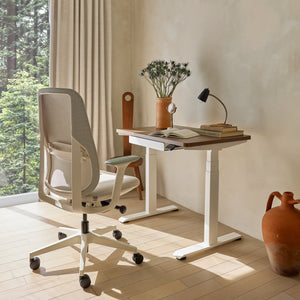
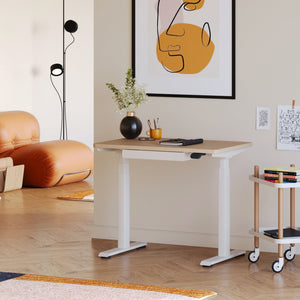
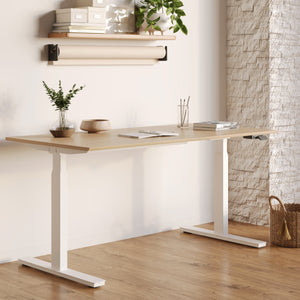
A versatile piece like the Small Standing Desk Montana adapts easily to any space, allowing you to experiment with positioning until it feels natural.
Placement Ideas
|
Layout Type |
Best For |
Description |
|
Facing a wall |
Deep work |
Reduces distraction |
|
Near a window |
Creative tasks |
Brings light and movement |
|
Center of room |
Meetings |
Symbolizes openness |
|
Corner placement |
Compact areas |
Saves space and feels cozy |
The perfect spot is the one that balances visibility, comfort, and accessibility.
Designing for Movement and Flexibility
Why Motion Matters
Static setups often lead to fatigue. The best home offices encourage movement throughout the day, whether by switching posture or repositioning your setup.
A modern standing desk lets you alternate between sitting and standing while keeping your layout fluid.
Movement Habits
-
Adjust your table height every hour.
-
Keep frequently used items within a short reach zone.
-
Incorporate standing breaks into your schedule.
-
Avoid rigid, one-position setups.
Movement builds energy, and energy drives focus.
Lighting That Complements Your Layout
Illuminating Productivity
Lighting and layout go hand in hand. Poor light placement can undo even the most functional arrangement. The goal is to create soft, balanced illumination that supports your natural rhythm.
Light Positioning Tips
|
Light Type |
Ideal Use |
Effect |
|
Natural light |
Beside or behind desk |
Boosts focus |
|
Desk lamp |
Task work |
Adds precision |
|
Ambient light |
Even tone |
Reduces shadows |
|
Accent light |
Corners or shelves |
Creates warmth |
Your workspace feels more inspiring when light supports both your eyes and your mood.
Balance Through Table Symmetry
Visual Calm in Workspace Design
Symmetry creates order. Even if your table isn’t centered, balancing the visual weight of objects around it keeps your setup looking intentional and grounded.
Balance Checklist
-
Match storage or décor on both sides of your workspace.
-
Keep heavier items lower and lighter ones higher.
-
Align your chair and monitor at the visual center.
-
Use simple lines to guide the eye evenly across the space.
Symmetry builds calm—an invisible structure that supports mental balance.

Choosing the Right Desk Surface
The Feel of Productivity
Texture impacts how your workspace feels to the touch. Smooth, matte surfaces are easier on the wrists, while natural wood grains offer warmth.
Surface Material Guide
|
Material |
Texture |
Effect |
|
Natural wood |
Warm, organic |
Invites calm |
|
Matte laminate |
Smooth |
Reduces glare |
|
Metal or glass |
Cool, clean |
Enhances focus |
|
Composite |
Balanced |
Blends durability and comfort |
A functional surface complements both your workflow and your senses.
The Role of Furniture Arrangement in Focus
Layout That Reduces Distraction
Your table layout determines how easily you shift between tasks. Cluttered surroundings can derail focus, while organized layouts help maintain mental flow.
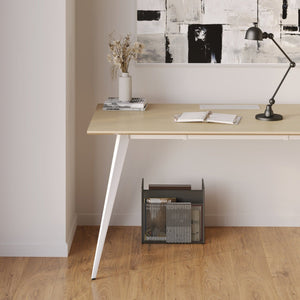
A functional office desk provides clean lines and ample space for structure and creativity.
Layout Essentials
-
Separate zones for writing, digital work, and thinking.
-
Leave open areas on your table for visual rest.
-
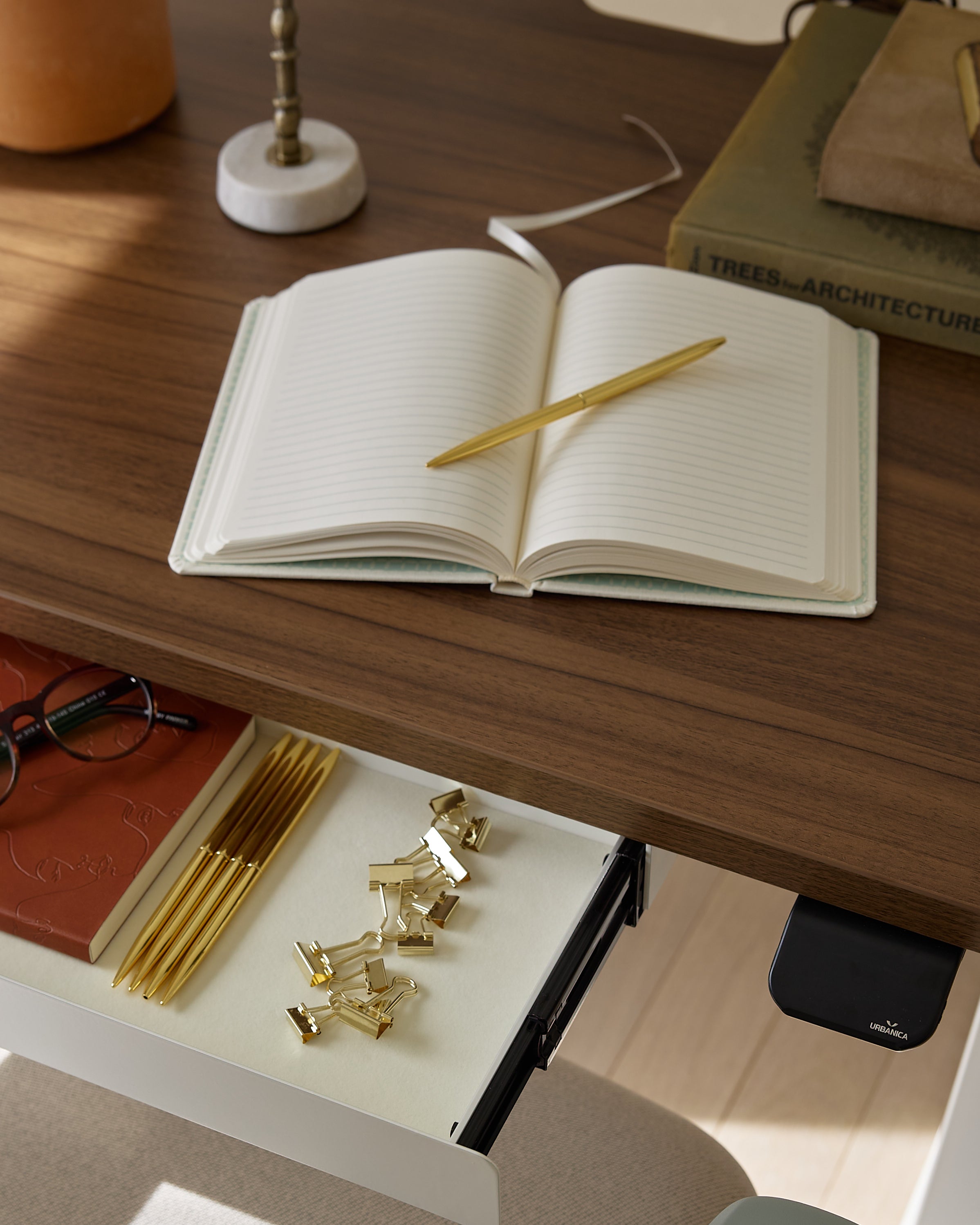
Keep cables hidden or managed neatly.
-
Rotate small accessories periodically to refresh the look.
A clean workspace isn’t just aesthetic—it’s functional clarity.
Psychological Impact of Workspace Design
What Research Reveals
According to a workspace psychology study, thoughtful furniture arrangement supports focus and well-being by creating a sense of spatial control. The more connected you feel to your setup, the more likely you are to sustain positive work habits.
Study Findings
-
Organized workspaces improve clarity and confidence.
-
Physical layout influences motivation.
-
Natural materials reduce cognitive fatigue.
-
Defined boundaries help maintain focus.
Designing for flow means designing for your mind.
Creating Multi-Zone Layouts
Separating Tasks Through Design
A single table can serve multiple purposes when organized effectively. Zoning different sections for tasks prevents overlap between activities.
A modular quad workstation layout helps define roles for each part of the table—one for writing, another for screens, and one for storage.
Zoning Strategy
|
Zone |
Purpose |
Benefit |
|
Digital zone |
Laptop, monitor |
Streamlines focus |
|
Creative zone |
Sketches, notes |
Encourages ideation |
|
Storage zone |
Files, tools |
Keeps order |
|
Reflection zone |
Empty space |
Provides mental reset |
Each section of your table supports a different part of your workflow.
Small Space, Big Impact
Maximizing Compact Work Areas
Limited space doesn’t mean limited flow. Smart placement and proportion make even small rooms feel open and functional.
Space Maximization Tips
-
Use wall shelves instead of floor storage.
-
Keep desk corners rounded to save visual space.
-
Choose lightweight furniture to maintain openness.
-
Position mirrors to expand light and depth.
Good design transforms constraints into creativity.
Refreshing Your Layout Over Time
Keeping Flow Dynamic
Even the best layout benefits from occasional updates. Changing your table’s direction or accessory placement prevents monotony and helps refresh mental energy.
Refresh Schedule
|
Frequency |
Adjustment |
Benefit |
|
Monthly |
Rotate table orientation |
Improves perspective |
|
Seasonally |
Change décor and lighting |
Matches natural cycles |
|
Yearly |
Reevaluate furniture balance |
Sustains flow |
Refreshing your setup renews focus and keeps your home office feeling alive.

Where Flow Meets Function
Designing for Clarity and Ease
Your workspace is more than furniture—it’s the framework for your habits. A thoughtful table arrangement balances beauty with purpose, helping you move, think, and create freely.
Key Takeaways
-
Position tables for natural movement and light.
-
Keep your space symmetrical and uncluttered.
-
Create zones that reflect your daily tasks.
-
Refresh regularly to maintain inspiration.
The best table arrangement doesn’t follow rules—it follows rhythm. When your environment supports your pace, productivity feels natural and effortless.
Leave a comment