























Best Bistro Table Use Cases for Hybrid Work and Shared Living Areas

Hybrid work has changed the way people evaluate furniture. A table is no longer judged only by whether it fits a meal or fills an empty corner. It now has to support video calls, focused solo tasks, shared routines, casual conversation, and the constant reset that comes with living and working in the same rooms. In compact homes and shared interiors, the most valuable furniture pieces are rarely the largest ones. They are the ones that can shift roles gracefully without making the room feel crowded or temporary.
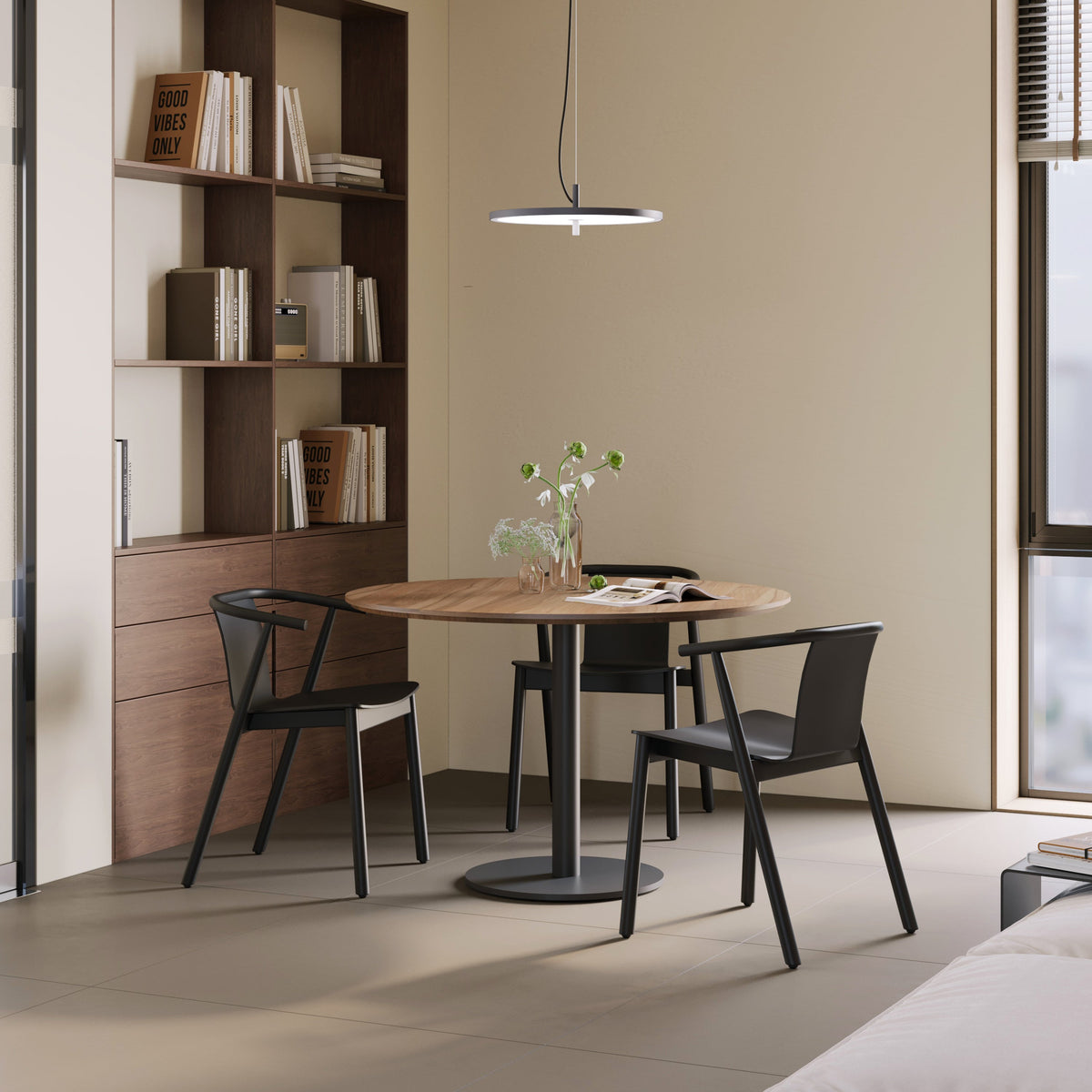
That is where the bistro table proves its value. A compact, round table can create a usable work surface, a small dining setting, and a social anchor without demanding the footprint of a larger desk or dining table. The appeal is not only about saving space. It is about creating a room that still feels calm, navigable, and visually resolved when daily life moves between work mode and home mode several times over.
When a Bistro Table Outperforms Bulkier Furniture in Multi-Use Rooms
The strongest bistro table use cases begin with a simple question: what does the room need to do every day? In many homes, one zone must handle breakfast, email, note-taking, laptop work, reading, conversation, and occasional dining without looking like a backup office. A larger table can make those functions possible, but it can also dominate circulation, reduce flexibility, and lock the room into one visual identity.
A smaller, round format handles this challenge differently. It gives enough surface for common hybrid tasks while preserving openness around it. A thoughtfully scaled compact round table suits both home and office use and is presented as a modern, collaborative table rather than a single-purpose dining piece.
Why hybrid routines changed the role of everyday tables
Before hybrid work became part of everyday life, many households could separate functions more clearly. A dining table was mostly for meals. A desk was for work. A corner chair was for reading. Now those boundaries are softer. The same person may answer emails before breakfast, take a midday call away from a main workstation, and use that same surface for dinner a few hours later.
That shift has made adaptable tables more relevant than rigid furniture plans. A bistro table supports this reality because it does not overdefine the room. It can be styled to feel residential while still offering enough utility for everyday work touchpoints.
What makes a bistro table especially effective in shared living areas
Round tables encourage movement. They soften the geometry of a room. They invite face-to-face interaction without the formality of a larger dining setup. In shared spaces, those qualities matter because people are not only using the table itself. They are also moving around it, passing through the room, setting things down, and shifting between activities.
A compact table also creates less visual pressure. That matters in apartments, open-plan living rooms, and mixed-use family zones where every additional piece of furniture changes how the room feels. The best bistro setup does not look like a compromise. It looks intentional.
The Spatial Advantage of a Compact Round Table in Tight Layouts
In smaller layouts, furniture must earn its square footage. A table may fit on paper, but still make the room feel blocked, overfilled, or awkward in daily use. Bistro tables often solve this better than larger alternatives because they provide enough usable area without taking over circulation paths.
The round shape helps most where people move diagonally through the room, such as near kitchens, sofas, or entry transitions. Sharp corners can interrupt flow and make a tight room feel tighter. A round table makes movement easier and visually gentler, which is one reason this format continues to work well in shared living areas.
Why round silhouettes improve movement
A round tabletop does not merely look softer. It functions differently. There is less risk of clipping a corner while passing through a narrow zone. Seating arrangements feel more balanced. Two people can share the table without one side feeling dominant. In homes where furniture needs to support both utility and ease, this matters.
How a smaller table changes the feel of a room
A room with too much furniture often feels busier than it really is. Even if each piece has a purpose, the overall effect can still feel crowded. A bistro table reduces that visual heaviness. It creates a defined destination without suggesting that every task requires a permanent setup.
The difference between enough surface and too much furniture
Most hybrid tasks do not require an oversized work surface. A laptop, notebook, mug, and small lamp fit comfortably on a compact tabletop. For short calls, planning sessions, reading, and light admin work, more furniture does not necessarily improve the experience. In many homes, it simply reduces flexibility.
Turning Underused Home Zones Into High-Function Work Touchpoints
One of the most practical use cases for a bistro table is transforming overlooked spaces into useful secondary work areas. Window corners, breakfast nooks, lounge edges, and underused dining alcoves often have enough room for a compact table but not enough for a full workstation. Instead of leaving these areas underutilized, a bistro table gives them purpose.
Breakfast nooks that become morning planning stations
Breakfast areas are naturally suited to lighter work. They are often close to daylight, near the kitchen, and easy to reset. That makes them ideal for checking schedules, reviewing messages, writing notes, or handling a short block of laptop work before the day expands into other responsibilities.
Window-adjacent corners that support focused solo tasks
A small table near a window can become a strong work touchpoint because it feels separate from the main flow of the room without needing walls or partitions. It is often the right spot for quiet reading, outlining ideas, or taking a short call that does not require a larger setup.
Overflow work areas for households with more than one remote worker
In shared households, tension often comes from overlap rather than lack of total square footage. One person may need the primary desk while another only needs a temporary place to finish a report, reply to messages, or review a document. In these moments, a bistro table functions as an overflow surface that feels just as intentional as the main workspace.
Where a dedicated desk still makes more sense
A bistro table is not a substitute for every work need. Full-day computer sessions, multi-monitor setups, and highly ergonomic work demands are usually better served by a primary desk. That is why the best layouts treat the bistro table as part of a broader furniture strategy. Urbanica’s desks collection is centered on adjustable and ergonomic office desks for different spaces, making it a natural companion category when a home needs both a main workstation and a secondary landing area. A sentence like pairing a bistro setup with adjustable office desks stays accurate because the destination page is explicitly built around that use case.
How Bistro Tables Support the Rhythm of Hybrid Work Without Taking Over the Room
The most effective hybrid rooms are not the ones packed with specialized furniture. They are the ones that allow people to change modes without friction. A bistro table supports this rhythm because it can handle short work intervals, shared tasks, and daily transitions without asking the room to become an office first.
A clean backup setting for calls and short meetings
Not every video call should happen at the main desk. Sometimes the better setting is the quieter corner with a cleaner background and softer visual context. A bistro table can provide that alternative. It feels more relaxed on camera and often looks more integrated into the home.
A touchdown surface for short-form work blocks
Touchdown work is a major part of hybrid living. It includes checking proofs, reviewing notes, making a plan, sending follow-ups, reading documents, and doing the kind of short-form tasks that do not justify settling into a full workstation.
A small surface can actually improve these moments because it limits clutter and encourages focus on one task at a time. Instead of becoming a storage zone for everything, the table stays tied to immediate use.
A task-switching hub for people who work in intervals
Some people work best by changing posture and changing settings throughout the day. Moving from a main desk to a compact table for a different type of task can create a useful reset. It helps distinguish deep work from lighter work and keeps the home from feeling visually frozen in a single work posture all day.
Shared Living Areas Where a Bistro Table Solves More Than One Problem at Once
The best bistro table use cases are not limited to work. They become more compelling when the table supports daily living just as well.
Apartment dining spots that cannot afford visual bulk
In compact homes, the dining area cannot always justify a large footprint. A bistro table makes more sense because it supports everyday meals while keeping the space open. It is especially useful for one- and two-person households that value function but do not want their dining surface to dominate the room.
Living room edge zones that need a social anchor
A table near a lounge area can become the place for coffee, conversation, casual snacks, or a few minutes of laptop time. This kind of setup feels more approachable than a formal dining arrangement and more useful than a decorative accent table.
Entry-adjacent flex areas for planning and reset
Open-plan homes often need a surface near the transition between arrival and activity. A bistro table can help with keys, mail, lists, and quick check-ins while still looking refined enough to belong in a shared living area.
Why dual-purpose furniture often stays useful longer
Furniture that handles more than one realistic function tends to remain relevant longer. Needs change. Schedules shift. Rooms are reworked. Pieces with a narrow use case are easier to outgrow. A bistro table keeps earning its place because it adapts.
Seating Decisions That Determine Whether a Bistro Table Works for Work
A table can only perform as well as the seating around it. This is where many hybrid setups succeed or fail. If the chair is uncomfortable, too rigid, or visually disconnected from the room, the table may work for a brief coffee break but not for repeat daily use.
The difference between occasional seating and repeat-use seating
Occasional seating may be fine for a short meal or a ten-minute task. Repeat-use seating needs more support, better posture, and easier movement. That does not mean the room has to feel corporate. It means the seating should make regular use realistic.
What matters when one table supports meals and laptop sessions
Several factors influence whether a bistro setup works well over time:
1. Seat height should pair naturally with the tabletop.
2. Back support should be sufficient for longer sitting periods.
3. The chair should move easily in and out of the space.
4. The material and silhouette should still feel appropriate in a shared room.
5. The overall look should connect with the rest of the interior.
How better seating improves daily usability
Urbanica’s chairs collection is presented specifically around ergonomic office chairs, which makes it appropriate for a work-supportive anchor when discussing repeated use rather than decorative seating alone. Referring readers to ergonomic office chairs aligns with the actual destination page and reinforces the idea that comfort matters when a dining-height table also serves as a regular work surface.
Lighting Layers That Help a Bistro Table Shift From Work Surface to Living-Space Feature
Lighting often determines whether a table feels unfinished or fully resolved. Overhead lighting may illuminate the room, but it rarely gives a small work-and-dine surface the clarity or atmosphere it needs.
Why overhead lighting alone rarely supports hybrid use
General room lighting can be too flat for close work and too harsh for evening use. A multifunctional table needs something more localized, especially if the goal is to support both task visibility and a calmer after-hours mood.
Table lighting that adds clarity during work hours
A targeted light source can make note-taking, reading, and laptop-adjacent tasks more comfortable. It also gives the table a stronger sense of purpose by defining it as a zone rather than just an empty surface.
Ambient lighting that keeps the setup from feeling too utilitarian
A work surface in a shared room should not look like an afterthought during the day or a dead zone at night. Lighting helps maintain this balance.
A multi-use light that supports both function and atmosphere
The Alumina product page identifies the piece as a multi-use LED table and wall light, so an anchor such as multi-use LED table light stays faithful to the page itself while fitting naturally into a paragraph about flexible lighting. A fixture with that kind of flexibility suits a bistro setup well because it supports clear work lighting without making the room feel overly task-driven.
Accessory Choices That Keep a Small Table Functional Instead of Cluttered
Smaller tables work best when every object has a reason to be there. The goal is not to decorate heavily. The goal is to maintain usefulness without visual noise.
The essentials that earn a place on a working bistro table
A small tray, coaster set, notebook, compact lamp, and one carefully chosen object often go further than a crowded arrangement of small items. Because the surface is limited, editing becomes part of good design.
How accessories shape the table’s role throughout the day
Accessories help a table change identity. In the morning, it may hold a notebook and lamp. In the evening, it may reset for tea or a simple meal. The fewer unnecessary items there are, the easier that transition becomes.
Why restraint matters more on a smaller surface
Urbanica’s accessories collection is an office furniture accessories destination, so office workspace accessories is an accurate anchor that reflects both the page theme and the article’s focus on practical tabletop support. The right accessories should make a compact table feel calmer, not busier.
| Table Element | Why It Helps During Work | Why It Helps in Shared Living Areas |
|---|---|---|
| Small lamp | Improves local visibility | Adds warmth and definition |
| Tray | Keeps essentials contained | Makes resets faster |
| Coasters | Protects the surface | Supports both drinks and meals |
| Notebook or planner | Encourages focused use | Keeps daily tasks visible without clutter |
| One decorative object | Softens the work feel | Helps the table belong to the room |
Portable Lighting and Evening Ambience in Dual-Purpose Rooms
As the day changes, the same table should be able to feel less like a workstation and more like part of the home. Portable lighting is one of the most effective ways to create that shift.
Why compact lamps matter in smaller shared rooms
Larger fixtures can overwhelm a small tabletop. A more compact lamp supports the surface without dominating it. It also helps the table stay versatile enough for both work and relaxed use.
Mood-setting for dining, reading, and low-key evening use
Evening use is often quieter and less task-driven. Softer lighting helps the space follow that shift. Instead of looking like a leftover office station, the table becomes a comfortable part of the room’s nighttime rhythm.
A smaller lamp with a lighter visual footprint
The Shore lamp page describes the piece as a recycled glass table lamp, making recycled glass table lamp an accurate and transparent anchor. That type of lighting works particularly well on a bistro table because it adds presence without creating unnecessary visual weight.
Matching Bistro Table Use Cases to Different Floor Plans and Household Patterns
No single layout rule works for every home. The right use case depends on who lives there, how often the table is used, and what the surrounding room already needs to do.
Studio apartments where every piece affects the whole room
In studios, the bistro table often works best near a window or at the edge of the kitchen zone, where it can support meals, planning, and short work sessions without interrupting the room’s openness.
Shared apartments with overlapping schedules
In a shared apartment, the table often functions as a flexible second station. One person may use it for a call while another uses a dedicated desk elsewhere. The ability to reset quickly becomes a major advantage.
Family homes with crossing routines
In family homes, the same table may move between homework, laptop use, coffee breaks, and conversation. That layered use is not a flaw. It is exactly what makes the piece valuable.
Homes refining a more intentional work-living setup
Urbanica’s Los Angeles landing page is centered on modern, ergonomic office furniture rather than a general city guide, so modern ergonomic office furniture is a more truthful anchor than a location-only phrase. For households trying to create a more cohesive hybrid environment, that kind of broader workspace framing can help connect residential comfort with practical daily use.
Why Bistro Tables Keep Delivering Value as Work and Home Habits Evolve
The best furniture choices are often the ones that remain useful as routines change. That is why the bistro table continues to hold value in hybrid work and shared living areas. It does not require a room to behave one way forever. It supports a more realistic pattern of living, where meals, work, conversation, and planning all happen in close proximity.
Its greatest strength is range. It can be a morning perch, an overflow workstation, a lunch spot, a call surface, a reading corner, or a social table depending on the hour and the household. That breadth of use is what makes it such a smart fit for people who want their homes to feel composed without being rigid.
When a table can support daily work, shared routines, and spatial calm all at once, it becomes more than a compact furniture piece. It becomes one of the clearest examples of how thoughtful design can make hybrid living feel easier, more natural, and more livable.
Related Articles
-
 This Is How To Build A Small Home Office You Actually Want To Work From, And How To Pick Desks For Small Spaces - Urbanica Furniture's Full Guide
-
 Filing Cabinets for Small Spaces That Still Look Clean Now
-
 Minimalist Office Table Ideas That Work Like a Bistro Table
-
 Make Small Shared Spaces Work Better With a Bistro Table
-
 Best Filing Cabinet Layout Ideas for Small Home Offices and Shared Rooms
-
 What Size Filing Cabinet Makes Sense for Small Workspaces?


