















Skip to content
For Teams
Memorial Day Deals Are Here - Upgrade Your Workspace for Less using the code MEMORIALDAY | Free Shipping on Orders $65+
FAQ
need to know

Useful articles

Table Lamp vs Desk Lamp: Which One Belongs in a Home Office?

Table Lamp vs Desk Lamp: Which One Belongs in a Home Office?

A home office lamp does more than brighten a corner. It shapes how clearly you see your work, how comfortable your eyes feel after hours at a screen, how polished the room looks on video calls, and how organized the desk feels during a full workday. The table lamp vs desk lamp decision is really a question of purpose: should the light support the task directly, soften the room around you, or do both?

A desk lamp usually belongs on the primary work surface when your day involves reading, writing, sketching, reviewing documents, or working beside a monitor. It gives you more control over where the light lands. A table lamp belongs in a home office when the space needs warmth, visual balance, or a softer layer of light that makes the room feel less like a workstation and more like part of the home.

The best choice depends on how the office is used, where the desk sits, how much surface area is available, and whether the lamp needs to work as a productivity tool or a design element.

Table Lamp vs Desk Lamp in a Home Office: The Real Difference Is Light Direction

The basic difference between a table lamp and a desk lamp is not just size or style. It is how the lamp controls light.

A table lamp typically spreads light outward through a shade. It creates a broader glow that helps define the mood of a room. In a home office, that can be valuable when the workspace sits inside a bedroom, living area, guest room, or open-plan space. A table lamp can make a desk area feel intentional without making it feel overly technical.

A desk lamp is more task-focused. It is designed to direct light onto a specific work area, such as a notebook, keyboard, planner, document, or sketchpad. Many desk lamps have adjustable necks, arms, heads, or compact bases, which makes them more useful when precision matters.

Desk lamps support task lighting where work actually happens

Task lighting is focused light for a specific activity. In a home office, that usually means lighting the area directly in front of you or slightly to the side of your dominant hand.

A desk lamp works well when you need light to land on the desk surface without flooding the whole room. This matters for document review, handwritten notes, reading printed materials, crafting, drawing, or any work that requires detail. A desk lamp can also reduce the need for harsh overhead lighting because it brings brightness closer to the task.

Table lamps support ambient comfort and room balance

Ambient light is the general light that fills a room. A table lamp is often better at creating that softer layer. It can sit on a side table, credenza, shelf, storage cabinet, or the far edge of a larger desk. Its job is not always to illuminate the exact spot where your pen touches paper. Its job is to make the office feel comfortable and visually balanced.

A table lamp can also help prevent a screen from becoming the only bright object in a dark room. That contrast can feel uncomfortable during evening work, especially when the surrounding space is dim. A softly glowing table lamp nearby can make the room feel easier on the eyes.

The practical test is whether the lamp lights the task or the room

A simple way to decide between a table lamp and desk lamp is to ask what the lamp is responsible for lighting.

If the lamp needs to brighten a specific surface where work happens, choose a desk lamp. If the lamp needs to soften the room, add visual warmth, or make the office look complete, choose a table lamp. If both needs matter, the strongest answer is often layered lighting.

How Your Work Habits Decide Which Lamp Belongs on the Desk

A home office used for occasional email has different lighting needs than one used for full-time remote work, design tasks, tutoring, bookkeeping, or late-night study. The lamp should match the way the desk is used most often.

Laptop and monitor work needs balanced light, not maximum brightness

For screen-heavy work, the goal is not simply to make the room brighter. The goal is to reduce uncomfortable contrast and avoid glare. A lamp that shines directly into the screen can create reflections. A lamp that shines into your eyes can feel distracting. A lamp that is too dim may leave the monitor feeling harsh by comparison.

A desk lamp can work well for laptop or monitor setups when it is angled toward the desk surface rather than the display. A table lamp can also help by creating soft ambient light behind or beside the workstation. The best arrangement often places light off to the side, slightly behind the screen plane, or directed downward toward non-reflective surfaces.

Paperwork and writing need controlled brightness

If your work involves forms, printed reports, books, handwritten notes, planners, or contracts, a desk lamp is usually the better primary choice. Paperwork needs direct visibility. A table lamp may create enough general brightness for casual reading, but it often lacks the directional control needed for longer review sessions.

Placement matters. Right-handed users often benefit from a lamp on the left side of the desk so the writing hand does not cast a shadow across the page. Left-handed users often benefit from the opposite arrangement. The best lamp position depends on the task, but the principle stays the same: light should fall on the work, not fight the movement of your hand.

Creative and visual work benefits from flexibility

Creative work often moves around the desk. A designer may shift between a laptop, samples, sketches, and notes. A student may move between a textbook and a keyboard. A consultant may review paperwork while joining calls. A desk lamp with an adjustable head or arm can follow these changes more easily than a fixed table lamp.

That does not mean table lamps are irrelevant for creative offices. A table lamp can support the atmosphere of the room, especially when visual work benefits from a calmer setting. The desk lamp handles the detailed work zone, while the table lamp helps the space feel grounded.

When a Table Lamp Belongs in a Home Office

A table lamp belongs in a home office when the room needs warmth, softness, and visual cohesion more than direct task lighting. It is especially useful when the office is part of a larger living space.

The workspace is visible from the rest of the home

Many home offices are not separate rooms. They are built into bedrooms, living rooms, dining areas, hallways, or guest spaces. In these settings, a desk lamp can sometimes make the area feel too utilitarian, especially if the lamp has a technical shape or exposed hardware.

A table lamp can make the work zone feel more integrated with the home. It adds a residential layer that helps the desk blend with nearby furniture. A lamp with a considered shape or material can signal that the workspace was designed, not improvised.

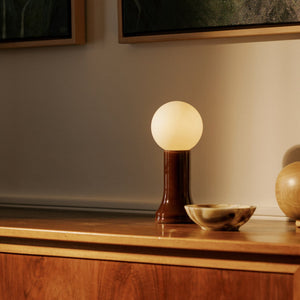
For example, a recycled glass table lamp can make a home office feel softer and more finished while still serving a practical lighting role.

The office needs a better background for video calls

Lighting affects how a room appears on video. Overhead light alone can feel flat or harsh. A table lamp placed behind or to the side can add depth to the background, helping the office look warmer and more composed.

The lamp does not need to be the main light on your face. In fact, a table lamp is often better as a background or side glow. It can help the room feel less shadowy without creating direct glare. This is especially helpful in offices where the desk faces a wall or where the video background looks empty.

The desk is large enough for decorative lighting

A table lamp can work on a desk if the desk has enough depth and width. It needs breathing room. If the surface is already crowded with a monitor, keyboard, mouse, papers, speakers, and chargers, a table lamp may feel bulky or misplaced.

On a larger desk, a table lamp can sit at a rear corner and add ambient glow. On a smaller desk, it may be better placed on a nearby cabinet, shelf, or side table. The goal is to let the lamp contribute to the room without stealing space from the work.

When a Desk Lamp Is the Smarter Home Office Choice

A desk lamp belongs in a home office when the lamp has to support concentration, accuracy, and daily productivity. It is the better choice when the desk is a true workstation rather than just a decorative writing surface.

The main work surface needs direct light

A desk lamp is strongest when the task area needs dependable illumination. It can aim light across a keyboard, notebook, printed page, or side workspace. This level of control is useful for people who switch between screen work and paper work throughout the day.

A table lamp may brighten the area generally, but it usually cannot control shadows as well. For focused work, the ability to direct light is often more important than the overall amount of light in the room.

The desk setup needs ergonomic support

Lighting and ergonomics are connected. If a laptop sits too low, the screen angle may encourage neck strain, and a lamp may end up shining into the display instead of onto the desk. Raising the screen can improve posture and make the lighting plan easier to manage.

A slim laptop stand can help create a cleaner relationship between the screen, keyboard area, and lamp placement. When the display is elevated, task light can be directed toward the desktop instead of competing with the laptop screen.

Small desks need lamps with a clear purpose

Small desks require discipline. Every object has to earn its place. A decorative table lamp may look beautiful, but if it consumes too much surface area, it can make the desk harder to use.

A compact desk lamp is usually more practical for smaller workstations. It can sit near the back corner, direct light where needed, and leave the main surface open for daily tasks. If the desk is very narrow, a wall-mounted, clamp-style, or side-positioned lighting solution may be better than a traditional lamp base.

Table Lamp vs Desk Lamp Comparison for Real Home Office Scenarios

Home Office Scenario Table Lamp Performance Desk Lamp Performance Better Fit
Laptop-only work Good for soft room balance Strong if angled away from the screen Desk lamp or layered lighting
Reading printed documents Limited unless placed close Strong and precise Desk lamp
Evening email or admin work Comfortable and warm Useful but may feel intense Table lamp
Video-call background Strong for depth and ambiance Useful as side support Table lamp
Small desk setup Can crowd the surface Better with a compact form Desk lamp
Large executive-style desk Adds polish and warmth Supports focused tasks Both
Decorative office corner Strong visual contribution Secondary role Table lamp
Paperwork-heavy role Usually not enough alone Best for task visibility Desk lamp


Small desks favor precision over decoration

A small desk can still look refined, but function has to lead. If a lamp blocks your notebook, crowds your mouse area, or forces cords across the work surface, it is not helping the office perform well.

For small desks, the best lamp is usually compact, directional, and easy to position. A table lamp may still belong nearby, but it often works better off the main desk surface.

Larger offices can support both lighting roles

A larger office can benefit from a desk lamp and a table lamp because each one handles a different job. The desk lamp supports direct work. The table lamp softens the surrounding space. Together, they prevent the room from feeling either too dim or too harsh.

This layered approach is especially useful when the office has multiple zones: a primary desk, a reading chair, storage furniture, shelving, or a side surface used for planning and reference materials.

Glare, Color Temperature, and Lamp Height Matter More Than Most People Think

Choosing between a table lamp and desk lamp is only part of the decision. The quality of the light matters just as much.

Glare control protects comfort during screen-heavy work

Glare happens when light hits your eyes directly or reflects off a screen, glossy desk, framed art, glass surface, or polished object. A lamp can be attractive and still uncomfortable if the bulb is exposed or the shade sits at eye level.

For a desk lamp, angle the light downward and away from the monitor. For a table lamp, use placement and shade direction to keep the brightest part of the lamp out of your direct line of sight. Matte surfaces and softer shades can also help reduce harsh reflections.

Color temperature changes the mood of the office

Warm light creates a relaxed feeling and often works well for evening tasks, reading, and residential office spaces. Neutral light tends to feel balanced for everyday work. Cooler light can help with certain detail-oriented tasks, but it may feel too stark in a home office if used heavily.

The right color temperature depends on the room and the work. A home office that doubles as a bedroom may benefit from warmer ambient light. A dedicated workstation may need more neutral task light during the day.

Lamp height affects shadows and eye comfort

A lamp that is too low may create harsh shadows. A lamp that is too high may spread light too widely or expose the bulb. The best height keeps the light source controlled and comfortable while directing brightness toward the work area.

For desk lamps, the head should usually sit above the work surface and angle down. For table lamps, the shade should diffuse light without placing the brightest point directly in the user’s eye line.

Layered Lighting Is Often Better Than Choosing Only One Lamp

The strongest home office lighting setups usually combine more than one type of light. This does not mean the room needs to be complicated. It means each light source should have a role.

Ambient lighting sets the room’s baseline comfort

Ambient light keeps the office from feeling dark or visually heavy. It can come from a ceiling fixture, natural daylight, floor lamp, or table lamp. In the table lamp vs desk lamp decision, the table lamp is often the better ambient contributor.

A table lamp helps the office feel calm before and after peak work hours. It can also make the space more welcoming when the desk is not in use.

Task lighting supports the active work zone

Task lighting is where the desk lamp performs best. It supports the work that requires focus. A desk lamp can brighten the exact zone where your hands, documents, and tools are active.

This is why a desk lamp is often the better choice for the main work surface. It is not just lighting the office. It is helping the work happen.

Flexible lighting supports changing work modes

Some home offices need lighting that adapts across different setups. A lamp that can function in more than one placement can be useful when the room shifts between focused work, reading, planning, and casual use.

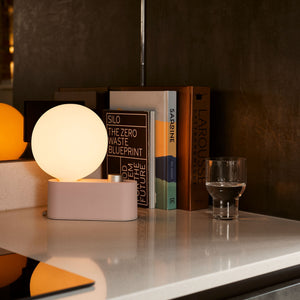
A multi-use LED table and wall light can support this kind of flexible layered setup because it is not limited to the traditional idea of a single desk position.

Desk Layout, Cord Access, and Power Placement Can Decide the Winner

A lamp may be the right style and still be the wrong fit if the desk layout cannot support it. Power access, cord paths, and object placement all influence whether a table lamp or desk lamp works better.

The lamp should not compete with essential desk zones

A functional desk has zones: screen zone, typing zone, writing zone, storage zone, and reach zone. A lamp should fit into these areas without interrupting them.

If a table lamp occupies the writing zone, it will feel frustrating. If a desk lamp blocks a monitor or pushes the keyboard too close to the edge, it is not placed correctly. The right lamp supports the layout instead of forcing the layout to work around it.

Power location affects where the lamp can live

Power access often determines lamp placement more than people expect. If the nearest wall outlet is behind the desk, cords may become visible or awkward. If the lamp shares power with a laptop, monitor, and charger, the setup can become cluttered quickly.

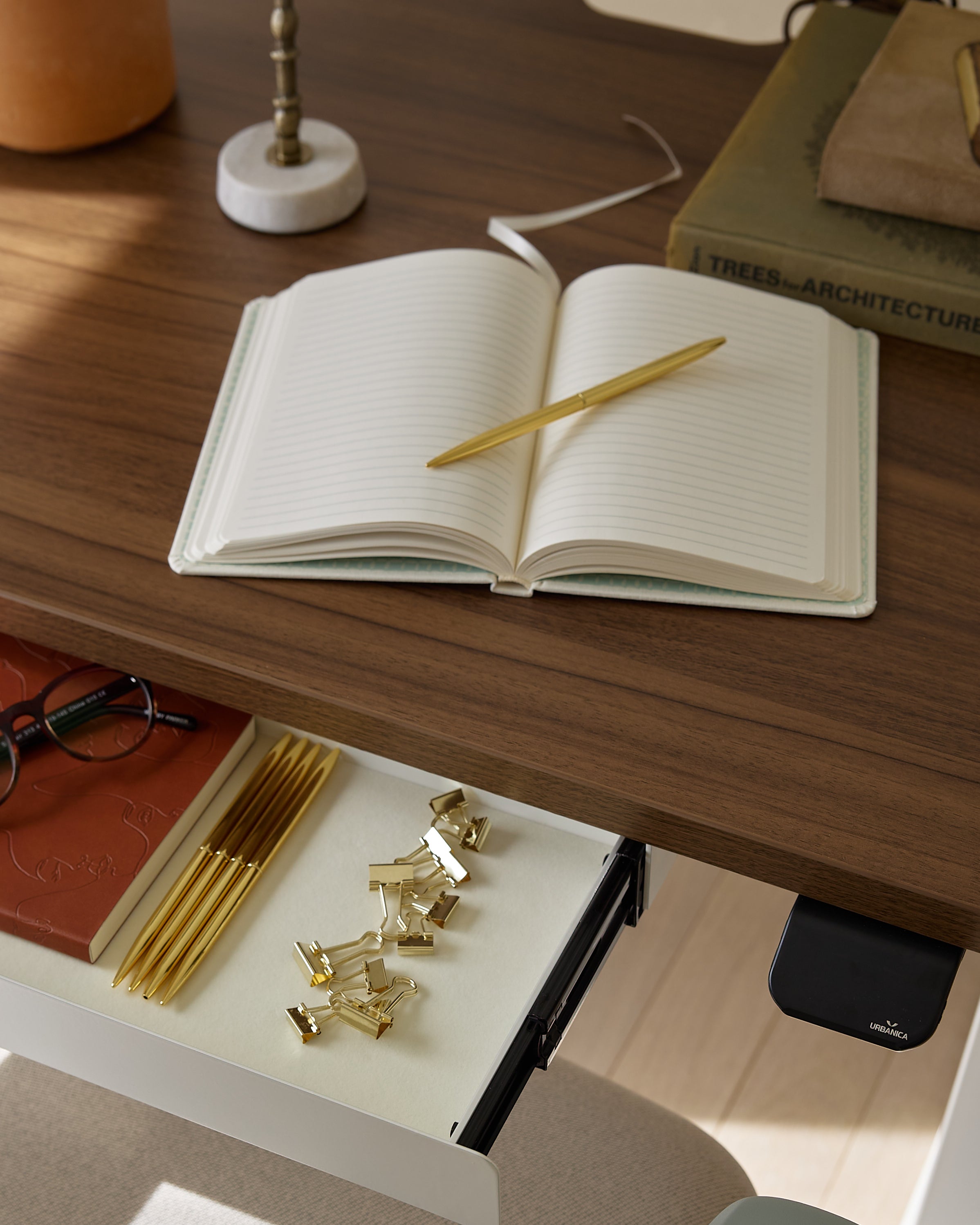
For a fixed workstation, an in-desk power outlet can help keep power access close to the work surface so lighting and devices feel more organized.

Flexible desks benefit from adaptable power access

Some workspaces change often. A desk may shift between laptop work, paperwork, video calls, and shared household use. In that case, fixed cord paths may not be ideal.

A clamp-on power outlet can support a cleaner setup when the desk arrangement needs to stay flexible. It also helps prevent the lamp from being placed poorly simply because that is where the nearest outlet happens to be.

Storage and Surface Clarity Influence the Right Lamp Choice

Lighting works best when the surrounding workspace is organized. A cluttered desktop can block light, create shadows, and make even a well-chosen lamp feel ineffective.

Table lamps need visual breathing room

A table lamp is partly functional and partly visual. It needs space around it to look intentional. If it is surrounded by loose papers, cables, mail, and devices, it can make the desk feel more crowded rather than more polished.

A table lamp is strongest when the surface around it is calm. That may mean placing it on a cabinet, shelf, or side table instead of the main desk.

Desk lamps work best when the task area stays clear

A desk lamp needs a clean path between the light source and the task. Stacks of paper, tall accessories, and monitor arms can interrupt the beam and create shadows. Keeping the work surface clear helps the lamp do its job.

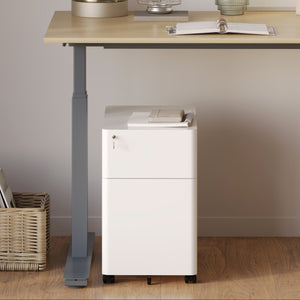
Storage plays a direct role here. A compact lockable filing cabinet can move paperwork away from the desktop, making it easier for either a desk lamp or table lamp to support a cleaner office layout.

Choosing a Lamp Based on Home Office Style

The right lamp should match the way the office looks and the way it functions. Style matters, but it should not override comfort or usability.

Minimalist offices need slim and intentional lighting

A minimalist home office benefits from lighting that has a clear purpose. A compact desk lamp, a simple table lamp, or a flexible wall light can all work, but the lamp should not add unnecessary visual weight.

The best minimalist lighting choices are quiet, useful, and easy to place. They support focus without becoming the loudest object in the room.

Warm residential offices benefit from table lamp softness

A warm home office often includes wood tones, fabric textures, soft seating, books, art, or decorative accessories. A table lamp fits naturally into this environment because it reinforces the residential feel.

This approach works especially well when the office is visible from other living areas. The lamp helps the workspace feel connected to the home rather than separated from it.

Dedicated workstations need furniture and lighting to work together

A serious home office is not built from one product. The chair, desk, storage, power access, monitor height, and lighting all affect one another. When these pieces are chosen as a system, the office feels calmer and performs better.

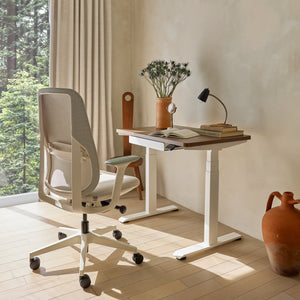
A workspace planned around modern ergonomic office furniture can make the table lamp vs desk lamp choice easier because the lighting supports the larger layout rather than compensating for a poor one.

Five Practical Questions for Choosing Between a Table Lamp and Desk Lamp

Use these questions to make the decision more precise:

1. What needs the most light?
Choose a desk lamp if the answer is documents, notebooks, drawings, or detailed desk work. Choose a table lamp if the answer is the room itself.

2. Where will the lamp sit?
A table lamp needs surface space and visual breathing room. A desk lamp needs a position that can direct light without blocking work.

3. Will the lamp create screen glare?
If the light reflects on your monitor or shines toward your eyes, the placement needs to change.

4. Does the office need focus, warmth, or both?
Focus points toward a desk lamp. Warmth points toward a table lamp. Both needs point toward layered lighting.

5. Is the desk small, medium, or large?
Small desks usually favor compact desk lamps. Larger desks and nearby surfaces can support table lamps more comfortably.

The Best Home Office Lighting Choice Balances Focus, Comfort, and Atmosphere

A desk lamp belongs in a home office when the work surface needs direct, reliable light. It is the stronger choice for reading, writing, reviewing papers, sketching, and focused daily work. It helps the desk function as a workstation.

A table lamp belongs in a home office when the room needs softness, warmth, and visual balance. It is the stronger choice for ambient lighting, video-call backgrounds, mixed-use rooms, and offices that need to feel connected to the rest of the home.

For many home offices, the best answer is not table lamp or desk lamp. It is table lamp and desk lamp, each placed with intention. The desk lamp supports the work. The table lamp supports the room. Together, they create a workspace that feels clear, comfortable, and genuinely livable.

Previous article How to Use a Table Lamp in a Home Office Without Losing Task Lighting
Next article Ergonomic Office Chair West Virginia: Creating Healthier and More Comfortable Workspaces

Leave a comment

* Required fields

Get 10% off your first order

Find the office furniture that’s designed to match your style, comfort, and needs perfectly. Subscribe

My Office

You have unlocked free shipping!

You're saving $29 and unlocked free shipping!


Your cart is empty.
Start Shopping

Contact Us