























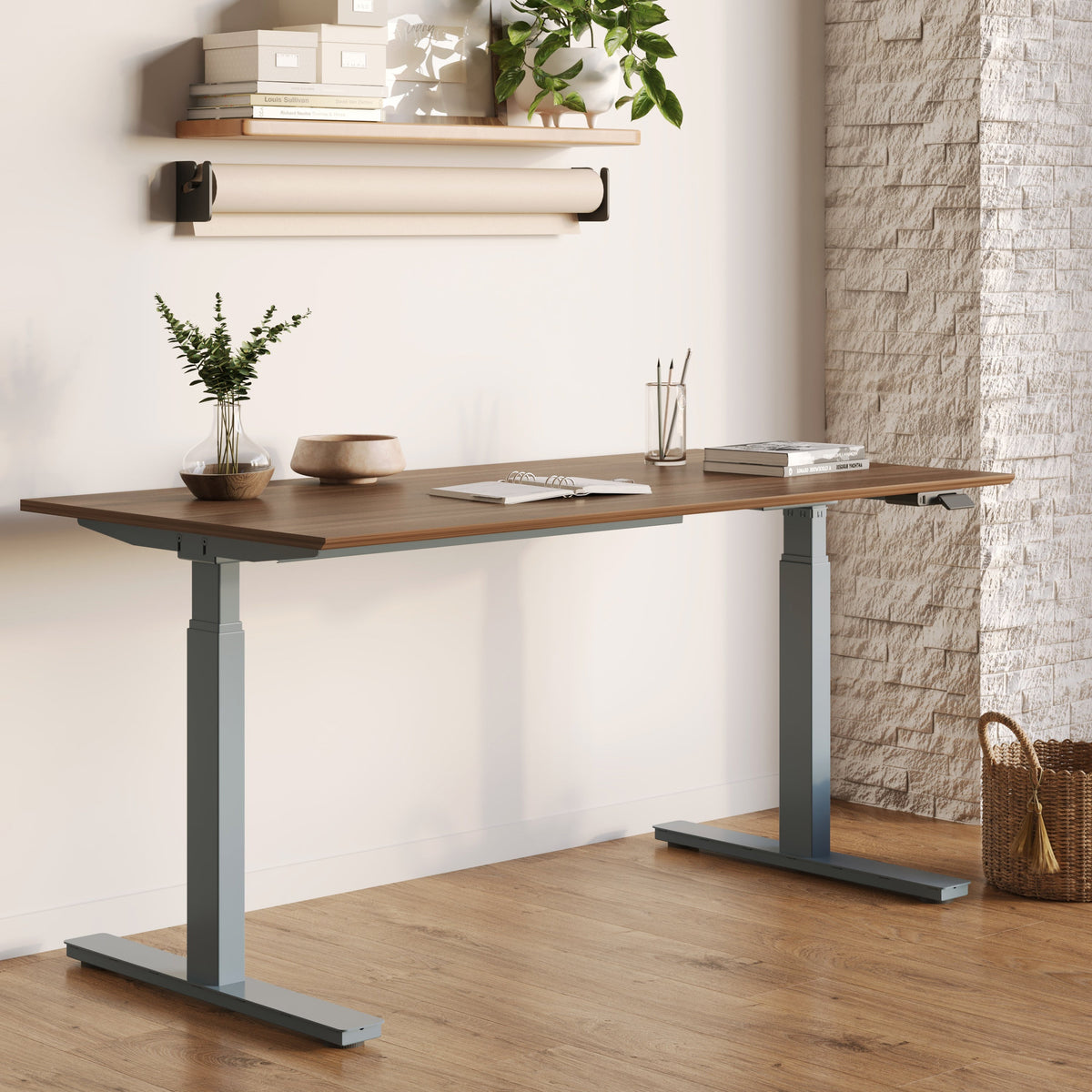
Standing Desks That Fit Studio Apartments

Studio Apartments as Multi-Purpose Living Systems
One Room Supporting Work, Rest, and Daily Life
Studio apartments operate as fully integrated living systems. A single open room must accommodate work, sleep, meals, and downtime without the benefit of physical separation. Furniture choices therefore shape not just how the space looks, but how it functions throughout the day. A standing desk in a studio is never just a workstation. It becomes part of the daily rhythm of the home and must support productivity without overwhelming the environment.
Standing desks that truly fit studio apartments are designed to coexist with daily life. They enable movement and focus while preserving openness, visual balance, and comfort in a space where every square foot matters.
Why Traditional Office Furniture Fails in Studios
Many office desks are designed for commercial settings with defined rooms and generous floor plans. Thick panels, deep surfaces, and enclosed bases make sense in those environments but often disrupt studio living. In a single-room layout, oversized desks block light, interrupt circulation, and make work feel permanently present.
Studio-appropriate standing desks take a different approach. They emphasize proportion, flexibility, and visual restraint so work can exist without dominating the home.
Spatial Considerations That Define the Right Standing Desk
Evaluating Footprint Beyond Basic Measurements
Width and Depth in Relation to Circulation
Floor area alone does not determine whether a desk fits a studio. Circulation paths are equally important. A desk that technically fits against a wall may still feel intrusive if its depth narrows walkways or interferes with seating and storage. Slimmer profiles often provide sufficient workspace while maintaining comfortable movement through the room.
Adequate clearance for standing transitions and chair movement ensures the desk supports daily routines rather than complicating them.
Vertical Proportion and Ceiling Awareness
Studios often feature lower ceilings or exposed lighting and ductwork. A standing desk must transition between seated and standing heights without becoming visually overwhelming at full extension. Designs with clean lines and open frames maintain balance with ceiling height, shelving, and nearby furnishings.
Vertical restraint helps the desk feel integrated rather than imposing.
Compact Desks and Habit Formation
Smaller desks often encourage better long-term habits in studio environments. Limited surface area discourages clutter and makes posture changes easier to maintain. When transitions between sitting and standing feel effortless, consistency becomes more achievable.
Right-sized desks support routine rather than novelty.
Standing Desk Designs Suited to Studio Living
Adjustable Standing Desks With Residential Proportions
A thoughtfully designed height-adjustable standing desk provides flexibility while remaining appropriate for residential interiors. Open frames, slimmer legs, and controlled surface dimensions allow the desk to function as a productive workstation without introducing a commercial office feel.
This type of desk works well for studio residents who need adaptability but want their workspace to visually recede outside working hours.
Small-Scale Standing Desks for Tight Layouts
Some studios require even more compact solutions. Reduced-width desks fit naturally into corners, window alcoves, or narrow wall segments. These designs support focused work sessions without requiring major layout changes.
A compact standing desk for small apartments encourages intentional use. By limiting surface area, it reinforces a minimalist approach that aligns with the realities of studio living.
Integrating Work Without Dominating the Home
Time-Based Zoning Instead of Fixed Boundaries
Studios benefit from flexible routines rather than permanent work zones. A standing desk supports time-based zoning, where the same area serves different purposes throughout the day. Work happens during designated hours, then transitions back into living space.
Desks that are visually restrained and easy to adjust make these shifts feel natural rather than disruptive.
Placement Strategies That Preserve Flow
Wall-Oriented Desk Arrangements
Placing a desk along a wall helps preserve open floor space and maintain a sense of order. Thoughtful cable management and minimal accessories reduce visual noise, allowing the desk to blend into the background when not in use.
Wall placement supports both function and visual calm.
Window-Facing Workspaces
Natural light plays a valuable role in small apartments. Positioning a desk near a window can improve comfort and reduce reliance on artificial lighting. Proper placement ensures glare is controlled and access to airflow remains unobstructed.
When done thoughtfully, window-facing desks enhance both productivity and atmosphere.
Seating as a Critical Companion to Standing Desks
Limitations of Casual Seating
Dining chairs and stools are rarely designed for sustained work. They often lack lumbar support and appropriate seat height, which can undermine the benefits of a standing desk during seated periods. In studios, where posture changes are frequent, this becomes especially noticeable.
Purpose-built seating supports healthier transitions between sitting and standing.
Chairs Designed for Everyday Work at Home
Studio-friendly work chairs balance ergonomic support with restrained proportions. Narrower frames, breathable materials, and clean silhouettes allow them to blend into living spaces rather than stand out.
A curated range of office chairs designed for everyday work makes it easier to find seating that complements both desk and apartment layout.
Minimal Ergonomic Seating for Open Spaces
The Novo ergonomic office chair offers supportive seating with a streamlined profile well suited to open-plan studios. Its restrained design allows it to integrate seamlessly into the living environment while providing comfort during seated work.
This type of chair supports productivity without visually anchoring the room.
Enhanced Support for Longer Seated Sessions
For studio dwellers who spend extended periods seated, additional adjustability and support become important. The Onyx ergonomic office chair provides a higher level of comfort while maintaining proportions appropriate for smaller spaces.
Choosing seating that balances comfort and scale helps maintain spatial harmony.
Visual Weight, Materials, and Design Harmony
Structural Transparency and Perceived Space
In studio apartments, perception shapes experience. Desks with open bases and visible floor beneath them create continuity and make the room feel more expansive. Heavy panels and enclosed storage interrupt sightlines and can make the space feel segmented.
Visual transparency supports calm and cohesion.
Finishes That Blend With Residential Interiors
Material choices influence how furniture feels within a living space. Neutral finishes, subtle textures, and matte surfaces integrate more easily into studios. Light woods and restrained metal accents reflect light softly and reduce visual contrast.
Consistent finishes across furniture help reinforce a cohesive environment.
Preparing for Movement and Change
Furniture That Adapts to New Living Situations
Studio living often involves relocation or layout changes. Desks that are right-sized and thoughtfully constructed adapt more easily to new environments. They fit through narrow entries, reposition without difficulty, and remain useful as routines evolve.
Adaptability contributes to long-term satisfaction.
Coordinated Desk Options for Cohesive Spaces
Exploring standing and sitting desk options within a unified design language allows residents to adjust their workspace setup without disrupting the overall aesthetic. Coordinated collections support gradual refinement rather than frequent replacement.
This approach maintains visual consistency over time.
Urban Living Realities That Influence Furniture Choices
Constraints of Apartment Buildings
Older apartment buildings often feature narrow staircases, tight hallways, and limited elevator access. Furniture designed with these realities in mind reduces friction during delivery and future moves.
Practical considerations play a central role in long-term usability.
Access to Furniture Within the Local Environment
Having access to workspace furniture available locally helps apartment dwellers better understand scale, materials, and proportions before committing. Local availability also simplifies support and replacement needs over time.
This accessibility supports confident, informed decisions.
Designing a Studio Workspace That Encourages Daily Standing
Reducing Friction in Everyday Use
The easier a desk is to approach and adjust, the more likely it is to be used consistently. Clear access, intuitive controls, and thoughtful placement reduce friction and support healthier routines.
In studios, simplicity often determines success.
Standing Desks as Part of a Balanced Living Environment
Standing desks that truly fit studio apartments do more than conserve space. They respect daily rhythms, support movement, and integrate naturally into single-room homes. When scale, proportion, and design align, the desk becomes part of the living environment rather than a compromise within it.
A well-chosen standing desk supports work while preserving the comfort and openness that define successful studio living.
Related Articles
-
 This Is How To Build A Small Home Office You Actually Want To Work From, And How To Pick Desks For Small Spaces - Urbanica Furniture's Full Guide
-
 Filing Cabinets for Small Spaces That Still Look Clean Now
-
 Minimalist Office Table Ideas That Work Like a Bistro Table
-
 Make Small Shared Spaces Work Better With a Bistro Table
-
 Best Filing Cabinet Layout Ideas for Small Home Offices and Shared Rooms
-
 What Size Filing Cabinet Makes Sense for Small Workspaces?


