



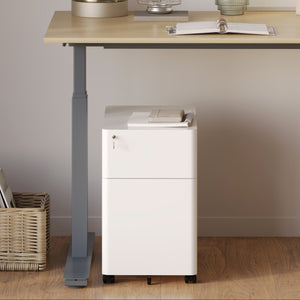



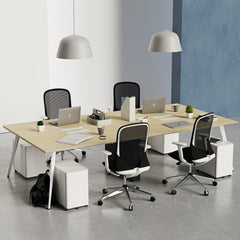
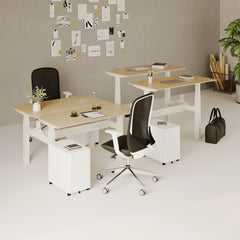
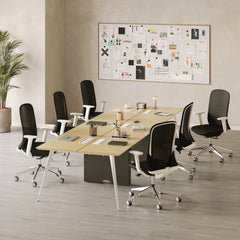


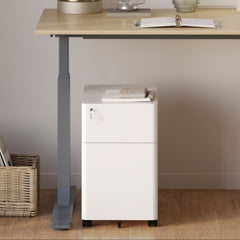


Filing Cabinet Choices for Cleaner Workstation Planning
Cleaner workstation planning starts with filing storage that matches the desk, document volume, security needs, and daily workflow. Explore how cab...
Learn more
Visit quiz page to see how we makes it easy to create an inspiring workplace


Workflows are made of repeatable behaviors: how tasks begin, how long attention holds, how often context changes, and how quickly people recover from mental and physical load. Desk choice influences each of those behaviors because it determines whether posture can change without interrupting work. A desk is not simply where a laptop sits. It is an anchor point for movement patterns, ergonomic tolerance, and the pace at which energy rises and falls throughout the day.
A standing desk and an adjustable desk can both support productive work, but they do it in different ways. The core difference is not “standing is good” versus “sitting is bad.” The difference is whether the workstation supports intentional variation. A fixed standing desk commits a workflow to one dominant posture. An adjustable desk makes posture a controllable variable inside the workflow itself.
The result shows up in everyday realities: whether someone can stay focused through a long writing session, whether a meeting-heavy schedule leaves the body stiff by mid-afternoon, whether collaboration feels fluid or physically awkward, and whether the workspace continues to fit when responsibilities change.
A standing desk is typically a fixed-height work surface intended to be used primarily while standing. Because the height is not meant to change during use, setup precision matters. If the height is even slightly off for the user’s body, the worker compensates with shoulders, wrists, or lower back. That compensation may be subtle at first, then increasingly noticeable over long sessions.
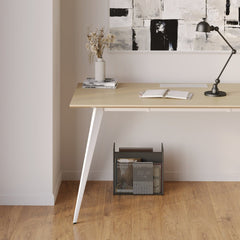
Fixed-height standing desks excel when the user’s tasks and movement patterns are consistent. They are straightforward, stable, and often visually minimal. The simplicity can be an advantage in spaces that favor clean lines and uncluttered workflow zones.
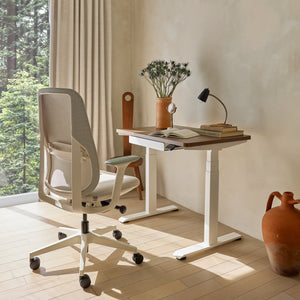
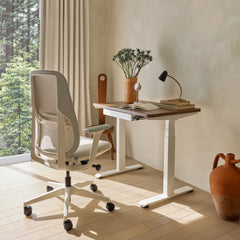
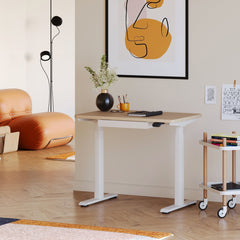
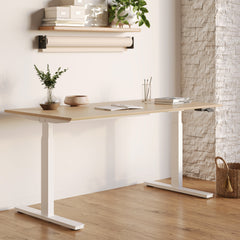
An adjustable desk is designed to support both seated and standing postures by changing the work surface height. That adjustment can be manual or motorized, but the defining feature is the ability to position the work surface appropriately for different postures and different users.
Adjustable desks fit workflows that change over the course of a day. They also fit teams where a workstation may be shared. Instead of forcing one posture all day, an adjustable desk supports posture as a deliberate part of work design.
Many comparisons treat standing desks and adjustable desks as opposites, but they are not always competing categories. A standing desk is a posture commitment. An adjustable desk is a posture system. The right decision depends on the workflow you need to support, not a universal rule about posture.
Workflows vary widely in cadence. Some jobs involve quick bursts of activity followed by frequent movement. Others require long periods of concentration. Fixed standing desks tend to support short to moderate task durations well, especially when the worker naturally moves often. Adjustable desks support a wider range, including long, uninterrupted sessions, because posture can change without leaving the workstation.
Most modern workflows involve context switching: responding to messages, joining calls, shifting between documents, and collaborating in real time. Posture can become a useful reset cue. Standing for a call, sitting for focused drafting, standing again for a quick review creates physical separation between cognitive modes. Adjustable desks make this easy. Fixed standing desks require the user to find reset cues elsewhere, often by stepping away or altering stance in place.
Precision work includes detailed writing, editing, design refinement, coding, and anything that benefits from stable positioning. Many people prefer a seated posture for precision because it reduces lower-body fatigue and supports fine motor stability. Active work includes sorting physical materials, fast-paced communication, quick review cycles, and collaborative ideation where movement feels natural. Standing desks can align well with active work. Adjustable desks can support both by allowing the posture to match the moment.
Energy is not constant. Morning momentum, mid-day dip, post-meeting fatigue, and late-day recovery are normal patterns. Adjustable desks help match posture to those shifts. Standing can support alertness during low-energy periods, while sitting can support endurance during long output phases. Fixed standing desks can work for people whose energy remains stable or whose workflow involves frequent movement, but they are less forgiving when energy drops and the body needs relief.
Standing desks often thrive in environments where work is not meant to be sedentary. In studios, project rooms, and collaborative spaces, standing can encourage quick exchanges and reduce the psychological “settling in” that sometimes slows momentum. The workstation becomes a hub rather than a nest.
Standing desks also fit roles where the worker frequently leaves the desk. If someone is moving between zones, checking inventory, reviewing samples, or facilitating team flow, a fixed standing desk can feel aligned with the natural movement of the day.
The moment a workflow demands extended focus, fixed height becomes the key limitation. Even with good stance habits, prolonged standing can lead to subtle fatigue that disrupts concentration. When fatigue builds, posture deteriorates. When posture deteriorates, discomfort increases. When discomfort increases, attention fragments.
Fixed standing desks can also constrain multi-user environments. A standing height that fits one person may not fit another. Without adjustability, shared workstations become compromise stations.
Effective standing desk use depends on movement. The healthiest standing posture is not static. It includes small shifts, brief walks, and changes in foot position. Standing desks support workflow best when standing is part of a movement-based routine, not a rigid requirement.
A standing desk should be evaluated by whether it supports the user’s real task patterns, not by whether it looks minimal or appears “better” than sitting.
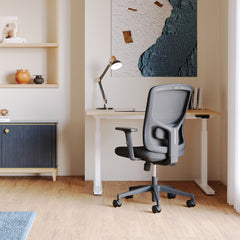
Many workdays include a blend of deep work, calls, collaboration, and quick administrative tasks. Adjustable desks fit that reality. A person can sit for a long writing block, stand for a meeting, sit again to finalize details, stand to reset after long screen time. That flexibility keeps posture aligned with task demands and helps reduce fatigue that accumulates from any single position.
For teams, adjustable desks also reduce friction when different people use the same workstation. Height adjustment becomes a practical necessity in shared environments, not an optional feature.
Adjustment method matters less than consistency of use. A desk that adjusts smoothly is more likely to be used as intended. A desk that feels cumbersome may be adjusted less, turning a flexible tool into a fixed habit. The best adjustable desk is the one that supports easy, repeatable transitions without turning posture changes into a distraction.
The most meaningful benefit is not novelty. It is controlled variation. Adjustable desks make it possible to change posture without abandoning the workstation or interrupting a train of thought. That protects workflow continuity while still allowing the body to recover.
| Workflow Dimension | Standing Desk (Fixed Height) | Adjustable Desk (Height Variable) |
|---|---|---|
| Best-fit task cadence | Short cycles, frequent movement | Mixed cadence, long sessions included |
| Posture variety | Low by design | High by design |
| Shared workstation readiness | Limited | Strong |
| Recovery during long work blocks | Requires stepping away or improvised relief | Built-in through posture switching |
| Precision task comfort | Varies by user tolerance | Stronger support due to seated option |
| Collaboration and quick stand-up moments | Naturally aligned | Strong when used intentionally |
| Long-term adaptability as roles change | Role-specific | Broadly adaptable |
Whether standing or adjustable, desk height must support neutral wrists and relaxed shoulders. Screen height must reduce neck strain. When the workstation is set too high, shoulders rise and wrists bend. When too low, the user collapses forward. Those patterns harm both comfort and output.
A desk is only as effective as its setup. The goal is not perfection. The goal is repeatable comfort that supports consistent productivity.
A common mistake is treating seating as optional once a standing option exists. In reality, most workflows still require sitting at times. Good seating supports recovery, deep focus, and precision. Poor seating undermines the benefits of both standing and adjustable setups.
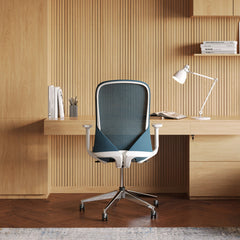
A curated range of office chairs for daily workstation use can function as a workflow stabilizer, supporting long sessions without encouraging slouching or rigidity.
Desk choice cannot replace movement. Micro-movements, brief walks, and posture shifts are what keep the body resilient. The best workstation supports these behaviors rather than locking the user into one pattern.
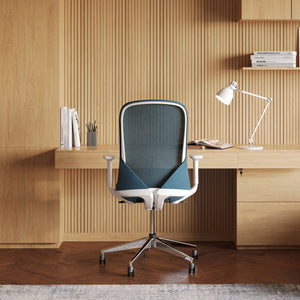
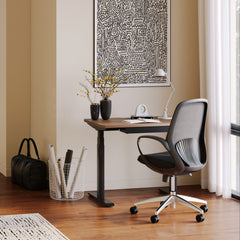
Adjustable desks often shine during long, seated focus blocks. That requires a chair that supports stable alignment without feeling restrictive. The chair should encourage upright posture, support the lower back, and allow subtle movement that prevents stiffness.
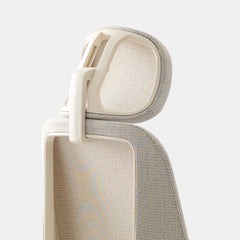
The Ergonomic Novo Chair fits adjustable desk routines that include long work blocks, especially when seated comfort is essential for sustained concentration and detailed output.
For workflows that shift posture multiple times a day, chair stability becomes important. The chair should support consistent positioning so the user does not need to “re-find” comfort every time they sit. This matters in meeting-heavy schedules where transitions happen quickly.
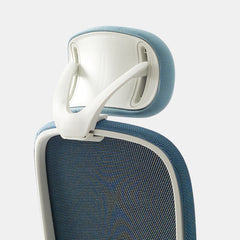
The Ergonomic Onyx Chair supports this kind of repeatability, helping seated phases feel reliable rather than distracting.
In standing-dominant workflows, occasional sitting is not a failure. It is part of endurance. A chair used for brief recovery sits can help maintain overall productivity by reducing fatigue accumulation that leads to poor posture.
The Muse Chair can serve as a practical option for light, intermittent seated use in flexible spaces where the workstation is not meant to be seated full-time.
Some standing desk environments are built around collaboration rather than long solitary sessions. In these spaces, seating is often used temporarily, especially when discussions run longer than expected or when someone needs a moment of seated stability for a detailed task.
The Seashell Chair can function well in these collaborative zones as occasional workspace seating without turning the environment into a permanently seated setup.
Workflows built on rapid task turnover often benefit from standing desks. When the day includes frequent movement and the desk serves as a check-in point rather than a long-term station, fixed standing can feel efficient and intentional.
Ideal characteristics include:
Frequent movement between zones
Short communication loops
Quick administrative tasks mixed with physical actions
High collaboration frequency
Workflows built on long creation blocks tend to favor adjustable desks. Sitting supports endurance and precision, standing supports resets and alertness. The ability to switch helps maintain productivity without forcing discomfort.
Ideal characteristics include:
Long writing, design, or analysis sessions
High time-on-task requirements
Periodic meetings that benefit from posture change
Output that depends on sustained concentration
Many teams operate in mixed modes. Meetings, messaging, deep work, and collaboration are interwoven. Adjustable desks align with this complexity because they adapt to the moment, especially when multiple users share a space or when job roles shift over time.
Standing desks can be simpler to place because they do not require the same adjustment range considerations. Adjustable desks benefit from a layout that supports transitions, allowing space for movement and chair positioning.
Clearance is not only about physical space. It is also about workflow clarity. If a desk is placed where movement feels cramped, posture switching becomes less likely. When movement is easy, good habits become natural.
Workspaces perform best when they support distinct behaviors: focused work, collaboration, quick check-ins, and recovery moments. Desk choice should reinforce those zones. A standing station in a collaboration zone can support quick exchanges. Adjustable desks in focus zones support long output.
This is where office planning becomes more than furniture selection. It becomes workflow design in physical form. For organizations designing cohesive layouts, workplace furniture solutions for productive offices support a broader approach to space planning that aligns furniture placement with how teams actually operate.
Workflows evolve. New responsibilities, new tools, new team structures, and new routines shift what a workstation needs to support. Adjustable desks often remain relevant as change occurs because they can adapt without replacing the core workstation. Standing desks remain valuable when the workflow remains stable and movement-based, but they can become less suitable if work becomes more sedentary or precision-heavy.
A well-designed workstation does not promise impossible results. It supports consistent habits that reduce friction and improve comfort over time. The most successful setup is one that people use naturally because it feels good and fits the work, not because it relies on rigid rules.
When desk choice is grounded in workflow reality, both standing desks and adjustable desks can serve effectively. The best decision is the one that matches task cadence, supports posture variation appropriately, and integrates seating and space planning into a cohesive system.


You have unlocked free shipping!
You're saving $29 and unlocked free shipping!
Leave a comment