



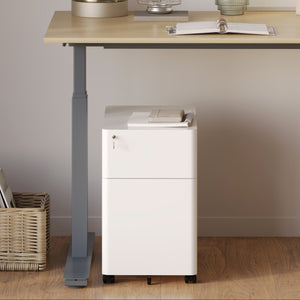






















Filing Cabinet Choices for Cleaner Workstation Planning
Cleaner workstation planning starts with filing storage that matches the desk, document volume, security needs, and daily workflow. Explore how cab...
Learn more
Visit quiz page to see how we makes it easy to create an inspiring workplace


A chair that looks great in a photo can feel completely different after a normal day of living. Daily use has a way of revealing what matters: how your hips settle after the first hour, whether your shoulders creep upward when you type, whether the seat edge presses into your legs, whether the backrest encourages a relaxed spine or a slouched one.
From our perspective at Urbanica, daily seating is a design decision with consequences. It affects comfort and productivity, but it also affects how a room works. Many people are furnishing spaces that do not fit neatly into “office” or “home.” A dining area becomes a laptop zone. A spare room becomes a studio. A living room corner becomes a Zoom background. The chair has to perform in that real world.
This is why “ergonomic chair vs stylish chair” is not a shallow debate. It is about choosing which priorities you want built into the structure of the chair, and which priorities you are willing to solve through the way you use and style the space.
Ergonomics is often treated like a marketing word, but daily comfort comes from specific physical decisions: shapes, ranges, and mechanisms that influence posture and movement. A true ergonomic chair is built to reduce unnecessary strain during seated tasks, especially when sitting is continuous.
An ergonomic chair earns its name when it supports a neutral spine, meaning the chair helps you sit without forcing the pelvis to tuck or the ribcage to collapse. Neutral does not mean rigid. It means your back is supported in a way that lets you breathe naturally and keeps tension from accumulating in predictable places like the lower back, neck, and shoulders.
Lower back support works best when it meets you where your curve actually is. Too high and it pushes the mid-back forward. Too low and it does nothing. In daily use, subtle but consistent lumbar contact is often more valuable than aggressive contouring.
Seat comfort is not only about softness. It is about the angle and the front edge. A seat edge that is too sharp can compress the underside of the thighs. A seat that is too deep can pull you away from the backrest. These small geometry choices become big after long stretches of sitting.
Adjustability should not feel like a complicated project. The best ergonomic chairs make it easy to set the essentials once and then rely on the chair to support you day after day.
Key adjustments that tend to matter most for daily use include:
Seat height to keep feet grounded and knees comfortable
Backrest tension or recline control for supported movement
Arm positioning that helps shoulders relax during keyboard and mouse work
Not every person needs every adjustment. What matters is that the chair can fit the body that is using it, in the space where it is being used.
Not every daily-use chair needs to be a full technical workstation chair. Some people need high support for focused desk work. Others need a versatile chair that looks at home in a dining area but still feels stable for a few hours at a laptop.
When we talk about options, it helps to see the full range of seating styles and functions together. Our Urbanica chair collection is designed to make it easier to compare forms and intended use cases without forcing a one-size-fits-all idea of comfort.
A stylish chair is not automatically uncomfortable. Many design-forward chairs feel great for daily life, especially when the chair is used in shorter blocks or across varied activities. The difference is that stylish chairs typically prioritize silhouette, proportion, and material expression first.
In real homes and studios, style is not superficial. It shapes whether a space feels calm or busy, whether it supports focus or feels distracting, whether it communicates warmth or severity. A chair can anchor a room visually the way a rug or lamp does.
Stylish chairs often succeed when:
The room needs a focal point or sculptural form
Seating is shared, rotated, or used intermittently
The chair must “belong” aesthetically across multiple functions
If a chair is used for extended desk work, the missing pieces become clearer. A beautiful silhouette does not automatically provide stable lumbar support. A fixed seat height might not match your desk. Armrests might be absent or decorative, which can push you toward shoulder tension during typing.
None of this means you should avoid stylish chairs. It means you should match them to the kind of daily use you actually have, not the kind of daily use you imagine.
Some designs manage to offer a strong visual identity while still being built for regular sitting. The Seashell Chair is a good reference point for a design that reads as sculptural while still being intended for dependable daily seating.
The most helpful comparison is not “ergonomic equals good, stylish equals bad.” The useful comparison is: what kind of daily sitting are you solving, and where will the chair live?
Short sitting sessions tend to reward softness and shape. Long sitting sessions tend to reward structure and support. If your day includes long uninterrupted blocks at a desk, an ergonomic chair often becomes the foundation that makes the rest of the workspace feel easier.
If your day is broken up, moving between tasks, rooms, or postures, a stylish chair can be the right daily partner because your body is not asking the chair to carry the full workload alone.
A chair that performs beautifully can still be the wrong choice if it overwhelms the room, clashes with the table height, or forces awkward placement. Daily use includes the daily reality of walking around the chair, pulling it in and out, cleaning around it, and seeing it in your peripheral vision for months.
| Daily-Use Factor | Ergonomic Chair Tendency | Stylish Chair Tendency | What to watch for |
|---|---|---|---|
| Long desk sessions | Supports posture over time | Comfort may fade in long blocks | Back support and arm support become decisive |
| Mixed activities | Can feel task-specific | Often blends across rooms | Consider how often you switch between work and life |
| Fit to desk height | Usually easier to dial in | Fixed heights can be limiting | Check elbow height relative to the work surface |
| Visual integration | Can read “work mode” | Often reads “design mode” | Choose based on whether the chair is always visible |
| Movement and recline | Often engineered for supported motion | May be fixed or minimally flexible | Supported movement often reduces end-of-day stiffness |
| Maintenance reality | Materials chosen for frequent use | Materials chosen for appearance | Prioritize surfaces that match your day-to-day habits |
A chair choice becomes easier when you look at a typical day and name the moments where the chair must perform. At Urbanica, we think about daily use in scenarios, because the best chair for one person can be the wrong chair for another who sits the same number of hours, but sits for different reasons.
If your chair is the base of a workday, you need reliability. The chair should support stable posture during typing, calls, and concentrated work, without requiring constant readjustment. This is the scenario where an ergonomic chair often justifies itself through day-to-day comfort.
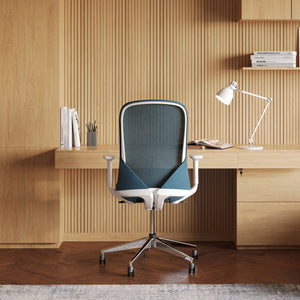
Our Ergonomic Novo Chair is positioned for this type of daily routine, where the chair is a primary tool rather than occasional seating.
Some daily routines are fluid. You might sketch, write, edit, eat, and meet, all from the same zone. Here, the chair must support multiple postures and still feel visually at home. A chair that is too technical can make the room feel like an office. A chair that is too decorative can make working feel like a compromise.
The Muse Chair fits this scenario as a design-forward office chair option, where the chair needs to contribute to the room’s look while still supporting consistent use.
Some people have a clear signal from their body when a chair is wrong: lower back fatigue, neck tension, pressure points, or a constant urge to shift. In these cases, prioritizing support is not a luxury. It is a practical response to daily comfort needs.
The Ergonomic Onyx Chair is aligned with this category, where the chair is expected to hold up through longer seated periods and support posture consistently.
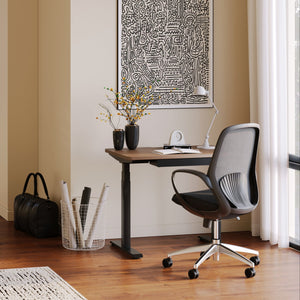
A chair can only perform as well as the setup allows. Even a high-quality chair will feel off if the desk height forces your shoulders up or your wrists down. Daily use magnifies these misalignments.
A supportive seating position typically involves:
Feet grounded
Knees comfortable, not pressed upward by the seat
Elbows able to rest near desk height without raising shoulders
Monitor positioned to reduce neck craning
The chair sets your base, but the desk controls your reach and your posture habits.
The goal is not a dramatic transformation. It is a setup that works daily without friction. Desk size, surface depth, stability, and adjustability all influence how well a chair choice will play out in real life.
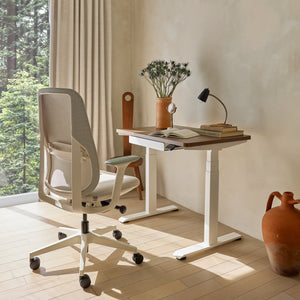
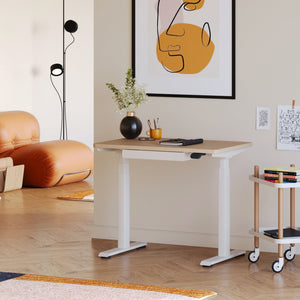
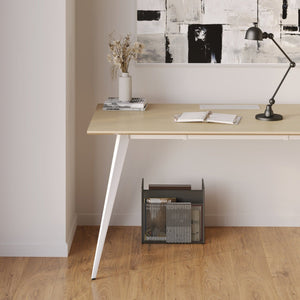
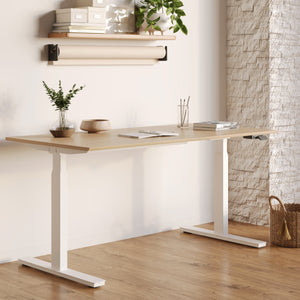
Our Urbanica desk collection is built around work surfaces intended for everyday use, which makes it easier to choose a chair and desk as a system rather than as separate purchases.
Many people assume they must pick one identity: comfort-first or design-first. In practice, the best daily-use choice is often a chair that leans toward one priority while respecting the other.
If you choose an ergonomic chair for function, you can still make it feel intentional in a design-driven room:
Match finishes and tones to nearby furniture to reduce visual contrast
Use lighting and wall art to shift focus from “workspace” to “space”
Keep the desk area visually clean so the chair does not read as clutter
If you choose a stylish chair for a multipurpose room, it helps to be honest about how to use it:
Break up long sitting with brief standing or movement
Use a supportive posture rather than perching forward for hours
Adjust your desk setup to reduce the strain the chair cannot solve
Daily use is about patterns. A stylish chair can absolutely be part of a healthy routine when the routine includes movement and reasonable sitting blocks.
Daily chair decisions feel complicated because they combine body comfort, room design, and habits. A simple checklist helps clarify which category aligns with your real needs.
1. Identify your longest continuous seated block on a typical day.
2. Name your primary seated task, such as typing, drawing, meetings, or dining.
3. Check whether the chair needs to live in a visible space or a dedicated work zone.
4. Decide whether arm support matters for your task.
5. Consider how often the chair is shared by others in the household or team.
6. Think about how you want the room to feel when you are not working.
If the longest seated block is long and task-focused, ergonomic features often matter more. If the chair must blend into a living space and support varied use, style and visual integration may take the lead.
Daily use changes again when the chair is not for one person in one room. In a professional environment, seating decisions involve consistency, space planning, and durability expectations across different users and roles.
Teams often need chairs that can adapt to different people without creating a complicated adjustment routine. They also need chairs that look cohesive across a space while supporting varied tasks, from focused work to meetings and collaboration.
When furnishing a workspace, the chair choice is linked to desk layout, circulation paths, and how people move through the day. This is where guidance and curated selection can make the outcome feel intentional rather than improvised.
For organizations thinking through workspace setup and seating decisions, our office furniture services for modern workplaces page provides a practical starting point for planning and sourcing without turning the process into guesswork.
The best daily-use chair is the one that stays comfortable in your actual routine and fits naturally in your actual space. Ergonomic chairs are often the right choice when sitting is a core part of work and posture support needs to be consistent. Stylish chairs are often the right choice when a room must remain visually cohesive and seating is part of a broader living pattern.
From our side at Urbanica, the goal is not to convince anyone that one category is universally superior. The goal is to help people choose seating that aligns with how they spend their days, how their spaces function, and how they want those spaces to feel when the laptop is closed.


You have unlocked free shipping!
You're saving $29 and unlocked free shipping!
Leave a comment