















Mesh office chair hard plastic painful: FAQs with simple answers

Why mesh can feel like hard plastic when you expected flexible comfort
Mesh is supposed to feel responsive, breathable, and supportive. When it feels like hard plastic, the cause is usually not the mesh itself. It is the interaction between the mesh, the seat frame underneath, and how your weight is being distributed over time.
The seat-frame rim is the most common “hard plastic” culprit
Many mesh seats are built like a trampoline stretched across a rigid perimeter frame. If your body compresses the mesh down far enough, you can feel the firm edge beneath it. That edge can register as plastic digging into your thighs or as a hard ring under your sit bones.
What rim pressure feels like vs normal firmness
-
Rim pressure feels sharp, localized, and repeatable. You can usually point to the exact spot.
-
Normal firmness feels even across a larger area and tends to fade as you settle.
Quick self-check for rim contact
Sit as you normally would, then slowly shift your weight forward and back by a few centimeters. If the “plastic” sensation appears and disappears at a specific spot, that is a strong sign of frame contact.
Mesh tension can hurt whether it is too tight or too loose
Mesh tension has a comfort window. Outside of it, pain shows up fast.
Too tight feels like a drum
Overly taut mesh does not give enough under your sit bones. Pressure concentrates in small zones, which can feel like a hard surface even though it is technically flexible.
Too loose creates a hammock effect
Overstretched mesh lets you sink. That often tilts your pelvis backward, encourages slumping, and can lead to tailbone pressure or low back fatigue. It can also increase the chance you bottom out onto the frame.
Breathability is not pressure relief
Airflow helps with heat buildup, but pressure distribution determines whether you can sit comfortably for extended periods. A breathable seat can still create pressure points if the front edge is aggressive or if the mesh collapses in the center.
Small variables can amplify discomfort
A few practical factors can make the same chair feel dramatically harder:
-
Thick seams, belts, or pocket items that create pressure lines
-
Sitting in one fixed posture for long blocks
-
A desk setup that forces you to perch or shrug
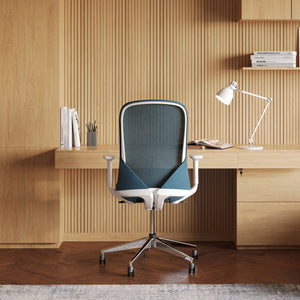
When the discomfort is consistent and clearly structural, comparing different seat constructions can be more productive than endless micro-adjustments. Our full office chair collection is useful for scanning seat styles side by side, especially if you want to move away from a mesh seat that keeps producing the same pressure points.
A 3-minute diagnosis that pinpoints what is actually causing the pain
A quick diagnosis works best when it is systematic. Instead of adjusting everything at once, isolate the problem by identifying the pain signature, then confirming the contact zone.
Step 1: Name the pain signature
Use the simplest label that fits:
-
Sharp edge pain (feels like plastic digging in)
-
Deep ache (dull pressure under sit bones or tailbone)
-
Numbness or tingling (often circulation-related)
-
Burning or hot spots (usually pressure concentration plus time)
Step 2: Identify the contact zone
Choose the closest match:
-
Front edge under thighs
-
Mid-seat under sit bones
-
Rear-seat near tailbone
-
Backrest and lumbar area
Step 3: Run four fast tests
This order keeps the results clean.
1. Two-finger rim test
Slide two fingers under the area that hurts and gently lift the mesh. If you immediately feel a rigid ridge underneath, rim pressure is likely part of the issue.
2. Feet-flat reset
Sit back, plant both feet flat, and adjust your seat height so your knees are roughly level with your hips or slightly lower. If thigh pressure drops quickly, circulation and edge pressure were major contributors.
3. Seat-depth gap check
With your hips all the way back, check the space behind your knees. If the front edge presses into the back of the knee area, the seat depth is too long for your leg length or you are not able to sit back comfortably.
4. 30-second recline test
Recline slightly and return to upright. If tailbone pain spikes when reclining, your pelvis is likely tucking under due to slumping or a mismatch between recline and lumbar support.
Step 4: Decide whether you are fixing setup, the chair, or both
-
If pain changes meaningfully with height, foot support, or seat depth, the setup is a big lever.
-
If pain stays in the exact same spot no matter what, seat architecture is probably the limiter.
Pain map FAQs with simple answers that match real causes
These are the questions we hear most often when someone says, “My mesh chair feels like hard plastic.”
Why does my mesh chair dig into my thighs?
Thigh discomfort usually means the front edge is taking too much load or circulation is being restricted.
Simple fixes that often work quickly
-
Lower the seat slightly so your feet are fully planted and your thighs are not being used as a support beam.
-
Check seat depth so the front edge is not pressing into the back of your knees.
-
Add stable foot support if you cannot get feet-flat positioning without raising the chair too high for your desk.
A practical sign you nailed the fix
If your thighs feel lighter and you can relax your legs without shifting constantly, edge pressure is under control.
Why does it feel like I am sitting on a hard ring?
That “ring” sensation is often frame contact or bottoming out.
Bottoming out vs rim pressure in 10 seconds
-
If the pain appears as you shift your weight and feels like a ridge, it is often rim pressure.
-
If the discomfort increases the longer you sit and you feel like you are sinking, it can be mesh collapse or bottoming out.
When the mesh is fine but the seat pan design is not
Some seats place the structural rim closer to the sitting surface. Even with good tension, the design can create edge loading for certain body types or sitting patterns.
Why does my tailbone hurt on mesh?
Tailbone pain often comes from pelvic tuck. When your pelvis tilts backward, pressure shifts toward the coccyx.
One change that often helps
Sit fully back, then slightly increase recline tension or reduce recline range so you are supported rather than collapsing. The goal is a stable pelvis, not a forced posture.
When lumbar support becomes the problem
If lumbar support hits too high or too aggressively, you may slide forward to escape it. That creates a chain reaction: forward slide leads to tailbone loading and more seat pressure.
Why do my hips feel pinched or uneven?
Hip pinching is often asymmetry, not “bad hips.” It can come from armrests forcing your elbows outward, or from perching instead of sitting back.
Simple reset
-
Lower armrests so shoulders relax.
-
Keep both feet anchored.
-
Sit back so the backrest shares the load.
Why does my lower back ache even with a mesh backrest?
Lower back ache often means the lumbar support is mismatched to your spine or you are losing pelvic stability over time.
What supportive lumbar feels like
Support should feel present, not pushy. If you notice yourself constantly shifting to get away from the lumbar area, it is either too aggressive or positioned incorrectly.
Mesh seat mechanics explained like a comfort engineer
When mesh feels like plastic, the mechanics usually come down to pressure concentration and how your posture changes over time.
The pressure triangle that decides comfort
A chair has to balance three contact zones:
-
Thigh support without cutting circulation
-
Sit bone support without creating hard points
-
Back and lumbar support that keeps the pelvis neutral
If one corner of the triangle fails, another corner gets overloaded. That is why fixing thigh pressure can suddenly reduce low back fatigue, and why changing lumbar settings can change how hard the seat feels.
Why the same chair feels worse after two to three hours
Pressure points are not just about shape, they are also about time. Small compression, subtle slumping, and reduced movement allow pressure to build in the same tissue areas. Even a good seat can become uncomfortable if your setup encourages stillness.
Common mesh failure modes that change feel
Mesh can also change over the life of a chair.
Stretch and sag that creates a permanent dip
A sagging center encourages pelvic tuck and can make the seat feel harder in the wrong places because your weight is no longer distributed evenly.
Uneven tension that subtly twists your pelvis
If you consistently sit slightly off-center, the mesh can develop uneven tension. Over time, that can create a “crooked comfort” sensation where one hip feels higher or more pressured than the other.
When adjusting cannot overcome architecture
If the seat edge always feels harsh, or you keep finding the same “hard ring” regardless of setup, it is usually more honest to say the seat design is not the right match for your body and work style.
Desk setup mistakes that make mesh feel harder than it is
Many “mesh is painful” complaints are actually “desk and chair are fighting each other.” When the desk is too high, the chair often gets raised to compensate, which increases thigh pressure and makes the seat feel harder.
The desk-too-high chain reaction
1. Desk is high relative to your elbows
2. Chair gets raised so your arms reach the keyboard comfortably
3. Feet lose stable contact with the floor
4. Thighs carry more pressure at the front edge
5. Mesh feels like a plastic rim
Screen position can push pain into the seat
If your monitor is too low or too far forward, you tend to lean in. Leaning forward reduces backrest support and shifts more pressure into the seat, especially into the front edge and sit bones.
A simple alignment method using household objects
-
Elbows should rest comfortably at the desk height without shrugging.
-
Feet should be stable. If the chair must be higher for elbow comfort, add a footrest or a sturdy platform so your legs are not hanging.
-
Eyes should meet the upper portion of the screen without craning your neck.
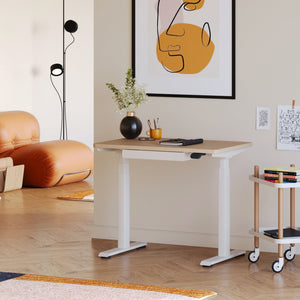
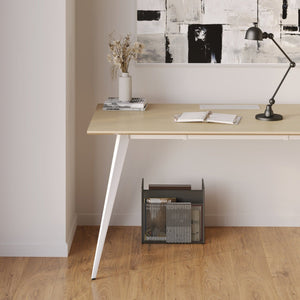
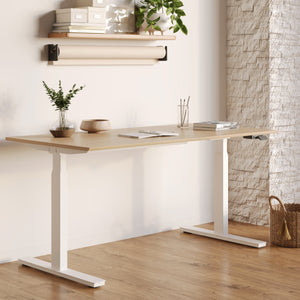
If you are building a setup from scratch, choosing a desk that matches your working posture can prevent many chair problems from showing up in the first place. Our desk and standing desk selection is a practical reference for comparing desk styles and work surface heights as part of a complete workstation.
Seat pads, footrests, and quick fixes that help without creating new problems
Quick fixes can be helpful when they address the real cause. They can also backfire when they simply mask symptoms.
When a thin seat pad helps vs hurts
A thin, supportive pad can help distribute pressure and soften edge loading. A thick, plush cushion often creates instability and raises your sitting height, which can reintroduce desk mismatch and shoulder tension.
A safe rule of thumb
If a pad makes you feel perched or wobbly, it is probably too thick or too soft for the problem you are trying to solve.
Tailbone cutout cushions are not universal
Cutout cushions can help when tailbone pressure is the primary issue, especially when pelvic tuck is under control. They can be frustrating if the main issue is thigh circulation or seat height, because they do not solve the root cause.
Footrests are one of the most reliable fixes
When feet support is missing, a footrest often provides immediate relief. It reduces thigh loading, improves circulation, and stabilizes posture so the backrest can do its job.
Armrest tuning can stop hip and thigh pain
Armrests that are too high elevate the shoulders and pull the torso forward. Armrests that are too wide push elbows outward and encourage twisting. The goal is relaxed shoulders and straight forearms.
Mesh vs foam vs shell seats for people who feel “plastic pain”
Not every body tolerates mesh the same way. If you consistently feel rim pressure or hard points, a different seat construction may be more comfortable.
Mesh seats
Mesh can work beautifully when tension is well-calibrated and the seat edge is forgiving. It can also feel harsh when the rim is prominent or when the mesh sags over time.
Foam or hybrid seats
Foam and hybrid constructions often feel more forgiving because they distribute pressure more evenly across the seat. Breathability varies, so comfort depends on the full design, not just the material.
Supportive shell seats
Some people prefer shell-style seats because the support surface is consistent and predictable. When mesh feels like it is constantly changing under you, a stable shell can feel more secure.
Pain complaint to seat style match table
| What you feel first | Most likely cause | Setup change to try first | Seat style that often feels better |
|---|---|---|---|
| Thigh numbness or tingling | Seat too high or front edge pressure | Lower seat, add foot support, check seat depth | Waterfall edge or more forgiving seat pan |
| Hard ring under sit bones | Rim contact or bottoming out | Confirm with rim test, adjust posture stability | Hybrid seat pan or a design with less rim prominence |
| Tailbone pain when reclining | Pelvic tuck and recline mismatch | Increase recline support, refine lumbar position | Seat that supports neutral pelvis consistently |
| Hip pinching or unevenness | Asymmetry, armrest interference | Reset armrests, sit fully back | Wider or more contoured seat pan |
| Low back fatigue over time | Slumping, lumbar mismatch | Adjust lumbar height, stabilize feet | Backrest with balanced lumbar feel |
Choosing a chair when mesh is painful, using honest comparison points
When someone tells us mesh feels like hard plastic, we focus on three practical criteria: seat edge feel, adjustability that supports neutral posture, and the overall support style that matches how they work.
Seat edge and seat pan feel should lead the decision
The seat edge is where “plastic pain” typically lives. If the front edge presses into your thighs or the rim shows up under your sit bones, comfort will be difficult no matter how good the backrest is.
Adjustment range only matters if it solves your pain pattern
More adjustability is helpful when you can use it to stabilize your posture and distribute pressure. It is less helpful when the seat itself is the main limiter.
Concrete model pages for readers who want to compare specifics
For those who prefer comparing actual product pages instead of vague descriptions, these references keep things straightforward:
-
The Ergonomic Novo Chair product listing is a useful starting point when you want a dedicated ergonomic chair and want to review the exact configuration details shown on the page.
-
The Muse Chair product listing helps when you are evaluating a chair that is positioned as adjustable seating and you want to see the model’s presentation and options as listed.
-
The Ergonomic Onyx Chair product listing is helpful when you want to compare another ergonomic model and review what is explicitly listed for that chair.
-
The Seashell Chair product listing is a practical reference when you want to evaluate that specific model and confirm the available variations shown on-site.
A simple decision filter based on your pain map
Use the pain you feel first as the filter:
-
If thighs go numb first, prioritize seat edge comfort and stable foot support.
-
If tailbone pain is the dealbreaker, prioritize pelvic stability and a backrest feel that does not force you to slide forward.
-
If stability matters more than softness, look for seat designs that distribute pressure consistently and encourage sitting back.
Testing chairs without being fooled by the first minute
A chair can feel fine for sixty seconds and still be miserable after the first long work block. Testing should focus on pressure points, circulation, and whether you can stay supported without constant micro-adjustments.
The five-minute sit test that reveals rim pressure and circulation problems
1. Sit fully back with your hips anchored.
2. Plant both feet and relax your shoulders.
3. Wait one minute without shifting. Notice where discomfort starts.
4. Do the rim test and the seat-depth gap check.
5. Recline slightly and return upright. Notice whether pressure moves to the tailbone or thighs.
If the same pressure point shows up repeatedly during this test, it is likely structural rather than a minor setup issue.
The adjustment order that prevents false negatives
When testing, change one variable at a time and use a consistent order:
1. Seat height
2. Seat depth or sitting distance from the backrest
3. Armrest height and width
4. Recline tension and lock behavior
5. Lumbar position and feel
Where to confirm ordering and delivery questions without relying on assumptions
When shoppers want clarity on region-specific delivery availability, support, and common ordering questions, our delivery and support FAQ hub provides answers in one place. It is designed to reduce guesswork while you focus on fit, comfort, and workspace planning.
Comfort past hour three when mesh feels like plastic
Long-session comfort is rarely about one magic setting. It is about maintaining pressure distribution over time, keeping your pelvis stable, and introducing small movement so your tissues are not loaded the same way for hours.
Micro-movements that reduce pressure peaks without breaking focus
-
Shift your weight left and right for two slow breaths every so often
-
Do one gentle recline and return to reset your pelvis
-
Stand briefly during natural transitions, like switching tasks or finishing a call
These are small, realistic habits that reduce the intensity of pressure points without turning your day into a constant stretching routine.
A break cadence that fits meeting-heavy days
Instead of chasing perfect posture, use predictable moments to reset:
-
Stand when you do not need to type
-
Re-seat yourself fully back after long calls
-
Re-check feet placement before deep work blocks
Mesh longevity signals that the seat is changing, not your body
If a chair used to feel fine and now produces consistent hard spots, the seat may be stretching or losing tension. If discomfort appears faster than it used to and the seat feels less supportive in the center, it is worth treating it as a material change rather than a personal posture failure.
The most reliable long-term fix is seat architecture that matches your body and work style
When mesh feels like hard plastic, the honest goal is not to force your body to tolerate a design mismatch. The goal is to build a setup where the seat edge, the support feel, and the desk relationship work together naturally. That is what reduces pressure points, keeps circulation stable, and makes comfort repeatable day after day.
Leave a comment