

























Filing Cabinet Choices for Cleaner Workstation Planning
Cleaner workstation planning starts with filing storage that matches the desk, document volume, security needs, and daily workflow. Explore how cab...
Learn more
Visit quiz page to see how we makes it easy to create an inspiring workplace


Small rooms rarely fail because they are too small. They fail because too many functions are being asked of the same footprint without a clear layout strategy. A bistro table works well in that tension because it offers a smaller, lighter surface that can support meals, laptop work, reading, short meetings, and everyday overflow without demanding the same visual or spatial commitment as a full dining set or a larger workstation. Urbanica’s bistro table is positioned for office and home use, while its desks and chairs collections emphasize ergonomic, modern workspace solutions, which makes the category fit naturally into both apartment and compact office planning.
The most successful bistro table layout is not simply the one that looks attractive in a photo. It is the one that protects movement, supports the room’s primary habits, and keeps the surrounding furniture proportional. In a small apartment, that can mean turning an unused corner into a daily dining and work spot. In a compact office, it can mean creating a softer collaboration zone that does not require a full conference setup. The goal is not to make the room do more through clutter. It is to make the room do more through better editing.
A bistro table succeeds in compact rooms because its scale is inherently easier to control. A smaller top reduces floor coverage, but the bigger benefit is often visual. When the table feels lighter than the surrounding furniture, the room reads as more open even when every piece is being used every day. Circular forms help even more because they remove hard corners from already tight traffic paths.
In a studio, every square foot has to justify itself. A bistro table can function as a breakfast surface in the morning, a laptop perch in the afternoon, and a casual dinner spot at night without requiring the room to be rearranged each time. That kind of flexibility matters more than raw table size. A larger table may offer more surface area, but if it interrupts circulation or forces awkward chair placement, the room becomes harder to live in.
This is where a compact bistro table becomes especially useful. Urbanica’s product page describes it as suitable for office and home settings, which aligns with the kind of hybrid use that small apartments and compact offices demand.
Rectangular tables can work in some small rooms, but they often introduce sharp corners where movement is already constrained. In apartments with a kitchen pass-through, a slim corridor, or a sofa placed close to the dining area, rounded edges help the body move through the room more naturally. The difference may seem subtle on paper, but in daily use it affects how calm the space feels.
Many small homes and offices are weighed down by furniture that exists for a single purpose but gets used only occasionally. A breakfast table that is only for meals, or a side meeting table that is used once a week, takes up too much room if it cannot adapt. A bistro table earns its place when it supports several routines with minimal adjustment.
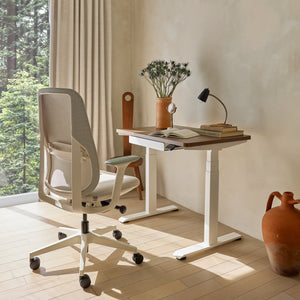
A dedicated desk is still the right choice for people who spend long hours at a computer, need integrated accessories, or require a more task-specific setup. Urbanica’s desks collection is built around adjustable ergonomic office desks and modern workspace use, so it is a better fit for sustained workstation needs.
Still, in rooms where work is intermittent rather than constant, a bistro table can be a smarter use of space than a full zone built around adjustable ergonomic office desks. The key is to be honest about how the surface will actually be used most days.
Good placement starts before the table enters the room. Layout planning matters because small spaces do not absorb mistakes gracefully. A table that is only slightly oversized, or only slightly too close to a doorway, can make the whole room feel unresolved.
The first test is simple. Can someone walk past the table comfortably when chairs are tucked in? Can someone sit down without blocking a main path entirely? Can a cabinet, appliance door, or entry door still open without conflict? In small rooms, flow is the first design decision and the last one the room forgives.
Before placing the table, look for areas where multiple functions already collide. Common pressure points include kitchen thresholds, entry lanes, the gap between a sofa and media unit, and storage doors. In offices, pressure points often include filing access, printer stations, and the path between the primary desk and the door.
Some rooms benefit from a clearly defined bistro zone. Others need the table to feel almost secondary so the entire room remains visually open. In a square studio corner with natural light, the table can act as a focal point. In a very narrow open-plan room, it may be better for the table to sit quietly along a transition without drawing too much attention.
A table can technically fit and still feel wrong. Thick bases, bulky chairs, and too many surrounding accessories can make a compact setup feel heavier than its footprint suggests. The best layouts keep the table and its supporting pieces visually consistent.
Small apartments reward layouts that turn awkward areas into stable routines. The strongest bistro setups do not feel like leftover solutions. They feel like the room was always meant to work that way.
A corner near a window is often one of the best places for a bistro table in a studio apartment. It defines a purpose without requiring a divider. Two well-scaled chairs, one table lamp, and a restrained tabletop are usually enough. This arrangement supports breakfast, email, reading, or a short work session while keeping the center of the room more open.
Corners are often too shallow for larger furniture but ideal for a two-seat table. They also help the table feel grounded rather than floating awkwardly in the middle of the room.
In one-bedroom apartments and open-plan rentals, the space between the kitchen and living room often needs to work harder than any other part of the home. A bistro table in this zone can act as the everyday dining area without introducing the mass of a traditional dining set. It is also practical for grocery sorting, quick prep overflow, and short laptop tasks.
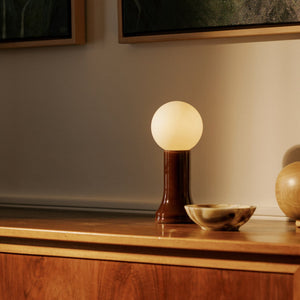
A bistro table near daylight can become one of the most used places in a small apartment, especially for people who alternate between quiet work, meals, and casual downtime. Evening use matters too, and that is where a softer light source can make the area feel complete rather than temporary. Urbanica’s Shore lamp is described as a table lamp made from recycled glass, which makes a recycled glass table lamp a natural fit for a compact table corner that needs warm, contained light.
In many apartments, there is no separate dining room, only a bit of open area beside the sofa or near a bookshelf. Placing the bistro table at the edge of the living zone can create a distinct function without building a hard boundary. This works best when the table is close enough to feel connected to the room, but not so close that seated dining interferes with lounging or walking paths.
Compact offices benefit from furniture that creates softer, more flexible interactions. A bistro table can introduce a human-scale working area that feels less formal than a conference table and less transactional than sitting across a main desk.
A small office often needs a place for quick review sessions that do not justify a full meeting room. A bistro table gives two people enough room to open laptops, review notes, or sketch ideas without overbuilding the space. It is especially effective for creative teams, founders, consultants, and private offices where spontaneous discussion happens often.
Not every conversation needs to happen at a primary workstation. A small bistro setup in a side corner can support informal conversations, candidate waiting moments, or quiet one-on-one check-ins. Because the scale is smaller, the atmosphere tends to feel more approachable.
Inside private offices, a second small table changes the tone of a conversation. Reviews, planning sessions, and collaborative edits often feel more balanced when both people sit beside a shared surface rather than across a desk. Urbanica’s office furniture page presents ergonomic and modern office furniture solutions, so a phrase like modern workspace furniture truthfully reflects the destination without leaning on the location name itself.
Tiny offices often look improvised when every surface has a different visual language. A bistro table helps most when the surrounding pieces feel coordinated in scale and purpose. That usually means two seats, one light source, and just enough supporting storage nearby to prevent the tabletop from becoming a catchall.
Chairs can quietly ruin a small-space table setup. Even a well-placed table starts to feel wrong when paired with seats that are too wide, too heavy, or difficult to tuck in.
Slimmer seating preserves the openness around the table and makes it easier to move in and out of the setup. Armchairs can work, but only if they do not project too far past the tabletop edge or block the nearest path.
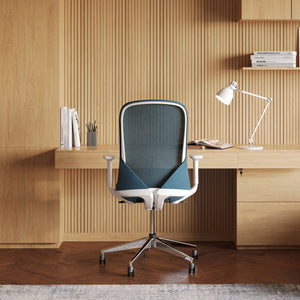
If the table is mainly for eating and short stays, the chairs can stay simpler. If the same table supports longer work sessions, comfort becomes more important. Urbanica’s chairs collection focuses on ergonomic office chairs, which makes it appropriate when the bistro setup is expected to handle more frequent computer or focused seated use.
That makes ergonomic office chairs a better companion when the table regularly shifts into work mode, especially in compact offices or hybrid live-work rooms.
Small rooms often look more polished and function better when the seating count is restrained. Two properly scaled chairs preserve movement and keep the setup practical. Four chairs around a small table may look complete in theory, but in daily use they often create congestion.
The final layer around a bistro table should clarify the zone, not compete with it. In compact interiors, light and accessories have an outsized impact because there is less room for visual error.
Daylight should influence placement whenever possible. A table intended for meals, reading, and light laptop work will almost always feel better near a window than deep in a dim interior corner. After sunset, the right fixture should reinforce the setup’s main use.
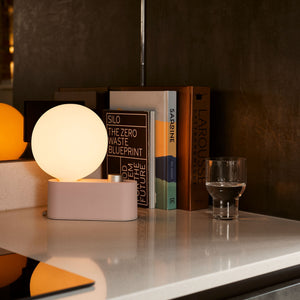
Urbanica’s Alumina Lamp is described as a multi-use LED table and wall light. That versatility makes the Alumina Lamp especially relevant for compact areas where one piece may need to handle both function and atmosphere.
A bistro table in a small room cannot carry the same decorative load as a large dining table. One small tray, a coaster set, or a compact plant is usually enough. If the table also supports work, every accessory should justify the surface area it consumes.
The best finishing pieces are the ones that keep the table more usable, not busier. Urbanica’s accessories collection includes office-oriented accessories and modern workspace add-ons, so workspace accessories fits naturally when discussing supporting pieces that help compact setups stay organized.
Mistakes with small-space furniture are usually not dramatic. They are accumulative. A table is a little too large, the chairs are a little too thick, the lamp is a little too dominant, and soon the room feels crowded even though nothing seems obviously wrong on its own.
A table may look perfectly proportioned online and still fail once real movement is considered. Always think about the chair in use, not just the table at rest.
Wall-hugging is a common instinct in small rooms, but it can create awkward negative space and make the furniture arrangement feel accidental. Sometimes pulling the table slightly away from the wall creates a more natural and balanced layout.
The strongest small-space layouts are flexible because real life is flexible. A bistro table works best when it is allowed to serve meals, work, conversation, and quiet downtime instead of being protected for just one idealized function.
The best bistro table layout ideas for small apartments and compact offices are not about squeezing more furniture into less space. They are about giving one well-chosen piece a clear role inside a room that needs to remain adaptable. When flow comes first, the table stays proportional, and the supporting chairs, lighting, and accessories remain disciplined, even a very compact room can feel composed, useful, and easy to move through. The result is not a room that feels fuller. It is a room that feels more resolved.


You have unlocked free shipping!
You're saving $29 and unlocked free shipping!
Leave a comment