























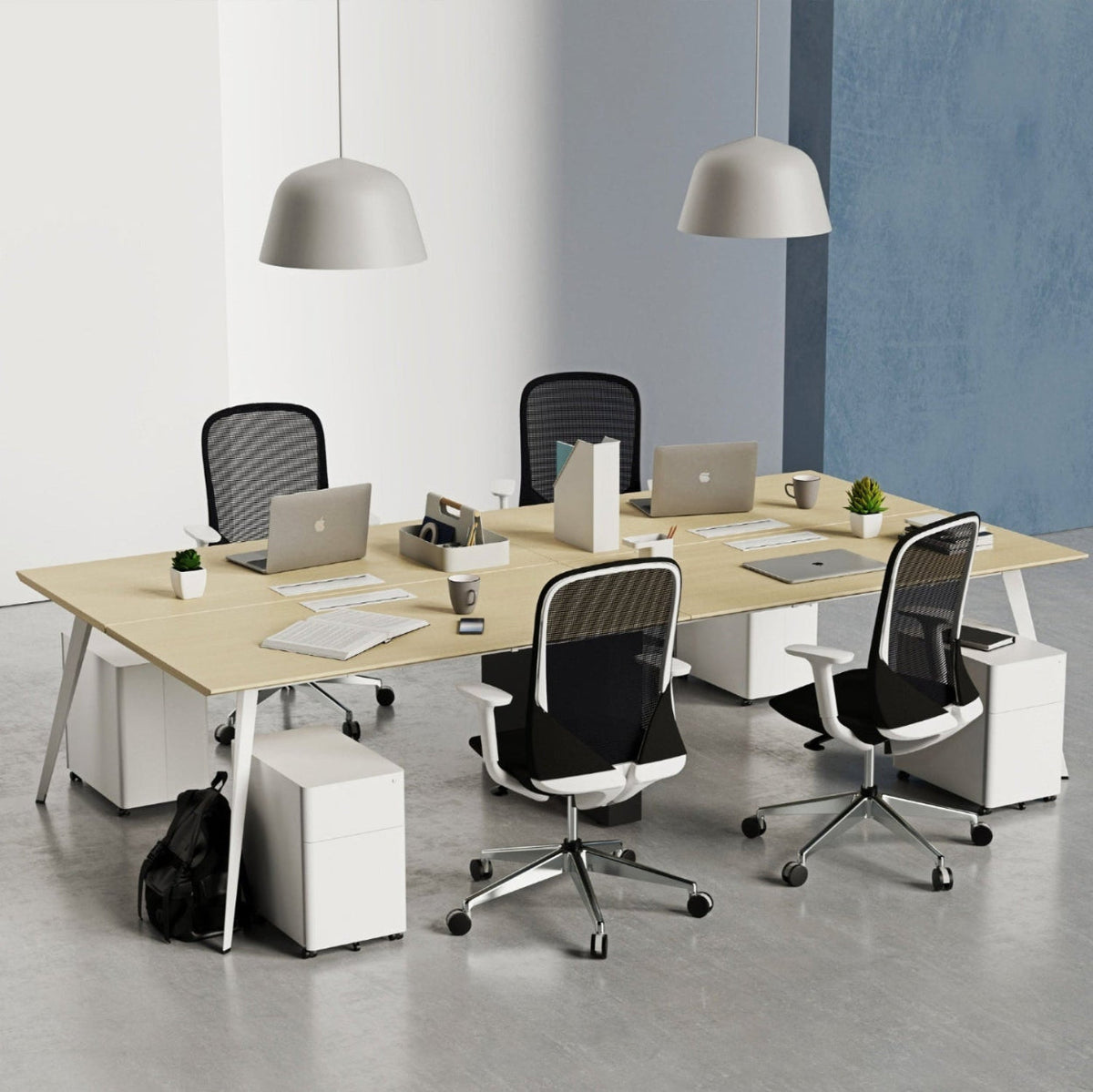
How to Match a Filing Cabinet with Your Desk for a Cleaner Office Look

A clean office does not come from hiding every object. It comes from making each object look like it belongs. The desk carries the visual weight of the workspace, while the filing cabinet controls how much paper, tech clutter, and loose office material stays off the surface. When those two pieces work together, the entire office feels more composed, calmer, and easier to use.
The mistake many workspaces make is treating the filing cabinet as a late addition. A desk is chosen first, then storage is pushed underneath it, beside it, or into a corner without considering scale, finish, drawer clearance, or the way the room is viewed from the doorway. Even when the cabinet is useful, it can make the office look crowded if it feels disconnected from the desk.
A cleaner office look starts with pairing the desk and filing cabinet as one functional zone. A lockable rolling filing cabinet can support that goal when the workspace needs compact storage that keeps important documents contained without turning the desktop into a paper drop zone.
Why Desk and Filing Cabinet Coordination Defines Office Visual Order
Visual Weight Shapes the First Impression of the Workspace
Visual weight is the quiet design factor that decides whether a desk and filing cabinet look balanced. It describes how heavy, light, tall, wide, dark, or visually dense a piece feels in the room. A cabinet can be physically compact but still look heavy if it has a dark finish, strong edges, or a block-like shape. A larger piece can feel lighter if it sits low, has simple lines, or blends with the desk finish.
Matching a filing cabinet with a desk is not only about choosing the same color. A clean office look depends on proportion. A slim desk paired with an oversized cabinet can feel lopsided. A sturdy desk paired with a very small cabinet can look accidental. The goal is to create a furniture relationship where neither piece competes for attention.
A good pairing usually follows one of three strategies:
1. Match the overall color family for a seamless look.
2. Repeat one material or finish detail between the desk and cabinet.
3. Balance contrast by repeating the darker or lighter tone elsewhere in the workspace.
When these choices are intentional, the cabinet becomes part of the desk setting instead of looking like storage that wandered into the room.
Desktop Clutter Often Comes from Poor Storage Placement
Many messy desks are not caused by poor habits alone. They are caused by storage that is inconvenient. If files are too far away, supplies are buried, or drawers are hard to open from a seated position, paperwork naturally collects on the desk.
A filing cabinet should sit where it supports the way work actually happens. Daily-use files belong within easy reach. Occasional records can sit farther away. Supplies used throughout the day should not require twisting, standing, or moving the chair repeatedly.
Clean office design depends on reducing friction. When the cabinet is placed correctly, filing becomes a natural movement rather than a separate chore. That simple shift keeps the desk surface clearer because papers have an obvious place to go.
Cohesion Works Better Than Exact Matching
A desk and filing cabinet do not have to be identical to look coordinated. In fact, exact matching can sometimes make a workspace feel flat or overly rigid. Cohesion is more flexible. It allows the desk, cabinet, chair, lighting, and accessories to relate without looking like a furniture set copied from a showroom.
A white desk can pair well with a light gray cabinet. A wood desk can work with a black cabinet if the black tone appears again in a chair frame, lamp, or hardware. A dark desk can feel lighter with a neutral cabinet, provided the contrast looks deliberate.
The cleanest office setups usually avoid randomness. Every visible finish should have a reason to be there.
Start with the Desk Style Before Choosing Cabinet Shape and Placement
Minimalist Desks Need Storage That Preserves Clean Lines
Minimalist desks rely on open surface area, simple geometry, and limited visual interruption. A bulky filing cabinet can quickly weaken that effect. The best cabinet match for a clean-lined desk is usually compact, simple, and visually quiet.
Before selecting storage, study the desk first. Look at the leg shape, tabletop thickness, edge profile, and finish. A desk with narrow legs and a thin top usually pairs better with a lower cabinet. A desk with a heavier top can support a more substantial storage piece beside it.
Collections of adjustable office desks are useful starting points because they show how desk size, movement, and silhouette influence the rest of the office setup. Once the desk style is clear, the filing cabinet choice becomes more precise.
Standing Desks Require Cabinet Clearance and Movement Space
A standing desk adds another layer to cabinet planning because the desk changes height. Storage should never interfere with the desk frame, cables, controls, or the user’s movement between sitting and standing.
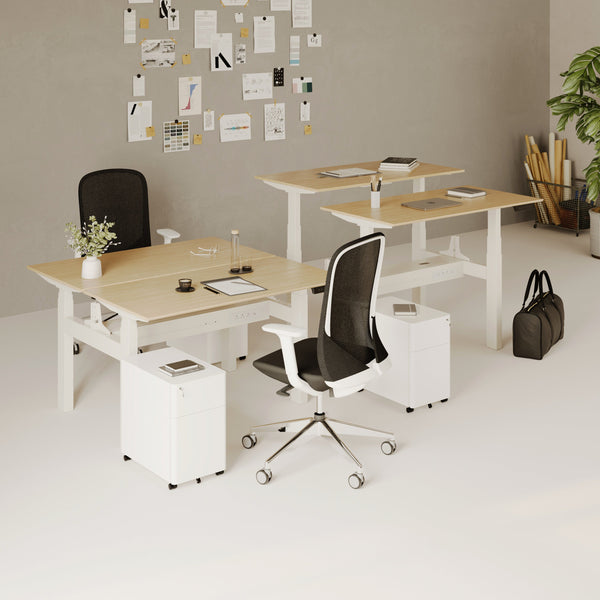
A cabinet placed under a fixed desk may work well, but that same placement can feel cramped under a standing desk if the cabinet limits knee room or blocks the lift path. Side placement is often cleaner for adjustable workstations because it keeps the storage accessible without crowding the moving desk structure.
The Reach Zone Rule for Sit-Stand Workflows
The reach zone is the area you can access comfortably without twisting, stretching, or stepping away from the desk. For sit-stand setups, the cabinet should sit close enough for regular use but outside the desk’s movement zone.
A good test is simple: open the drawer while seated, then raise the desk and check whether the cabinet still feels naturally placed. If the cabinet only works in one desk position, the layout may need adjusting.
Executive Desks Need Storage That Feels Integrated
A larger office desk can easily make a small filing cabinet look like an afterthought. In executive-style offices, the cabinet should feel connected to the desk through finish, height, or placement. Side-by-side positioning often works well when the cabinet aligns with the desk’s visual direction.
The cabinet top also matters. A single lamp, tray, or small decorative object can make the cabinet feel designed. Loose papers, stacked folders, and random devices make it look like a second desk. In a polished office, the cabinet top should serve a purpose without becoming visual overflow.
Shared Workstations Look Cleaner with Repetition
In team environments, one mismatched filing cabinet may not be disruptive. Several mismatched cabinets can make the entire office look busy. Repetition creates order. When cabinets share similar height, finish, and placement across multiple desks, the room feels calmer even when many people are working in it.
For shared workstations, consistency is more important than decoration. Cabinets should follow the same layout logic from desk to desk, especially in open rooms where every storage choice is visible.
Match Cabinet Height to Desk Proportions for a Built-In Look
Under-Desk Cabinets Work When Legroom Remains Comfortable
An under-desk filing cabinet is often the cleanest solution for small offices because it hides storage inside the desk footprint. The key is maintaining comfort. If the cabinet crowds the knees, blocks the chair, or makes the desk feel cramped, it solves one problem while creating another.
Measure the available space before choosing placement. Consider the cabinet height, drawer depth, desk height, chair width, and the direction the drawers open. A cabinet may fit physically but still feel wrong if the user has to angle their legs around it all day.
Under-desk placement works best when the cabinet sits to one side, leaving a clear central zone for the chair and knees. This keeps storage close while preserving an open working posture.
Side Placement Creates a Credenza-Like Workstation
A filing cabinet placed beside the desk can create a more intentional workstation, especially when the top of the cabinet aligns visually with the desk surface or sits slightly lower. This arrangement works well when the office has enough width and the user needs frequent file access.
Side placement also frees the space under the desk. That can make the workstation feel lighter, especially with a task chair that needs room to move. The cabinet becomes a small support station for files, a lamp, or a controlled paper tray.
The cleanest side placement usually keeps the cabinet parallel to the desk. Angled storage can look temporary unless the room layout specifically calls for it.
Low Cabinets Make Smaller Offices Feel Wider
Low storage keeps sightlines open. In compact rooms, this matters more than many people realize. A tall cabinet near the desk can make the workspace feel boxed in, while a lower filing cabinet lets the eye move across the room.
This does not mean tall storage is always wrong. It simply means taller pieces usually belong along a wall or in a secondary storage area rather than directly beside the main desk. The desk zone should feel open enough for focused work, not surrounded by vertical mass.
Choose Color and Material Pairings That Reduce Visual Noise
Tone-on-Tone Pairings Create a Calm Workspace
A tone-on-tone pairing uses similar shades to create visual continuity. White with white, pale wood with warm neutrals, or black with charcoal can make the desk and filing cabinet read as one cohesive unit.
This approach is especially useful in small offices because it reduces contrast. When the desk and cabinet sit in the same general color family, the eye sees fewer interruptions. The room feels more spacious and less crowded, even with the same amount of furniture.
Tone-on-tone does not require a perfect match. Slight variation often looks more natural than an almost-match that feels unintentionally off. A light neutral cabinet can pair beautifully with a pale desktop if the undertones do not clash.
Contrast Looks Intentional When It Repeats
Contrast can create a sharp, modern office look, but only when it is controlled. A black filing cabinet beside a white desk can look clean if black appears again in the chair base, lamp, desk frame, or hardware. Without repetition, the cabinet may look isolated.
A wood desk with a metal cabinet can also work when the surrounding accessories bridge the two materials. A lamp with a metal detail, a neutral chair, or a simple tray can help connect the pieces visually.
The rule is simple: one contrast point is a statement, but an unsupported contrast point can look random.
Hardware, Wheels, Legs, and Edges Matter
Small details influence whether the filing cabinet belongs with the desk. Drawer pulls, wheels, corners, legs, and surface texture all contribute to the overall design language.
A desk with rounded edges pairs naturally with storage that has softer corners or a simple profile. A sharp, architectural desk can support a more linear cabinet. Visible wheels can feel practical and modern when the rest of the setup has a flexible, functional tone. If the desk feels refined and still, the wheels should not visually dominate.
The cleaner the office goal, the more important these details become.
Place the Filing Cabinet Where It Supports Daily Movement
Daily Files Should Be Within Reach but Outside the Chair Path
The most useful filing cabinet placement is close enough to access without effort, but not so close that it interrupts movement. A cabinet that blocks the chair path will eventually become frustrating, even if it looks good.
Place the cabinet on the side that matches the user’s natural reach. For right-handed users, that may be the right side of the desk. For others, the left side may feel better. The best position depends on how files are retrieved, how often drawers are opened, and whether the user needs to turn toward a monitor, printer, or secondary surface.
A cabinet behind the chair can work for archived files, but it is rarely ideal for daily paperwork. Clean design should support behavior, not fight it.
Drawer Clearance and Chair Movement Should Be Planned Together
A filing cabinet and office chair share the same floor zone. If the drawer opens into the chair base, the layout will feel awkward. If the chair cannot roll back without hitting the cabinet, the workspace will feel tight.
This is why seating should be considered as part of the desk-and-storage plan. Well-scaled ergonomic office chairs can support the workstation when there is enough clearance around the filing cabinet for natural movement.
A cleaner office is not only about appearance. It also depends on the ease of sitting, reaching, opening drawers, and returning items to their proper place.
Cabinet Tops Should Be Styled with Restraint
The top of a filing cabinet can either elevate the office or quietly collect clutter. Treat it as a designed surface, not spare storage. One lamp, one tray, or one small plant may be enough. A printer can work if the cabinet is proportionally appropriate and the cords are managed cleanly.
Avoid stacking papers directly on top. Paper stacks flatten the design and make the office feel unfinished. If incoming documents need a landing spot, use a single tray with a clear boundary.
The One-Tray Rule for Paper Control
A single tray keeps temporary paperwork from spreading across the desk and cabinet. It should hold only active items, not long-term storage. Once the tray fills, the system is asking for attention.
This small boundary helps preserve the visual purpose of the filing cabinet: closed storage below, controlled activity above.
Use Accessories to Connect the Desk and Filing Cabinet Visually
Laptop Elevation Helps the Desk Surface Look Structured
A laptop placed flat on the desk can make the workspace feel low and scattered, especially when paired with notebooks, chargers, and files. Elevating the laptop gives the desk a clearer vertical structure and helps separate the screen zone from the paper zone.
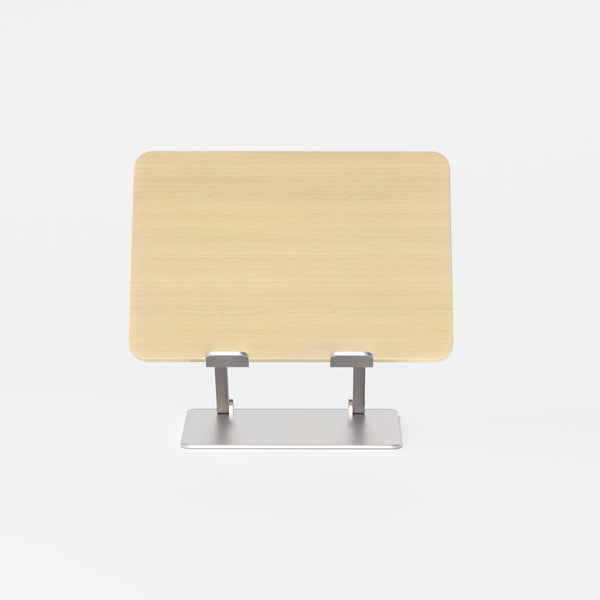
A slim laptop stand can support a cleaner desktop arrangement by lifting the laptop while leaving more visual breathing room around the main work surface. When the laptop, cabinet, and desk each have a defined role, the whole setup feels more organized.
Lighting Can Bridge the Desk and Storage Zone
Lighting is one of the easiest ways to make a filing cabinet feel intentional. A lamp placed on the desk corner or cabinet top visually connects the two pieces. It also softens the practical nature of filing storage.
The Alumina desk lamp or wall sconce fits naturally into this kind of planning because the anchor object is lighting for a work area, not unrelated decor. Whether light sits directly on the desk or nearby, it can help the cabinet feel like part of the workstation composition.
Softer Lighting Adds Warmth to Functional Storage
Filing cabinets can sometimes look purely utilitarian. A warmer light source can soften that effect without adding clutter. This is especially helpful in home offices, creative studios, and work nooks where the office furniture shares space with living furniture.
A Shore recycled glass table lamp can introduce a material contrast that feels warmer than metal or laminate alone. The key is to keep the lamp proportional to the cabinet and avoid surrounding it with extra objects.
Cable Planning Protects the Clean Look
Even a perfectly matched desk and filing cabinet can look messy if cables are visible. Lamp cords, laptop chargers, printer cables, and power strips should be planned before styling the surface.
Run cords behind the desk when possible. Keep cables away from drawer tracks. Avoid placing a cabinet where opening the drawer pulls against a cord. If a printer or lamp sits on the cabinet, the cable route should feel deliberate rather than improvised.
A clean office look depends as much on what is hidden as what is displayed.
Match the Desk and Filing Cabinet to the Office Layout
Small Home Offices Need Compact Storage and Open Floor Lines
Small offices benefit from low, compact storage that does not overpower the desk. A filing cabinet under one side of the desk or beside a wall can keep paperwork close while preserving open floor space.
Light finishes often work well in compact rooms because they reduce visual density. A darker cabinet can still work if it is balanced by a dark desk frame, chair base, or lamp. The important point is restraint. Small offices become cluttered quickly when too many finishes, accessories, or storage pieces compete.
Apartment Work Nooks Need Storage That Blends After Work Hours
In a work nook, the filing cabinet has to look appropriate even when the workday is over. This is where matching the cabinet to the broader room matters. If the desk sits in a bedroom, living room, or hallway, the cabinet should relate to nearby furniture instead of looking like a corporate insert.
A clean work nook often uses a simple desk, compact cabinet, warm lighting, and hidden supplies. At the end of the day, the cabinet should help the area feel settled rather than abandoned.
Executive Offices Benefit from Balanced Storage and Negative Space
A larger office can handle a more substantial desk and side storage, but restraint still matters. Too many matching pieces can make the room feel heavy. The cleaner approach is balance: a strong desk, a well-placed filing cabinet, a comfortable chair, and a few controlled accessories.
Negative space is part of the design. Leaving room around the cabinet makes the furniture look chosen rather than crowded. The space between pieces helps define the workstation.
Team Workspaces Need Consistent Furniture Logic
In team offices, visual order comes from repetition. Cabinets should sit in similar positions, use related finishes, and allow consistent chair movement from desk to desk. When each workstation follows a different storage logic, the room becomes visually noisy.
A cohesive office furniture setup supports this kind of planning because desks, chairs, accessories, and storage all need to work together across the larger environment. The cleaner the shared layout, the easier it is for individual workstations to stay organized.
Filing Cabinet and Desk Matching Guide for Faster Decisions
| Desk Style | Best Filing Cabinet Match | Cleaner Office Effect | Placement Priority |
|---|---|---|---|
| Minimalist fixed desk | Compact cabinet with simple drawer fronts | Keeps the workstation visually calm | Under the desk or directly beside it |
| Standing desk | Low cabinet outside the moving desk frame | Preserves clearance and movement | Beside the desk, away from lift paths |
| Wood desk | Neutral, black, or complementary wood-tone cabinet | Adds warmth without creating clutter | Repeat one finish elsewhere |
| Dark desk | Dark cabinet for continuity or light cabinet for contrast | Creates a grounded or balanced look | Use contrast intentionally |
| Small writing desk | Narrow cabinet that does not overpower the surface | Maintains scale in compact rooms | Place against a wall or under one side |
| Shared workstation | Matching cabinets for each user | Reduces inconsistency across the room | Align cabinets in a repeated rhythm |
Avoid Matching Mistakes That Make the Office Look Messier
Choosing a Cabinet That Is Too Tall for the Desk
A tall cabinet beside a lower desk can interrupt the horizontal line of the workspace. The result may feel crowded even when the room is organized. If taller storage is needed, place it along a wall or outside the immediate desk zone.
The desk area should feel open and usable. Storage should support the workstation, not dominate it.
Matching Color While Ignoring Scale
A filing cabinet can match the desk finish and still look wrong if the proportions are off. A cabinet that is too wide, too deep, or too visually heavy will make the desk feel smaller. Scale comes before color.
Before focusing on finish, check height, width, drawer depth, and floor space. A slightly different color in the right scale often looks cleaner than an exact color match in the wrong size.
Mixing Too Many Materials in One Desk Zone
Wood, metal, plastic, glass, fabric, and painted finishes can all work in an office, but not all at once in a small area. Too many competing materials make the desk and cabinet look less connected.
A good rule is to choose two main finishes and one accent. For example, a wood desktop, neutral cabinet, and metal lamp detail can feel layered without becoming busy.
Letting the Cabinet Become a Second Desk
When the cabinet top becomes a place for mugs, mail, cords, receipts, and notebooks, the clean office look starts to collapse. The filing cabinet should not become overflow storage.
Keep the top intentional. Use closed drawers for storage, a tray for temporary papers, and clear space for visual calm.
Practical Styling Checklist for a Cleaner Desk and Filing Cabinet Setup
1. Measure the desk height, cabinet height, drawer depth, and chair clearance.
2. Decide whether the cabinet works best under the desk, beside the desk, or along a nearby wall.
3. Match visual weight before trying to match the exact finish.
4. Keep drawer paths clear of chair legs, desk frames, and foot movement.
5. Repeat one color, material, or hardware detail between the desk and cabinet.
6. Limit the cabinet top to one functional object and one decorative object.
7. Plan cable routes before placing lamps, laptop chargers, or printers.
8. Keep daily files within reach and archive rarely used documents elsewhere.
9. View the setup from the doorway to check whether the cabinet looks integrated.
10. Leave open space on both the desk and cabinet top so the workstation can breathe.
A Cleaner Office Emerges When Storage Feels Built Into the Desk Zone
A filing cabinet should make the desk look calmer, not heavier. When height, placement, finish, and movement are planned together, storage becomes part of the workspace design instead of a visible compromise.
The strongest desk-and-cabinet pairings are practical first. They keep files close, protect legroom, allow drawers to open easily, and prevent paper from spreading across the desk. Once those basics are right, the visual choices become easier. Color, lighting, accessories, and chair clearance can all support the same clean office goal.
A well-matched filing cabinet does more than store documents. It gives the desk structure, gives the room order, and helps the office feel ready for focused work every day.
Related Articles
-
 Our Conference Chairs and Meeting Tables Compared, so You Can Furnish a Huddle Room, a Meeting Room, or a Boardroom for Eight in One Order
-
 Best Filing Cabinet Options for Minimalist Offices That Still Need Real Storage
-
 How to Make a Filing Cabinet Feel Like Part of the Room Instead of Extra Furniture
-
 Best Filing Cabinet Styles for Modern Home Offices That Need Hidden Storage
-
 Best Laptop Stand Options for Minimalist Desk Setups
-
 Best Monitor Stand Styles for Modern and Minimalist Home Offices
