















How to Make a Desk Setup Feel Like Home
The Human Element That Turns a Desk Into a Place You Love
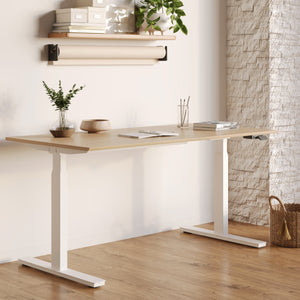
A desk feels like home when it reflects who you are and supports how you work. The combination of comfort, clarity, and personal meaning encourages deeper focus and calmer energy. A home-like setup is not only about style, it is a system of lighting, ergonomics, storage, and sensory cues that communicate safety and familiarity. When each element is intentional, the workspace becomes an anchor for steady, enjoyable work.
Foundations That Support Everyday Ease
Fitting the Desk to Your Body
A supportive workstation starts with alignment. Chair height should let your feet rest flat, knees near hip level, and wrists neutral while typing. Screen height should place the top of the display near eye level to reduce neck strain. Reference reliable standards and adjust to your body type and room constraints using the principles in the OSHA workstation ergonomics guidance.
Planning Reach Zones
Place items by frequency. Primary tools, keyboard, mouse, notepad, and daily reference materials belong within the forearm reach arc. Secondary items, like reference books or chargers, belong just beyond that arc but still accessible while seated. Seasonal or rare-use items can live out of sight to keep the desk visually calm.
Positioning for Natural Light and Movement
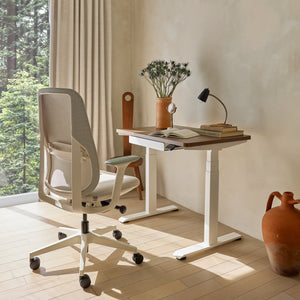
Daylight supports alertness and a sense of time. Position the desk so light falls from the side rather than directly behind the screen, which reduces glare. Leave a clear path around the chair to encourage small posture shifts and brief standing breaks. Space that allows movement feels more like home because it respects the body’s need to change positions through the day.

Light That Sets Mood, Identity, and Rhythm
Layering Ambient, Task, and Accent Light
A single overhead fixture rarely feels residential. Combine ambient glow, precise task light, and a soft accent to create warmth and depth. The ambient layer sets the tone for the room, the task layer delivers crisp focus at the work plane, and the accent layer adds personality and visual interest.
-
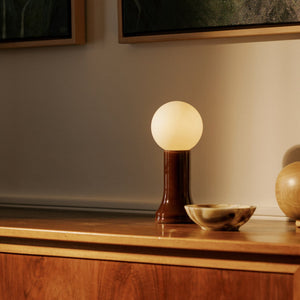
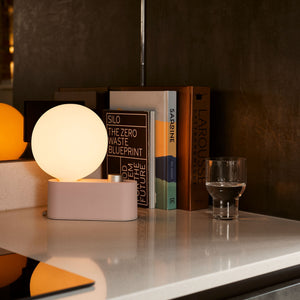
Ambient suggestion, a matte ceramic alumina lamp with a warm bulb for evening comfort
-
Accent suggestion, a coastal-inspired shore lamp to introduce natural texture and a gentle focal point
Choosing Color Temperatures That Support Focus
Use warmer light for winding down and neutral white for concentration. If you switch tasks often, consider two lamp presets at different color temperatures rather than one very bright source. Lower output in the evening supports calmer work without eye fatigue.
Practical Bulb and Shade Pairings
| Goal | Bulb Temperature | Shade Type | Result |
|---|---|---|---|
| Crisp document work | 4000–4500 K neutral white | Opal or frosted glass | Reduced glare with clear contrast |
| Video calls with flattering skin tones | 3000–3500 K warm white | Fabric drum shade | Softer edges and fewer harsh shadows |
| Evening journaling or planning | 2700–3000 K warm | Metal shade with diffuser | Cozy glow with focused spill |
Power and Connectivity That Disappear Into the Design
Integrating Power Directly Into the Work Surface
Invisible power keeps surfaces open and calm. A flush-mount power grommet makes charging feel natural, since cables route through the desk rather than across it. This is especially helpful in clean-lined setups where visible cords would distract from the material palette.
Adding Flexible Power When the Desk Must Adapt
In shared rooms or multipurpose studios, a tool-free edge power hub adds sockets and ports without drilling. It moves with the desk, supports temporary gear, and preserves a rental-friendly approach.
Guiding Cables With Intention
Vertical and Horizontal Cable Paths
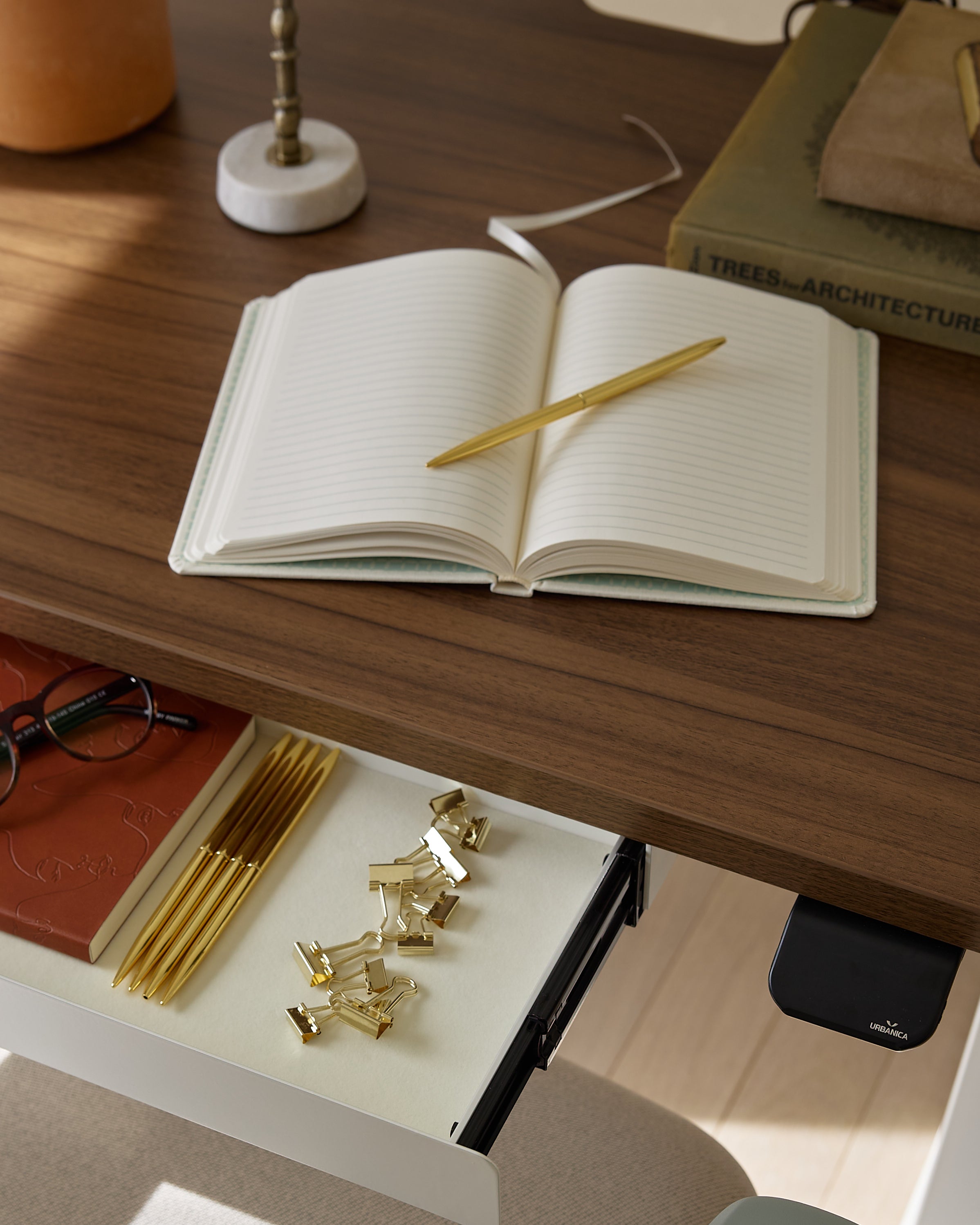
Use an articulated cable spine from desk to floor to hide the bundle and protect it from chair legs. Pair it with a low-profile under-desk tray so power bricks and excess length stay off the floor and out of view.
Labeling and Service Loops
Label both ends of every cable for quick swaps. Leave small coils, known as service loops, near devices that you unplug often, such as a laptop dock. Order saves time, and it also reduces visual noise, which helps the desk read as a living space rather than a temporary setup.
Storage That Protects Focus While Looking Like Home
Anchoring the Desk With a Cohesive Pedestal
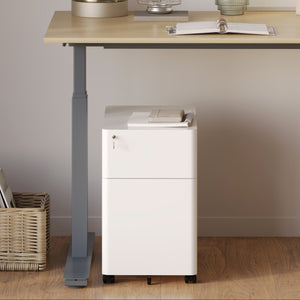
A desk feels stable when storage aligns with its lines and materials. A streamlined file pedestal storage option can sit flush to the desk to extend usable surface area and create a visual base. Use upper drawers for tools, and lower drawers for files or bulky items, which maintains balance and keeps sightlines clean.
A Simple System You Can Maintain
The Two-Tray Rule
Use one shallow tray for active tasks and one hidden tray for items in transition, such as receipts that need scanning. When either tray fills, process it completely, then reset. This keeps chaos from spreading without complicated routines.
Vertical File Habits
Keep only current projects near the desk in vertical files, archive finished work in concealed storage, and recycle printed drafts weekly. Clear categories reduce decision fatigue and prevent piles from forming.
Personal Expression That Adds Warmth Without Clutter
Curating Objects With Intent
Choose a few meaningful objects and give each a location. A single framed photo, a small sculpture, or a travel note can provide a touchpoint for calm. Rotate these pieces seasonally so the space feels new without creating clutter.
Textures That Invite Touch
Pair smooth and tactile materials to create comfort through contrast. Consider a leather desk mat, a wool throw over the chair, and a wood pen tray. These elements help the space read as residential and lived in, which encourages you to linger and do deep work.
Greenery for Rested Eyes and Softer Edges
Place one small plant within peripheral view to introduce softness at the boundary of your vision. Even a low-maintenance plant can break up hard lines and screen glow, which makes the space feel more humane and less mechanical.
Zoning a Desk Like a Micro Home
Defining Micro Zones on a Single Surface
Organize the desk into three zones that mirror a home’s flow.
1. Focus zone, keyboard, mouse, primary notebook, and reference cards
2. Creation zone, sketch pad, tablet, or open book stand for analog work
3. Restore zone, a lamp, plant, photo, or item that signals small breaks
Reinforcing Zones With Light, Color, and Tools
Use slightly warmer light in the restore zone, neutral light at the focus area, and a textural mat in the creation zone. Color and texture are gentle boundaries that tell your brain what to do in each area without adding clutter or rigid rules.

Color, Material, and Finish That Feel Grounded
Building a Calm Palette
Start with a neutral base and add two accent tones, one warm and one cool, to create balance. For example, mix oak and cream with a muted blue accessory, then add a clay or terracotta object for gentle warmth. Keep finishes consistent across hardware so the desk looks cohesive.
Surfaces That Age Gracefully
Select materials that develop character. Wood, powder-coated metal, and quality fabrics support a lived-in look that grows richer over time. Durable surfaces reduce the urge for constant replacement and reinforce the comfort of familiarity.
Acoustics and Sound That Feel Like Home
Softening Echo and Harshness
Add a rug under the chair, a fabric pinboard, or curtains nearby to reduce hard reflections. Softer acoustics make long sessions easier on the mind and help the room support both concentration and conversation.
Setting Soundscapes for Different Modes
Create three playlists, one for deep focus, one for light administration, and one for reflective planning. This turns sound into a gentle ritual that marks transitions and prevents context switching from feeling abrupt.
Routines That Keep the Space Calm
A Morning Opening Ritual
-
Open blinds or switch on ambient light
-
Place one personal object where you can see it
-
Set the day’s three priorities on a card in the creation zone
-
Start your focus playlist or settle into quiet
A Five-Minute Evening Reset
-
File or photograph notes, then store the notebook
-
Coil cables into the tray, place devices on charge
-
Wipe surfaces with a dry cloth
-
Dim to the warmest light and close with one sentence about the day
Small rituals protect the feeling of home, since they close the loop daily and reduce the need for weekend resets.
Shared, Small, and Rental Spaces
Designing for Tight Footprints
Choose compact storage that fits under the desk, keep accessories scaled to the surface, and mount lamps that do not consume valuable work area. Maintain wall space for vertical organization to prevent the desk from feeling crowded.
Keeping Peace in Shared Rooms
Use a clamp-on power hub for quick setup and a lidded box for shared supplies. Clear resets and labeled cables prevent friction, which protects the home-like mood for everyone.
Renters and Noninvasive Choices
Favor solutions that do not require drilling, such as freestanding shelves, clamp lights, and adhesive hooks that remove cleanly. Portable elements keep your deposit safe without sacrificing comfort.
Decision Guide for Layouts and Lifestyles
Matching Room Type to Desk Strategy
| Room Type | Primary Challenge | Desk Strategy | Key Additions |
|---|---|---|---|
| Compact bedroom corner | Visual clutter near rest area | Narrow desk with calm palette | Under-desk tray, one warm lamp |
| Living room nook | Shared traffic and noise | Zoning with light and rug | Clamp power hub, fabric pinboard |
| Dedicated office | Sustained focus and storage | Larger surface with pedestal | File pedestal, neutral task light |
| Studio apartment | One room for all activities | Foldable or wall-mounted desk | Cable spine, portable accent lamp |
Quick Selector for Power Options
-
Daily laptop docking on a fixed desk, choose the flush-mount power grommet
-
Rotating workstations or shared surfaces, choose the tool-free edge power hub
Maintenance That Preserves the Feeling of Home
Weekly Care Loop
-
Dust screens and lamps with a microfiber cloth
-
Water plants and rotate them a quarter turn
-
Empty the transition tray, archive what is complete
-
Review cables for slack and clean routing
Monthly Refresh
-
Swap one decorative object or photo
-
Revisit lighting levels as seasons shift
-
Check chair height and monitor position against ergonomic baselines
Consistency keeps the room feeling cared for, which in turn makes work feel welcome.
Troubleshooting Common Discomforts
Visual Fatigue
If eyes tire quickly, lower screen brightness to match the room and introduce a neutral task lamp at roughly 45 degrees to the work surface. Consider a matte screen filter if reflections persist.
Shoulder and Wrist Tension
Raise or lower the chair so elbows hover near 90 degrees, keep wrists straight, and bring the keyboard closer so shoulders relax. Confirm neutral posture against the OSHA workstation ergonomics guidance.
Cable Drift and Clutter
Add adhesive guides near the back edge of the desk so cables land in the under-desk tray, then route vertically through the cable spine to the floor box. Label devices that move often to reduce mental friction.
Example Layout Recipes
Minimal Focus Desk
-
Narrow top with rounded front edge for comfort
-
One task lamp, one accent lamp
-
Under-desk tray for power bricks
-
One vertical file for current projects
-
A single plant at the monitor’s edge
Creative Dual-Mode Desk
-
Medium top with a desk mat defining the creation zone
-
Clamp hub at the rear corner for tablets and camera
-
Cable spine to a floor outlet to keep pathways clear
-
Two lamps at different color temperatures for quick context switching
-
A small shelf or riser for sketchbooks
Family-Friendly Homework and Work Station
-
Wider top with two seating positions
-
Edge power hub for temporary devices
-
Low storage drawer for shared supplies
-
Pinboard with magnetic clips
-
Warm ambient lamp for evening reading
Putting the System Together
The Comfort Stack
1. Ergonomics, align chair, desk, and screen to support the body
2. Light, layer ambient, task, and accent to set mood and reduce strain
3. Power, integrate surface access and a clamp option for flexibility
4. Cable routes, use a tray under the desk and a spine to the floor
5. Storage, anchor with a pedestal and two-tray habit
6. Expression, curate meaningful objects and textures
7. Rituals, open and close the day with short routines
Each layer builds on the one below it. The result is a desk that looks quiet, works smoothly, and feels like home.
How a Home-Like Desk Influences Daily Work
A home-like desk invites you to settle in, think clearly, and return with ease. Ergonomic alignment protects energy, layered light sets a calm tone, and clean cable paths remove small irritations that steal attention. Storage systems keep commitments visible but contained, while personal textures and objects signal belonging. The room becomes a partner in your work, steady and familiar, ready to meet you each day.
Leave a comment