









How to Build a Compact Workstation Around One Laptop Stand

A compact workstation works best when one object gives the entire setup structure. For laptop users, that object is often the laptop stand. It lifts the screen, defines the visual center of the desk, frees usable surface area, and encourages a more intentional relationship between the body, the tools, and the room.
Small work areas often fail for the same reason: everything competes for the same flat surface. The laptop sits too low. The keyboard is cramped. The mouse drifts too far to one side. A lamp takes over the corner. Cables cross the desk because there is no planned path for power. The result is not just visual clutter. It is a workstation that feels temporary, even when it is used every day.
A laptop stand changes that equation because it creates hierarchy. The screen gets one clear zone. The keyboard and mouse get another. Lighting, power, and accessories can then be placed with purpose instead of being squeezed into whatever space remains. A product such as an ergonomic adjustable laptop stand can become the starting point for a compact workstation that feels composed, capable, and easier to reset at the end of the day.
Why a Laptop Stand Can Anchor an Entire Small-Space Workstation
A compact workstation is not simply a smaller version of a traditional office desk. It has to be more deliberate. Every object needs to earn its place, and every inch of surface area needs to support the way work actually happens.
The laptop stand earns its role because it solves several spatial problems at once. It raises the screen, separates viewing from typing, and makes the laptop feel less like a loose object sitting on a table. Once the stand is placed, the rest of the workstation has a reference point.
Screen Elevation Creates a More Usable Work Surface
Using a laptop flat on the desk usually forces the screen, keyboard, and trackpad into one fixed position. That position is rarely ideal for long periods of focused work. If the screen is comfortable to view, the keyboard may be too far away or too high. If the keyboard feels reachable, the screen often sits too low.
A stand separates those needs. The laptop screen becomes the elevated visual layer, while an external keyboard and mouse can sit in the lower working layer. This layered approach is especially valuable on a compact desk because it prevents one device from dominating the entire surface.
Vertical Organization Matters More Than Extra Width
When space is limited, the first instinct is often to look for a wider desk. Width helps, but it is not always available in apartments, bedrooms, studio spaces, or shared rooms. Vertical organization can be more effective.
A laptop stand gives the desk a second level. Even when nothing is stored underneath it, the lift creates visual breathing room. The desk feels less like a pile of objects and more like a planned workstation. That perception matters because a small desk that looks orderly is easier to use, easier to maintain, and less stressful to return to each morning.
The Stand Becomes the Visual Centerline
A compact desk needs a center. Without one, accessories tend to drift. The laptop moves to one side. The mouse gets pushed outward. A notebook opens wherever there is empty space. The lamp is placed wherever it fits, even if it causes glare.
Placing the laptop stand first creates a visual centerline. The screen aligns with the torso. The keyboard aligns with the screen. The mouse stays close to the keyboard. Lighting and accessories then support the workstation rather than competing with it.
Start With the Desk Footprint Before Adding More Objects
The right compact workstation begins before the laptop stand is placed. It begins with the desk footprint. A beautiful setup can still feel awkward if the desk is too shallow, too crowded, or positioned in a way that blocks natural movement.
The goal is not to fill the surface. The goal is to create a reliable working zone that supports the laptop, hands, lighting, and power with enough negative space to keep the setup calm.
Measure the Work Zone, Not Just the Desk
Desk measurements can be misleading if they are considered in isolation. A compact workstation also depends on the surrounding clearance. Chair pullback space, wall distance, window placement, outlet access, and walking paths all affect how comfortable the workstation feels.
Before arranging the setup, measure four things:
1. The desk width available for the laptop stand, keyboard, mouse, and lamp
2. The desk depth from the front edge to the wall or back edge
3. The chair clearance needed to sit and stand without bumping nearby furniture
4. The power route from the nearest outlet to the laptop and lighting
These measurements make the setup more realistic. A desk that looks large enough may feel cramped if the chair cannot move properly. A narrow desk may work well if the laptop stand is centered and the accessories are kept minimal.
Desk Depth Shapes Screen Comfort
For a laptop stand-centered workstation, depth often matters more than people expect. The stand should not place the laptop screen so close that the user feels crowded. There also needs to be room in front of the stand for an external keyboard, mouse, or trackpad.
A very shallow surface can still work, but it requires restraint. The laptop stand should sit far enough back to create a comfortable viewing distance, while the keyboard remains close enough to keep the shoulders relaxed. If the desk is deeper, there may be more room for a notebook or small lamp, but the same principle applies: screen zone in back, hand zone in front, support items to the side.
Choose a Desk That Supports the Way the Stand Will Be Used
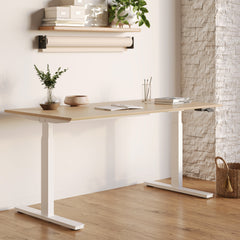
Different desks support different work habits. A narrow wall-facing desk may be ideal for writing, studying, or video calls. A standing desk may help people who like to shift posture throughout the day. A larger office desk can support more tools, but it may also invite clutter if there is no clear layout system.
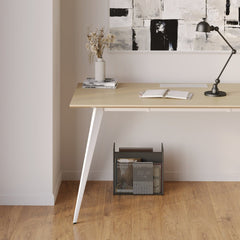
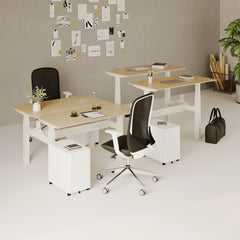
For a workstation built around one stand, the best desk is the one that supports the screen, keyboard, mouse, and light without forcing awkward reach. A collection of desks designed for focused work zones can help frame the choice around work behavior rather than surface size alone.
| Desk type | Best compact use | Laptop stand advantage | Planning consideration |
|---|---|---|---|
| Narrow rectangular desk | Bedroom, hallway, or wall nook | Keeps the screen centered and simple | Limit side accessories |
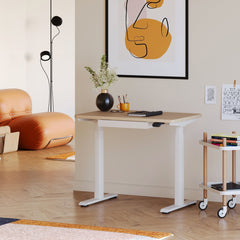
| Compact standing desk | Hybrid sitting and standing work | Helps maintain screen structure across posture changes | Plan cable movement carefully |
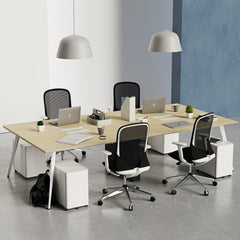
| Standard work desk | Daily full-time laptop work | Allows room for keyboard, mouse, lamp, and notes | Avoid filling the extra space |
| Shared table surface | Flexible home work zone | Stand defines a temporary work area | Requires a reset habit |
Select the Laptop Stand Style Around Daily Work Patterns
Not every compact workstation needs the same laptop stand. The best choice depends on how the laptop is used. A person who works for hours at the same desk may prioritize adjustability and stability. Someone who moves between rooms may prefer a cleaner, lighter setup. A shared workstation may need more flexibility than a single-user desk.
The stand should match the behavior of the workday, not just the look of the desk.
Adjustable Stands Support Changing Tasks and Users
An adjustable stand is useful when the workstation has to adapt. Video calls, document review, design work, writing sessions, and shared use can all benefit from the ability to refine screen height or angle.
Adjustment also matters when the same desk is used by people with different sitting heights. Instead of forcing everyone into one fixed position, the stand can help create a more personalized screen setup. That does not mean the stand solves every ergonomic issue by itself. Chair height, keyboard placement, mouse position, and desk height still matter. The value of adjustability is that it gives the screen zone more flexibility within that larger system.
Low-Profile Stands Keep the Desk Visually Light
Some compact workstations need a quieter presence. A lower-profile stand can suit a minimalist surface, a small apartment desk, or a workstation that shares space with a bedroom or living room. The goal is still to create screen elevation, but with a lighter visual footprint.
A low-profile laptop stand can work especially well when the desk needs to stay simple and easy to reset. It supports the idea that a compact setup does not have to look overly technical or crowded. The stand becomes part of the furniture composition rather than a bulky add-on.
Match the Stand to the Primary Work Habit
A laptop stand should be chosen according to the task it supports most often. The wrong choice usually shows up in small frustrations: the screen feels too low, the desk feels crowded, or the laptop is inconvenient to remove.
| Primary work habit | Stand priority | Why it matters |
|---|---|---|
| Writing and admin work | Stable screen position | Keeps the laptop steady while external tools handle typing |
| Video calls | Better screen and camera placement | Supports a more natural viewing angle |
| Shared workstation | Height or angle flexibility | Allows different users to adjust the setup |
| Minimal desk layout | Slim physical profile | Preserves visual calm and surface space |
| Frequent laptop movement | Easy placement and removal | Keeps the workstation flexible |
Build the Layout in the Right Order: Screen, Hands, Light, Power
A compact workstation should be assembled in sequence. Random placement leads to conflict between objects. A systematic order keeps the desk functional and easier to maintain.
The correct sequence is simple: place the screen first, then the hands, then the light, then the power path. Accessories come last.
Place the Laptop Stand First
The laptop stand determines the workstation’s center. Set it near the back portion of the desk, centered with the chair and torso. It should leave enough space in front for the keyboard and enough side space for the mouse or trackpad.
Do not begin with the lamp, notebook, or decorative items. Those objects should respond to the screen position. If the stand is placed after everything else, the workstation often ends up compromised before the main tool is even in use.
Position the Keyboard Where the Body Naturally Works
Once the laptop is on the stand, place the keyboard directly in front of the user. The keyboard should sit close enough that the elbows can remain relaxed near the body. If the keyboard is pushed too far back, the shoulders reach forward. If it is too close to the desk edge, the wrists may feel unsupported.
A compact desk does not require a full-size keyboard. Many people work comfortably with a compact keyboard, especially when desk width is limited. The important point is alignment: keyboard centered under the screen, hands relaxed, and enough room for the mouse beside it.
Keep the Mouse or Trackpad in the Same Reach Zone
The mouse should not be treated as an afterthought. On small desks, it often gets pushed to the far right or left because the lamp, notebook, or coffee cup takes priority. That creates unnecessary reach.
Keep the mouse or trackpad close to the keyboard, in the same primary reach zone. Left-handed users should reverse the setup without hesitation. Trackpad-heavy users can place the trackpad directly beside or below the keyboard, depending on desk depth.
Add Lighting After the Work Zones Are Clear
Lighting should support the workstation, not interrupt it. Once the screen, keyboard, and mouse are correctly placed, the lamp can move into a secondary zone. It should illuminate the work surface without blocking the screen, reflecting sharply on the display, or crowding the hand area.
A compact workstation with strong lighting control feels more intentional. It also transitions better between daytime work, evening tasks, and shared-room use.
Light the Compact Workstation Without Crowding the Desk
Lighting can make a small workstation feel either focused or cluttered. A poorly placed lamp steals surface space, creates glare, or makes the desk look heavier than it needs to. A well-placed lamp defines the work area and adds warmth without interfering with the laptop stand.
The right lighting strategy depends on how the workstation fits into the room. A desk in a bedroom may need softer light. A desk in a living room may need a lamp that looks natural alongside furniture. A dedicated office nook may need more direct task lighting.
Task Lighting Should Support the Keyboard and Side Zone
The most useful task light is not necessarily the brightest one. It is the one placed correctly. The lamp should illuminate the keyboard, notebook, or reading area while leaving the laptop screen clear.
For right-handed writing, placing the lamp on the left can reduce shadows across the page. For left-handed writing, the opposite may work better. If the desk is used mostly for digital work, position the lamp so it brightens the surface without reflecting directly into the screen.
Flexible Lighting Helps Tight Corners Work Harder
Small desks often sit near walls, corners, beds, sofas, or windows. In those cases, a lamp that can adapt to more than one placement style is useful. A table lamp may work when surface space is available. A wall-mounted approach may be better when the desk needs to stay open.
An Alumina LED table and wall lamp belongs in the lighting conversation because it reflects that dual-use need. The anchor point is not about overpromising a perfect solution for every space. It is about recognizing that compact workstations benefit from lighting that can support the desk without necessarily consuming the best working area.
Ambient Light Helps the Workstation Belong in the Room
Many compact workstations are not hidden in private offices. They are visible from the bed, sofa, dining area, or entryway. That changes the role of lighting. The lamp is not only a work tool. It also becomes part of the room’s atmosphere when the laptop is closed.
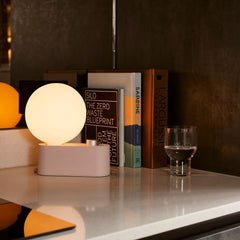
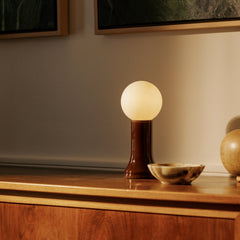
A Shore recycled glass table lamp can support this softer role because the linked product centers on a table lamp made from recycled glass. In a compact workstation, that type of lighting choice can help the desk feel less like equipment storage and more like a considered part of the home.
Practical Light Placement Rules
1. Keep the lamp base outside the keyboard and mouse zone.
2. Place light where it supports reading or note-taking without casting hand shadows.
3. Avoid direct glare on the laptop screen.
4. Use softer ambient light when the workstation shares a bedroom or living room.
5. Leave one side of the desk visually open so the setup does not feel boxed in.
Control Cables and Accessories Around the Laptop Stand
A compact workstation can look organized from the front and still feel chaotic if the cable path is unmanaged. Laptop chargers, lamp cords, phone chargers, hubs, keyboards, and external drives can quickly overwhelm a small surface.
The laptop stand can help by creating a natural cable direction. Power should move behind or beside the screen zone, not across the keyboard area.
Route Power Behind the Screen Zone
The cleanest compact setups send cables toward the back of the desk. The laptop charger should run behind the stand when possible. Lamp cords should follow the desk edge or wall side. Hubs should be placed where they are reachable but not central.
The goal is not to hide every cord perfectly. The goal is to prevent cables from crossing the main work path. If the keyboard and mouse area stays clear, the workstation feels more spacious even when several devices are connected.
Separate Permanent Cables From Temporary Cables
Not every cable deserves a permanent place on the desk. The laptop charger, lamp cord, and perhaps one hub may stay connected daily. Other cables, such as camera chargers, headphones, external drives, or device-specific adapters, can be stored nearby and brought out only when needed.
This separation prevents cable creep. A compact workstation loses efficiency when occasional tools become permanent clutter.
Choose Accessories That Solve Real Desk Friction
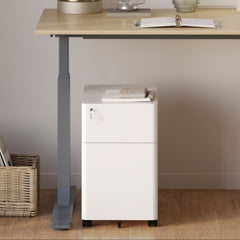
Accessories should be selected for function, not accumulation. A small desk does not need every possible office add-on. It needs the right support objects: stand, keyboard, mouse, lighting, power access, and perhaps one storage or filing solution.
A curated group of office accessories for a cleaner workstation can support this kind of intentional setup when the choices respond to actual work habits. The accessory should answer a specific need: raise the screen, improve lighting, organize power, support documents, or reduce visual clutter.
Five-Minute Cable and Surface Reset
-
Return the laptop to the stand.
-
Move the charger behind the screen zone.
-
Re-center the keyboard.
-
Place the mouse or trackpad beside the keyboard.
-
Remove anything unrelated to the next work session.
This reset is simple, but it protects the workstation from becoming a storage surface.
Make the Compact Laptop Setup Comfortable Enough for Daily Use
A laptop stand improves the structure of a compact workstation, but comfort comes from the full arrangement. Screen height, chair position, keyboard placement, lighting, and movement all contribute to how the setup feels over time.
The most reliable approach is to make small adjustments rather than chase a perfect formula. A compact workstation should support the body without requiring the room to behave like a large office.
Align the Screen With the Torso
The laptop screen should sit directly in front of the user whenever possible. Turning the head repeatedly toward an off-center screen can make the setup feel tiring. Centering the laptop stand with the chair and keyboard creates a more natural working posture.
The top portion of the screen should be easy to view without a major downward neck angle. Exact positioning depends on body height, chair height, and laptop size, so the best method is practical testing. Sit naturally, look forward, and adjust until the screen feels easy to use.
Use an External Keyboard and Mouse With the Stand
When a laptop is raised on a stand, the built-in keyboard rises too. That is why an external keyboard and mouse are important. They allow the laptop to serve as the screen while the hands remain at a comfortable working level.
This is the detail that turns a laptop stand from a visual riser into a true workstation tool. Without separate input devices, the user may end up reaching upward to type, which defeats much of the purpose of lifting the laptop.
Coordinate Chair Height, Desk Height, and Stand Height
The chair should be adjusted before finalizing the stand position. Sit with feet supported and shoulders relaxed. Then place the keyboard where the hands naturally land. After that, adjust the laptop stand so the screen works with the body position.
This sequence prevents the common mistake of placing the screen first and forcing the body to adapt. The compact workstation should be built around both the tool and the person using it.
Compact Ergonomic Checkpoints
-
The screen is centered with the torso.
-
The keyboard sits directly in front of the user.
-
The mouse or trackpad is close enough to avoid reaching.
-
The lamp does not block or glare against the screen.
-
At least one section of desk surface remains clear.
Adapt the One-Stand Workstation to Real Rooms
The best compact workstation is not a showroom setup. It needs to work in the actual room where life happens. A laptop stand can anchor many different environments, from a bedroom corner to a living room wall, because it gives the workspace a consistent center.
The surrounding choices should change according to the room. A bedroom desk may need visual softness. A living room workstation may need furniture-level polish. A studio setup may need a stronger boundary between work and rest.
Bedroom Workstation Built Around Calm Surfaces
A bedroom workstation should avoid visual noise. Since the room already has a strong rest function, the desk should feel orderly when not in use. A laptop stand helps by giving the laptop a home rather than leaving it open flat across the surface.
Keep the layout simple: laptop stand centered, compact keyboard in front, mouse beside it, lamp to one side, and only one notebook or daily tool visible. Avoid storing unrelated items on the desk. The smaller the room, the more valuable negative space becomes.
Living Room Workstation That Blends With Furniture
A living room workstation must perform during work hours and settle visually afterward. That means the setup should avoid looking like a pile of office equipment. Materials, lighting, and cable control become especially important.
The laptop stand should align cleanly with the desk or table surface. Accessories should be limited and chosen for consistency. A lamp can help the workstation feel intentional, while hidden or controlled cables keep the area from looking temporary.
Studio Apartment Setup With a Clear Work Boundary
In a studio apartment, boundaries are often visual rather than architectural. The laptop stand can act as a signal. When the laptop is on the stand, the desk is active. When the laptop is closed and the surface is reset, the work zone quiets down.
This kind of boundary is useful because it helps the workstation belong to the room without taking over the room. The setup does not need to disappear completely. It needs to look composed enough that the space feels livable after work.
Urban Workspaces Need Adaptable Furniture Choices
Smaller urban homes, creative studios, and hybrid workspaces often need furniture that can handle multiple roles. A desk may support full workdays, video calls, side projects, and personal tasks. The laptop stand creates the workstation’s core, but the surrounding furniture needs to support that flexibility.
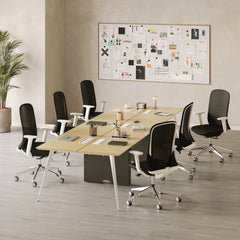
Choosing furniture that adapts to urban workspaces fits this broader need because the linked page focuses on office furniture suited to changing workdays, home studios, and office environments. For a compact workstation, adaptability is less about novelty and more about making the same square footage work with greater clarity.
Decide What Stays, What Moves, and What Gets Removed
Compact workstations are maintained through editing. A laptop stand can create structure, but the surface will still become crowded if too many objects remain visible.
The simplest rule is to divide everything into three categories: stays, moves, or leaves.
Keep the Daily Work Objects Visible
The objects that stay should support daily work directly. For most laptop stand setups, that means:
-
Laptop on stand
-
External keyboard
-
Mouse or trackpad
-
Task or ambient light
-
One notebook, document tray, or daily planning tool
These items create the workstation. Everything else should be questioned.
Move Occasional Tools Off the Main Surface
Occasional tools are useful, but they do not need prime desk space. Extra chargers, backup notebooks, headphones, adapters, and reference materials can live in a drawer, tray, cabinet, or nearby shelf.
This keeps the primary work surface available for active tasks. Compact workstations feel larger when occasional items are close but not constantly visible.
Remove Objects That Create Visual Drag
Some clutter is easy to identify. Old notes, empty packaging, unused pens, random cables, and duplicate accessories make the workstation feel smaller. Other clutter is more subtle. Decorative objects can be beautiful, but if they interrupt the keyboard, mouse, or lighting zone, they reduce function.
A compact workstation does not have to be bare. It should be edited. One meaningful object may add warmth. Five unrelated objects usually create distraction.
A Practical Blueprint for Building Around One Laptop Stand
A reliable compact workstation can be built with a repeatable layout. The details may change by room, but the order stays the same: stand, keyboard, mouse, light, power, reset.
The Narrow Desk Blueprint
For a desk between roughly 24 and 36 inches wide, center the laptop stand near the back. Place a compact keyboard directly in front. Put the mouse or trackpad on the dominant side, close to the keyboard. Add a small lamp to the opposite side if it supports the task. Route power behind the stand and avoid using the center of the desk for storage.
This layout works because it protects the main work lane. The hands stay in front. The screen stays centered. The lamp supports the setup without taking control of it.
The Hybrid Worker Blueprint
Hybrid workers often shift between calls, writing, reading, and moving the laptop. The workstation should support quick transitions. Keep the laptop stand accessible so the laptop can be removed easily. Avoid trapping cables under heavy accessories. Place the lamp and power path where they do not interfere with opening, closing, or carrying the laptop.
The goal is a setup that feels stable during work but flexible when the laptop needs to move.
The Minimal Creative Blueprint
Writers, designers, students, and creative professionals often need both digital focus and open surface space. In this setup, the laptop stand remains centered, but one side of the desk is protected as a clear creative zone. That side can hold a sketchbook, reference material, tablet, or notebook when needed.
The key is not to fill that zone permanently. It should remain available for changing work, which is exactly what makes the compact station feel useful rather than cramped.
Mini Case Study: Turning a Bedroom Desk Into a True Workstation
A small bedroom desk begins as a laptop, lamp, charger, notebook, and several loose accessories spread across one surface. The laptop sits flat, the screen is low, the keyboard takes up the center, and the lamp crowds the mouse area.
By placing the laptop on a stand at the back center, the entire layout changes. The external keyboard moves to the front center. The mouse returns beside it. The lamp shifts to the side where it supports the surface without blocking the screen. Cables route backward instead of across the desk. The notebook stays in one side zone.
No larger desk is required. The improvement comes from hierarchy.
Build a Compact Workstation That Feels Deliberate Every Day
A compact workstation succeeds when it feels easy to return to. The laptop stand is valuable because it gives the setup a daily reset point. When the laptop is placed back on the stand, the screen zone is restored. When the keyboard and mouse return to their positions, the hand zone is restored. When the lamp and cables stay in their lanes, the desk remains calm.
Small workstations do not need to imitate large offices. They need precision. A clear screen position, a comfortable hand zone, thoughtful lighting, controlled power, and edited accessories can make a modest desk feel serious and complete.
The laptop stand is the anchor, but the real strength of the workstation comes from the system built around it. Every object has a role. Every zone has a purpose. Every reset brings the desk back to a state that supports focus without asking for more room than the space can give.
Related Articles
-
 This Is How To Build A Small Home Office You Actually Want To Work From, And How To Pick Desks For Small Spaces - Urbanica Furniture's Full Guide
-
 Filing Cabinets for Small Spaces That Still Look Clean Now
-
 Minimalist Office Table Ideas That Work Like a Bistro Table
-
 Make Small Shared Spaces Work Better With a Bistro Table
-
 Best Filing Cabinet Layout Ideas for Small Home Offices and Shared Rooms
-
 What Size Filing Cabinet Makes Sense for Small Workspaces?


