















Skip to content
For Teams
Spring Sale Ends Soon: Save 15% on WFH Bestsellers + Free Shipping on Orders $65+ | Use Code SPRING15
FAQ
need to know
Useful articles
Desk Width Requirements for Dual Monitor Setups That Still Fit Small Rooms

Desk Width Requirements for Dual Monitor Setups That Still Fit Small Rooms

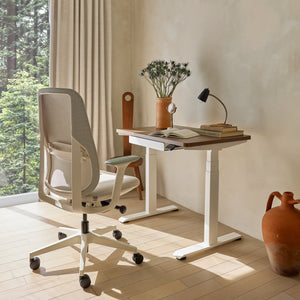
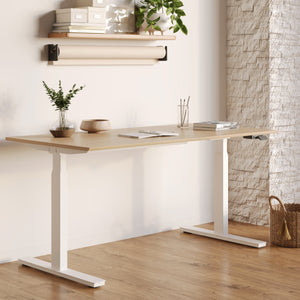
Minimalist home office Standing Desk featuring wood surface, task lighting, and organized accessories against neutral wall

Small rooms force better desk decisions. A dual-monitor setup can improve focus, make side-by-side work easier, and reduce constant window switching, but it also raises the risk of choosing a desk that overwhelms the room. The right width is not simply the widest top that fits between two walls. It is the narrowest width that allows two monitors, proper viewing distance, centered input placement, and enough open space for the room to stay comfortable.

That distinction matters in bedrooms, apartment corners, converted guest rooms, and compact home offices where every inch carries more than one job. The desk supports screens, but it also affects how a chair moves, how storage opens, how cables are managed, and how calm the room feels when work is over. In smaller interiors, width becomes a planning decision, not just a product specification.

Why desk width becomes the limiting factor in a small-room dual-monitor setup

Desk width is usually the first dimension people compare, and in compact rooms it often becomes the deciding one. Two monitors increase horizontal demand immediately. Even when the screens fit, the desk may still fail if the user loses mousing space, elbow room, or the ability to sit centered with the keyboard.

Two monitors reshape the whole workstation, not just the screen area

A dual-monitor arrangement changes how the desktop functions. The user typically needs one monitor centered or both angled inward in a balanced way. That affects where the keyboard sits, where the mouse travels, and how much open surface remains for daily work. Once two stands, two bases, a laptop, speakers, or a notebook enter the picture, a desk that looked adequate on paper can start to feel narrow in practice.

This is why comparing models across broader categories such as adjustable ergonomic office desks is more useful than chasing a single width number in isolation. The best fit depends on how the full setup behaves once everything is placed, not just how wide the desk sounds in a product list.

Small rooms magnify bad sizing decisions

In a larger room, a desk that is slightly too wide may simply feel oversized. In a small room, that same mismatch can interfere with walking paths, crowd nearby furniture, or make the workstation feel visually heavy. A bed, dresser, cabinet, or closet door can turn a reasonable desk into a frustrating one if clearance was not considered from the start.

The goal is not to maximize desk size. It is to preserve room function while still creating a workstation that feels stable, balanced, and easy to use for long sessions.

The minimum desk width for dual monitors depends on more than one number

There is no single width that works for every pair of displays. Monitor size, stand shape, angle, and desk accessories all affect the real requirement. Still, a few practical ranges help frame the decision.

A realistic width range for compact dual-monitor desks

For many small-room setups, 48 inches is the point where dual monitors become possible, but that does not make it ideal. It is better viewed as a lower threshold for compact arrangements, especially when the screens are modest in size or mounted efficiently.

A width around 55 to 60 inches is often more comfortable for two monitors in a small room. That range gives more room for alignment, open hand space, and a less crowded visual feel. Wider desks can improve comfort further, but they are not automatically the better answer if they reduce circulation or dominate the room.

A practical formula for estimating usable width

A useful way to plan desk width is to add together:

1. The combined width of both monitors or monitor housings

2. The gap or inward angle needed between them

3. A small amount of side breathing room

4. The footprint of stands or the reach of an arm mount

Remaining open space for keyboard, mouse, and daily accessories

This approach shifts the decision from guesswork to function. Instead of asking whether a desk is “big enough,” the better question is whether the width still leaves room for normal movement and clean placement once the setup is complete.

What “usable width” really means in a compact workstation

Total desktop width is not the same as working width. Large monitor bases, desk power accessories, and other hardware can quietly eat into the available surface. In small rooms, those losses matter more because there is less spare room to absorb poor placement.

A desk can technically fit two monitors while still feeling cramped because the remaining surface is fragmented. Good width planning protects the area in front of the user, not only the area beneath the screens.

Monitor size changes desk-width requirements more than most buyers expect

Many people think of monitor size only in terms of the diagonal measurement. In reality, the housing width, stand footprint, and preferred viewing angle often matter more when selecting a desk.

Dual 24-inch monitors are usually the easiest fit

Two 24-inch displays are often the most manageable choice for smaller rooms. They provide useful side-by-side workspace without demanding the same span as larger screens. On a well-planned desk, this size can support comfortable daily work while leaving enough room for input devices and a few essentials.

This size is often where narrower desks remain realistic, especially if the surface is kept organized and accessories are chosen carefully.

Dual 27-inch monitors raise the pressure on desk width

Two 27-inch screens create a stronger workspace presence. They can deliver a more immersive view and greater visual working area, but they also make small rooms feel crowded faster. Wider housings, bigger stands, and greater viewing-distance needs all push the desk toward a larger footprint.

This is where layout discipline becomes more important. A desk can still work well with two 27-inch monitors in a small room, but it needs more intentional planning around depth, side clearance, and accessory placement.

A monitor arm can make a narrower desk more workable

Mounting can change the experience of desk width without changing the furniture footprint itself. A monitor arm for flexible screen positioning can help lift displays off bulky bases, free up central workspace, and allow more precise positioning. That does not magically eliminate width requirements, but it can make a compact desk feel more usable and less crowded.

When arm-mounted screens improve small-room comfort

Arm-mounted monitors are especially helpful when the main problem is surface crowding rather than overall wall space. By reclaiming the area where stands would normally sit, the desktop becomes easier to keep clean and easier to use for writing, mousing, and device placement.

Desk depth, viewing distance, and chair movement decide whether the width feels right

Width gets most of the attention, but it should never be judged alone. A desk that is wide enough for two screens can still feel wrong if the depth is too shallow or the chair cannot move comfortably behind it.

Width without depth creates false confidence

Larger displays need appropriate viewing distance. If the desk is too shallow, the monitors may feel too close even though the width seems correct. That can lead to awkward posture, crowded hand placement, and a setup that looks impressive but feels tiring.

Depth also affects where the keyboard sits relative to the body. In a dual-monitor setup, the user benefits from enough front-to-back space to keep the wrists comfortable while still leaving visual distance to the screens.

Small-room measurements that affect desk performance

Desk width should always be checked against the rest of the room. Important measurements include chair pullback, walkway clearance, nearby storage access, and the swing of any doors or closets. A workstation should not trap the user in the corner or force constant adjustment just to move around the room.

The most common mistake is measuring wall width only. A better method is to measure the working zone, including the chair travel area and the path people use to move through the room.

Room function matters as much as workstation function

A desk in a small room is never just a desk. It changes the usability of the entire space. If the workstation makes the room harder to enter, harder to clean, or harder to share, it is too large even if the monitors fit perfectly.

Standing desks can improve flexibility in compact dual-monitor rooms

A fixed-height desk can work very well, but a height-adjustable option often adds flexibility where room constraints force compromise. In compact spaces, that flexibility can help the setup feel less static and easier to live with.

Why adjustability helps in small spaces

A height-adjustable standing desk can support posture changes throughout the day while helping the workstation serve different tasks more comfortably. In rooms that double as sleeping, storage, or shared living areas, that kind of adaptability can matter more than adding extra width.

This is not about chasing novelty. It is about making one desk perform well under different conditions without turning the room into a dedicated commercial office.

Small-room cases where adjustability earns its place

Height adjustability is especially useful when the same desk supports focused computer work, laptop tasks, short standing sessions, and different users over time. In a compact room, that kind of range can make the entire setup feel more considered and less rigid.

Cable routing and power access influence whether a compact setup feels clean or chaotic

Two monitors add more than screen width. They often add more cables, more charging needs, and more opportunities for clutter. In a small room, that visual and physical clutter becomes harder to ignore.

Why cable clutter feels worse in small rooms

Loose wires, bulky power strips, and poorly placed chargers can steal usable inches from the desk and make the whole workstation feel messier than it is. In tight spaces, surface clarity becomes part of comfort. A setup that looks controlled is easier to work at and easier to live beside.

Built-in and clamp-on power serve different layout needs

A built-in desk power outlet suits setups where the desk location is stable and clean surface access matters. By bringing charging and power access into the desk more intentionally, it can reduce dependence on awkward accessory placement across the top.

A clamp-on desktop power access works better when flexibility matters, such as rental spaces, temporary layouts, or setups that may be reconfigured over time. Edge-mounted access can be practical when the goal is to add power convenience without permanently altering the main surface.

Power placement rules that protect usable width

Keep charging access away from the primary mouse zone. Avoid placing bulky accessories between monitor stands where they break up the central working area. In small rooms, the best cable strategy is the one that preserves open surface and reduces visual noise at the same time.

Shared rooms and multi-user layouts need a different width strategy

Not every small room is built around one person. Some workspaces are shared by partners, coworkers, or households that need the room to support more than one routine.

One larger workstation can be smarter than two smaller desks

When two people need to work in the same room, squeezing in two separate desks can waste wall space and create a more fragmented layout. In some cases, a two-person sit-stand workstation can make better use of a single uninterrupted wall while keeping the room visually cleaner.

That approach is not right for every household, but it can be more space-efficient than trying to force two unrelated setups into a tight footprint.

Shared layouts still need personal planning zones

Even in a unified workstation, each user needs enough width for screens, input devices, and basic movement. The lesson remains the same: the best result comes from protecting usable zones, not simply maximizing furniture size.

How to choose the right desk width without guessing

The most reliable decision process starts with the actual equipment and ends with the room, not the other way around. Measure the setup first, then test whether the room can support it cleanly.

A simple decision sequence that works

1. Measure the total width of the monitors and stands

2. Decide whether the screens will sit flat, angle inward, or mount on an arm

3. Add margin for side clearance and daily hand placement

4. Confirm that desk depth supports comfortable viewing distance

5. Check chair movement, walkway space, and nearby furniture interference

6. Plan power access and cable routes before finalizing the desk

Practical width guidance by setup type

Setup type Typical monitor scenario Width guidance for small rooms Main planning priority
Minimal compact setup Two 24-inch monitors 48 to 55 inches Keep accessories minimal
Balanced daily workstation Two 24-inch or modest 27-inch monitors 55 to 60 inches Protect central input space
Larger visual workspace Two 27-inch monitors 60 inches and above when room allows Preserve viewing distance
Arm-mounted compact layout Two monitors on an arm system Can stay on the lower end if depth works Reclaim surface space
Shared small-room station Two users or divided tasks Depends on zoning and wall span Separate each user’s working area


This table is not a promise of universal fit. It is a planning framework. Final comfort depends on the exact screens, the desk depth, and how the rest of the room functions.

Seeing the desk in context prevents the most expensive sizing mistake

Numbers can guide a good decision, but scale feels different in the room than it does on a product page. A width that sounds compact may still look dominant beside a bed or storage unit. A desk that seems modest online may feel much larger once two monitors are mounted and a chair is pulled back.

Test the footprint before committing

Mark the desk outline on the floor with tape. Simulate monitor placement with boxes or measured paper cutouts. Pull a chair into the space and check how it moves. Open nearby doors and drawers. Walk the route you would normally take through the room. These simple checks often reveal issues that dimensions alone do not show.

Visual calm is part of a successful workstation

A small room works best when the desk feels integrated rather than imposed. Materials, proportions, and accessory discipline all affect that impression. For readers exploring broader ideas around layout, finish, and modern workspace direction, workspace planning inspiration for modern home offices can help frame what a better-balanced setup looks like without losing sight of function.

The best desk width is the narrowest one that still supports dual-monitor comfort

The right desk for a dual-monitor setup in a small room is not the biggest one that can be squeezed into place. It is the width that keeps both screens usable, preserves centered posture, supports clean cable management, and leaves the room easy to move through.

That usually means treating desk width as one part of a complete planning system. Monitor size, mounting style, depth, chair clearance, and power access all shape the outcome. When those elements are measured honestly, the result is a workstation that supports serious daily use without making the room feel smaller than it already is.

Previous article Mini Standing Desk Setup Tips That Prevent Wrist and Shoulder Strain

Leave a comment

* Required fields

Get 10% off your first order

Find the office furniture that’s designed to match your style, comfort, and needs perfectly. Subscribe

My Office

You have unlocked free shipping!

You're saving $29 and unlocked free shipping!


Your cart is empty.
Start Shopping

Contact Us