



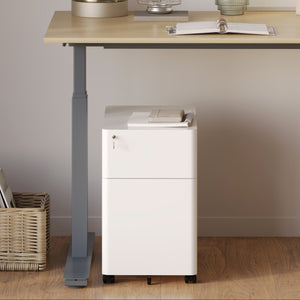






















Filing Cabinet Choices for Cleaner Workstation Planning
Cleaner workstation planning starts with filing storage that matches the desk, document volume, security needs, and daily workflow. Explore how cab...
Learn more
Visit quiz page to see how we makes it easy to create an inspiring workplace


Minimalist workspaces are rarely about owning less for the sake of less. They work when every piece earns its place, supports daily habits, and helps the room feel calm instead of crowded. That is why the idea of using a bistro table instead of a desk has gained traction. A bistro table feels lighter, looks less corporate, and often fits more naturally into a home that was never designed to hold a full office.
Still, replacing a desk with a bistro table is not automatically a smart move. A workspace can look beautiful in a photo and become frustrating after a week of real use. The better question is not whether a bistro table can replace a desk in theory. It is whether it can replace a desk for the kind of work the room actually needs to support.
For some people, the answer is yes. A compact, well-proportioned surface can be enough for laptop-based work, note-taking, and focused sessions that do not require equipment or storage. For others, a dedicated desk remains the more honest and functional choice. The difference comes down to workflow, posture, lighting, and how much the workspace must do without disturbing the visual simplicity of the room.
A desk often announces itself as a workstation first and a furniture piece second. In a minimalist interior, that can feel visually heavy. A bistro table changes the tone. It tends to read as part of the room rather than a block of utility placed inside it. That shift matters in homes where the work area shares space with dining, reading, hosting, or rest.
A compact bistro table for office and home can be especially appealing in spaces where a rectangular desk would interrupt movement or make the room feel overly planned around work. Its smaller profile can preserve openness, and its shape often softens the edges of a room that already contains many straight lines from shelving, walls, and cabinetry.
Minimalism also favors furniture that can live more than one life. A bistro table can function as a work surface in the morning, a reading table in the afternoon, and a quiet place for coffee in the evening. That versatility supports a more residential feeling, which is often the real goal in a home workspace. The setup does not need to look temporary, but it should avoid making the room feel like a permanent office unless that is truly necessary.
Minimalist choices still need to perform. A smaller table is only useful if it supports the basic actions that happen there every day. That includes opening a laptop comfortably, writing by hand, keeping a drink safely out of the way, placing a light source nearby, and maintaining enough clear space to work without constant rearranging.
There is a difference between a surface that looks uncluttered and one that feels effortless to use. A table that is too small, too high, or awkwardly shaped for the task can create friction that shows up in subtle ways. Elbows may feel cramped. Notes may slide too close to the keyboard. A charger may cross the tabletop because there is no sensible routing. None of those issues are dramatic on their own, but they accumulate.
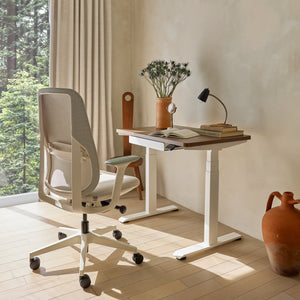
This is where dedicated adjustable ergonomic office desks still hold an advantage. They are designed around sustained work, not just visual compatibility with a room. That does not make them better in every home, but it does mean they solve practical problems more directly.
A minimalist workspace succeeds when it reduces decisions and distractions. That means the surface should not need constant correction. If a person has to keep shifting items around just to make room to type, the furniture is not supporting focus. The cleanest setup is often the one that quietly handles routine use without demanding attention.
A bistro table can meet that standard when the work itself is light and intentional. It becomes harder when the workload expands beyond what the surface can comfortably hold.
The strongest case for a bistro table appears in laptop-first work. Many people do not need a large command center to do excellent work. They need one stable surface, a supportive chair, adequate lighting, and enough room to think. In those cases, a smaller table can feel liberating rather than limiting.
Writers, consultants, students, therapists, remote coordinators, and many creative professionals often work within a narrow physical footprint. Their core tools may be a laptop, a notebook, and a phone. If the workflow is mostly digital, a bistro table can provide enough surface area without introducing the visual weight of a larger desk.
This kind of setup can also help protect attention. A large desk invites spread. Paper piles, accessories, gadgets, and decorative objects can slowly colonize the surface. A smaller table naturally enforces restraint. That can be an advantage for people who focus better when only the essentials are in view.
In compact rooms, scale is everything. A full desk may fit on paper but still make the room feel tighter, especially if it projects into a walking path or competes with other large furnishings. The rounded footprint of a bistro table can improve circulation and reduce the sharp, boxed-in feeling that sometimes comes with a conventional workstation.
This is especially valuable in bedroom corners, studio apartments, and combined living-dining areas. A bistro table often feels like a considered furniture choice rather than a compromise forced by lack of space.
Minimalist homes tend to ask more from each square foot. A room may need to support work during the day but feel relaxed and domestic at night. In that context, a bistro table offers flexibility that a large desk may not. It can blend into the room after hours instead of continuously signaling unfinished tasks.
That visual softness is not trivial. It affects how a room feels to live in. A workspace that integrates well can make it easier to maintain separation between work mode and home life, even when both happen in the same physical environment.
A bistro table is not a universal replacement. Once work becomes more equipment-heavy, more administrative, or more physically demanding over long sessions, a desk usually provides better support. Minimalism should not ask a piece of furniture to be something it is not.
The difference is not only width. It is also usable depth, zoning, and edge-to-edge control. A traditional desk makes it easier to separate keyboard space, writing space, and peripheral space. That matters for anyone using an external monitor, reviewing documents, or keeping multiple tools in reach.
The more tasks rely on simultaneous access to different items, the harder it becomes for a bistro table to keep up gracefully. A minimalist workspace should feel edited, not under-equipped.
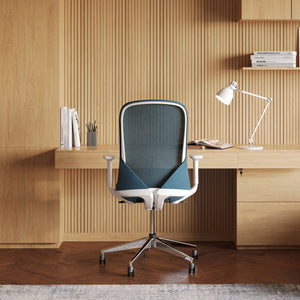
Even the best surface can fail when paired with the wrong chair. A bistro table used for work needs seating that supports an appropriate posture and keeps the user at a workable height. That is why pairing matters so much. Thoughtful ergonomic office seating options can make the difference between a setup that works for daily use and one that feels pleasant for only short stretches.
If the chair sits too low, shoulders rise and wrists strain. If it sits too high, posture becomes tense and grounded support is lost. Bistro tables are often chosen for their appearance, but appearance should never outrank body mechanics when the piece will be used for repeated work.
A setup can feel fine for answering emails and still underperform during a three-hour writing block or a long sequence of meetings. That does not mean a bistro table is a poor choice. It means the intended duration and intensity of work should guide the decision.
Minimalism is easier to maintain when there is a system for the items that support work but do not need to remain visible. Desks often solve that through drawers, integrated structure, or compatibility with nearby storage. A bistro table can still work, but it usually depends on smarter editing and better accessory choices.
Without that discipline, a small surface becomes crowded faster than a larger one. When clutter appears, the promise of minimalism breaks down quickly.
A bistro table works best when the surrounding setup supports it. The table should not carry the entire workload of the workspace alone. Lighting, accessories, and the daily reset routine all shape whether the arrangement feels refined or improvised.
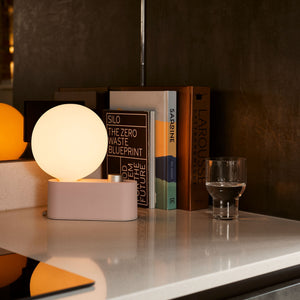
Good lighting makes a compact setup feel complete. It supports concentration, reduces visual fatigue, and gives the workspace a sense of purpose. A piece like a multi-use LED table and wall light can be especially useful in minimalist environments because it serves a task-oriented function while keeping the visual language clean.
Rather than filling the table with objects, strong lighting helps one deliberate item do more work. That approach aligns well with minimalism, where fewer pieces are expected to be both functional and visually coherent.
The right accessory strategy is not about adding more. It is about keeping essential items organized so the table remains usable. A cable solution, a slim tray, or a compact stand can prevent the surface from becoming visually noisy. Curated office furniture accessories support this idea when they help maintain order instead of introducing decorative clutter.
An empty section of tabletop is not wasted. It gives the eye room to rest and gives the user room to shift tasks without clearing space first. In a minimalist workspace, that breathing room is part of what makes the environment feel calm.
A good bistro table setup can be cleared quickly. That reset matters because it helps the room return to its broader purpose. When work tools can be reduced to a small, deliberate footprint, the space feels more livable and less captured by routine.
Minimalist workspaces can become cold if every decision is made only around reduction. Warmth matters. Texture matters. The room should support focus while still feeling like part of a home.
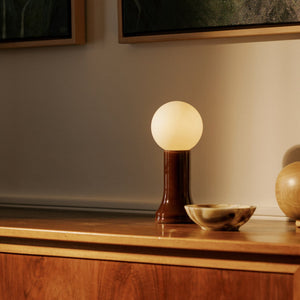
A smaller workspace becomes more convincing when it feels complete rather than sparse. One carefully chosen object can help establish that balance. A recycled glass table lamp brings softness and atmosphere to a compact work corner without requiring a larger footprint. Accent lighting like this can help the workspace transition from task-oriented use in the day to ambient use in the evening.
A bistro table is most successful when it responds to the architecture and furniture already present. In some homes, that means leaning into a quiet, sculptural look. In others, it means pairing the table with warmer finishes so the workspace feels integrated rather than isolated. Broader planning around ergonomic office furniture for modern workspaces can help frame the decision as part of a complete environment rather than a single-product substitution.
| Criteria | Bistro Table | Traditional Desk | Better Fit |
|---|---|---|---|
| Visual lightness | Softer presence, often less dominant | More structured and task-oriented | Bistro table in shared or compact rooms |
| Multi-use potential | Easily shifts between work and living | Usually remains a dedicated workstation | Bistro table for flexible interiors |
| Long-session support | Depends heavily on pairing and workflow | Better for sustained, equipment-based work | Desk for longer daily use |
| Storage compatibility | Limited on its own | Stronger support for organized systems | Desk when tools need a home |
| Laptop-first use | Often very effective | Also effective, but may be more than needed | Bistro table for simpler workflows |
| Monitor and paperwork use | More restrictive | Easier to zone and manage | Desk for layered tasks |
| Room integration | Blends naturally with home furnishings | Can feel more office-like | Bistro table for minimalist styling |
The comparison shows that neither piece is universally better. The better choice depends on how the person works, how often the setup is used, and whether the room needs to preserve a strong residential identity.
A bistro table is a smart choice for people whose work is primarily digital, whose rooms need to stay visually open, and whose routines benefit from a lighter physical setup. It suits those who value quiet design, reduced visual noise, and the flexibility to let the workspace recede when the workday ends.
A desk remains the better answer for people who need deeper surfaces, more structured storage, regular monitor use, or a setup built for long uninterrupted sessions. That is not a failure of minimalism. It is a sign that honest function should guide the room.
The strongest minimalist workspace is not the one with the fewest pieces. It is the one where every piece supports focus, comfort, and clarity without asking the room to become something it is not. In the right setting, a bistro table can absolutely replace a desk. It just needs to do so with the workflow, posture, and rhythm of the space fully in mind.


You have unlocked free shipping!
You're saving $29 and unlocked free shipping!
Leave a comment