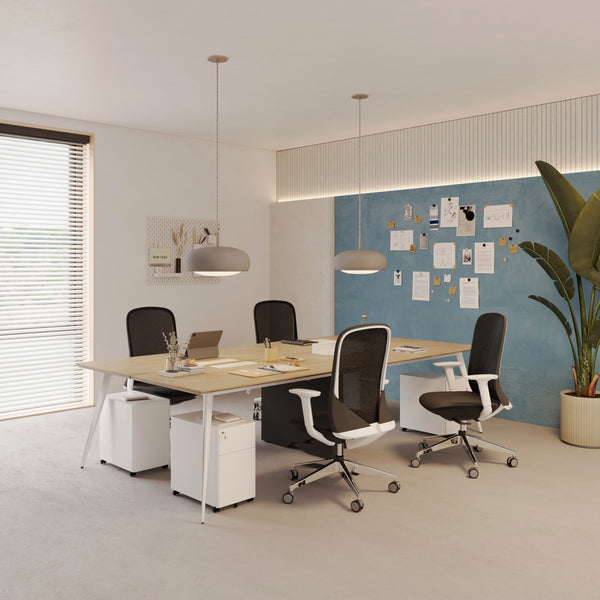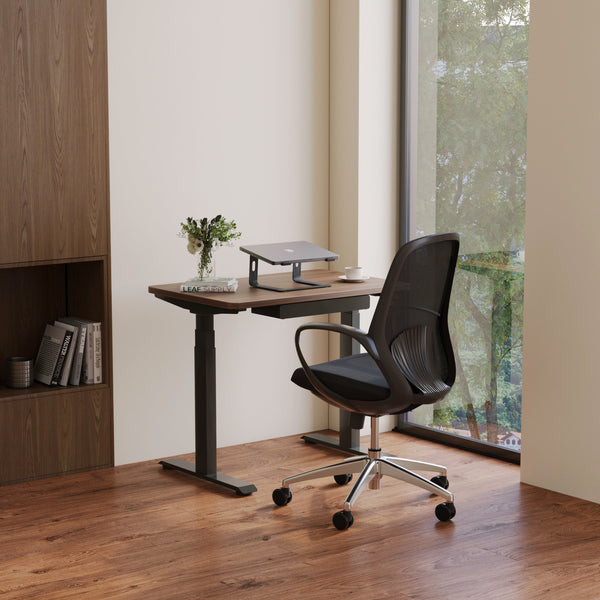

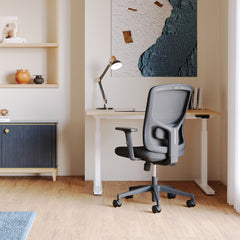
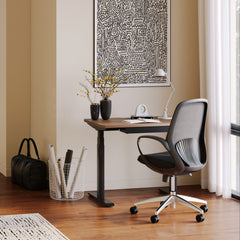
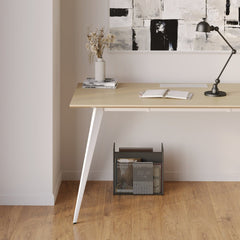
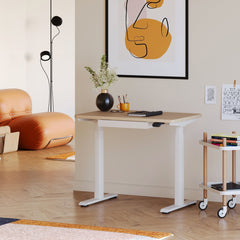





Chair Height vs. Desk Height: Getting the Combo Right
TLDR
This article covers chair height vs desk height, and why the two work best when you set them as a pair. We look at what a mismatch does to your back, shoulders, neck, and focus, and at the ergonomics behind a comfortable sitting posture.
Then we get into the numbers: common desk heights, chair seat heights, and a quick table that matches both to how tall you are. We also show how our chairs pair with different desks, and where accessories fit in.
Toward the end, we cover quick tests you can run at your own desk, the setup errors to watch for, a few example setups, the long-term payoff of a good match, and where ergonomic furniture is heading. When you're done, you'll know how to set your chair and your desk so they fit you and each other.
Who This Article Is For
- You've just set up a home office and aren't sure how high the chair should go.
- Your shoulders creep up by mid-afternoon, or your wrists ache after a long stretch of typing.
- You're on the shorter side, and your feet don't rest flat on the floor at a standard desk.
- You're tall, and a standard desk feels too low for your arms and your screen.
- You're buying a chair and a desk at the same time and want them to fit each other.
Chair Height vs. Desk Height: Getting the Combo Right
Chair Height vs Desk Height: Why the Balance Shapes Comfort and Productivity
When people set up a workspace, they often choose furniture based on looks or convenience. But the chair height vs desk height balance is one of the most important factors in long-term comfort and efficiency. The wrong setup leads to stiff shoulders, aching backs, and tired eyes, while the right one can transform how you feel throughout the day.
From home offices to corporate boardrooms, ergonomic balance between seating and desk surfaces has become a crucial part of wellness and productivity. In fact, organizations like OSHA emphasize ergonomic design to prevent repetitive strain injuries and fatigue at work.
The good news? By learning how chair height and desk height should complement each other, you can prevent discomfort and boost focus.

Chair Height vs Desk Height: The Real Consequences of Mismatched Setups
How Misalignment Affects the Body
-
Back and Shoulder Pain: If your desk is too high, shoulders hunch upward. Too low, and you lean forward, rounding your back.
-
Circulation Problems: A chair that’s too tall causes dangling feet, restricting blood flow.
-
Neck Strain: If your monitor is above or below eye level, you tilt your head unnaturally.
How It Impacts Work and Lifestyle
Mismatched chair height vs desk height doesn’t just hurt physically—it chips away at productivity. Small discomforts accumulate, leading to fatigue, reduced focus, and even lower work quality.
The Ergonomic Science Behind Chair Height vs Desk Height
The foundation of ergonomics is about creating a natural, supported posture. The chair height vs desk height combination is central to this because it determines alignment of the body’s three major zones:
-
Lower Body (hips, thighs, feet) – Proper seat height keeps knees at a comfortable angle.
-
Upper Body (arms, shoulders, wrists) – Desk height aligns with elbows and wrists.
-
Head and Eyes – Monitor position depends on where your desk and chair meet.
According to CDC Ergonomics, poor posture is directly linked to long-term musculoskeletal disorders, which cost employers billions annually.
Standard Measurements for Desk and Chair Heights
Desk Height Guidelines
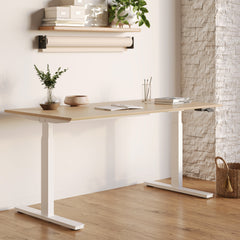
Most fixed desks are 28–30 inches tall—ideal for people between 5’6” and 5’11”.
Adjustments for Shorter Adults
-
Footrests to prevent dangling feet.
-
Lower-profile chairs for natural alignment.
Adjustments for Taller Adults
-
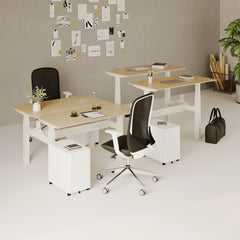
Sit-stand desks or risers can bring desks to 31+ inches.
-
High-adjustable ergonomic chairs can match these desk setups.
Chair Seat Height Guidelines
The average adjustable chair ranges from 16–21 inches in seat height. The Ergonomic Novo Chair provides multiple adjustments for maximum compatibility.
Adjustable vs. Fixed Chairs
-
Adjustable: Best for shared offices or growing teens.
-
Fixed: Stylish but less flexible, requiring desk modifications.
Importance of Seat Depth
Seat pan depth ensures thighs are supported without cutting off circulation—often overlooked in chair selection.
Quick-Reference Table for Height Matching
| User Height | Recommended Chair Height | Recommended Desk Height |
|---|---|---|
| 5’0”–5’5” | 16–18 inches | 26–28 inches |
| 5’6”–5’11” | 17–20 inches | 28–30 inches |
| 6’0”–6’5” | 19–21 inches | 29–31 inches |

Matching Chair Styles to Desk Heights
Ergonomic Chairs for Office Desks
Workspaces that demand long sitting hours benefit from models like the Ergonomic Onyx Chair. Adjustable lumbar support and height flexibility make it a reliable option.
Designer and Non-Adjustable Chairs
Not all seating has ergonomic features. Stylish chairs like the Muse Chair add visual appeal but need thoughtful desk pairing.
When Design Sacrifices Function
A gorgeous chair paired with a mismatched desk can undermine both health and productivity.
Solutions for Fixed-Height Chairs
Accessories like cushions or footrests bridge the gap between aesthetics and ergonomics.
Lightweight and Multipurpose Chairs
The Seashell Chair is versatile, suitable for dining or shared office spaces.
Best Fit for Shared Work Environments
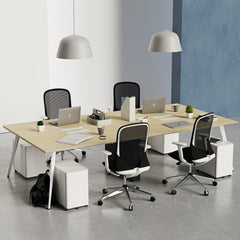
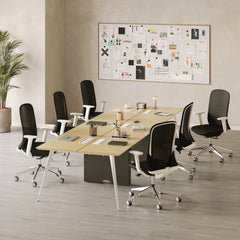
In multipurpose settings, pair them with adjustable or laptop-friendly desks for balance.
Beyond Furniture: Accessories That Fix Chair Height vs Desk Height Gaps
Essential Add-Ons for Comfort
-
Footrests to support circulation.
-
Keyboard trays to maintain neutral wrist alignment.
-
Monitor arms to adjust eye level.
Affordable Hacks to Try
-
Cushions to lift seating height.
-
Desk risers for laptops.
-
Portable stands for flexible setups.
Meeting Industry Standards
According to BIFMA Standards, ergonomic furniture should prioritize adjustability and long-term comfort, reinforcing why alignment between desk and chair matters.
By learning how chair height and desk height should complement each other, you can prevent discomfort and boost focus.
Practical Tests to Check Your Chair and Desk Setup
The Elbow Test for Chair Height vs Desk Height Alignment
-
Sit naturally in your chair.
-
Bend elbows to 90 degrees.
-
Desk should be level with your elbows—if not, adjust.
The Eye-Level Screen Check
Your eyes should naturally meet the top third of your monitor.
Replace vs. Accessorize
Sometimes upgrading to an adjustable chair like the Muse Chair is more effective than endlessly accessorizing a mismatched setup.
Common Mistakes in Setting Up Chair Height vs Desk Height
Relying on Average Measurements
What works for one person may not work for another. Individual customization is key.
Ignoring Leg Position
Dangling feet or overly bent knees create circulation problems.
Misusing Armrests
Fixed vs. Adjustable Armrests
Fixed armrests can block you from sitting close to the desk, while adjustable ones adapt to different needs.
When to Skip Armrests Altogether
In tighter setups, removing armrests may provide better alignment with desks.
Real-Life Applications of Chair Height vs Desk Height Adjustments
Small Home Office with a Fixed Desk
A professional solved discomfort by pairing a fixed desk with cushions and footrests instead of replacing the furniture.
Corporate Setup with Ergonomic Chairs
Companies investing in the Ergonomic Novo Chair reported improved productivity and fewer employee complaints.
Creative Studio Balancing Style and Comfort
By mixing the Seashell Chair with ergonomic desks, the studio maintained aesthetics without compromising health.
Long-Term Benefits of Correct Chair Height vs Desk Height
Preventing Chronic Pain
Proper alignment reduces risks of carpal tunnel syndrome, spinal misalignment, and tendonitis.
Boosting Creativity and Focus
A balanced setup removes distractions caused by discomfort, keeping attention sharp.
Enhancing Workplace Culture
Ergonomic investment demonstrates care for employee health, improving morale and retention.

The Future of Chair Height vs Desk Height in Ergonomic Design
Adjustable and Smart Furniture
Height-adjustable desks and AI-driven chairs are reshaping how people interact with workspaces.
AI-Driven Ergonomic Sensors
Chairs may soon detect posture in real time and self-adjust.
Sustainability in Ergonomics
Furniture made with eco-conscious materials and adaptability ensures longevity while supporting health.
Check the Chairs Collection for versatile designs that evolve with your needs.
Chair Height vs Desk Height: The Foundation of a Healthy Workspace
The debate over chair height vs desk height is not just about numbers—it’s about building workspaces that sustain long-term health and performance. By aligning your chair and desk properly, using ergonomic accessories, and investing in flexible furniture, you can prevent discomfort while improving productivity.
Work is hard enough—your furniture shouldn’t make it harder. Align your setup, and you’ll notice the difference in both body and mind.
FAQ
How High Should Your Desk Be When You Sit?
Your desk should sit about level with your elbows, with your shoulders relaxed. The Occupational Safety and Health Administration (OSHA), the US agency that sets workplace safety rules, describes a comfortable seated posture where your joints line up naturally. In it, the elbows stay close to the body and are bent between 90 and 120 degrees. The elbow test in this article checks the same thing at 90 degrees.
Cornell University Ergonomics Web, a workstation guide by Professor Alan Hedge at Cornell, sets the same lower limit: the elbow should bend to 90 degrees or more. For a flat surface used for both computer work and writing, it suggests 28 to 30 inches off the floor for most adults. That matches the 28 to 30 inches this article gives for most fixed desks.
If that standard height fits your body, our Office Desk stands at a fixed 30 inches. If it doesn't, our Standing Desk moves from 22 to 44 inches with push-button controls, so you can set the exact height your elbows need. The Office Desk starts at $349, and the Standing Desk starts at $574.
What Should You Do If Your Feet Don't Reach the Floor?
Start by lowering the chair until your feet rest flat on the floor. OSHA's guidance on chairs says the seat height is right when the entire sole of your foot rests on the floor and the back of your knee sits slightly higher than the seat.
The trouble usually starts when the chair goes up to reach a tall desk. OSHA notes that a seat that's too high can leave your feet unsupported or push you forward in the chair, away from the backrest. It says these postures can lead to fatigue, restricted circulation, and pain.
With the chair set for your feet, the desk has to come down to meet your elbows, so we recommend a desk that adjusts. Our Standing Desk lowers to 22 inches, and our Muse Chair is built for people from 5 feet tall, the lowest height fit we publish for any of our chairs.
Which of Our Chairs Fits a Shorter or Taller Person?
For a shorter person, we'd start with our Muse Chair. It's built for people between 5 and 6 feet tall, and its six points of adjustment include seat height, tilt, and armrest position.
For a taller person, our Onyx Chair fits a height range from 5 feet 2 inches to 6 feet 2 inches, the tallest height fit we publish for any of our chairs. It has an adjustable seat height and height-adjustable armrests. If you're taller than that, send us a message before you order and we'll help you check the fit.
Seat depth matters too. OSHA recommends a seat that adjusts in depth, so it supports a taller person's thighs and still lets a shorter person sit back fully. Our Novo Chair lets you slide the seat forward or back to match the length of your legs. The Onyx is $249, the Muse is $320, and the Novo is $445.
Should Your Armrests Fit Under the Desk?
Your armrests should let you pull the chair in close, so if they hit the desk edge first, lower them or move them aside. OSHA warns that armrests that are too large or badly placed can keep the chair too far back, so you end up reaching and leaning forward. If armrests can't be adjusted to fit, OSHA suggests removing them or not using them.
Cornell's guide adds a point about typing. It says that leaning your forearms on the armrests the whole time you type or use a mouse isn't a good idea. Armrests should be easy to move out of the way when you need the keyboard.
Our Novo Chair has armrests that move up and down, forward and back, and pivot side to side, so you can lower them or swing them aside when you pull in to type. Our Onyx Chair has height-adjustable armrests, too.
Set Your Chair for Your Feet and Your Desk for Your Elbows, Then Order What's Missing
Start with the elbow test from this article: sit the way you normally work and bend your elbows to 90 degrees. Your forearms should line up with the top of the desk. If the desk sits higher or lower than your forearms, the desk is the part to change, and the chair stays where your feet rest flat.
Our chairs collection shows every chair we make side by side. Our Standing Desk moves to your elbow height, so the chair can stay where your feet need it. If you're not sure which chair suits your height, send us a message with how tall you are and the desk you work at, and we'll point you to the right one.
We're Urbanica Furniture, a family-owned business with three decades in furniture manufacturing. Our address is 1705 NW 38th Ave, Lauderhill, FL 33311, and our phone number is +1-(888)-350-9545.
References
- Occupational Safety and Health Administration (OSHA), Ergonomics overview, linked in the article's opening section: OSHA describes ergonomics as fitting a job to a person and says it helps lessen muscle fatigue, increases productivity, and reduces the number and severity of work-related musculoskeletal disorders (MSDs). Working in awkward body postures is one of the MSD risk factors OSHA lists. https://www.osha.gov/ergonomics
- National Institute for Occupational Safety and Health (NIOSH), part of the Centers for Disease Control and Prevention (CDC), About Ergonomics and Work-Related Musculoskeletal Disorders, linked in the article as CDC Ergonomics: NIOSH describes musculoskeletal disorders as disorders of the muscles, nerves, tendons, ligaments, joints, cartilage, or spinal discs that are caused by sudden or sustained force, vibration, repetitive motion, or awkward postures. https://www.cdc.gov/niosh/ergonomics/about/index.html
- BIFMA, Standards Overview, linked in the article as BIFMA Standards: BIFMA sponsors the voluntary comfort, safety, sustainability, and durability standards adopted by the commercial furniture industry, including ANSI/BIFMA X5.1 for general-purpose office chairs. https://www.bifma.org/page/standardsoverview
- OSHA Computer Workstations eTool, Good Working Positions: supports the FAQ answer on desk height. In a neutral posture the elbows stay close to the body and are bent between 90 and 120 degrees, and the hands, wrists, and forearms are roughly parallel to the floor. https://www.osha.gov/etools/computer-workstations/positions
- OSHA Computer Workstations eTool, Workstation Components, Chairs: supports the FAQ answers on feet, seat depth, and armrests. The chair height is appropriate when the entire sole of the foot can rest on the floor with the back of the knee slightly higher than the seat. A seat that is too high can leave the feet unsupported or move you forward away from the backrest, and these postures can lead to fatigue, restricted circulation, swelling, numbness, and pain. The seat pan should be depth adjustable to support taller users while letting shorter users sit with their back fully supported. Armrests that are too large or badly placed can keep the chair from getting close to the keyboard, and armrests that cannot be adjusted properly, or that interfere, can be removed or left unused. https://www.osha.gov/etools/computer-workstations/components/chairs
- Cornell University Ergonomics Web, Computer Workstation Ergonomics Guidelines, by Professor Alan Hedge: supports the FAQ answers on desk height and armrests. A flat work surface used for computer work and writing should be between 28 and 30 inches above the floor, which suits most adults, the elbow angle should be at or greater than 90 degrees, resting the forearms on armrests while typing or mousing is not a good idea, and armrests should be easy to move out of the way. https://ergo.human.cornell.edu/ergoguide.html