
Skip to content
For Teams
Upgrade Your Workspace This Spring with Our Premium Ergonomic Office Furniture | Free Shipping on Orders $65+
FAQ
need to know

Useful articles

Clean Desks Inspiration for a Minimal Workspace Look

Clean Desks Inspiration for a Minimal Workspace Look

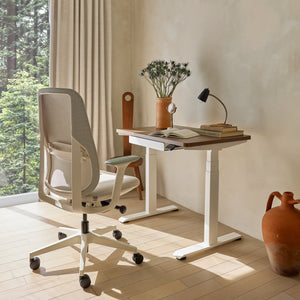
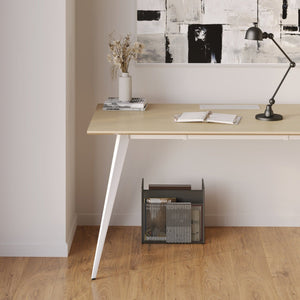
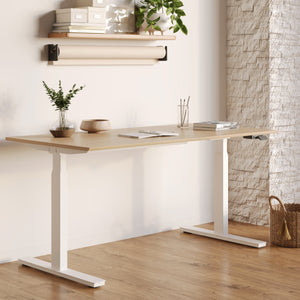
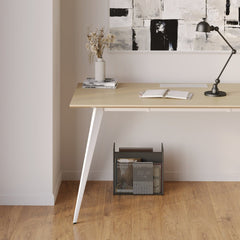
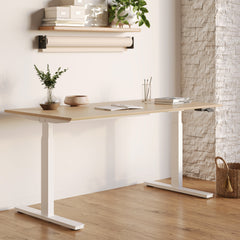
Urbanica SleekForm Ergonomic Office Desk with angled white steel legs and light wood surface – modern minimalist desk design for home or office use

Why Clean Desks Matter For How We Work

As a furniture brand that lives inside offices, studios, and home work corners every day, we see a direct connection between what sits on a desk and how work actually feels. A clean surface is never just about appearance. It shapes the pace of tasks, the way people breathe when they sit down, and how easily they can move from one idea to the next.

A visually quiet desk gives the brain fewer decisions to make. When every object has a clear role, people stop hunting for tools and start using them. Meetings begin on time because the workspace is already set. Creative work feels lighter because there is room to spread out when needed, and just as easily, room to clear away again.

How Visual Calm Supports Focused Work

Human attention is drawn to movement, color shifts, and cluttered patterns. On a busy desk, the eye bounces from cable to notebook to cup to random accessory. Each of those micro distractions takes a tiny toll on focus.

When we help customers create visually calm workstations, we focus on three things:

  • Fewer visible objects within arm's reach

  • Consistent lines and materials

  • Clear sightlines from chair to screen

That combination makes it easier to stay with a single task. People check their phones less, tab hop less, and report that their desks feel more like tools than storage.

Comfort, Posture, and the Minimal Desk

A clean setup is not only about what is on the surface, but also how the body relates to it. Height, reach, and angles all influence whether someone can stay comfortable through a workday. We encourage users to align their setups with the principles in the official OSHA guidance on ergonomics, because a minimal workspace should feel good as well as look good.

When the chair, desk, keyboard, and monitor work together, people move more naturally, slouch less, and avoid balancing laptops on stacks of books or piles of paper. That, in turn, makes it easier to keep the area clear, because improvisation is no longer required just to sit and work.

Principles Of A Minimal Workspace Look

Minimalism is not about stripping the personality out of a desk. It is about keeping everything that is truly useful, then giving those essentials room to breathe. From our perspective as designers and manufacturers, three principles matter most: simple surfaces, controlled color, and disciplined storage.

Simple Surfaces That Invite Clarity

The surface itself sets the tone. A clean top with tidy edges encourages people to treat the desk as a place for work in motion, not long term storage. When customers ask where to begin, we often guide them to start with the desk choice itself and build around it.

Within our catalog, our curated range of office desks focuses on surfaces that are wide enough to work comfortably, yet visually light. The goal is to support daily tools, not bury them under unnecessary structure. Once the core surface is right, everything else becomes easier to refine.

Color, Materials, And Visual Weight

Minimal desks tend to use a limited palette. Soft woods, white or light gray finishes, and matte textures reduce glare and visual noise. Metal accents can be present, but they work best when they support structure rather than draw attention.

We encourage customers to think in terms of visual weight. A dark monitor, a lamp, and a plant already introduce three focal points. Keeping the desk and storage lighter in tone helps those objects stand out without fighting each other.

Hidden Storage And Cable Discipline

Even the most beautiful surface can be overwhelmed by loose cables and scattered accessories. Effective minimal setups rarely happen by accident. They are supported by quiet systems under and around the desk.

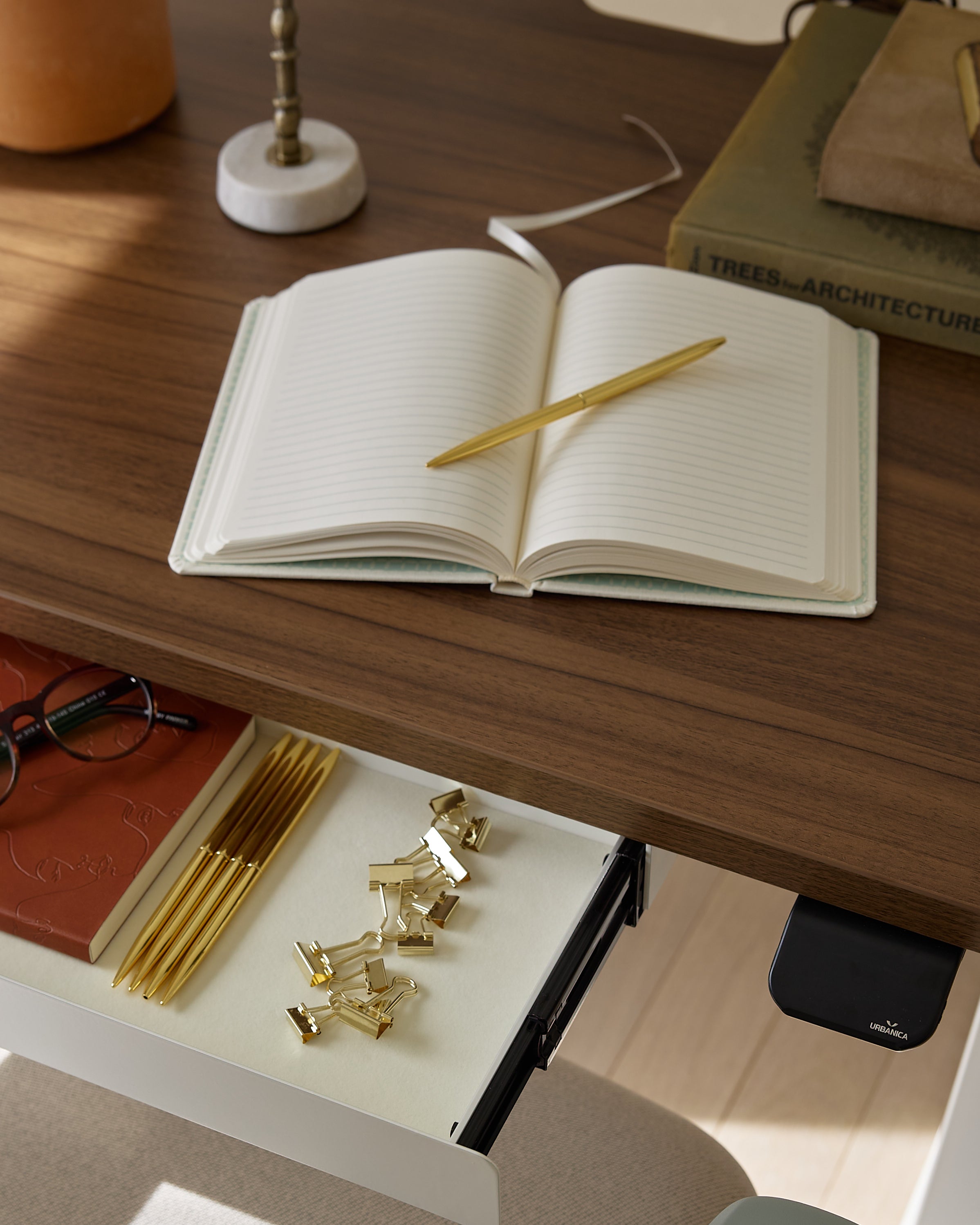
Small trays in drawers, simple boxes on shelves, and under desk cable channels all make it easier to keep the top free. We often see the biggest change when customers commit to routing cables once and then leaving them alone, rather than constantly plugging and unplugging in plain view.

Comparing Minimal Desk Archetypes

A minimal workspace can show up in different forms. The table below outlines three core archetypes we often design for and how they relate to a clean desk look.

Desk Setup Style Best Suited For Visual Focus
Focused seated workstation Deep individual work and study Single screen, notebook, lamp
Sit stand configuration People who like to alternate positions Slim top, open leg space
Shared bench workstation Teams that collaborate face to face Repeated segments, aligned screens


Each style can be executed with a minimal aesthetic when surfaces remain clear, storage is deliberate, and color stories stay tight and intentional.

Designing A Minimal Desk For Solo Work

Individual desks are often where the deepest concentration happens. Our role as a brand is to create furniture that supports that concentration rather than fight against it. Clean lines, thoughtful proportions, and dependable structure are all part of that work.

A Clean Seated Setup For Daily Focus

For many people, the foundation of a minimal workspace is a seated desk that feels stable and predictable. The surface should be large enough for a monitor or laptop, a notebook, and a few essential accessories, without feeling cramped.

A product like a streamlined single user office desk gives a straightforward starting point. The rectangular top, simple base, and neutral finish make it easier for users to limit what actually lives on the surface. Everything that stays visible should earn its place either through daily function or genuine emotional value.

Structuring The Surface

We often suggest dividing the top into loose zones:

  • A primary work zone directly in front of the chair

  • A support zone to one side for reference material

  • A small comfort or character zone, often home to a plant or framed photo

This gentle structure prevents objects from drifting across the desktop and keeps clear lines for wrists, mouse, and keyboard.

Standing Based Minimalism For Active Workflows

Some users think more clearly when they can change position. Standing brings a different sense of energy to the workday and naturally encourages people to keep the desk lighter, because items tend to shift with movement.

A piece like a standing desk for focused work pairs well with a minimal approach because the clean top and open space underneath discourage clutter. People are less likely to stack boxes under a surface they regularly raise and lower, and they quickly see the benefit of keeping only the essentials on top.

Keeping Standing Desks Clear

We guide users to anchor their standing setup with just a few elements:

  • Screen or laptop centered at eye level

  • Input tools within a natural shoulder width

  • One or two frequently used accessories within easy reach

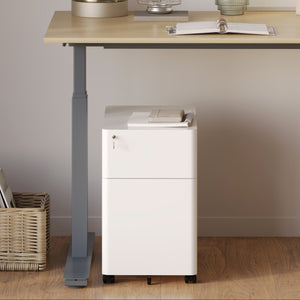
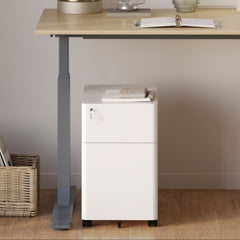
Everything else belongs either in a nearby cabinet, on wall mounted storage, or in a mobile pedestal that can be repositioned as needed.

Compact Desks For Small, Clean Corners

In apartments, shared rooms, and multi use spaces, the desk often has to fit into a tight footprint. Minimalism becomes a necessity rather than a style choice, because there simply is not room for excess.

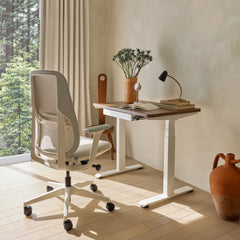
A solution like a compact mini standing desk for small spaces can carry a full workday without visually overwhelming the room. The smaller surface naturally encourages people to work with a limited set of tools, and when the day is done, the space can transition back toward living rather than work.

Vertical And Wall Based Support

In small settings, we frequently combine compact desks with vertical storage. Slim shelves, peg rails, and wall mounted organizers accept the items that cannot live on the surface yet still need to remain close. The result is a corner that looks intentional, not improvised.

Scaling Minimalism For Shared And Team Workspaces

Minimalism is just as powerful in shared environments as it is in home offices. In fact, the benefits often multiply when several people occupy the same visual field. Consistent desk choices, aligned layouts, and shared storage habits all contribute to a calmer, more focused floor.

Clean Layouts For Small Teams

For groups of four, it is important that no one feels like they are sitting at an afterthought. Symmetry helps. When screens line up, partitions match, and surfaces share the same finish, the space feels balanced and professional.

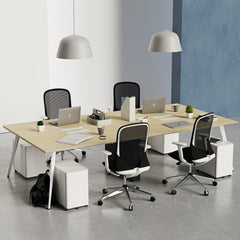
A configuration built around a four person shared workstation system supports this kind of harmony. Each person has a defined zone, yet the group still feels visually connected. Clean lines help the team focus on each other and their work, not on mismatched furniture.

Shared Rules For Shared Surfaces

When we work with teams, we encourage them to agree on simple norms. Examples include keeping only active documents on the desk, returning personal items to drawers at the end of the day, and treating shared center zones as project space rather than storage.

Larger Benching For High Activity Spaces

As headcount grows, so does the risk of visual noise. Without structure, a big open area can quickly become a sea of cables, papers, and random items that dilute the sense of purpose.

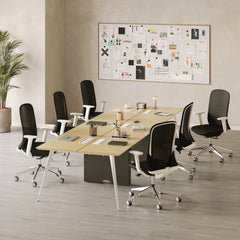
A bench solution like a six user workstation bench helps align screens, edges, and leg space into a single coherent block. When combined with consistent chairs and well planned cable routing, the result is a row that reads as one element rather than six competing stations.

Zoning Within A Larger Floor

Minimalism at scale often involves creating neighborhoods. Teams with similar duties sit together, and each neighborhood follows the same desk and storage approach. That reduces visual fragmentation and makes it easier for visitors to understand how the space works.

Standing Partnerships For Collaborative Work

Some work is best done in pairs. Designers reviewing layouts, managers and coordinators planning schedules, or mentors sitting with new team members all benefit from being able to stand side by side.

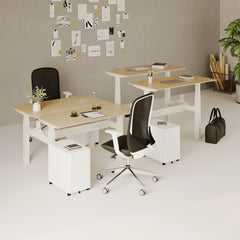
A solution such as a two person standing office desk supports this dynamic. Two people share a single structure, yet each retains a clear zone. When the surface is kept clean, it becomes easy to slide a laptop between them, spread sketches, or simply hold a conversation without feeling crowded.

Encouraging Movement Without Mess

Standing pairs work best when surfaces stay clear. Shared trays for small tools, combined with under desk power solutions, prevent personal items from spreading out and help keep the focus on the shared task or conversation.

Styling Choices That Keep A Clean Desk Feeling Warm

Minimal does not have to mean cold. As a brand, our aim is always to balance clarity with warmth, so spaces feel inviting rather than sterile.

Soft Layers, Not Excess Objects

Instead of adding more items, we use a few carefully chosen layers. A textured desk mat, a plant with a simple silhouette, or a ceramic cup for pens can soften the look without pulling the eye in too many directions.

Color plays a supporting role here. A single accent shade repeated across a lamp, small tray, and picture frame gives the space personality without creating clutter.

Light As Part Of The Composition

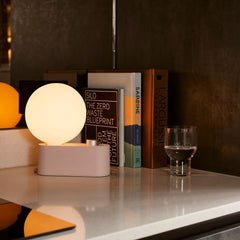
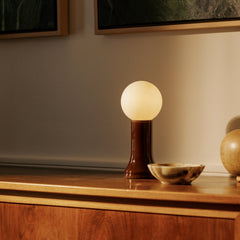
Lighting is both practical and emotional. Low profile lamps with clean lines can anchor a corner while keeping the desk surface open. In many of our installations, we pair overhead lighting with a directional lamp that can be aimed at tasks, leaving other parts of the desk in softer light.

Natural light is equally important. Placing desks so that daylight comes from the side rather than directly behind or in front of the screen helps reduce glare and preserves a calm visual field.

Tech That Respects The Minimal Look

Technology will always be part of modern work. Our responsibility is to give that tech a dignified place to live. Slim monitors, wireless input tools, and well managed docks all contribute to a respectful relationship between hardware and furniture.

Where possible, we encourage users to mount screens on arms, tuck hubs out of sight, and commit to a tidy power plan early. Once those systems are in place, the desk can return to being a clean stage for work rather than a tangle of devices.

Systems That Keep Desks Clear Over Time

The most beautiful clean desk can lose its shape in a week if habits do not support it. Minimalism is sustained through small routines, not occasional big clean ups.

A Short Daily Reset That Actually Happens

We design our furniture with the hope that people will close each day with a quick reset. It does not need to be dramatic. A realistic routine might look like this:

1. Return all loose items to drawers, shelves, or containers.

2. Stack any remaining work in a single, tidy pile or tray.

3. Wipe the surface with a simple cloth to clear dust and fingerprints.

4. Coil or straighten any cables that migrated during the day.

5. Place one visible item that signals "ready for tomorrow" such as a notebook or pen.

This takes only a few minutes, but it significantly changes how the space feels when work begins again.

Weekly Reviews Of What Really Belongs

Once a week, it helps to look at the desk with fresh eyes. Are there items that have sat untouched for days or weeks. Are there papers that could be scanned or filed. These small questions prevent slow accumulation from undoing the work of previous organizing.

We see the strongest results when people treat their desks like tools maintained with care, not shelves absorbing whatever lands there.

Digital Habits That Support Physical Minimalism

Physical and digital clutter feed each other. A desktop filled with open windows and scattered files often corresponds to paper piles and scattered accessories. Encouraging simple digital practices, such as using a consistent folder structure and closing unused applications, can indirectly support a cleaner physical space.

When both the screen and surface feel clear, users report a greater sense of control over their day. That is exactly the feeling we design for.

Inspiration Themes For Different Minimal Desk Personalities

Every workspace is personal, even when the furniture comes from the same collection. We see a few recurring themes among customers who embrace clean desks.

Calm Neutrals With Warm Wood

This approach combines light wood tones with soft fabrics and muted accessories. The result is a space that feels grounded and welcoming. It works especially well in home offices that need to share visual language with the rest of the home.

Crisp Black And White For Sharp Focus

Here, contrast is intentional and controlled. White tops, dark frames, and a limited number of accessories convey precision. This theme suits studios, editing suites, or any environment where clarity and structure are central.

Nature Inspired Minimalism

Plants, stone textures, and earthy colors bring the outside in without overcrowding the desk. The goal is not to create an indoor garden, but to introduce a few organic elements that soften the workspace and support long stretches of focused effort.

Hybrid Ready Setups For Flexible Lifestyles

As more people split their time between home and shared offices, we see growing interest in layouts that are easy to reconfigure. Clean desks play an important role here. When surfaces are not overloaded, it becomes simpler to move screens, adjust storage, or transition between individual deep work and collaborative sessions.

Where Clean Desk Design Is Headed

From our vantage point, the future of work is not about louder furniture or more complicated features. It is about giving people environments that respect their attention. Clean desks, honest materials, and well considered systems help workers feel calm, capable, and in control of their day.

As we continue to design, we keep returning to a simple question: when someone sits down here, will the space help them do their best work, or get in the way. A minimal workspace look, supported by thoughtful furniture and sustainable habits, keeps the answer firmly on the side of focus, comfort, and clarity.

Previous article Best Monitor Stand Ideas for Two-Screen Workstations Without Visual Clutter

Leave a comment

* Required fields

Get 10% off your first order

Find the office furniture that’s designed to match your style, comfort, and needs perfectly. Subscribe

My Office

You have unlocked free shipping!

You're saving $29 and unlocked free shipping!


Your cart is empty.
Start Shopping

Contact Us