























Best Filing Cabinet Layout Ideas for Small Home Offices and Shared Rooms

A filing cabinet can either make a small home office feel organized or make a shared room feel tighter than it already is. The difference usually comes down to layout. In compact work areas, storage is not just about where documents go. It affects how easily a chair moves, how much of the desk remains usable, whether drawers open cleanly, and how naturally the room shifts between work and everyday life.
Small home offices often live inside bedrooms, guest rooms, living rooms, dining corners, hallway nooks, or studio apartments. These spaces cannot be planned like traditional offices because every piece has to work harder. A filing cabinet may need to hold work documents, household records, school papers, business files, printer supplies, and personal paperwork while still blending with the rest of the room.
The best filing cabinet layout ideas start with one simple principle: keep essential files close, keep movement clear, and make storage feel intentional. A well-placed cabinet can define a work zone, reduce surface clutter, protect private documents, and make even a small shared room feel calmer.
Why Filing Cabinet Layout Matters More in Small Home Offices
In a larger office, a filing cabinet can often sit wherever there is an empty wall. In a small home office, that same approach can quickly create problems. A cabinet placed too close to a chair can block movement. A drawer that opens into a walkway can interrupt the room. A cabinet positioned near a bed or sofa can make a shared space feel like it has been overtaken by work.
Compact rooms depend on clear movement paths
A small office layout should begin with circulation, not storage. Before choosing a filing cabinet position, it helps to map how people move through the room. Consider the path from the doorway to the desk, the clearance around the chair, the opening swing of closet doors, and the space needed to fully extend cabinet drawers.
A cabinet that looks compact when closed may still need meaningful space in front of it to be usable. If drawers open into a chair, bed frame, sofa, or hallway path, the cabinet becomes inconvenient no matter how neatly it stores files.
Shared rooms need storage that does not dominate the space
A shared room has more than one purpose. A bedroom office still needs to feel restful. A living room workstation still needs to feel welcoming. A guest room office still needs to reset easily when visitors arrive.
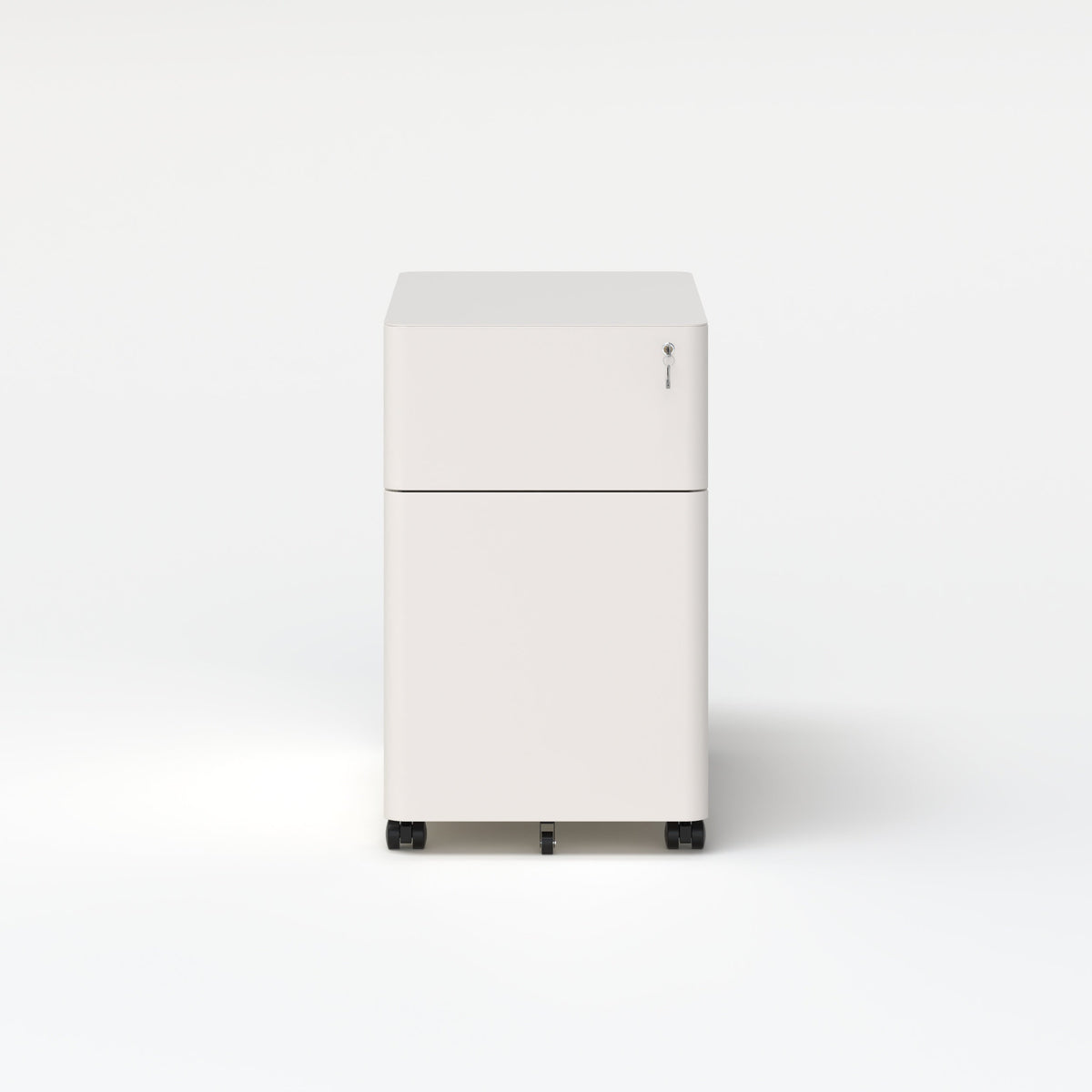
That is why closed storage is especially valuable. A lockable file storage cabinet can help keep important documents contained while giving the workspace a cleaner, more controlled footprint. In a small room, this kind of storage works best when it is placed as part of the office zone rather than floating randomly in the room.
Filing cabinets help define a work zone without adding walls
A cabinet can act as a quiet boundary. Beside a desk, it signals where work materials belong. Under a desk, it keeps storage visually tucked away. Along a wall, it can connect the desk to nearby shelving or lighting. In shared spaces, these small visual boundaries make the office feel planned instead of improvised.
The Under-Desk Filing Cabinet Layout for Tight Workstations
An under-desk filing cabinet layout is one of the most practical options for small home offices because it preserves floor space. It works especially well in wall-facing workstations, closet offices, narrow bedrooms, and studio apartments where every inch has to earn its place.
Use under-desk placement when floor space is limited
Under-desk placement keeps files close without adding another furniture footprint to the room. This is useful when the desk already occupies the best available wall, or when the office must fit into a tight nook.
The layout works best when the desk is wide enough to allow the cabinet to sit to one side while still leaving comfortable legroom. For small rooms, desk choice and cabinet placement should be considered together. Pairing file storage with adjustable office desks can support a cleaner workstation plan because the desk surface, height, and available under-desk area all influence whether storage feels comfortable or cramped.
Protect legroom before adding storage
The most common under-desk mistake is treating the space below the desk as free storage. It is not. It is also where your knees, feet, chair base, and posture need room.
A cabinet should not sit directly in the center of the kneehole unless the desk is wide enough to support that arrangement comfortably. In most small office layouts, the cabinet works better offset to the left or right. This allows the user to sit naturally while keeping files within reach.
When the cabinet should move beside the desk
An under-desk cabinet may not be the best option if the desk is narrow, if the chair has arms, if the drawer handles interfere with seated posture, or if two people use the workstation at different times. In those cases, a desk-side cabinet usually provides better access and comfort without crowding the legs.
The Desk-Side Filing Cabinet Layout for Daily Paperwork
A desk-side layout places the filing cabinet beside the workstation rather than underneath it. This is a strong choice for people who use files throughout the day and need quick access without disrupting their workflow.
Put active files on the side that matches your habits
The best side for a filing cabinet depends on how you work. If you write notes with your right hand and usually reach to that side, the cabinet may feel most natural on the right. If your desk setup places notebooks, a mouse, or a second screen on one side, the cabinet may need to shift to the opposite side to avoid congestion.
The goal is to place active documents within a natural reach zone. Client files, current projects, household paperwork, school forms, and business records should not require standing up every time they are needed. Archive files, old tax records, manuals, and rarely used documents can live farther away.
Turn the cabinet top into a controlled landing zone
The top of a filing cabinet can be useful, but only when it has a defined purpose. Without a plan, it quickly becomes a pile of papers, receipts, cords, and random supplies.
A small tray can hold incoming documents. A notebook can sit there during the workday. A printer may work on top if the cabinet height and surface are appropriate for the room. In a shared home office, lighting can also help make the cabinet feel integrated rather than purely functional. A multi-use LED lamp can support a compact workstation where a cabinet top, desk, or nearby surface needs flexible illumination.
The one-tray rule for paper control
Use one tray for incoming paperwork and avoid adding a second pile. When the tray fills, sort it into active, reference, shred, or archive categories. This keeps the cabinet top from becoming a second desk and helps the room stay visually calm.
The Corner Filing Cabinet Layout for Awkward Room Shapes
Corners are often underused in small home offices, especially in bedrooms, guest rooms, and living spaces where the main wall is already occupied by a desk or shelving. A filing cabinet can turn a forgotten corner into useful storage, but it must be used strategically.
Store weekly-use files in corner cabinets
A corner cabinet is ideal for documents you need regularly but not constantly. This includes insurance folders, property records, warranties, manuals, client archives, seasonal paperwork, and extra office supplies.
For files accessed many times per day, a corner may feel inconvenient. For files accessed once a week or a few times a month, it can be perfect. The key is matching location to frequency.
Balance low storage with vertical elements
A filing cabinet in a corner can look isolated if nothing connects it to the rest of the room. A shelf above it, a piece of wall art, a plant beside it, or a small lamp nearby can help the corner feel intentional.
In compact spaces, lower cabinets often work better than tall, heavy storage pieces because they keep the room from feeling boxed in. The cabinet provides function at the base of the wall while vertical elements add height without adding bulk.
Corner placement mistakes to avoid
Do not place a filing cabinet where the drawers open into a bed, dresser, closet door, or walking path. Avoid using a dark corner as a paper drop zone. Also avoid storing daily-use files in a corner if reaching them interrupts work repeatedly. A corner layout should reduce friction, not create it.
The Shared Bedroom Office Layout That Separates Work From Rest
A bedroom office requires careful planning because the room has to support focus during the day and rest at night. Filing cabinet placement plays a major role in that transition.
Keep filing storage inside the work zone
In a bedroom, the filing cabinet should stay close to the desk and away from the bed whenever possible. When work files sit near the sleep area, the room can feel mentally busy even after the laptop closes.
A strong bedroom office layout usually places the desk against a wall, with the cabinet tucked beneath or beside it. This keeps work materials contained in one zone. If the cabinet must sit across the room, choose a quiet wall location rather than a spot beside the bed or nightstand.
Use lighting to soften the office corner
Lighting can make a filing cabinet feel less like office equipment and more like part of the room. A small lamp on or near the cabinet can help the work zone feel warmer, especially in a shared bedroom or guest room where harsh task lighting may feel disruptive.
A recycled glass table lamp can fit naturally into this type of setting because the anchor point is not just task utility. It is also about helping the office corner blend with a more personal room.
A simple bedroom filing setup for remote work
Place the desk against the least visually busy wall. Put the filing cabinet on the side farthest from the bed. Keep active work folders in the upper drawer and household records below. Use the cabinet top for one tray or one lamp, not both if the surface is small. At the end of the workday, close the drawers, clear the tray, and tuck in the chair.
The Living Room Filing Cabinet Layout That Looks Intentional
A living room office has to work in plain sight. Filing storage cannot look like an afterthought because the room is used by family members, guests, or roommates. The cabinet should connect visually with surrounding furniture.
Align the cabinet with existing furniture lines
A filing cabinet looks more intentional when it lines up with the desk, console, bookcase, or media unit nearby. Avoid placing it alone in the middle of an open wall unless the rest of the workstation supports that placement.
Look at the room from the entry point. If the cabinet is the first thing people see, soften it with placement, lighting, or a nearby vertical element. If possible, position it so it reads as part of a work nook, not as a separate office object dropped into the living room.
Protect private documents in high-traffic spaces
Living rooms introduce privacy concerns. Drawers should not open directly toward guest seating if sensitive documents are inside. Paperwork should not sit exposed on the cabinet top. Closed storage matters because financial records, personal documents, and business files should not become part of the room’s visual field.
The cabinet should be close enough to support work but discreet enough to protect privacy when the room returns to its social purpose.
Plan cabinet placement around chair clearance
Chairs move more than most people realize. They pull out, rotate, shift backward, and sometimes roll. When a living room doubles as an office, chair clearance affects both comfort and cabinet access.
Choosing ergonomic office chairs is only part of the layout equation. The cabinet must also be placed so the chair can move without hitting drawer fronts, side walls, coffee tables, or sofa edges. A comfortable chair loses its value if the surrounding storage makes movement awkward.
The Two-Person Shared Office Layout With Clear Filing Ownership
Shared home offices often fail because storage ownership is unclear. When two people use the same room, the filing cabinet layout should make it obvious who uses which drawer, which documents are shared, and how both people can access files without interrupting each other.
Divide files by person, project, or access frequency
There are three practical ways to divide a shared filing cabinet:
1. By person: Each person gets a drawer or section.
2. By project: Files are organized around shared work, household management, or client categories.
3. By access frequency: Daily files stay near the main workstation, while occasional files move to lower drawers or a wall-side cabinet.
The right system depends on how the room is used. Two remote workers may need separate active drawers. A couple managing household records may prefer shared categories. A family workspace may need sections for school, home, work, and reference documents.
Avoid cabinet locations that create interruptions
A cabinet placed behind one person’s chair may force the other person to interrupt them whenever files are needed. A cabinet between two desks can work well, but only if drawers open into a clear shared zone. A cabinet near the doorway may seem convenient, but it can create congestion if both users need it often.
In a two-person layout, filing storage should be reachable without making either user move repeatedly.
A practical guest room example
Imagine a guest room with one primary desk and a second person who works there occasionally. The cabinet sits beside the desk rather than between the desk and bed. The upper drawer holds active work files for the daily user. The lower drawer holds shared household records. When guests arrive, the chair tucks in, the drawers close, and the cabinet remains part of the room without creating visual clutter.
Filing Cabinet Layout Comparison for Small Home Offices and Shared Rooms
| Small-Space Scenario | Best Filing Cabinet Position | Best Files to Store There | Layout Advantage | Mistake to Avoid |
|---|---|---|---|---|
| Closet office | Under desk or side wall | Daily admin files | Keeps storage tucked away | Crowding legroom |
| Small bedroom office | Beside desk, away from bed | Active work files | Separates work from rest | Letting papers face the bed |
| Guest room office | Corner or under desk | Weekly-use files | Easy to reset for visitors | Blocking closet access |
| Living room office | Beside desk, console, or bookcase | Private household documents | Blends with furniture | Opening drawers toward seating |
| Two-person office | Between zones or along shared wall | Split personal or project files | Clarifies ownership | Creating chair conflicts |
| Studio apartment | Under desk or quiet wall | Essential active files | Reduces visual clutter | Letting storage dominate the room |
Small-Room Filing Rules That Improve Workflow and Calm
A smart filing cabinet layout is not only about the cabinet’s physical position. It also depends on what goes inside and how often each file is used.
Sort files by access frequency
The easiest way to plan filing storage is to organize by how often documents are needed.
-
Daily-use files: Keep beside or under the desk within easy reach.
-
Weekly-use files: Store in a nearby cabinet, corner, or wall-side position.
-
Monthly-use files: Move farther from the main work surface.
-
Archive files: Store in lower drawers, closets, or secondary storage areas.
-
Shared household files: Place where all approved users can access them without disrupting work.
This system prevents the most valuable storage space from being filled with documents that rarely need attention.
Measure drawer clearance before committing to a layout
A cabinet is only useful if its drawers open comfortably. Before finalizing placement, check the space in front of the cabinet. Account for full drawer extension, chair legs, caster movement, bed frames, door swings, dresser access, and walkways.
This step is especially important in shared rooms because the office is not the only function competing for space. A filing cabinet that blocks a closet, guest bed, or living room path will feel inconvenient even if it looks good when closed.
Keep the desk clear so the cabinet does not become overflow storage
When a desk is crowded, paperwork usually spills onto the filing cabinet. That turns a storage solution into a clutter magnet. One way to prevent this is to use vertical organization on the work surface.
A slim laptop stand can help lift a laptop and free up usable desk area, making it easier to keep papers sorted instead of pushed onto the nearest cabinet top. Clear surfaces make a small office feel larger and help the filing system work as intended.
Design Details That Help Filing Cabinets Blend Into Shared Rooms
A filing cabinet does not need to disappear to work well in a small room. It needs to feel connected to the furniture and habits around it.
Place the cabinet outside the strongest sightline
The strongest sightline is usually what someone sees when entering the room. If the filing cabinet sits directly in that view, it can make the space feel more office-heavy. Placing it beside the desk, under the work surface, near shelving, or along a secondary wall can reduce its visual weight.
In shared spaces, the best filing cabinet placement often feels quiet. It supports the room without asking for attention.
Use restrained styling on cabinet surfaces
A cabinet top should not carry too many objects. One tray, one lamp, one plant, or one small stack of books may be enough. Too many items make the cabinet feel cluttered and reduce its usefulness.
The goal is to soften the office function without hiding it behind decoration. A filing cabinet can look organized, warm, and practical at the same time.
Match the layout to compact homes and hybrid work habits
Small home offices are often part of larger lifestyle patterns. A room may support video calls in the morning, homework in the afternoon, and guests on the weekend. Furniture choices need to respect those shifts.
Planning around ergonomic and modern office furniture can help create a workspace that feels suitable for daily productivity while still fitting naturally into a home. The filing cabinet should support that balance by keeping documents organized without making the room feel overly commercial or rigid.
Common Filing Cabinet Layout Mistakes That Make Small Offices Feel Tighter
Even a good cabinet can feel wrong if the layout ignores the room’s limits. Small spaces are less forgiving, so avoiding common mistakes is just as important as choosing the right placement.
Placing storage before mapping movement
The cabinet should not be the first piece placed after the desk. Chair movement, walking paths, drawer clearance, and door swings should come first. Once those zones are clear, the cabinet can be placed where it supports the workflow without creating friction.
Giving archive files the best location
Prime desk-side storage should belong to active documents. If a cabinet next to the desk is filled with old manuals, outdated records, or rarely used paperwork, the most convenient storage zone is being wasted. Archive files can move farther away so daily paperwork stays close.
Letting the cabinet top become permanent storage
A cabinet top covered with paper makes the whole room feel less organized. In shared rooms, this is especially noticeable because the office area remains visible after work ends. Keep the top surface limited to one defined function and move permanent files into drawers.
Forgetting the room’s second purpose
A filing cabinet layout should respect the full room. In a bedroom, it should not disturb rest. In a living room, it should not interrupt seating or social flow. In a guest room, it should not block luggage space or closet access. The best layout supports work without taking over the room.
Smart Filing Cabinet Layouts Make Small Home Offices Easier to Live With
A small home office becomes easier to use when filing storage is planned with the same care as the desk and chair. The strongest layouts balance four practical needs: access, clearance, privacy, and visual calm.
Keep daily files near the desk. Move less active documents to corners, lower drawers, or secondary storage zones. Check drawer clearance before deciding on placement. Use cabinet tops carefully. In shared rooms, keep filing storage inside the work zone so the rest of the room can continue doing its job.
A filing cabinet should not make a small room feel smaller. With thoughtful placement, it can help define the workspace, protect important documents, reduce clutter, and make a compact home office feel more organized, flexible, and comfortable every day.
Related Articles
-
 This Is How To Build A Small Home Office You Actually Want To Work From, And How To Pick Desks For Small Spaces - Urbanica Furniture's Full Guide
-
 Filing Cabinets for Small Spaces That Still Look Clean Now
-
 Minimalist Office Table Ideas That Work Like a Bistro Table
-
 Make Small Shared Spaces Work Better With a Bistro Table
-
 What Size Filing Cabinet Makes Sense for Small Workspaces?
-
 Best Laptop Stand Ideas for Flexible Workspaces and Multi-Use Rooms


