








Filing Cabinets for Small Spaces That Still Look Clean Now

Small workspaces rarely have room for furniture that serves only one purpose. Every piece must support daily tasks, preserve movement, and contribute to a calm visual environment. Filing cabinets are especially difficult to place because they need enough capacity for documents while remaining easy to access and unobtrusive.
A cabinet may technically fit beneath a desk or beside a wall, yet still make the room feel crowded. Drawer clearance, chair movement, cable placement, finish coordination, and document volume all influence whether storage looks integrated or added as an afterthought.
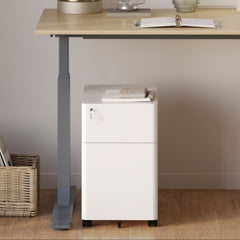
The most effective approach is to treat filing storage as part of the complete workstation. A lockable rolling filing cabinet can support compact organization when its dimensions, drawer arrangement, mobility, and locking function match the room’s actual needs. The goal is not to hide as much paper as possible. It is to create a controlled storage system that keeps important documents accessible without allowing the cabinet to dominate the space.
Why Filing Cabinets Can Overwhelm Small Workspaces
A filing cabinet occupies more than the floor area shown in its dimensions. It also requires operating space. Drawers need room to extend, the user needs space to stand or sit nearby, and the office chair must be able to move without colliding with the cabinet.
A compact model can still feel oversized when placed in the wrong position. A deep cabinet beside a narrow desk may project into a walkway. A tall cabinet can interrupt the visual line of the room. Large handles, exposed labels, contrasting finishes, or stacked objects on top can make even a small storage unit appear heavier.
Physical Size and Visual Weight Are Different
Physical size refers to measurable width, depth, and height. Visual weight describes how dominant an object appears within the room.
A cabinet often looks lighter when it has:
-
A low profile
-
Closed drawer fronts
-
Restrained hardware
-
A finish that coordinates with nearby furniture
-
Clear space around its edges
-
An uncluttered top surface
By contrast, a cabinet may look heavier when it introduces a new color, blocks natural light, projects beyond the desk, or becomes a landing place for paper and office supplies.
Clean Storage Depends on Alignment
Furniture appears more intentional when its edges relate to one another. A cabinet aligned with the front or side of a desk creates a stronger visual connection than one placed at an arbitrary angle.
The same principle applies to wall placement. A unit centered beneath a shelf or positioned flush with a workstation can appear integrated, while a cabinet floating between unrelated furniture pieces may resemble temporary overflow storage.
Measuring the Full Filing Cabinet Operating Zone
Choosing storage by cabinet dimensions alone can lead to frustrating placement problems. A more reliable method is to measure the complete operating zone, including the space required to open drawers and retrieve documents.
Start by recording the available width, depth, and height. Then identify anything that reduces usable space, such as baseboards, vents, radiators, wall outlets, desk supports, power strips, or cable trays.
Drawer Clearance Needs Its Own Measurement
The area in front of the cabinet must remain open enough for the deepest drawer to extend fully. This is especially important for lower drawers, which are often blocked by chair bases, rugs, desk legs, or nearby furniture.
Use removable tape on the floor to mark the cabinet footprint and projected drawer path. Place the office chair in its normal working position and test whether the marked area interferes with sitting, turning, or standing.
Under-Desk Placement Requires More Than Height Clearance
A cabinet may be shorter than the desktop but still fail to fit comfortably underneath. Desks can include crossbars, control boxes, support beams, motors, and cable-management components that reduce the usable opening.
Protect the Natural Sitting Position
Storage should occupy genuinely unused space beneath the desk. It should not force the user to sit off-center, angle the legs, or reduce foot movement.
Before placing a cabinet under the work surface, check:
-
Knee clearance
-
Foot placement
-
Chair approach
-
Support-frame location
-
Drawer opening direction
-
Cable routes
-
Height-adjustment components
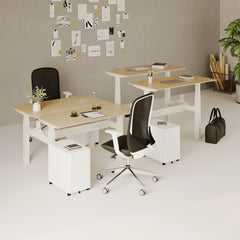
When comparing office desks and standing desks, it is useful to evaluate the structure beneath each work surface as carefully as the desktop dimensions. A clean filing setup depends on compatibility between the desk frame and storage footprint.
Selecting a Cabinet Shape That Preserves a Clean Visual Line
Small-space storage works best when its proportions complement the room rather than compete with it. Low and narrow cabinets are often easier to integrate because they can sit beside or beneath a desk without interrupting the horizontal line of the workstation.
That does not mean the smallest available cabinet is always the right choice. A unit that cannot hold the intended files may create new clutter elsewhere. The cabinet must be compact enough for the room but functional enough for the documents it will contain.
Match Drawer Types to Real Storage Needs
A useful filing cabinet usually combines document storage with limited space for small office items. The drawer arrangement should reflect how the user works rather than how many compartments look appealing.
File Drawers for Upright Records
Dedicated file drawers are intended for folders and records that need to remain upright and easy to retrieve. They are more suitable for active paperwork than general drawers where documents may become stacked or folded.
Utility Drawers for Controlled Supplies
Smaller drawers can hold stationery, notebooks, charging cables, or office tools. These items should not displace the cabinet’s primary purpose. When every drawer becomes a mixed storage area, important documents become harder to find and loose paper starts returning to the desk.
Closed Fronts Create a Calmer Background
Open shelving can work well for books or decorative objects, but exposed paper tends to introduce visual noise. Binders, trays, folders, and envelopes create multiple colors, edges, and labels within a small field of view.
Closed drawers conceal those irregular shapes and allow the cabinet to function as a quiet background element. This is especially valuable in bedrooms, living rooms, studios, and guest rooms where the office remains visible after work.
Finish Coordination Matters More in Compact Rooms
A small room gives the eye fewer places to rest, so mismatched finishes become more noticeable. The cabinet does not need to match every piece exactly, but it should repeat at least one existing element.
Useful points of connection include:
-
Desk-frame color
-
Hardware tone
-
Desktop finish
-
Wall color
-
Nearby shelving
-
Chair base material
A limited palette helps separate furniture pieces read as one system.
Filing Cabinet Placement for Common Small-Space Layouts
The best position depends on how often files are used, how the room is shared, and whether the cabinet needs to move. Each placement option has a different effect on accessibility and visual order.
| Cabinet position | Best suited to | Main advantage | Key clearance concern |
|---|---|---|---|
| Beneath one side of a desk | Dedicated compact workstations | Uses underutilized space | Knee and foot room |
| Directly beside the desk | Frequently accessed records | Keeps files within reach | Chair and drawer overlap |
| Against a short wall | Multipurpose rooms | Creates a defined storage zone | Visual separation from the desk |
| Beneath a return surface | L-shaped work areas | Integrates storage into the workstation | Frame and support clearance |
| Inside a closet or niche | Residential work corners | Conceals office materials after hours | Less convenient daily access |
| Near a shared work surface | Small team spaces | Makes common records accessible | Privacy and circulation |
Under-Desk Storage for a Dedicated Workstation
This placement usually creates the cleanest sightline because most of the cabinet remains beneath the work surface. It works best when the desk has enough width to preserve comfortable legroom.
The cabinet should sit to one side rather than directly beneath the primary sitting position. Drawer handles and corners should not catch clothing or interfere with chair movement.
Side Placement for Daily File Access
A cabinet beside the desk is often more convenient for records used throughout the day. Aligning the cabinet front with the desk edge helps the two pieces appear related.
Leave enough room for the lowest drawer to open without moving the chair each time. If the cabinet has wheels, make sure the floor surface does not cause it to shift during normal use.
Concealed Placement for Shared Residential Rooms
When a work area occupies part of a bedroom or living room, visual separation may matter more than instant access. A cabinet can sometimes sit within a closet, recessed niche, or coordinated furniture grouping.
The chosen location should remain dry, stable, and accessible. It should also support the cabinet safely without blocking ventilation, doors, or household circulation.
Keeping Documents Secure Without Making Storage Feel Heavy
Some paperwork requires more control than ordinary office notes. Contracts, financial records, personnel information, identification documents, and confidential client materials should not remain visible or casually accessible.
Locking storage can reduce the need for separate document boxes, but the presence of a lock does not make every cabinet suitable for every security requirement. Storage choices should reflect the sensitivity of the documents and the organization’s own privacy and retention practices.
Mobility Helps Multipurpose Rooms Adapt
Rolling cabinets can support spaces that change function during the day. A cabinet may remain beneath the desk during focused work and move aside when the room needs to accommodate another activity.
Mobility is most useful when the cabinet still has a consistent home position. A unit that is repeatedly left in walkways or moved without a clear purpose can make the room feel unsettled.
Wheels and Cables Need Separate Paths
Power cords should never cross the cabinet’s rolling route. Wheels can catch cables, pull connected devices, or prevent drawers from opening safely.
A clear cable path also improves the room’s appearance. When power strips and adapters gather around storage, the filing area can look cluttered even when the paper itself is hidden.
Organizing a Small Filing Cabinet So Clutter Does Not Return
Compact storage requires disciplined organization because there is little space for unnecessary documents. The cabinet should contain only records that have a clear purpose, access pattern, or retention requirement.
Sort Documents by Retrieval Frequency
A practical filing structure separates paperwork into four broad groups:
-
Active records: Documents used regularly or connected to current work
-
Reference records: Information needed occasionally for ongoing tasks
-
Long-term records: Materials retained for legal, contractual, financial, or personal reasons
-
Exit records: Documents ready for digitization, archival storage, shredding, or appropriate disposal
This structure keeps frequently used material close at hand while preventing old paper from occupying the most convenient drawers.
Give Each Drawer One Primary Role
Mixed-purpose drawers often become difficult to maintain. A drawer containing contracts, pens, charging cables, receipts, and notebooks forces the user to search through unrelated items.
A clearer arrangement might reserve one drawer for daily supplies, another for active files, and another for retained records. The exact setup should follow the cabinet’s design and the user’s document volume.
Use Broad, Stable Labels
Labels should make retrieval easier without creating excessive categories. Overly detailed systems can slow down filing because each document requires a difficult classification decision.
Useful labels often refer to:
-
Business function
-
Client group
-
Document type
-
Calendar year
-
Project status
-
Retention category
Consistent terminology across paper and digital storage makes hybrid record management easier. Physical and digital folders that use the same naming pattern reduce confusion.
Maintain a Weekly Paper Reset
A small filing cabinet stays clean when loose paper is processed before it accumulates. A simple routine can include:
-
Filing documents that require physical retention
-
Digitizing eligible reference materials
-
Shredding sensitive duplicates appropriately
-
Removing expired records according to applicable policies
-
Returning supplies to assigned drawers
-
Clearing the top surface
The cabinet’s limited capacity becomes an advantage when it encourages regular decisions about what deserves to remain.
Connecting Filing Storage With Cable and Desktop Control
Paper clutter and cord clutter often occupy the same small zone. A cabinet beneath the desk may compete with power strips, chargers, monitor cables, and device adapters.
These elements should be planned together. Drawer paths need to remain clear, wheels need unobstructed movement, and power connections should not hang loosely where they can be pulled or trapped.
Desk-Level Power Can Reduce Floor Congestion
An in-desk power module can provide desk-integrated access to power connections when the product dimensions, cutout requirements, and desk construction are suitable.
Compatibility should be checked before installation. Not every work surface is designed for an integrated component, and placement should not interfere with structural supports or cable-management features.
Keep the Cabinet Top Deliberate
The top of a filing cabinet can easily become a second desk. Incoming mail, notebooks, cups, and office supplies may gather there because the surface is convenient.
A clean setup gives the surface one defined role. It may remain empty, support one document tray, or hold a compatible compact device when the cabinet’s specifications and safe-use guidance allow it.
Negative space is often the better choice in a visible work area. An empty top makes the cabinet appear smaller and helps the room feel less crowded.
Extending Clean Storage Into a Compact Meeting Zone
Small private offices often need to support both focused work and occasional conversation. The filing cabinet should remain accessible to the primary user without placing confidential documents within easy reach of visitors.
Creating separate zones for individual work, shared discussion, and document storage can make a limited room feel more organized.
Rounded Surfaces Can Improve Circulation
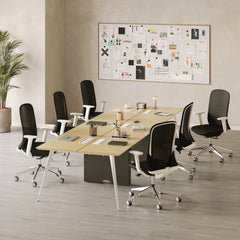
A round meeting table can create a dedicated discussion area without the projecting corners of a rectangular surface. Its complete footprint, including chairs and occupied seating space, still needs to be measured carefully.
The table should not block filing drawers or require users to move furniture every time records are accessed. A compact meeting zone works best when storage remains outside the main visitor path.
Informal Conversations May Need a Lighter Surface
An office bistro table may suit short conversations, laptop check-ins, or casual collaborative moments when a full meeting setup is unnecessary.
This type of surface should be evaluated separately from filing storage. Its role is to support interaction, while the cabinet remains responsible for document control. Keeping those functions distinct helps the room stay visually clear.
Seating Scale Protects Cabinet Access
An ergonomic conference chair belongs in a collaborative seating context rather than beside the cabinet as an improvised task chair or storage surface.
Chair width, depth, and pull-out space affect circulation. A seat that fits beneath a table may still block the filing cabinet when occupied. Planning around the full seated footprint prevents repeated furniture rearrangement.
Small-Space Filing Mistakes That Create Visible Clutter
A clean filing area can quickly lose its purpose when storage decisions are based on maximum capacity rather than actual use.
Choosing More Capacity Than the Room Needs
Extra storage often encourages paper accumulation. Before selecting a cabinet, estimate the volume of active files and required retained records.
Documents kept without a clear purpose can make retrieval harder and reduce the cabinet’s useful capacity. Compact storage works best when it is paired with a realistic retention system.
Ignoring the Lowest Drawer
The bottom drawer frequently has the greatest clearance problems. Chair bases, thick rugs, desk legs, and nearby furniture can prevent it from opening fully.
Testing the complete opening path before placement avoids a cabinet that fits visually but fails functionally.
Mixing Intake, Storage, and Supplies
Incoming paper should have a separate, limited holding area. Placing unprocessed documents directly into general drawers makes it difficult to distinguish active work from filed records.
A single tray or folder can serve as an intake point, provided it is emptied regularly.
Treating the Cabinet Top as Overflow Space
Closed storage loses much of its visual value when the top is covered with paper. A cabinet can conceal several organized drawers while still making the room look messy if the visible surface becomes crowded.
Selecting Furniture One Piece at a Time
Desks, chairs, storage, power access, and meeting surfaces affect one another. Choosing each element independently can produce mismatched heights, blocked pathways, and inconsistent finishes.
A coordinated workspace feels cleaner because each piece has a clear relationship to the others.
A Practical Scorecard for Compact Filing Storage
Before choosing a cabinet, assess the complete workspace rather than focusing on one feature.
-
Footprint: The cabinet fits the measured width, depth, and height.
-
Drawer path: Every drawer can open fully.
-
Legroom: Under-desk placement preserves comfortable sitting.
-
File compatibility: The drawers suit the intended records.
-
Security: Access control matches the sensitivity of stored documents.
-
Mobility: Wheels support a real functional need.
-
Stability: The cabinet remains steady on the existing floor.
-
Finish: Color and hardware coordinate with nearby furniture.
-
Cable safety: Power routes remain separate from drawers and wheels.
-
Access frequency: Daily files are easy to retrieve.
-
Delivery path: The cabinet can pass through doors, halls, and stairs.
-
Maintenance: The filing system is simple enough to sustain.
A cabinet that performs well across these categories is more likely to support the room over time without creating new clutter.
Building a Cohesive Workspace Around Compact Filing Storage
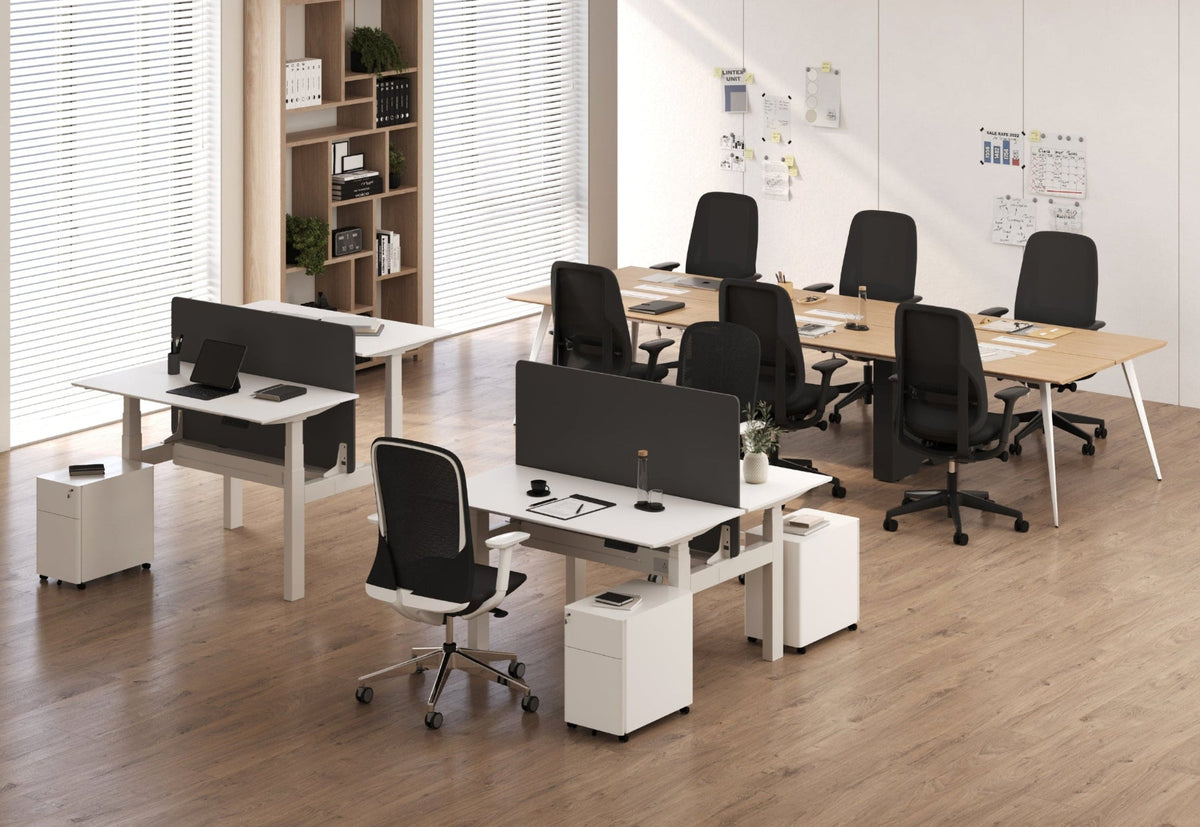
The filing cabinet should not be treated as a standalone utility object. It works best when planned alongside the desk, chair, power access, lighting, meeting area, and circulation path.
Limit the Material and Color Palette
A restrained palette allows separate pieces to appear connected. The desktop finish, cabinet color, frame tone, and visible hardware should share a clear visual relationship.
Exact matching is not always necessary. Repeating one finish or material can provide enough continuity to make the workspace feel intentional.
Keep Every Furniture Piece Accountable
Each item in a small office should have a defined role. Decorative objects, extra chairs, side tables, and open storage should earn the space they occupy.
This approach is reflected in collections of modern office furniture for creative workspaces, where desks, seating, storage, and accessories can be considered as connected parts of a working environment rather than isolated purchases.
A cohesive room does not need to feel rigid or overly matched. It needs consistent proportions, clear pathways, and enough visual restraint for the filing cabinet to blend into the setting.
Compact Filing Storage That Adapts Without Creating New Clutter
The best filing cabinet for a small space is not always the narrowest model or the one with the most drawers. It is the cabinet that fits the room’s physical limits, supports the required documents, preserves movement, and remains visually connected to the workstation.
Clean storage depends on accurate measurements, realistic document retention, controlled surfaces, and a permanent placement plan. Mobility, locks, and specialized drawers can be useful, but only when they respond to an actual need.
A proportionate cabinet can remain valuable as work habits change. When it is selected as part of the whole room, it keeps paper accessible, protects important records, and supports a workspace that feels calm rather than crowded.
Related Articles
-
 This Is How To Build A Small Home Office You Actually Want To Work From, And How To Pick Desks For Small Spaces - Urbanica Furniture's Full Guide
-
 Minimalist Office Table Ideas That Work Like a Bistro Table
-
 Make Small Shared Spaces Work Better With a Bistro Table
-
 Best Filing Cabinet Layout Ideas for Small Home Offices and Shared Rooms
-
 What Size Filing Cabinet Makes Sense for Small Workspaces?
-
 Best Laptop Stand Ideas for Flexible Workspaces and Multi-Use Rooms


