















Best ergonomic office chairs for back pain and long hours at the desk

Why desk-related back pain snowballs over long hours and what an ergonomic chair actually changes
Spinal loading over time: compression, creep, and why “fine in the morning” becomes sore by afternoon
Long desk days create a predictable pattern. The first hour often feels neutral, then your posture gradually drifts. This happens because tissues adapt to sustained positions. Muscles fatigue, connective tissues slowly lengthen under load, and the pelvis subtly tilts backward. The shift is small, but the impact is not. When the pelvis rolls back, the lumbar curve flattens. Once that happens, the upper back tends to round and the head moves forward to keep your eyes on the screen. What begins as a comfortable slouch becomes a chain of compensations that increases strain across the lower back, mid-back, neck, and shoulders.
An ergonomic chair changes the situation by reducing how much constant effort your body needs just to stay organized. Instead of your core and back muscles doing all the stabilizing work, the chair supports your pelvis and lumbar spine in a way that keeps you closer to a neutral alignment. The best chairs also support movement, so your body can shift positions without losing support.
The pelvic tilt domino effect: lumbar flattening to upper-back rounding to forward head posture
When the pelvis tucks under, the base of your spine loses its natural curve. Your ribs then sink backward, the shoulder blades drift forward, and your neck extends as your head reaches toward the monitor. That posture can feel restful initially because it offloads active muscular engagement. Over hours, it can increase fatigue and discomfort because joints and discs take more load and muscles must compensate in inefficient positions.
Static versus dynamic sitting: why “still” is often the real problem
Even a well-aligned posture becomes uncomfortable if it is held without interruption. What protects people during long hours is supported micro-movement. A chair with an appropriate recline response, stable support, and usable adjustability lets you alternate between a forward working posture and a slightly reclined posture. That shift reduces sustained pressure and gives tissues a chance to recover without interrupting work.
Pain patterns that hint at the wrong chair setup
Back pain at a desk is not one-size-fits-all. The pattern of discomfort can point to a specific mismatch between your body and the chair setup.
Low-back ache after 60 to 90 minutes: lumbar support and recline mismatch
If the low back starts aching in a predictable window, the lumbar support might be too low, too high, too aggressive, or simply not contacting you when you recline. In many cases, a slightly reclined working angle paired with lumbar support that contacts the natural curve reduces the need to “hold yourself up.”
Upper-back and neck tightness: armrest height and keyboard reach
If shoulders feel elevated or your neck tightens during typing, armrests may be too high, too far apart, or not aligned to how you use a keyboard and mouse. Reaching forward or outward can create tension through the upper back even when the lumbar region feels supported.
Hip pinching or SI irritation: seat depth and hip angle
A seat that is too deep often forces you to slide forward, tilting the pelvis backward. A seat that is too high can also change hip mechanics and increase tension through the back of the legs, influencing pelvic position. People with sensitive hips or SI joints often do better with seat depth that supports the thighs without pressing into the back of the knees.
Numb legs or tingling feet: front-edge pressure and seat height
If you feel numbness, pressure behind the knees, or tingling after sitting, the seat height may be too high, the seat edge may be pressing into soft tissue, or the seat depth may be too long for your legs. A small clearance behind the knees and stable foot contact can make a noticeable difference.
The ergonomic chair fit system that matters for 8 plus hours: measurements, adjustability, and pressure management
Seat height as the foundation: foot contact, knee angle, and hamstring tension
Seat height sets your entire chain of alignment. When feet are planted and knees sit around a comfortable bend, your pelvis is more likely to stay neutral. If the chair is too high, you may perch on the edge and lose back support, or you may slide forward to find comfort. If it is too low, the pelvis can tuck under and flatten the lumbar curve.
A practical target is stable foot contact and a knee position that does not feel compressed. Many people also feel better when hips are not forced lower than knees, but comfort varies by body proportions and desk height.
When to use a footrest versus lowering the chair
If your desk is fixed and you must raise the chair to keep elbows comfortable while typing, your feet may lose contact with the floor. That is where a footrest can help. It restores stable support under the feet so your pelvis is not pulled into an awkward position. If your desk allows it, lowering the chair is often the simpler option, but in many workspaces the desk is the limiting factor.
Seat depth and the behind-the-knee clearance rule
Seat depth influences whether you can sit back and use the backrest. If the seat pan is too deep, the front edge presses into the back of the knees and discourages sitting all the way back. If it is too shallow, the thighs are unsupported and the pelvis can feel unstable.
A quick check is to sit fully back and confirm you have a small gap between the seat edge and the back of the knees. The exact size varies, but you should not feel pressure behind the knees.
Who benefits most from a sliding seat pan
Sliding seat depth is especially helpful for people who are between sizes, share a chair, or alternate between upright typing and more reclined work. It lets you keep back support while maintaining comfortable clearance behind the knees.
Lumbar support that reduces effort without “pushing” the spine
Lumbar support is a common buzzword, but what matters is fit. Support should meet your lumbar curve so you can relax without collapsing. If lumbar support is too aggressive, it can feel like a hard point that creates discomfort. If it is too weak or too low, you do not get meaningful support.
Height versus depth adjustment: which one usually fixes what
Lumbar height helps position support where your curve naturally sits. Lumbar depth changes how strongly the support contacts your back. If you feel supported but still fatigue, height may be the fix. If you feel poked or forced forward, reduce depth or choose a chair where lumbar contact is more forgiving.
Sensitive low backs: dialing down aggressive lumbar and using recline strategically
For people who flare up with strong lumbar pressure, a gentle contact and a slightly reclined working posture often feels more sustainable. The goal is to reduce effort, not to force posture. A chair should help you return to a neutral position naturally.
Recline, tilt-lock, and tension: building a working recline you can type in
Recline is not just for breaks. A slight recline can reduce sustained loading because it distributes pressure and allows the backrest to share more of the work. The challenge is staying supported while still being able to type comfortably.
A stable recline with usable tension lets you lean back without feeling like you are falling, and return forward without pushing with your feet. Chairs that support a range of postures tend to feel better across long days than chairs that only feel good in one position.
Why 100 to 110 degrees often feels better than 90 degrees for long sessions
Many people feel less compression when the torso is not perfectly upright. A modest recline can reduce pressure and encourage breathing that does not feel restricted. The right angle is personal, but the broader idea is that small variation is healthier than rigid stillness.
Armrests that prevent shoulder-driven back pain
Armrests influence the upper back and neck more than most people expect. If armrests are too high, shoulders shrug. If too low, the upper back works harder to hold the arms. If armrests are too far apart, you may reach outward, creating tension through the shoulder girdle. If too narrow, you may hunch.
For long hours, the best armrest setup is one where elbows can rest lightly with shoulders relaxed, and hands can travel between keyboard and mouse without repeated reaching.
Height plus width plus pivot: matching your keyboard and mouse path
Height determines shoulder position. Width determines whether elbows can stay near your sides. Pivot helps when your mouse is placed outward or when you switch between typing and mousing. When these three align, your upper back can relax and your sitting posture becomes easier to maintain.
Materials and temperature regulation for long hours
Comfort changes when you get warm. Heat buildup often causes subtle fidgeting, sliding, or slumping as your body searches for relief. Breathable materials can help maintain comfort during long sessions, especially in warmer rooms or when you wear layered clothing.
Breathability and comfort: why heat buildup changes posture
When you feel overheated, you may pull away from the backrest or perch on the seat edge for airflow. That removes lumbar support and increases the effort your back must provide. Material choice cannot “fix” ergonomics, but it can support consistency.
Chair types that fit real workflows: high-focus tasking, mixed-use home offices, and design-led seating
High-adjustability ergonomic task chairs for long typing blocks and frequent meetings
If you work in long stretches of deep focus, adjustability is your friend. The ability to tune seat height, seat depth, lumbar positioning, recline, and armrests helps you create a stable baseline posture and then vary it throughout the day. The goal is not constant tweaking, but the ability to dial in a fit that matches your proportions and desk setup.
Home-office chairs that balance appearance and daily support
Home offices often live inside shared spaces. A chair might need to look intentional in a room while still performing for real work. In that environment, look for chairs that allow you to sit back and use the backrest, keep stable foot support, and maintain comfortable arm placement. A chair can be visually refined and still support long hours if the fundamentals are right.
Performance chairs with breathable materials for warmer rooms and long sitting sessions
Breathable backrests and supportive structures can help users stay consistent with back contact and posture. If you regularly sit through warm afternoons, material and airflow may influence whether you maintain supportive contact or start perching and slumping.
When a stylish chair is enough and how to compensate when it is not
Some chairs are ideal for shorter focused sessions or occasional desk work. If you choose a style-led chair, you can compensate with a more precise desk height, a footrest if necessary, and a structured routine of micro-breaks. It can also help to limit long, uninterrupted sessions in a chair that does not offer as much adjustability.
Back-pain-oriented chair selection: what to prioritize by body type, desk habits, and symptom triggers
Taller versus petite fit priorities
Your height alone does not determine fit, but it strongly influences seat depth, backrest coverage, and armrest range needs.
Seat depth, backrest height, and the armrest range issue
Taller users often need deeper seat support and higher backrest coverage to feel stable. Petite users often need a shorter seat depth so they can sit back without knee pressure. Petite users also benefit when the seat can go low enough for stable feet, and when armrests can come down far enough to avoid shoulder elevation.
If you cross legs, perch, or slide forward: what the chair is trying to tell you
These habits often signal a mismatch. Crossing legs can be a way to create stability when the chair feels too tall. Perching can happen when lumbar support is uncomfortable or when seat depth is too long. Sliding forward usually happens when the seat pan and backrest do not work together for your proportions, or when tilt tension makes recline unusable.
Instead of “correcting the habit” first, treat it as a clue. Adjust seat height, check knee clearance, and confirm the lumbar support meets your back without forcing you away.
If you alternate between deep work and calls: why recline support matters more than you think
Long hours are rarely uniform. You might type for two hours, then take a call, then return to focused work. Chairs that support a stable recline make those transitions smoother. When recline is usable, you can redistribute pressure during calls without losing support. That can reduce the tendency to slump or twist.
Red flags to avoid in any ergonomic chair listing
Limited adjustability disguised by thick padding
Padding can feel comfortable initially, but it does not replace fit. If you cannot set seat height properly, sit back with knee clearance, and maintain lumbar contact, thick cushioning can become a trap because it masks poor alignment for short periods while fatigue accumulates over long hours.
Fixed armrests that force shoulder elevation
If armrests are fixed at the wrong height or width, they can aggravate neck and upper back tension. For long hours, arm positioning is a major comfort variable, not a minor detail.
Seat geometry that encourages forward sliding
A seat that slopes forward, lacks stability, or does not allow you to sit back can cause a slow drift forward. Once you lose back contact, your muscles must work harder and discomfort builds.
Four Urbanica chair options to compare by support style and long-hours behavior
Onyx Chair: ergonomic essentials for long sessions with adjustability signals
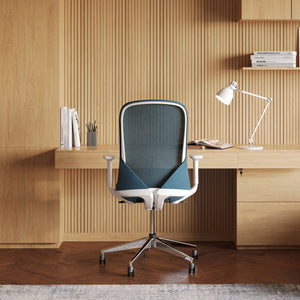
When back pain and long hours are the primary concern, chairs designed around ergonomic adjustability are often the most reliable place to start. The Onyx product information highlights several practical features, including lumbar support and adjustable armrests, which are commonly used to tune fit across different bodies and desk setups. For readers who want to review what is listed directly, refer to the Onyx Chair ergonomic specs and details as a factual baseline for what the chair is presented to include.
How to evaluate Onyx in a back-pain context without guessing
Start by setting seat height for stable feet. Next, sit fully back and confirm the lumbar support contacts your natural curve without feeling like a hard push. Then check armrest position so shoulders relax and elbows feel supported. Finally, test a modest recline and confirm you can hold that posture while still reaching the keyboard comfortably. If all those steps work together, the chair is doing its job.
Novo Chair: multi-adjustment ergonomic seating for extended desk days
For people who want multiple points of adjustability to fine-tune posture across long sessions, Novo is positioned as an ergonomic chair with several adjustment options. The product listing emphasizes adjustability and support-oriented design. Readers who want to confirm what is stated can consult the Novo Chair ergonomic support overview and compare those listed elements to their personal fit priorities.
A practical fit sequence for Novo that prioritizes comfort over perfection
Use a consistent order. Confirm feet, then seat depth clearance, then lumbar contact. After that, set armrests so shoulders can drop. Only then tune recline and tension to find a working posture you can maintain. This sequence prevents the common error of fixing one issue while creating another.
Muse Chair: adjustable structure with a softer, home-office-friendly feel
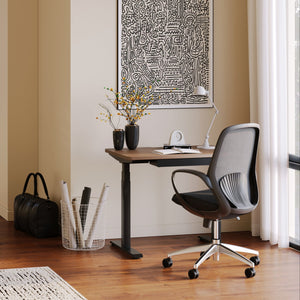
Muse is a chair that can make sense when you want daily comfort with a more home-oriented aesthetic, especially in a space where the chair remains visible outside of work hours. The most important point is to verify that you can sit fully back, maintain lumbar contact, and keep stable feet while still fitting your desk height. For the specific materials and how the product is described, reference the Muse Chair product details.
Keeping long sessions comfortable in a chair that shares space with daily life
Home offices often involve frequent transitions. You might step away to handle non-work tasks and return. A chair that feels easy to re-enter matters. A reliable cue is whether the chair helps your pelvis “land” in the same supported position each time you sit, rather than requiring constant repositioning.
Seashell Chair: breathable mesh with integrated armrests for practical everyday use
Seashell is presented with breathable materials and a clean profile, which can appeal to users who want a modern look and straightforward seating. Integrated armrests can be convenient, but they also reduce adjustability. That means desk height and chair height become even more important. If you want the exact product description and measurements as shown, use the Seashell Chair materials and measurements as the source of truth.
Making integrated armrests work for desk comfort
If armrests cannot be adjusted, prioritize getting seat height and desk height aligned so shoulders stay relaxed while typing. If the desk is high and armrests force shoulders upward, discomfort can build even if the seat feels comfortable. In that scenario, a chair with adjustable armrests may be the better long-hours match.
The fastest way to compare silhouettes and seating styles side-by-side
Some shoppers do best by comparing a few chairs in the same category to see how different backrest shapes and seat designs might align with their posture needs. The office chair category page provides a straightforward way to view available seating options and narrow the shortlist based on design preferences and the kind of support you want to test for your workday.
When the desk, not the chair, is driving your back pain and how to correct the geometry
Desk height checkpoints for relaxed shoulders and a supported spine
Even a well-fitted chair can fail if the desk forces poor arm angles. If the desk is too high, people often raise the chair to reach the keyboard comfortably, which can lift the feet off the floor and destabilize the pelvis. If the desk is too low, people often hunch forward or drop the head and shoulders.
A sustainable setup keeps shoulders relaxed, elbows close to the body, and the keyboard at a height that does not require shrugging. When the desk is fixed, you adjust around it carefully. That may mean a footrest, a keyboard tray, or adjusting monitor height so the neck stays neutral.
Elbow angle, keyboard height, and why raising the chair can backfire
Raising the chair can solve an elbow-height problem but create a foot-support problem. Without foot contact, the pelvis can shift, and the backrest becomes less effective. That is why chair and desk must be evaluated as one system.
Desk depth and monitor distance: preventing forward reach and neck strain
If the desk is too shallow, the monitor sits too close and the keyboard may force the wrists into awkward angles. If too deep without proper placement, you may reach forward. Both situations encourage the head and shoulders to drift forward, increasing neck and upper-back load.
A supportive chair helps, but the desk determines where your arms and eyes go. The more you reach, the more your back works.
Matching a chair to a stable work surface with leg clearance
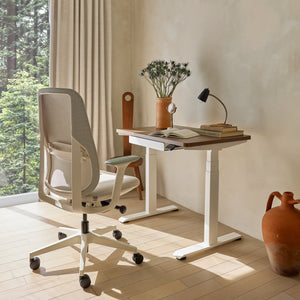
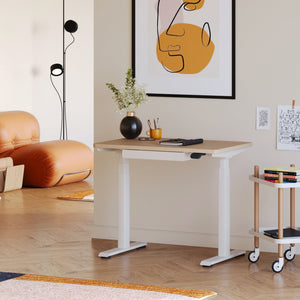
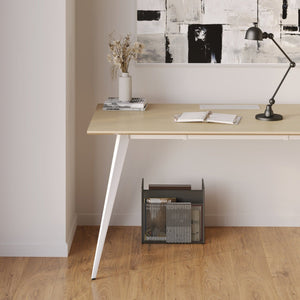
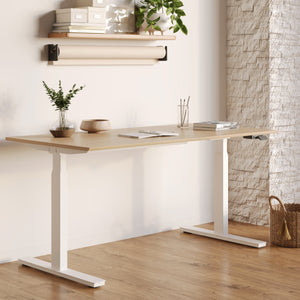
Leg clearance matters for posture. If the desk has obstructions, you may twist or sit off-center, which can aggravate low-back pain over time. A stable desk that supports a centered posture makes it easier to use the chair properly. For details on the work surface itself, see the Office Desk size options and workspace details and evaluate height, depth, and clearance in relation to how you sit.
A six-minute ergonomic setup sequence that reduces pain the same day
The correct order of operations so one adjustment does not break the next
1. Set seat height so feet are stable and the pelvis feels grounded.
2. Set seat depth so you can sit fully back with comfortable clearance behind the knees.
3. Position lumbar support so it meets your natural curve without creating a pressure point.
4. Tune recline and tilt tension to create a working posture you can maintain.
5. Set armrests so shoulders relax and elbows are lightly supported.
6. Align monitor height and distance so the head stays balanced over the torso.
This sequence works because each step depends on the one before it. Changing armrests before seat height often leads to compensations. Setting lumbar before seat depth can lead to sliding. A reliable order makes the chair feel predictable, which is exactly what long hours require.
Seat height to seat depth to lumbar to recline and tension to armrests to monitor alignment
If you only remember one thing, remember that the chair must support you while you sit fully back. Anything that prevents that, like a seat that is too deep or a desk that forces reaching, will undermine the best lumbar design.
Two micro-resets that reduce compression between tasks
30-second supported recline reset
Lean back into the backrest, let the chair carry more of your weight, and breathe slowly. This changes loading and gives the tissues of the lower back a short break without leaving your desk.
Stand-sit re-seat the pelvis reset
Stand up, take a step or two, then sit back down and intentionally place the pelvis fully against the backrest. Many people gradually slide forward during the day. This reset interrupts that drift and restores contact where the chair is designed to support you.
A quick self-check for neutral without effort
If you feel like you must tense your abdomen or brace your shoulders to sit upright, something is off. A supportive setup feels stable even when you are relaxed. The chair should help you return to a good posture rather than demand that you hold one.
Proof-of-fit shopping: how to evaluate a chair in under 10 minutes without falling for buzzwords
Pressure mapping by feel: thighs, tailbone, lumbar contact, and shoulder relaxation
Sit back fully and scan for pressure points. You should not feel sharp pressure at the tailbone. Thigh support should feel even, not concentrated behind the knees. Lumbar contact should feel supportive, not poking. Your shoulders should drop when your elbows rest.
Recline test: does the backrest support you or drop you backward?
Lean back slightly. A good chair supports you through the range and lets you return forward smoothly. If recline feels unstable, you may avoid using it and remain static all day, which can increase discomfort over time.
Armrest test: can you type with shoulders down and wrists neutral?
Place hands on the keyboard. If shoulders rise, armrests are too high or the desk is too tall. If elbows float without support, armrests may be too low or too far away. If your wrists bend up, the keyboard height may be wrong. These are system issues, not personal failures.
Day-30 regret prevention: which features matter after the novelty wears off
What matters long-term is not a “wow” feeling in the first two minutes. It is whether the chair keeps working when you are tired. Prioritize stable support, usable adjustments, and a recline you actually use. Comfort that lasts is usually about fit and movement, not about softness.
Delivery, planning, and support for office furniture orders when you are outfitting a workspace
Clear expectations around delivery support, ordering help, and service information
When outfitting a workspace, the practical details matter as much as the chair choice. Shipping information, ordering support, and service details help teams and individuals plan without making assumptions. For those operational specifics, use the shipping and ordering support information page as the most accurate reference, especially if you are coordinating multiple pieces or aligning a setup across a home office and a shared workspace.
When to bundle desk and chair versus upgrading one piece first
If your current chair cannot be adjusted to support your pelvis and lumbar region, upgrading the chair is often the most immediate comfort improvement. If your chair is close but your desk height forces shrugging or reaching, the desk setup may be the bottleneck. In many workspaces, the fastest path is to fix the biggest geometry problem first, then refine.
Building long-hours resilience: ergonomic seating as a system, not a single purchase
When to upgrade the chair versus adjust the workstation
A chair upgrade is warranted when you cannot achieve stable foot support, comfortable seat depth, and consistent lumbar contact. Workstation adjustment is often the priority when your shoulders are forced upward, your keyboard placement makes you reach, or your monitor setup pulls your head forward. The most reliable improvements come from addressing the limiting factor, not from chasing features.
Support strategy for back pain flare-ups that stays honest and practical
Back pain can flare for many reasons, including stress, lack of movement, and long periods of static posture. Ergonomic seating is not a medical treatment, and no chair can guarantee pain elimination. What the right chair can do is reduce common triggers by supporting neutral alignment and enabling posture changes. When discomfort rises, the safest approach is to change position, use a modest recline, and take short movement breaks rather than pushing through a rigid posture.
Movement that does not interrupt work: low-friction routines that keep posture from locking
Long-hours resilience improves when movement is designed into the day. Use micro-resets between tasks, stand during a call when possible, or shift into a supported recline during reading. The chair should make these transitions effortless. When movement is easy, people do it more often, and discomfort tends to build more slowly.
A long-hours workstation standard built around consistency and adaptability
The best ergonomic office chairs for back pain and long hours are the ones that help you sit fully back with stable feet, maintain comfortable lumbar contact, keep shoulders relaxed, and vary posture without losing support. From our perspective as a furniture brand, the goal is to help customers build a workstation that feels real and sustainable, not a setup that depends on perfect posture or unrealistic expectations. When the chair and desk work together and the setup supports small daily adjustments, long hours become more manageable and back comfort becomes easier to maintain.
Leave a comment