



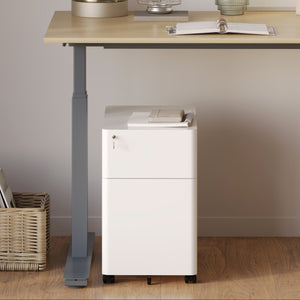






















Filing Cabinet Choices for Cleaner Workstation Planning
Cleaner workstation planning starts with filing storage that matches the desk, document volume, security needs, and daily workflow. Explore how cab...
Learn more
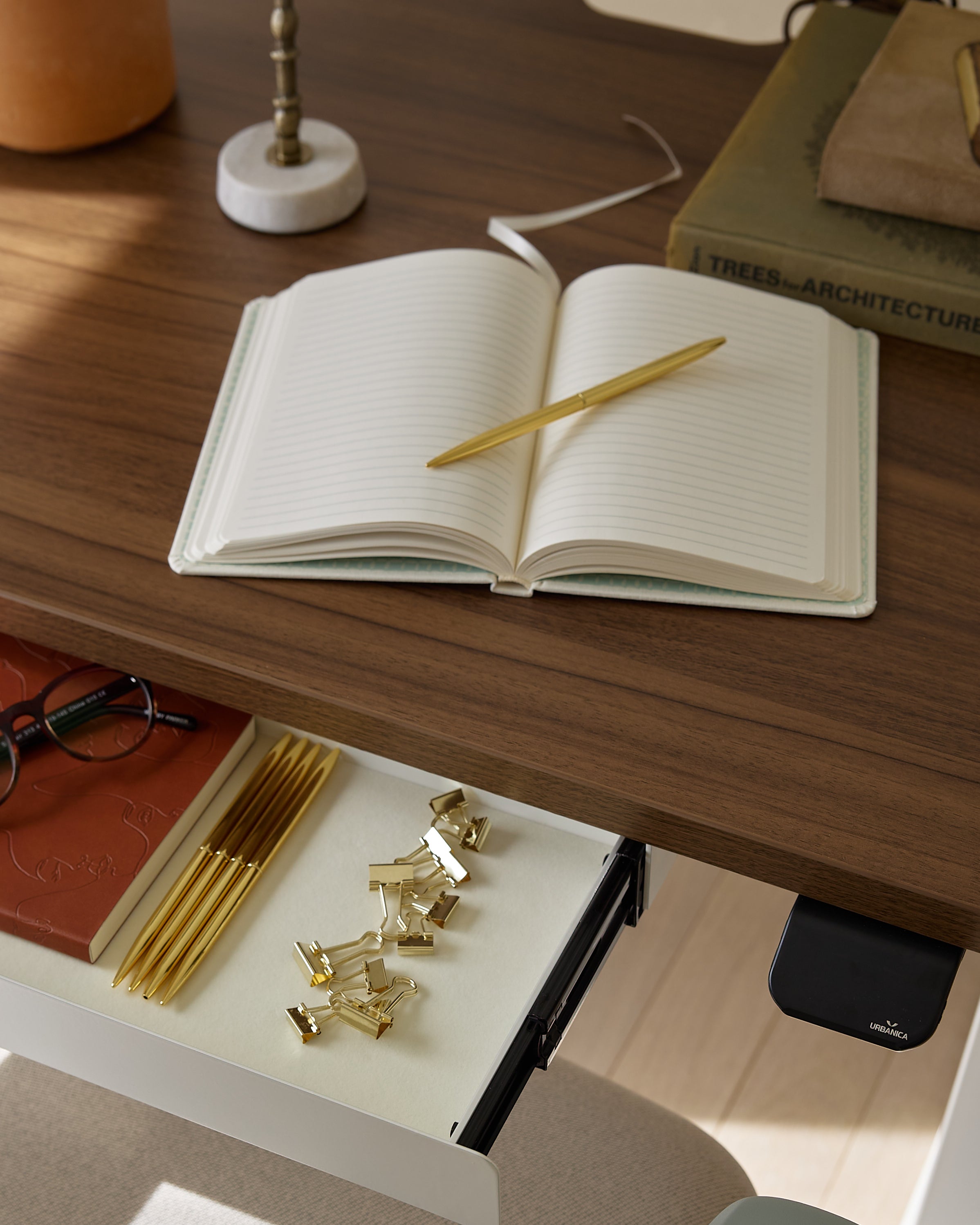
Visit quiz page to see how we makes it easy to create an inspiring workplace


Lower-back pain at work often gets blamed on “sitting too much” or “bad posture,” but the more reliable explanation is usually simpler: the back does not like being asked to hold the same position for long stretches. The spine is built for movement and varied loading, not for one posture that stays fixed while the hands and eyes work for hours.
A standing desk can be a useful tool for lower-back pain when it helps you change positions more often and reduce the strain of staying locked in one posture. A standing desk can also make symptoms worse when standing becomes another static posture with new stress points. The difference is rarely the desk itself. It is how the desk changes your working habits and how well your setup fits your body.
Lower-back pain is not one experience. The “shape” of your symptoms matters because it influences whether standing tends to help, and what kind of sit–stand routine is realistic.
This often feels like stiffness across the belt line or a deep ache that grows during the day. Many people describe feeling better after moving around for a few minutes. This pattern frequently responds well to a strategy built around frequent position changes and better-supported sitting.
Some people feel a pinch when they stand up, or a sharp moment when they straighten after a long sit. This can be driven by tight hip flexors, irritated joints, or a sensitized area that dislikes rapid change. Standing desks can still help, but ramp-up and movement quality matter more than total standing time.
If standing brings on pain fast, or if it increases symptoms down the leg, a standing desk is not automatically the solution. That does not mean standing is “bad.” It means static standing may be irritating your current pain pattern. A slower progression, more movement variety, and a setup that prevents over-arching and locked knees become essential.
Even a reasonable posture becomes a problem when it is held too long. Muscles fatigue and start to “brace” to keep you upright. Joints experience repetitive compression. Small compensations add up, such as leaning into one hip, craning forward toward the screen, or hovering the shoulders upward. The goal is not perfection. The goal is tolerable positions, rotated frequently, with a setup that reduces the need to brace.
A standing desk tends to be most helpful when it removes friction from posture change. If you can shift between supported sitting and comfortable standing without fussing with your workspace, the desk becomes a tool for load management. If standing becomes another rigid posture, the desk simply swaps one source of strain for another.
Standing can feel relieving because it changes hip and spine angles and invites subtle movement. But standing can also create strain if it encourages bracing, over-arching, or fatigue from hard flooring and static posture. Understanding both sides helps you use standing desks safely and realistically.
Standing can feel better when your lower-back pain is linked to stiffness from prolonged sitting. Gentle standing changes the hip angle and can reduce the “compressed” feeling that some people get after sitting for long periods. It can also support small, frequent movement that is hard to do when seated, such as shifting weight, taking a few steps, or changing stance.
Standing also tends to work well for tasks that naturally involve small posture changes, such as calls, reading, or quick admin work. These tasks often allow you to move without precision mouse work that can lock you in.
Standing can backfire when it becomes static. Common patterns include locking the knees, leaning into one hip, or arching the lower back to “stand tall.” Some people stand too far from the desk and reach forward, which pulls the ribcage and pelvis into a position that encourages lumbar tension. Hard floors and unsupportive footwear can add fatigue that travels up the chain into the lower back.
If your symptoms increase as you stand and ease when you sit, the answer is usually not “stand more anyway.” The safer path is to improve your standing mechanics, reduce standing duration, and increase movement variety while using supported sitting as a recovery position.
Green lights include stiffness that improves with movement, end-of-day achiness linked to long sitting, and general sedentary soreness. In these cases, a standing desk can be a practical way to introduce frequent change.
Yellow lights include radiating symptoms, recent flare-ups, or pain that worsens quickly with standing. A standing desk can still be used, but the ramp-up should be conservative, and the focus should shift from standing time to movement quality and short, tolerable doses.
From our perspective as a brand that builds workstations for real working days, the biggest difference-maker is not whether you sit or stand. It is whether your setup makes it easy to change your working position throughout the day.
When people buy a standing desk expecting it to eliminate pain by itself, they often miss the real win: the desk lets you rotate load so the same tissues are not doing the same job nonstop. This approach is also easier to maintain. It does not require extreme discipline or a strict schedule. It requires small changes repeated consistently.
Posture change can be a full transition from sitting to standing, but it can also be smaller shifts that still reduce sustained loading. Examples include:
Standing for a short task and sitting for focused keyboard work
Perching on the edge of the chair briefly, then returning to supported sitting
Taking a short walk while a file loads or during a call
Shifting stance, stepping back, or changing foot position while standing
The key is to avoid staying fixed. Many people do better when they think in terms of “switch often” rather than “stand a lot.”
Standing desks shine when they invite subtle movement. These options are simple and usually acceptable in a professional space:
Shift weight from foot to foot every few minutes
Keep knees softly bent rather than locked
Do a gentle hip hinge reset: hinge slightly, then return to neutral
Perform small calf raises or heel lifts
Alternate foot position by stepping one foot slightly forward, then switching
If any movement increases symptoms sharply, reduce the range and keep changes smaller. Comfort-first is the rule.
If pain increases during standing, reduce standing duration and increase movement variety. Do not treat static standing as a test of willpower. Discomfort that fades quickly when you sit is often a sign that your body is asking for shorter standing bouts, better alignment, or more support underfoot.
A standing desk can support your back, but only if it helps you work with less bracing and less reaching. Ergonomics is not about rigid posture rules. It is about placing your tools where your body does not have to fight your furniture.
When the desk is too high, shoulders creep up, and the upper back tenses. That tension often travels downward as the lower back starts to brace. When the desk is too low, you hunch or hinge forward, which can load the back in ways that build fatigue.
A practical target is to keep elbows close to your sides and bent comfortably while you type, with wrists in a neutral position. If you feel like you are holding yourself up with your lower back, check whether the keyboard is too far away or the desk is forcing your shoulders upward.
A monitor that sits too low pulls the head forward. The body often compensates by rounding the upper back and then re-arching the lower back to “balance.” That can create a tug-of-war that ends in lumbar fatigue.
A helpful approach is to set the monitor so your eyes naturally land on the upper portion of the screen without lifting the chin. Keep the monitor at a distance where you are not leaning forward to read, and position the primary screen directly in front of you to avoid repeated twisting.
Lower-back irritation is often driven by small repeated reaches rather than one big movement. Place your mouse, keyboard, and frequently used items inside a comfortable forearm radius. If you find yourself repeatedly reaching to the side or forward, adjust the layout before assuming your back needs “more standing.”
Standing on a hard surface for long periods can create fatigue that influences posture. When feet and legs tire, many people shift into a hip-lean stance and over-arch the back without noticing. Softer underfoot support, comfortable footwear, and shorter standing bouts can reduce this pattern. The goal is comfort that allows relaxed standing, not endurance standing.
A standing desk becomes useful when it fits into your day without forcing you into long standing stretches. Most people do better with short, repeatable standing bouts than with a dramatic switch from sitting all day to standing all morning.
For lower-back pain, the safer ramp-up is based on how you feel later, not how you feel during minute one. It is common to feel fine initially and then feel worse after the tissues accumulate fatigue.
A practical method is to begin with brief standing periods during natural transitions, such as the start of the day, between tasks, or during calls. If your back feels better or neutral over several days, you can add short bouts. If you feel worse later in the day or the next morning, reduce standing time and focus on better standing mechanics and more movement variety.
Different tasks load the body differently. Instead of trying to follow a rigid timer, align your sit–stand changes with task type.
Many people prefer supported sitting for intense typing and careful mouse work, with short standing breaks between blocks. This approach reduces the tendency to tense and brace while standing during high-precision tasks.
Calls are often a great time to stand because you can move more naturally. Gentle pacing or stance changes can prevent static loading.
High-mouse work can lock the shoulder and upper back. If you stand during these tasks, pay extra attention to desk height, mouse placement, and relaxed shoulders. Consider shorter standing bouts and more frequent changes.
If standing consistently increases radiating pain down the leg, or if you notice numbness, tingling, or a sharp escalation that does not settle quickly, scale back and consider professional evaluation. A desk is a tool, not a diagnostic device. Comfort and function should improve, not deteriorate.
A standing desk does not remove the need for good sitting. Supported sitting is often the recovery position that allows the back to calm down between standing bouts. A chair that encourages stable, supported posture can reduce bracing and help you alternate positions with less strain.
Sitting becomes problematic when the chair fails to support the pelvis and trunk, or when you stay in one seated posture for too long. If your chair forces you to perch, slump, or reach forward, you are likely to feel pain regardless of whether you stand occasionally.
Look for a chair setup that lets your feet rest firmly, your knees bend comfortably, and your back contact the backrest without forcing an exaggerated arch. Arm support matters too because shoulders that hover can increase upper-body tension, which often leads to compensations in the lower back.
For teams and home offices alike, we often see the biggest improvements when people pair a sit–stand routine with a chair that can be adjusted to their body and desk layout. If you are evaluating seating options to support that kind of routine, our office chair collection is designed to help build setups that people can actually maintain day after day.
A realistic pain-reducing strategy uses supported sitting for concentrated work and recovery, then uses standing for variety and movement. The pattern is less about maximizing standing minutes and more about preventing the back from getting stuck in one load profile.
When lower-back pain is part of the buying decision, certain features matter because they influence how comfortably you can change positions and how likely you are to actually use the desk as intended.
A desk that shakes or feels unstable can cause subtle bracing in the core and lower back, especially during typing. That bracing can fatigue the lumbar area over time. Stability supports relaxed posture, which is essential when the goal is pain reduction rather than endurance.
If the desk does not reach a comfortable height for both sitting and standing, you will end up compromising. Compromise often means shrugging shoulders, leaning forward, or arching the lower back to reach the keyboard. A desk that fits your body lets the arms and shoulders relax, which reduces downstream compensation.
A desk surface that supports a comfortable monitor distance helps prevent forward head posture. It also helps keep keyboard and mouse placement close enough to avoid leaning. Lower-back pain is often aggravated by repeated forward reach, so the surface and layout matter.
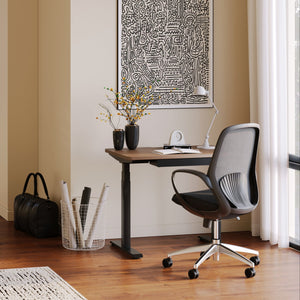
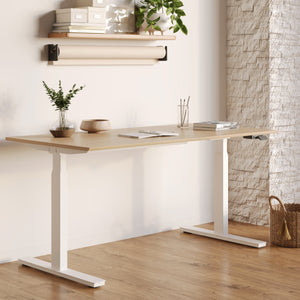
The most useful standing desk is the one you actually adjust. Easy transitions encourage short, frequent changes rather than rare, long standing sessions. For a full-size sit–stand option built for daily use, the Urbanica Standing Desk provides a straightforward way to support that posture-change strategy.
Not everyone has space for a large workstation. Small homes, shared rooms, and flexible work zones are common. Compact sit–stand solutions can still support lower-back comfort if the setup respects the same ergonomic principles.
A compact adjustable desk can be effective when your goal is short standing bouts, task-based alternation, or a flexible workstation that can be set up and put away. For many people, the value is the ability to change position without restructuring the whole room.
Mini setups can create back strain when the screen is too low, forcing a forward head posture, or when the keyboard position pushes the shoulders upward. Laptop-only work is a common risk because it compromises either screen height or hand position.
A better compact setup prioritizes neutral hand position and a screen height that does not pull you forward. External keyboard and mouse can help. A monitor riser or stand can help if you use a laptop. Keep the essentials within reach so you are not leaning forward repeatedly.
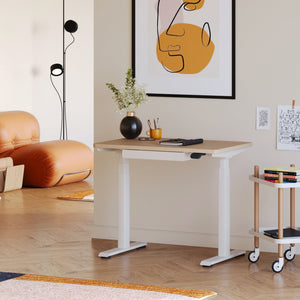
If your space calls for a compact option, the Urbanica Mini Standing Desk can be a practical way to introduce sit–stand variety while keeping the footprint manageable.
A standing desk is not always the first move. Some lower-back pain improves more from basic workstation alignment than from changing desk height. A stable, well-set fixed desk can support good sitting, reduce reach patterns, and create a reliable base for movement breaks.
If your back worsens with standing or you feel unstable at a standing desk, start with a setup that supports comfortable sitting and consistent screen placement. Many people see improvement when they stop leaning forward, stop twisting for tools, and stop perching on a poorly fitted chair.
When the work surface is stable and the layout is clean, you tend to move less in ways that strain the lower back. A reliable surface supports consistent keyboard and mouse placement, which reduces repetitive micro-reaches.
Even at a fixed-height desk, you can build movement into the day. Stand for calls, step away briefly between tasks, and keep frequently used items positioned to reduce twisting. Small habits can reduce static load significantly.
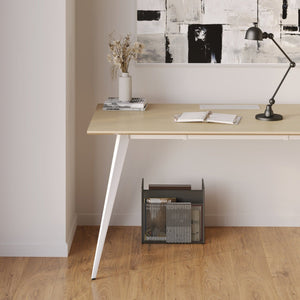
For a fixed-height workspace foundation, the Urbanica Office Desk can serve as a stable baseline for an ergonomically organized setup.
Choosing between a standing desk, a compact standing option, and a fixed desk is easier when the decision is tied to pain triggers, work type, and space realities. The goal is not to find a universally “best” desk. The goal is to pick a desk that supports a realistic posture-change routine.
Focus on these factors rather than chasing idealized promises:
Whether your pain improves with movement or worsens with standing
How long you typically work without a break
The equipment you use daily, including monitor count and input devices
The space you have and whether the workstation needs to be flexible
Whether you can keep your tools close enough to avoid reaching and leaning
| Desk type | Often a good fit when | Watch-outs to manage | Setup priorities for back comfort |
|---|---|---|---|
| Full-size standing desk | You want frequent sit–stand changes, use multiple devices, or need a consistent workstation | Standing too long, locked knees, leaning forward to the screen | Correct height, stable stance, monitor at comfortable eye line, tools within reach |
| Compact mini standing desk | Space is limited, you want short standing bouts, or you need a flexible workstation | Laptop-only compromises, screen too low, shoulders creeping upward | External keyboard and mouse, screen height strategy, tidy reach zone |
| Fixed office desk | Standing aggravates symptoms, you need a stable base, or you are rebuilding fundamentals first | Getting stuck in one seated posture, slumping due to chair mismatch | Chair fit, monitor height, keyboard distance, movement breaks and micro-movement habits |
In shared offices, comfort is influenced by more than furniture. It is influenced by layout, shared equipment placement, and how people naturally move through the space. Workstation design can either trap people in static positions or support frequent posture change.
Teams often spend long stretches in meetings, deep work, and collaboration. Without intentional design, the default becomes prolonged sitting. Even with standing desks available, people might not use them if transitions feel disruptive or if the shared setup does not fit the individual.
In a multi-person workstation, small layout choices matter. Tools that are shared should be positioned to minimize repeated twisting. Monitor placement should avoid forcing rotated sitting positions for long periods. Aisle access and cable management can also influence whether people stand and move naturally.
For teams building collaborative pods, the Quad Workstation Desk is a useful reference point for thinking through spacing, shared zones, and how multiple users can work without constant awkward reaches.
Furniture supports behavior, but norms drive consistency. Teams often do better when they normalize short movement breaks and posture change. Simple cues such as standing during certain meeting types, taking brief reset breaks between tasks, or alternating between sitting and standing for different work blocks can reduce static load without turning the office into a fitness studio.
Back comfort improves when the desk category matches your day-to-day work, not an idealized version of your work. A designer with multiple monitors and precision mouse work has different needs than someone who spends much of the day on calls. A compact room has different constraints than an open office.
A sit–stand desk is often best when you want frequent posture changes and your work setup needs a stable, repeatable layout. A compact adjustable desk can work well when you need flexibility and your equipment load is light. A fixed desk can be the right move when standing is currently aggravating symptoms or when you want to rebuild your ergonomics without adding another variable. Multi-person workstations become a category choice when collaboration and space planning are central.
If you are evaluating multiple categories side by side, the desks and workstations collection makes it easier to compare formats and visualize what fits your space and workflow.
If sitting builds stiffness and standing feels relieving, prioritize a setup that makes short standing bouts easy.
If standing increases symptoms quickly, prioritize supported sitting, improve standing mechanics, and use standing in short doses.
If pain shows up after long uninterrupted work, prioritize posture change habits and layout improvements that reduce reaching and bracing.
If your workspace forces twisting and leaning, prioritize better reach zones and equipment placement before changing desk type.
Workstation comfort is rarely decided by one product spec. It is decided by fit, placement, and the details of how the setup is assembled and used. A desk that fits your body and room is easier to use consistently, and consistency is what turns a sit–stand strategy into a comfort strategy.
A few simple measurements can reduce guesswork:
Standing elbow height with shoulders relaxed
Seated position comfort, including whether feet rest firmly and thighs are supported
Monitor distance based on what feels readable without leaning forward
Room dimensions, including the clearance needed to move and change posture
These measurements are not about perfection. They are about preventing avoidable compromises that lead to bracing and fatigue.
Desk placement affects how you move. If the workstation is cramped against a wall with no room to step back, standing can become static and uncomfortable. If cables and accessories make it difficult to change desk height or move the chair, you will change posture less often.
A clean setup also helps you keep keyboard and mouse placement consistent, which reduces repetitive reaching. Many back-pain complaints are actually “layout problems” that show up as pain because the body has to compensate all day.
When you are making decisions around fit, space, and how to assemble a complete workstation, reliable guidance matters. For support related to planning, choosing, and setting up office furniture in a real space, delivery and setup support for office furniture provides a practical starting point for aligning your workstation decisions with comfort and usability.
A standing desk can be good for lower-back pain when it supports what the back needs most: variety, movement, and a setup that reduces bracing. The most back-friendly workstation is the one that fits your body, fits your space, and makes posture change feel natural enough to repeat every day.


You have unlocked free shipping!
You're saving $29 and unlocked free shipping!
Leave a comment