



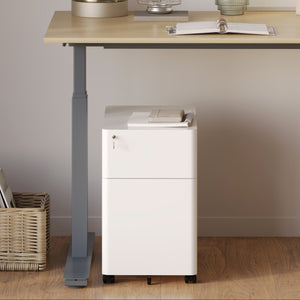






















Filing Cabinet Choices for Cleaner Workstation Planning
Cleaner workstation planning starts with filing storage that matches the desk, document volume, security needs, and daily workflow. Explore how cab...
Learn more
Visit quiz page to see how we makes it easy to create an inspiring workplace


Furniture height shapes more than posture. It influences energy, confidence, concentration, and even emotional control throughout the day. Whether you are sitting, standing, typing, or leading a meeting, the height of your desk and chair directly affects how your body responds to work. A workspace that aligns with natural movement reduces strain and increases clarity. When height is intentional rather than accidental, comfort improves and decision-making feels steadier. Small adjustments in elevation can shift not only physical experience but also mental performance.
Furniture that sits too low forces the spine to round and the shoulders to collapse inward. Over time, this posture drains energy and subtly affects confidence. On the other hand, surfaces that are too high can create tension in the neck and wrists, interrupting flow and reducing endurance. Proper height supports a neutral spine, relaxed shoulders, and aligned wrists. These details may seem minor, but over hours of work, they determine whether someone finishes the day feeling capable or fatigued. Control begins with alignment.
The height of your desk influences how you see and are seen.
A properly elevated surface positions your screen at eye level.
Balanced height reduces downward head tilt, improving breathing and alertness.
Standing options encourage open posture, which affects presence and communication.
Choosing a flexible standing desk allows you to adjust elevation depending on task demands. That adaptability reinforces control over workflow rather than reacting to discomfort.
Clutter often begins when a desk is not positioned comfortably.
If a desk is too low, paperwork piles up because reaching feels inconvenient.
If too high, writing feels strained and uncomfortable.
Correct height promotes smoother movement and cleaner habits.
An ergonomic office desk supports both comfort and organization, encouraging a workspace that feels deliberate instead of chaotic.
Research on the psychology of organizing highlights how physical order supports mental clarity. According to studies on declutter your space, tidy environments reduce cognitive overload and improve focus. Proper height makes organization easier to maintain.
When furniture matches your proportions, your body stops compensating. Instead of adjusting your shoulders or wrists constantly, you remain centered. This stability supports deeper focus and longer attention spans. Comfort is not indulgence. It is a structure that allows productivity to continue without interruption.
Static positions reduce circulation and energy.
Changing height reduces stiffness.
Alternating posture improves circulation.
Brief standing intervals increase alertness.
A workspace designed with height flexibility allows seamless shifts between tasks. It transforms furniture from passive equipment into an active contributor to workflow.
Furniture that respects body mechanics signals long-term thinking. Rather than pushing through discomfort, height-adjustable setups prioritize sustainability. This mindset values consistency over intensity.
|
Height Feature |
Comfort Benefit |
Control Benefit |
|
Adjustable desk |
Reduces back strain |
Supports flexible workflow |
|
Proper desk depth |
Wrist alignment |
Precise task management |
|
Supportive seating |
Lower fatigue |
Longer focus sessions |
|
Arm positioning |
Relaxed shoulders |
Steadier movement |
Small changes prevent long-term strain.
Elbows should rest near a ninety-degree angle.
Wrists should remain neutral while typing.
Forearms should be supported without lifting shoulders.
Adding supportive arm support stabilizes movement and reduces repetitive stress, reinforcing comfort across extended work sessions.
Chair height works together with desk height. If one is adjusted without the other, imbalance follows. A supportive ergonomic chair allows seat height and back support to align with desk elevation, keeping hips, knees, and shoulders coordinated. This balance maintains posture without constant correction.
Compact workspaces especially benefit from thoughtful elevation. In smaller environments, height flexibility prevents overcrowding and encourages efficient use of vertical space. For professionals seeking adaptable setups, a Mini Standing Desk Los Angeles offers a refined way to integrate movement without sacrificing structure.
Height also affects emotional regulation. When posture collapses, breathing becomes shallow and energy dips. Elevated alignment opens the chest and allows deeper breathing, which stabilizes mood and attention. This physiological shift strengthens composure during demanding tasks.
Control is often associated with mindset, but it begins physically. When furniture height supports natural posture, the body sends signals of stability to the brain. That stability reduces distraction and supports decision-making. A balanced surface reinforces the sense that your environment works with you, not against you.
Before finalizing your workspace setup, review this checklist:
Is your screen positioned at eye level?
Are your elbows comfortably bent near ninety degrees?
Can you alternate between sitting and standing during long sessions?
Does your chair height align naturally with your desk?
Are your shoulders relaxed rather than elevated?
Does the space feel organized and accessible?
When furniture height aligns with natural movement, comfort improves and control becomes effortless. Adjustments may appear small, yet they transform the way you work, think, and sustain performance.
Furniture height does more than support your laptop or hold your coffee. It shapes how your body distributes weight, how your lungs expand, and how long you can focus before fatigue creeps in. When a desk is too low, your shoulders round forward and your chest compresses. Over time, this posture reduces oxygen intake and increases muscle strain. When a desk is too high, your wrists bend upward and tension builds along the forearms and neck.
The right desk height allows your elbows to rest at roughly a 90-degree angle while typing. Your shoulders stay relaxed instead of lifted. Your spine maintains its natural curve. These small alignments help conserve energy throughout the day. Instead of burning effort to compensate for awkward angles, your body can redirect that energy toward thinking, planning, and creating.
A height-adjustable workstation such as a standing desk gives you the flexibility to shift positions based on the task at hand. Writing emails may feel better seated, while reviewing documents or taking calls may feel more comfortable standing. The ability to adapt keeps your muscles engaged without overloading one area for hours at a time.
Your desk height and monitor position work together. If one is off, the other follows. Many people adjust their screens but forget that the desk sets the foundation.
When the top third of your screen sits at or slightly below eye level, your neck remains neutral. If the desk is too low, you may tilt your head downward for long periods. If it is too high, you may lift your chin. Both positions strain the cervical spine.
Proper desk height keeps wrists straight while typing.
Forearms remain parallel to the floor.
Wrists do not bend upward or downward.
Shoulders stay relaxed rather than raised.
Adding an adjustable support such as an ergonomic arm helps maintain consistent alignment even when you reposition your screen. This keeps your viewing angle steady without forcing your body to compensate.
Desk depth also influences comfort.
At least an arm’s length between your eyes and the monitor reduces eye fatigue.
Sufficient depth allows you to keep notes or tools within reach without crowding your keyboard.
Extra space prevents a cramped posture that pushes your shoulders forward.
When height and depth are balanced, your workstation feels open and breathable instead of restrictive.
Your chair sets the starting point for the rest of your setup. If the seat is too high, your feet dangle and pressure builds under your thighs. If it is too low, your knees rise above your hips and your lower back rounds.
An adjustable office chair allows you to fine-tune seat height so your feet rest flat on the floor. Your knees should align roughly with your hips. This position stabilizes your pelvis and reduces strain along the lumbar spine.
Supportive seating such as an ergonomic chair provides structured back support that follows the natural curve of your spine. When combined with the right desk height, it creates a stable base for long working hours. The result is improved concentration because your body is not constantly signaling discomfort.
Standing desks have grown in popularity for good reason. Changing from sitting to standing encourages circulation and reduces stiffness. However, standing height must be just as precise as seated height.
When standing:
Elbows should remain at about 90 degrees.
Wrists should stay straight while typing.
Shoulders should not lift toward the ears.
Weight should be evenly distributed between both feet.
A properly adjusted standing desk allows you to maintain these positions without leaning forward. Leaning shifts weight into the lower back and defeats the purpose of standing. Height that matches your body keeps your spine upright and your movements controlled.
For those who prefer compact workspaces, a Mini Standing Desk Los Angeles option can provide flexibility without requiring a full office renovation. Even smaller adjustments can make a noticeable difference in daily comfort.
Height influences more than muscles and joints. It also affects how you perceive your space. A desk that feels too small or too low can create a subtle sense of restriction. A setup that aligns with your body often feels more open and manageable.
Clutter adds another layer. When surfaces are crowded, you may hunch forward to make space. That posture reinforces tension. Research on workspace organization shows that physical order can support mental clarity. Keeping your workstation at the correct height and free of excess items supports both posture and focus.
Reading about the psychology of organizing highlights how a tidy environment can calm the mind. When height and layout work together, your workspace becomes a supportive environment rather than a source of stress.
Below is a simplified comparison of how height adjustments influence comfort and control:
|
Position |
Key Alignment Goal |
Common Mistake |
Resulting Issue |
|
Sitting |
Elbows at 90 degrees, feet flat |
Desk too high |
Shoulder tension |
|
Sitting |
Knees level with hips |
Chair too low |
Lower back rounding |
|
Standing |
Wrists straight, screen at eye level |
Leaning forward |
Lumbar strain |
|
Standing |
Even weight on both feet |
Locked knees |
Fatigue and stiffness |
This table shows that comfort depends on small measurements. A difference of even one or two inches can shift your entire posture.
Different tasks require different levels of control. Precision tasks such as graphic design, writing, or detailed spreadsheets demand steady hands and relaxed shoulders. If your desk height forces your wrists into awkward angles, fine motor control decreases.
For keyboard work:
Forearms parallel to the floor increase stability.
Wrists straight improve accuracy.
Screen at eye level reduces distractions caused by discomfort.
An office desk with adjustable features can adapt to your workflow rather than forcing you into a fixed position.
For sketching or reviewing printed materials:
Slightly lower surfaces may provide better leverage.
Adequate depth prevents cramped posture.
Balanced height keeps your back upright.
Height flexibility supports smoother transitions between tasks. Instead of rearranging your entire setup, you adjust the surface to match the activity.
Poor alignment may seem minor at first. A slight wrist bend or small shoulder lift does not feel serious during a single afternoon. However, repetition turns small strain into chronic discomfort.
Over months or years, incorrect height can contribute to:
Persistent neck tension
Lower back stiffness
Shoulder tightness
Reduced typing endurance
These issues can lower productivity and reduce overall well-being. Investing time in adjusting furniture height protects both comfort and long-term health.
Rather than guessing, use a simple checklist to evaluate your setup.
Are your elbows at a 90-degree angle when typing?
Do your feet rest flat on the floor while seated?
Is the top of your monitor at or slightly below eye level?
Are your wrists straight instead of bent?
Can you switch between sitting and standing without strain?
If you answer no to any of these, your furniture height may need adjustment. Small corrections can produce immediate improvements in comfort.
Furniture height may seem like a technical detail, but it directly shapes how you feel every day. The correct height supports posture, improves control, and sustains energy. It reduces tension in the neck and shoulders. It keeps wrists aligned. It supports clear thinking by removing physical distractions.
By aligning your desk, chair, and monitor with your body, you create a workspace that works with you instead of against you. Comfort becomes consistent rather than occasional. Control over your tasks improves because your body remains steady and supported.
When your workspace fits your height, your posture stabilizes, your focus sharpens, and your daily routine feels more manageable. That is the quiet power of proper furniture height.


You have unlocked free shipping!
You're saving $29 and unlocked free shipping!
Leave a comment