















Skip to content
For Teams
Upgrade Your Workspace This Spring with Our Premium Ergonomic Office Furniture | Free Shipping on Orders $65+
FAQ
need to know

Useful articles

When Office Chair Headrests Help or Hurt for Neck Alignment

When Office Chair Headrests Help or Hurt for Neck Alignment

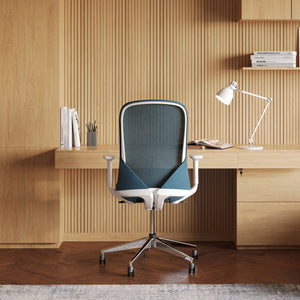
Urbanica Ergonomic Muse Chair Headrest in black, shown from the back with a curved mesh design, white frame, and smooth gliding wheels for office mobility.

Neck alignment at a desk is rarely determined by a single feature. A headrest can feel supportive in one position and intrusive in another, which is why strong opinions about office chair headrests often come from very different work habits rather than from a universal truth. For one person, a headrest reduces tension during calls, reading, or moments of recline. For another, it seems to crowd the head forward and make upright computer work feel awkward. Both experiences can be valid.

The real issue is not whether headrests are inherently good or bad. The better question is whether the chair, the workstation, and the user’s task pattern allow the headrest to support natural neck position instead of disrupting it. When that balance is right, the headrest becomes a helpful part of the seating system. When it is wrong, the headrest can become a source of compensation, stiffness, and postural frustration.

Neck alignment starts with the body below the neck

The neck does not operate in isolation. The position of the pelvis, ribcage, upper back, shoulders, and eyes all affect how the cervical spine behaves during desk work. That is why a headrest cannot reliably improve neck alignment if the rest of the seated posture is already working against it.

Neutral neck posture begins with stacked support

A neutral neck position usually means the head is balanced over the torso without excessive chin jutting, chin dropping, or upper trap tension. In a seated workspace, that balance is easier to maintain when the lower body is stable, the upper back is supported, and the monitor is positioned so the eyes can stay level without reaching forward.

When the seat is too deep, the monitor too low, or the backrest poorly matched to the user, the head often moves forward to compensate. In that situation, a headrest may seem like a solution, but it often addresses the symptom instead of the cause.

Why comfort and alignment are not always the same

A chair can feel soft, padded, or supportive in the first few minutes and still encourage poor neck mechanics over a longer session. Immediate relief does not always equal sustained alignment. Some users enjoy the sensation of having something behind the head, but if that contact pushes the skull forward while typing or viewing the screen, the neck may end up working harder rather than less.

This is where chair design matters. A well-considered task chair such as the Novo Chair fits naturally into this conversation because head support only works well when the rest of the chair supports balanced seated posture in the first place.

The most useful framing for evaluating a headrest

The question is not simply, "Does the chair have a headrest?" The more useful question is, "Does the headrest support the head during the right moments without interfering during upright work?" That distinction changes how people assess comfort, fit, and function.

When a headrest can genuinely support neck alignment

Headrests tend to help most when they are used selectively rather than constantly. They are especially useful during positions where the body leans back and the neck would otherwise need to work harder to support the weight of the head.

Recline changes the support needs of the neck

In an upright typing posture, the head should usually stay balanced over the shoulders with minimal contact from behind. In a reclined posture, the angle of the torso changes, and the neck may need a place to rest. This is where a headrest can become valuable. Instead of the upper traps and smaller neck muscles holding the head in place, the support surface can reduce that effort.

For people who naturally alternate between focused work and brief recovery periods, a chair such as the Muse Chair belongs in a discussion like this because the chair itself is part of the posture system, not just the headrest alone.

Reading, listening, and thinking tasks often benefit more than typing

Headrests are often most helpful during phone calls, video meetings, reading, or moments of reflection between active work blocks. These are the times when users are more likely to recline slightly, reduce keyboard activity, and benefit from a place to settle the head without muscular guarding.

By contrast, during intense typing and mouse work, many people do better when the head remains free rather than in contact with the headrest. Constant contact can encourage passive leaning instead of active balance.

The best use case is dynamic support, not constant dependence

A good headrest experience usually feels optional but available. The user can lean back into it when needed, then return to upright work without feeling that the chair is dictating head position. That difference matters. Helpful support should meet the user during transitions and recovery, not lock the body into a single posture.

When a headrest can work against neck alignment

A headrest becomes a problem when it changes the natural position of the head instead of simply supporting it. Many complaints about neck discomfort come from this mismatch.

Forward pressure is one of the most common problems

If the headrest sits too far forward, too low, or at an unhelpful angle, it can push the head away from neutral alignment. The result is often a chin-forward posture, tension at the base of the skull, and a subtle feeling of being crowded out of a comfortable seated position.

This is especially noticeable when users try to sit upright and the back of the head meets resistance before the torso is ready for that contact. What should have been support becomes interference.

Constant contact can encourage static posture

Another issue is overuse. A headrest is not meant to pin the head into one fixed position all day. Healthy desk sitting usually involves small shifts, posture changes, and moments of movement. When a user leans into a headrest continuously, it can reduce movement variety and contribute to stiffness, even if the chair feels supportive at first.

Mismatch between backrest and headrest geometry creates strain

The headrest should complement the backrest, not fight it. If the backrest supports the torso one way while the headrest catches the skull at another angle, the neck becomes the area that absorbs the mismatch. This is why the overall chair profile matters. A chair like the Onyx Chair can be part of the discussion around supportive daily seating because neck comfort depends on the whole sitting system, not on a single attachment.

Chair shape and task style matter more than headrest presence alone

A headrest is only one part of the equation. The height and contour of the backrest, the recline behavior, and the nature of the workday all influence whether a headrest improves or worsens neck alignment.

Upright task work usually needs freedom more than contact

During concentrated desk work, the head generally needs to stay balanced over the torso with minimal backward pressure. Users who spend hours typing, editing, designing, or managing multiple screens often feel better when the headrest stays out of the way during active work.

This does not mean a headrest is useless. It means its value often appears in the spaces between intense tasks rather than in the tasks themselves.

Mixed workdays tend to be the best fit for headrest use

People who move between typing, calls, reading, collaboration, and short pauses often benefit the most from a headrest. Their work naturally includes moments when recline is appropriate, and the support becomes a tool rather than a constant contact point.

Simpler task seating can still be the better answer

Not every workspace needs a headrest. Some users perform better with a streamlined chair that supports upright posture without adding upper-body contact they may not use. That is why a product like the Seashell Chair can make sense in a broader conversation about neck alignment. In some work patterns, straightforward task seating is more appropriate than a more layered support setup.

How to tell if a headrest is helping your neck in actual use

The best test for headrest value is not a quick sit. It is how the body feels across real work conditions.

Signs that a headrest is helping

A supportive headrest usually produces a few consistent outcomes:

  • The chin stays relatively level rather than being pushed downward or forward

  • Reclining feels easier on the upper traps and base of the skull

  • The user can move in and out of contact smoothly

  • Upright typing still feels natural when the head is off the support

These are signs that the headrest is available when needed without taking over the posture.

Signs that a headrest is hurting

There are also clear warning signs:

  • The head feels pushed forward while seated upright

  • The user avoids leaning back because the contact feels awkward

  • Neck stiffness increases after meetings or computer work

  • Shoulder tension rises because the headrest changes upper-body position

These signs usually indicate that the support is meeting the body at the wrong angle or at the wrong time.

A simple desk test for headrest fit

A practical way to test fit is to sit upright without touching the headrest, then recline slightly and notice when contact begins. The support should feel like it receives the head rather than pushing it. After that, return to upright work and check whether the head feels free again. The transition matters just as much as the contact itself.

Add-on headrests can improve a well-matched chair, but they cannot fix a poor setup

Chair-specific accessories can be useful when the underlying chair already suits the user. They are far less effective when the workstation itself is poorly arranged.

A dedicated accessory works best when the chair already fits

If the seat depth, back support, armrest position, and monitor setup are generally working well, a headrest accessory can fine-tune comfort during recline and recovery. That is the context where a chair-specific product such as the Muse Chair headrest becomes meaningful. It is an add-on meant to work with a chair system, not a substitute for proper workstation fit.

Accessories should refine support, not compensate for bigger problems

A headrest cannot correct a low monitor, a desk that forces shoulder shrugging, or a chair that is the wrong fit for the user’s proportions. When those issues remain unresolved, adding head support may simply shift the discomfort rather than solve it.

Compatibility matters more than labels

The word ergonomic can be useful only to a point. Real comfort depends on whether the support meets the user in a stable, believable, and adjustable way. A chair-specific attachment such as the Novo Chair headrest makes the most sense when buyers are thinking about compatibility and fit, not just about adding more features for the sake of it.

A practical framework for deciding whether a headrest belongs in the setup

Many buyers do not need a universal answer. They need a realistic framework that matches how they actually work.

Buy for dominant posture, not for an idealized posture

If most of the workday involves active typing and screen focus, the priority should be stable upright support. If the day includes frequent listening, reading, calls, or moments of recline, a headrest may become more valuable. The decision should match the dominant work pattern, not a theoretical best-case routine that rarely happens.

Evaluate the whole workspace, not just the chair

Neck alignment improves when the chair, desk, monitor, and user behavior work together. A headrest cannot carry the full responsibility for comfort. Broader furniture planning, layout decisions, and fit considerations also influence how a workstation performs over time. That is part of why workspace planning support belongs in this discussion. Neck comfort is shaped by the environment around the chair as much as by the chair itself.

Use this decision table to guide the choice

Work pattern Headrest likely helps Headrest may hurt Best evaluation approach
Frequent calls, reading, and recline Often If it pushes the head forward Check support during lean-back use
Long periods of typing and mousing Sometimes during breaks Often if it interferes upright Prioritize free head balance first
Mixed task day with regular posture changes Often If used as a constant anchor Focus on transition between postures
Simple task seating needs Not always necessary Can add bulk without benefit Choose based on actual work habits


Better neck alignment comes from selective support and regular movement

The most effective headrest is not the one that stays in contact all day. It is the one that supports the head during the moments when support is actually useful and stays unobtrusive when upright work demands freedom.

Good headrest use supports posture variation

A healthy desk routine includes changes in position, shifts in gaze, moments of recline, and short breaks from static work. A headrest can fit into that pattern when it encourages recovery without replacing active posture altogether. Used this way, it becomes part of a more balanced seating experience.

Poor headrest use usually solves the wrong problem

When a headrest is asked to make up for an unsuitable chair, a poor desk height, or a low monitor, the result is often disappointment. The neck may still compensate, only in a slightly different pattern. Real improvement comes from aligning the whole setup, then deciding whether head support adds value.

The most reliable conclusion for buyers and daily users

Office chair headrests help neck alignment when they support the head during reclined or low-intensity moments, preserve comfortable upright work posture, and match the chair’s overall geometry. They hurt neck alignment when they push the head forward, encourage static leaning, or try to cover for a workstation that is not set up to support natural posture.

For that reason, the smartest way to judge a headrest is not by whether it exists, but by whether it behaves well within the full reality of desk work.

Previous article What Does a Monitor Stand Actually Fix in Your Desk Setup?

Leave a comment

* Required fields

Get 10% off your first order

Find the office furniture that’s designed to match your style, comfort, and needs perfectly. Subscribe

My Office

You have unlocked free shipping!

You're saving $29 and unlocked free shipping!


Your cart is empty.
Start Shopping

Contact Us