



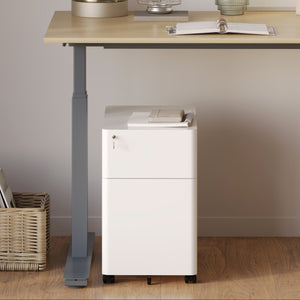






















Filing Cabinet Choices for Cleaner Workstation Planning
Cleaner workstation planning starts with filing storage that matches the desk, document volume, security needs, and daily workflow. Explore how cab...
Learn more
Visit quiz page to see how we makes it easy to create an inspiring workplace


A monitor stand is often treated like a minor desk accessory, something that tidies the setup or adds a little height under a screen. In practice, it usually fixes a deeper problem. It changes how the screen meets your eyes, how your hands and arms relate to the desk, how much of the work surface stays usable, and how the entire workstation functions throughout the day.
That matters because the monitor sits at the center of most modern work. It shapes where the body faces, where the hands land, how far the neck angles downward, and how the rest of the desktop gets arranged around it. When the screen sits too low or too heavily on the central workspace, people often start solving the wrong problem. They blame the desk for feeling cramped. They blame the chair for feeling unsupportive. They blame the room for feeling cluttered. In many cases, the setup is reacting to one issue that has never been properly addressed: the screen is not in the right place.
A monitor stand does not solve every ergonomic challenge on its own. It is not a cure-all, and it will not make an otherwise poor setup perfect. What it often does, however, is correct one of the most influential points in a desk layout. Once that point improves, a surprising number of other problems become easier to manage.
When a screen sits below a natural viewing angle, the body tends to adapt to it automatically. Most people do not consciously decide to lean forward, dip the chin, or round the upper back. Those positions develop because the eyes need to meet the screen somehow, and the body usually moves before the monitor does.
This is why a setup can look decent at first glance yet still feel draining after several hours. The issue is not always dramatic pain or visible strain. Often it shows up as quiet fatigue, a stiff neck later in the day, or a habit of constantly shifting in the chair without ever feeling settled.
A slightly low monitor may seem harmless for a short task. Over a long workday, that same angle can create repeated downward gaze and subtle forward-head posture. Those patterns matter because desk work is repetitive. Reading, replying, reviewing documents, joining calls, editing files, and checking tabs all pull attention back to the same display over and over again.
A monitor stand helps by bringing the screen closer to a more natural line of sight. That adjustment can encourage a more upright head position and reduce the tendency to collapse toward the display.
Many people tolerate a workstation that feels manageable rather than genuinely supportive. The setup is not painful enough to force a full redesign, so it stays unchanged. A monitor stand is often valuable in this exact situation. It can address a specific mismatch without turning the workspace into a major renovation project.
The area directly in front of the body is prime desk real estate. That is where writing happens, where the keyboard usually belongs, where documents get reviewed, and where day-to-day tools need to remain accessible. Unfortunately, many monitor bases sit right in that zone and occupy more space than people realize.
Once a screen is lifted, the desk often feels more usable immediately. The difference is not always about adding more surface area. It is about recovering the most functional part of the existing surface.
A crowded desk is not always a small desk. In many cases, it is a flat desk trying to hold too many functions on one horizontal plane. Elevating the monitor creates a second layer. That simple shift can open room for notebooks, trays, compact storage, or a cleaner keyboard position below the screen.
This is one reason people often start refining the rest of the setup with office workspace accessories after improving monitor placement. Once the screen stops dominating the center of the desktop, the rest of the workspace becomes easier to organize with intention rather than workaround.
The extra usability under and around a raised monitor helps more than appearance. It supports the actual sequence of work. A person can type, then jot down notes, then return to the keyboard without constantly moving objects out of the way. That smoother flow reduces friction, especially in setups used for both digital and paper-based tasks.
A bulky monitor base often pushes the keyboard too far forward or slightly off-center. The mouse then ends up drifting outward, which can make the whole working posture feel less natural. Even small positioning compromises matter when repeated all day.
With the display elevated, it becomes easier to center the keyboard and keep the mouse closer to a comfortable reach path. That does not guarantee perfect ergonomics, but it removes a common obstacle that gets in the way of better positioning.
A well-used desk usually needs more than a typing zone. It also needs an active zone for note-taking, sketching, reading printouts, or placing a phone, tablet, or planner during the workday. A low monitor can eat into that space. A raised one helps restore it.
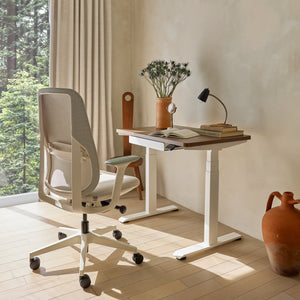
This matters even more when paired with ergonomic office desks that support better screen distance and a more usable layout across the surface. The stand and the desk work together. One manages screen placement, while the other determines how much room exists for the rest of the workflow.
A strong setup does not force every activity into one cramped zone. It should allow a natural shift between input, review, and reference tasks. A monitor stand often helps create that separation. The workstation feels less like a pile of tools and more like a system with defined working areas.
Screen position matters, but it is only one part of the workstation. If the chair encourages slumping, the user may still collapse forward even after improving monitor height. If the seat height feels off, the shoulders or elbows may remain awkward despite a better viewing angle.
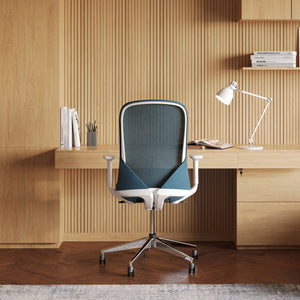
That is why monitor placement usually works best when it is supported by ergonomic office chairs built for longer periods of seated work. The body needs support from below at the same time the eyes need support in front.
A cleaner setup comes from how the components interact. Seat height affects arm position. Arm position affects keyboard placement. Keyboard placement affects how close the body sits to the desk. That changes viewing distance, which then affects how the monitor should be raised.
A monitor stand becomes much more effective when it is treated as part of this relationship rather than as an isolated product choice.
Many workstations do not require dramatic change. They require a few coordinated corrections that reduce conflict between the body and the tools. A screen that sits higher, a chair that supports upright sitting, and a desk that allows sensible spacing can work together to create a noticeably more stable environment.
When the screen sits low and wide across the main working area, it can interfere with task lighting in subtle ways. A lamp may cast light from the wrong angle, create reflections on the display, or lose useful reach across the desk because the monitor blocks the most practical position.
Raising the monitor opens more options. It can free the sides of the desk, reduce visual congestion near the center, and make it easier to direct light where it is actually needed.
Task lighting plays a practical role in reading, reviewing notes, and handling detail work. Once the screen is elevated, a desk lamp or wall sconce can support the workspace without competing with the monitor for the same physical territory.
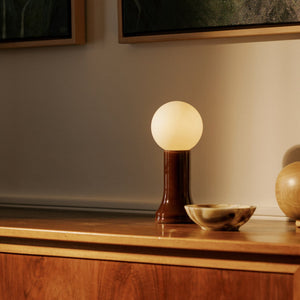
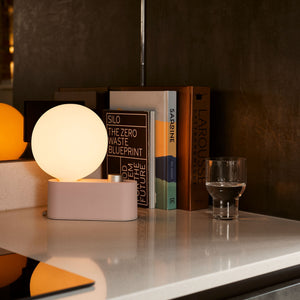
In the same way, a recycled glass table lamp can add useful illumination to the desk environment while keeping the center of the setup clearer for active work. The goal is not to fill the surface with more objects. It is to make every object earn its place.
Lighting and monitor placement influence how busy the desk feels. If the screen, lamp, cables, and daily tools all cluster in the same central zone, the workstation may feel crowded before work even begins. Elevating the monitor helps redistribute visual weight so the desk feels more open, balanced, and easier to use.
If the main problem is that the screen sits too low and occupies too much desk space, a monitor stand may be enough. It provides lift and often improves desktop organization at the same time. For users with one display and one consistent working posture, that can be the right level of correction.
There are cases where a fixed lift is only part of the answer. Shared workstations, creative environments, dual-use desks, and setups that switch often between focused solo work and collaborative viewing may need more flexibility. In those situations, an adjustable screen support arm can offer greater control over screen position.
That difference matters because height is only one variable. Depth, tilt, swivel, and lateral placement can also affect comfort and workflow.
A person who rarely changes posture or tasks may not need a highly flexible system. Someone who constantly alternates between reading, presenting, designing, and referencing other materials may benefit from a screen that moves more freely. The better choice is the one that honestly matches the pattern of work, not the one that sounds most advanced.
The need for a monitor stand usually shows up through a combination of body signals and desk inefficiencies. The body may lean in. The neck may angle downward. The desktop may feel blocked. The setup may look tidy yet still feel frustrating to use.
1. Sit in your normal working position without adjusting yourself for the desk.
2. Notice where your eyes land on the screen first.
3. Check whether your chin naturally points downward for most tasks.
4. Look at how much of the center desk area is occupied by the monitor base.
5. Pay attention to whether your keyboard, notes, and lighting have to work around the screen instead of alongside it.
If several of these points feel off, the monitor position is likely contributing more to the problem than it seems.
A monitor stand does not need to create an idealized setup to be worthwhile. It only needs to remove a meaningful source of friction. When the screen sits in a better place, the rest of the workstation often becomes easier to understand and improve.
The value of a monitor stand becomes clearer when the desk is viewed as a working system rather than a group of separate products.
| Desk setup issue | What the monitor stand helps improve | Why it matters in daily use |
|---|---|---|
| Screen sits too low | Raises viewing position | Can reduce habitual neck drop and forward lean |
| Monitor base blocks workspace | Frees central desk area | Creates more room for keyboard, notes, and tools |
| Desk feels visually crowded | Adds vertical separation | Helps the setup feel clearer and easier to manage |
| Lamp placement feels awkward | Opens options around the screen | Improves task lighting without crowding the center |
| Workflow feels cramped | Supports clearer task zones | Makes switching between activities smoother |
A monitor stand does not replace every other workspace decision, but it often improves several of them at once. That is why it can have a larger impact than its size suggests.
People often try to fix discomfort or clutter by adjusting around the monitor instead of addressing the monitor itself. They move the keyboard, buy a new lamp, clear the desk, or shift the chair, only to find that the setup still feels slightly off. When the screen remains too low or too dominant on the desktop, those other changes may help only temporarily.
Sometimes the monitor stand is the missing piece. Other times, it reveals that the workstation needs broader refinement. In those cases, it helps to compare dimensions, materials, and layout ideas through modern office furniture collections online before changing the setup more broadly.
What a monitor stand actually fixes is not just screen height. It fixes the relationship between the screen and the rest of the desk. It can restore usable space, support better posture habits, improve task flow, and make the workstation feel more coherent. For a change that looks small on paper, that is a meaningful return in everyday function.


You have unlocked free shipping!
You're saving $29 and unlocked free shipping!
Leave a comment