




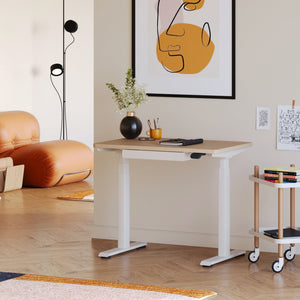
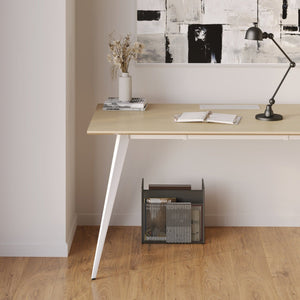
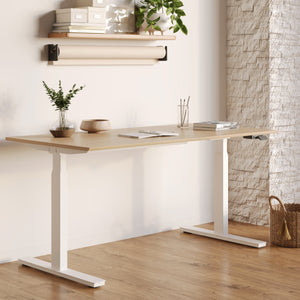
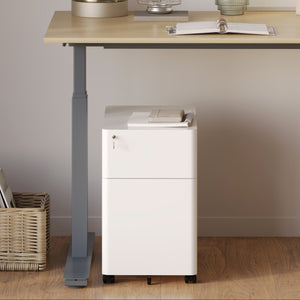






















Filing Cabinet Choices for Cleaner Workstation Planning
Cleaner workstation planning starts with filing storage that matches the desk, document volume, security needs, and daily workflow. Explore how cab...
Learn more

Visit quiz page to see how we makes it easy to create an inspiring workplace


Small spaces punish messy cable decisions. When a desk sits close to a wall, a bed, or a shared walkway, even one loose loop can snag a chair wheel, pull a charger off the surface, or turn your “clean desk” into a visible tangle by lunchtime. The fix is not more ties. The fix is a cable plan that respects how cords naturally travel in a tight room.
Treat cables like traffic. Different types need different lanes.
Power and bricks: laptop power, monitor power, docking station adapters, speaker adapters, anything with a bulky transformer.
Data and display: USB-C, HDMI, DisplayPort, Ethernet, audio cables that connect devices.
Daily-touch cables: phone charging, headphones, anything you unplug often.
This grouping matters because power bricks belong in a hidden “core,” data cables need gentle routing to avoid kinks, and daily-touch cables must stay accessible or they will creep across your desk again.
In small rooms, your outlet position dictates almost everything. Before mounting anything, map the path from your devices to power.
Where is the outlet relative to desk legs?
Will your chair roll through the cable path?
Does your desk sit flush to the wall, or is there a gap for cable exit?
Where do you want daily charging to happen so cords do not drape across your work zone?
At Urbanica, we see two realities: some people need renter-safe mounting, and others prefer a permanent setup. Both can look intentional.
Renter-safe: clamps, adhesive cable clips, removable fasteners.
Permanent: screw-in mounting points and a more “built-in” under-desk layout.
The goal is the same either way: one hidden power core, one clean drop to the floor, and zero dangling loops in your leg area.
A reliable small-space setup is layered. Each layer has a job, and each job prevents a specific kind of mess.
The power core is where you hide bulk. It is the difference between “organized” and “visually calm.” A containment solution keeps bricks and slack from hanging down, and it creates a home for cords that do not need daily handling. The product page for Under-Desk Cable Management reflects that purpose: concealing and organizing cords to reduce clutter and improve the look and function of the desk area. (URBANICA)
What belongs in the power core
A surge-protected power strip or similar centralized power point
Power bricks and adapters
Extra slack from monitor and laptop power cables
Any “always plugged in” accessories
What should stay out of the power core
Phone chargers you grab constantly
Anything you frequently swap between devices
Cables that need quick access for troubleshooting
In small spaces, multiple drops to the floor create visual noise and snag hazards. A single drop keeps the underside tidy and makes cleaning easier. A vertical organizer like Spine Cable Management is designed to guide cables downward in a controlled line rather than letting them hang. (URBANICA)
Where the vertical drop should live
Close to the outlet side of the desk
Away from the chair’s primary rolling path
Aligned with the power core so cables travel back first, then down
Small spaces often fail at the surface level. If your power access is on the floor, daily charging cords tend to drape across the desk or dangle in front of drawers. A clamp-on module creates a reachable charging edge without forcing cables to cross your work zone. Clamp-On Desk Power is explicitly positioned as a desk-mounted power option, which fits the “reachable but controlled” role in a compact setup. (URBANICA)
A small-space install goes smoothly when you build from the outlet inward. The sequence below is designed to prevent the common mistake of tying everything down, then realizing you chose the wrong drop point.
1. Choose your primary outlet and primary cable drop side.
Pick the side that keeps cords away from your chair wheels. If the outlet is centered behind the desk, choose the drop that keeps cables out of foot traffic.
2. Decide where your “reset point” will be.
This is the one plug or switch you can reach without crawling. In tight spaces, easy access matters because you will not maintain what is annoying to reach.
3. Mount the under-desk containment in the no-knee zone.
Place it behind where your thighs naturally sit. On shallow desks, shifting the containment slightly toward one side often protects legroom while still hiding the bulk.
4. Build the power core before routing any device cables.
Put power bricks in first, then position your power strip so plugs are accessible. Avoid stacking bulky adapters on top of each other so cables do not get compressed.
5. Route “always-on” cables first, then “often-changed” cables second.
Always-on examples: monitor power, desk power modules, desktop computer power.
Often-changed examples: USB accessories, audio cables, chargers that move between devices.
6. Create two slack strategies: a hidden service loop and a visible strain-relief loop.
The hidden loop lives in the power core to allow gentle repositioning later. The strain-relief loop sits near the device so the connector does not bear tension.
7. Make one clean drop to the floor using the vertical organizer.
Gather only the cables that must reach the outlet area. Keep the drop tight and straight so it looks deliberate rather than improvised.
8. Set a surface-level charging habit.
Assign one spot for daily charging and keep that cable length short enough that it does not wander across the desk.
Cables fail at stress points. Tight bends near connectors can shorten cable life, especially for frequently moved USB cables.
For cables you adjust often, use soft straps or reusable ties.
For cables you rarely touch, use more fixed routing points.
Power placement is the most important decision in small spaces because it determines whether cords drape or disappear.
When power is built into the desktop area, charging and device plugs can stay near the surface without creating a messy run to the floor. The In-Desk Power page describes an in-desk power module with AC outlets and USB ports, which aligns with the goal of convenient charging and connectivity from the desktop. (URBANICA)
Desks placed close to a wall where cords can exit behind the desk
A workstation that relies on a laptop and monitor with limited device swapping
Users who want charging access without adding another surface accessory
Clamp-on power is useful when you do not want to modify the desktop surface. It also keeps charging cords from creeping across your workspace because you can place it near your “charging corner.”
Place it on the side opposite your dominant hand if it would interfere with mouse movement.
Keep the cable exit behind the monitor line when possible so the front edge stays visually clean.
| Power approach | What it solves in small spaces | What to plan for |
|---|---|---|
| Under-desk power core | Hides bulky adapters and slack | Needs a reachable reset point and airflow awareness |
| Desktop clamp-on module | Keeps daily charging cords accessible and controlled | Works best when you define a single charging spot |
| In-desk module | Minimizes surface clutter by consolidating outlets and USB near the work zone | Requires thoughtful placement so cords do not cross the keyboard area |
Small rooms come in patterns. Your cable plan should match the pattern you live with.
When the desk sits close to a wall, the best routing is usually “back first, then down.” Keep cords moving along the rear underside so they are invisible from most angles.
Use a dedicated exit point so cords do not get trapped between desk and wall.
Keep the floor drop near the outlet side so cords do not stretch diagonally across the underside.
If the desk is away from the wall, cable management has a design job. The goal is one clean line down rather than multiple loose drops.
Keep the vertical drop aligned with a desk leg where it will visually blend.
Avoid routing that crosses open space under the desk, where it is visible from every angle.
Corner workstations often become two stations: the main work surface and a secondary charging or printer spot. Treat them as separate cable zones so one does not spill into the other.
Zone 1: computer and monitor, always-on cables routed tightly.
Zone 2: charging and occasional devices, kept accessible with controlled cord length.
Adjustable desks introduce one extra requirement: cables must move safely as the desk changes height. The simplest approach is to route cables so nothing tightens at the top position.
Assume your desk will be at its highest position at some point. Any cable that becomes taut at that height is a future problem. Build slack into the system in a controlled way using service loops and a predictable drop line.
A controlled drop prevents cables from swinging or rubbing against the frame. It also reduces the chance of accidentally pulling a plug out when the desk rises.
A desk designed for movement can make cable management easier because it anticipates the need for organized routing. The Standing Desk product page represents Urbanica’s sit-stand option, which can be paired with a power core and a single clean drop for an adjustable setup. (URBANICA)
Not all desk undersides are the same. Organizers fail when they are mounted to surfaces that cannot support them or when they block structural elements.
If the underside is minimal, you may have fewer safe mounting points. In that case, focus on a smaller power core, lighter accessories, and cable clips that guide cords without adding heavy load.
The desk underside has limited flat surface area
You want a removable setup that leaves no marks
The desk frame has crossbars that interfere with screw placement
Desks with more depth often provide better hiding zones along the rear third of the desk, where cables can be routed cleanly without interfering with leg space. The Office Desk page represents a dedicated desk option that can support a structured under-desk cable plan with a rear routing lane. (URBANICA)
Treat the back third of the desk as a cable corridor. Keep crossings out of the center underside where legs and knees live. This one habit prevents most small-space cable annoyances.
Small-space cable management should feel calm, not improvised. Renter-friendly does not have to look temporary.
Adhesives fail when surfaces are dusty, oily, or textured. Clean the surface, press firmly, and use a layout that avoids pulling forces. Cables should be guided, not suspended by adhesive clips alone.
Clamps work best with a stable edge and a non-slip interface. Use protective padding when needed and avoid over-tightening. The goal is stability, not force.
In tight rooms, cable noise is surprisingly common. A cable that taps a desk leg every time you shift your chair becomes a constant irritant.
Route cables along stable surfaces, not across open air
Add a gentle anchor point near the drop so cords do not swing
Keep slack controlled inside the power core instead of hanging freely
Most cable clutter returns for predictable reasons. Fixing these keeps your under-desk cord organizer setup stable over time.
When everything is bundled together, the bundle becomes thick and visible. It also makes troubleshooting harder. Use two lanes at minimum: always-on and often-changed.
Tight ties can kink cables and stress connectors. A cable plan that protects connectors will look better longer because cords do not develop awkward bends that refuse to lay flat.
If you have to reach under the desk every time you charge a phone or connect headphones, cables will migrate back to the surface. Keep daily charging accessible and controlled.
In small spaces, movement patterns dictate cable safety. Keep the floor area near chair wheels clean, and avoid routing cords where shoes and vacuum heads will catch them.
Cable management should support real life. The best setups are easy to maintain.
Look for three signals:
Only one controlled drop to the floor
No new cords draped across the desktop
No slack loops hanging near your knees
When you add a new device, route its cable through the “often-changed” lane first. If it becomes permanent, move it into the always-on lane later. This keeps your power core stable.
Minimal labeling works best when it is hidden inside the power core. The point is simple troubleshooting, not visual noise.
In small spaces, desk proportions can make cable management either effortless or frustrating. Depth, leg clearance, and underside structure are the hidden variables that determine whether an under-desk organizer sits safely and invisibly.
Urbanica’s office furniture delivery FAQ page brings together product exploration and common planning questions, which helps when you are making decisions around space, setup, and support without relying on guesswork. (URBANICA)
A clean under-desk cord organizer system is not about perfection. It is about repeatable structure: a hidden power core, a single clean drop, and a surface that stays usable because daily cables have a defined home. When those three pieces stay consistent, you can change devices, rearrange a corner, or shift from laptop-only to a full monitor setup without rebuilding everything from scratch.


You have unlocked free shipping!
You're saving $29 and unlocked free shipping!
Leave a comment