























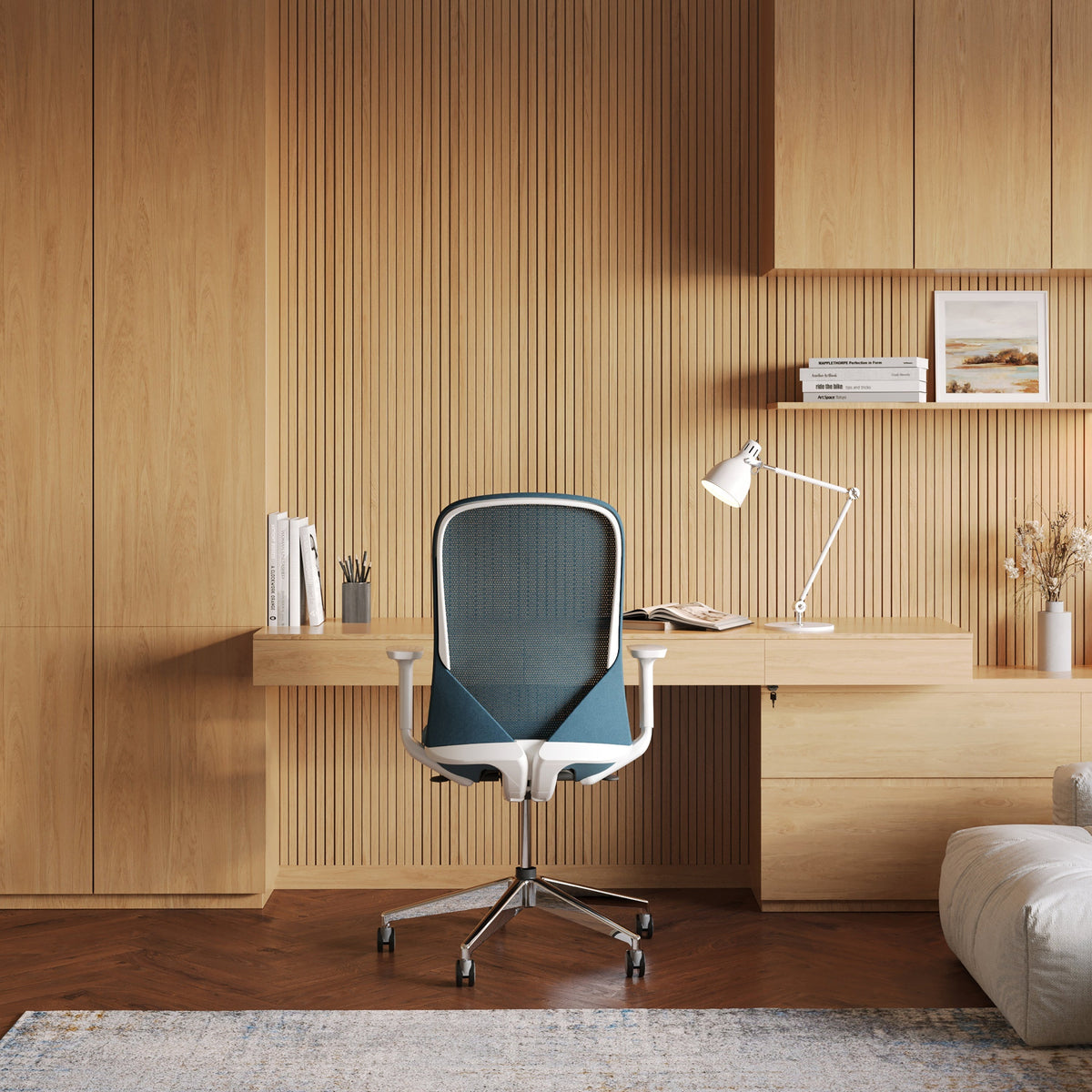
The Home Office Setup That Helps You Switch Off

Your Workday Starts Here (And Ends Here Too)
Working from home sounds convenient, until work starts following you everywhere. Your laptop ends up on the couch, your dining table becomes your office, and your brain never fully switches off. The secret to separating work and home isn’t willpower. It’s having a furniture setup that creates a clear boundary. When your workspace feels like a dedicated zone, it becomes easier to focus during the day and fully relax when the day ends.
Why Work-Home Separation Is So Hard in the First Place
The biggest challenge of remote work is that your home is designed for comfort, not productivity. Your brain associates certain spaces with rest, meals, entertainment, and family time. When you work in those same spaces, everything blends together. Even after you log off, your mind stays “half on” because your environment still looks like work.
That’s why furniture matters more than people think. A strong setup creates a visual and physical signal that says: this is the work zone. When you step into it, you focus. When you step away, you unwind.
Even if you live in a small apartment or share space with others, you can still create separation. It just requires intentional furniture choices that support a clear routine, not just a place to put a laptop.
If you’re setting up a compact workspace that fits into real life, a Mini Standing Desk California setup is a smart starting point because it creates a dedicated work zone without taking over your entire home.
Build a “Work Zone” That Has a Clear Start and Stop
If your work setup can be packed up easily or blended into your home, your brain will keep treating it as temporary. The goal is to create a zone that feels stable and consistent.
Create a Workspace That Feels Like a Real Office
Choose One Spot and Commit to It
Even if it’s a small corner, consistency matters more than size. When you work in the same spot daily, your brain learns the pattern.
Signs You’ve Picked the Right Work Spot
-
you can sit comfortably without bumping into furniture
-
you have access to power and charging
-
you can keep your tools nearby without clutter
-
you can step away from it when you’re done
Bullet Tips to Define Your Work Zone
-
face your desk toward a wall to reduce distractions
-
keep your work tools in one area only
-
avoid working in bed (it blurs rest and work)
-
use a small rug or lamp to visually mark the zone
Use Furniture That Supports Daily Consistency
A workspace that feels solid is easier to stick to. A clean office desk setup helps define your work zone because it gives you a stable surface that feels “official,” even inside a home.
What Makes a Desk Feel Like a Work Boundary
-
enough space for your daily tools
-
a clean layout that stays consistent
-
room for a monitor or laptop setup
-
a surface that doesn’t become a storage pile
Bullet Tips for Keeping Your Desk a Work-Only Space
-
keep personal items off the desk surface
-
store snacks and entertainment items elsewhere
-
keep your work notebook and pen in the same spot
-
clear the desk at the end of each day
Use Movement and Position Changes to Create Mental Separation
One of the biggest reasons work bleeds into home life is that your body never changes mode. You sit in the same position, in the same place, for everything. Work, scrolling, watching TV, even eating.
A better setup gives your body a clear shift between “work posture” and “home posture.”
A Flexible Desk Helps You Switch Modes Faster
Change Your Position to Reset Your Focus
When you can shift between sitting and standing, you create natural transitions in your day. Those transitions help you mentally separate tasks too.
A clean standing desk setup supports this because it helps you move more without leaving your workspace or turning your day into a constant rearrangement.
Why Movement Helps Work Feel More Contained
-
standing breaks create natural “pause points”
-
you reset your posture and attention
-
you reduce the sluggish feeling that makes work drag on
-
you stop working in the same position you relax in
Bullet Tips for Using Movement as a Boundary
-
stand during calls or meetings
-
sit for focused typing tasks
-
stand for planning and reviewing
-
change position before your last task of the day
Make Your Workspace Feel Different From Your Living Space
If your home setup feels the same everywhere, your brain doesn’t get a clear signal to switch off. Your work zone should feel different.
Simple Ways to Make Work Feel Separate
-
keep your work lighting brighter than your living space
-
keep your desk surface clean and minimal
-
keep your work chair only at the desk
-
keep your work tools out of your relaxation areas
Bullet Tips for a Stronger Work-Home Divide
-
don’t bring your laptop to the couch daily
-
avoid leaving paperwork visible after work
-
keep your work headphones in your desk zone
-
create a “closing routine” every evening
Comfort Is Part of Work-Life Balance
Work and home blend together faster when you’re uncomfortable. When your chair hurts your back or your desk height feels wrong, you shift constantly. You move your laptop around. You end up working in random places just to feel better.
That creates chaos, and chaos kills boundaries.
A supportive work setup keeps you comfortable enough to stay in your designated zone. That’s how furniture helps you separate work and home. It keeps work contained.
Keep Your Screen Setup Clean and Consistent
Your screen area is the visual center of your workspace. When it’s messy, your whole work zone feels messy. When it’s clean, your work zone feels calm and controlled.
A Clean Screen Area Makes Work Feel More Structured
Raise Your Screen to Free Desk Space
When your screen sits on the desk, the area underneath becomes clutter storage. Sticky notes, chargers, random papers, and small items pile up quickly.
A flexible monitor arm helps lift your screen and keep your desk surface open, which supports a cleaner boundary between “work tools” and “home clutter.”
What a Clean Screen Setup Helps You Avoid
-
stacking books under your laptop
-
messy cable tangles around your monitor
-
constant repositioning
-
visual clutter that makes work feel stressful
Bullet Tips for a Cleaner Screen Zone
-
keep only one notebook near your monitor
-
store sticky notes in a drawer, not on the screen
-
route charging cables toward the back of the desk
-
keep your desk center open for actual work
Follow Ergonomic Basics So Work Feels Easier
A comfortable setup reduces strain, which makes it easier to stay focused during work hours and stop when the day ends.
This ergonomic workstation guide outlines practical ergonomic steps that support better posture and long-term comfort.
Quick Ergonomic Checks
-
screen at eye level
-
elbows relaxed while typing
-
feet stable on the floor
-
shoulders not raised or tense
Bullet Tips for Ergonomic Consistency
-
don’t work hunched over a laptop all day
-
keep your chair height steady
-
keep your keyboard position consistent
-
adjust your screen once, then leave it
Your Chair Can Be the Strongest Boundary Tool
A chair is more than a seat. It’s a signal. When you sit in your work chair, your brain goes into work mode. When you leave it, your brain starts switching off.
That’s why a supportive office chair is one of the best furniture choices for work-home separation. It helps you stay comfortable at your desk so you stop drifting into other areas of the house to work.
A good chair also reduces the “I’ll just work a little longer” effect, because your work zone feels complete. You don’t need to relocate to get comfortable.
Work-Home Separation Setup Guide (Table)
Here’s a simple table that shows how furniture choices can strengthen your work-home boundary.
|
Furniture Choice |
What It Solves |
How It Creates Separation |
Best For |
|
Dedicated desk zone |
working everywhere |
keeps work in one spot |
small homes |
|
Adjustable desk setup |
long sitting sessions |
creates movement transitions |
long workdays |
|
Clean screen layout |
visual clutter |
makes work zone feel structured |
focus work |
|
Supportive work chair |
discomfort + drifting |
keeps you at your desk |
daily use |
|
Minimal desk surface |
constant mess |
makes closing routine easier |
busy schedules |
The “Closing Routine” That Turns Your Office Off
Furniture creates the boundary, but habits lock it in. The most important habit is your closing routine.
End Work With a Simple Physical Reset
Reset Your Desk in 3 Minutes
A clean desk makes tomorrow easier. It also helps your brain stop thinking about unfinished tasks.
Your 3-Minute Closing Routine
-
clear cups and trash
-
stack loose papers into one folder
-
put tools back in their spot
-
plug in devices to charge
-
wipe the desk quickly if needed
Bullet Tips to Make the Routine Stick
-
do it right after your last meeting
-
set a daily reminder for the same time
-
keep it short so you’ll actually do it
-
don’t aim for perfect, aim for reset
Remove Work Items From Your Living Space
If your laptop and paperwork stay visible after work, your brain stays in work mode.
What to Put Away Every Night
-
laptop (if possible)
-
work notebook
-
headset
-
paperwork
-
chargers that don’t need to stay out
Bullet Tips for a Cleaner Boundary
-
keep work items in one drawer or bin
-
avoid leaving your desk messy overnight
-
don’t bring your work tools to the couch
-
shut down your screen fully when done
What If You Don’t Have a Separate Room?
A lot of people don’t have a full home office. You might be working in your bedroom, living room, or dining area. That doesn’t mean separation is impossible. It just means your boundary has to be created with layout and routine instead of walls.
Here’s what works in small spaces:
-
use one desk setup only for work
-
avoid working in bed
-
keep your chair at the desk only
-
create a closing routine daily
-
keep your workspace minimal and consistent
The goal is to make work feel contained, even in a shared room.
When your workspace is stable, your home starts feeling like home again.
Your Work-Life Boundary Checklist (A Setup That Stays Strong)
Separating work and home is not about being strict. It’s about making your space support your life. When your furniture setup is intentional, work becomes easier to start and easier to stop.
Checklist: Furniture Setup for Work-Home Separation
-
Choose one dedicated work zone and stick to it
-
Use a desk setup that stays consistent
-
Keep your screen area clean and open
-
Use a supportive chair that keeps you comfortable
-
Use movement (sit/stand) to reset your mode
-
Keep work tools out of your relaxation areas
-
Create a 3-minute closing routine daily
-
Reset your desk so tomorrow starts fresh
When you build the right furniture setup, your home stops feeling like an office, and your work stops following you into every room.
Related Articles
-
 Our Conference Chairs and Meeting Tables Compared, so You Can Furnish a Huddle Room, a Meeting Room, or a Boardroom for Eight in One Order
-
 This Is How To Build A Small Home Office You Actually Want To Work From, And How To Pick Desks For Small Spaces - Urbanica Furniture's Full Guide
-
 Best Setup for Laptop and 2 Monitors With Less Neck Strain
-
 Round Meeting Table Ideas That Make Team Talks Smoother
-
 Better Guest Seating Ideas Around a Round Meeting Table
-
 Draw the Line at Your Desk


