








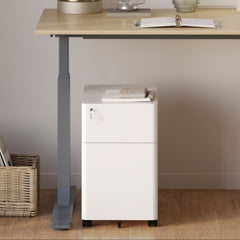


Filing Cabinet Choices for Cleaner Workstation Planning
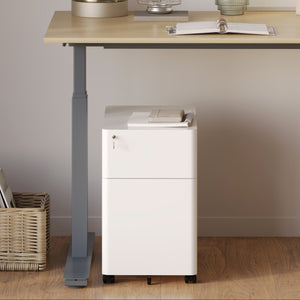
Cleaner workstation planning starts with filing storage that matches the desk, document volume, security needs, and daily workflow. Explore how cab...
Learn more
Visit quiz page to see how we makes it easy to create an inspiring workplace


Mental performance is not just about discipline, motivation, or time management. It is also deeply physical. When your body feels uncomfortable, your brain spends energy managing strain, shifting posture, and trying to stay alert through tension. That hidden effort adds up. It slows thinking, reduces patience, and makes focus feel harder than it should. On the other hand, when your workspace supports your body properly, mental clarity becomes easier to maintain. Comfort is not an indulgence. It is a practical foundation for better focus, better mood, and better output.
Your brain reacts to your body continuously. If your neck is tight, your shoulders are raised, or your lower back feels compressed, your nervous system reads that as stress. Stress can narrow attention and shorten your ability to stay mentally engaged. This is why discomfort often leads to mental restlessness. You may think you are “easily distracted,” but sometimes your body is simply asking for relief.
Comfort improves mental performance in three major ways:
It reduces distraction caused by pain or tension.
It lowers mental fatigue by preventing constant posture corrections.
It supports steadier energy because your body is not fighting gravity all day.
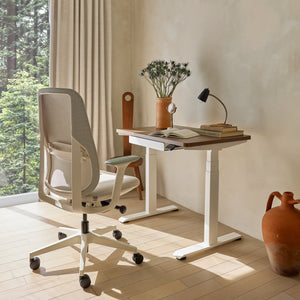
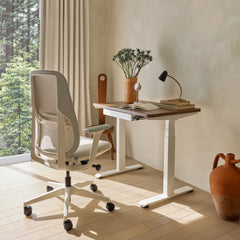
This matters even more in compact rooms where you cannot rely on extra space to “fix” a layout. A properly sized workspace helps you stay mentally calm because it feels physically natural to use. For small rooms, a Small Standing Desk California setup can support comfort without crowding the space, which helps preserve both physical ease and mental clarity.
When you sit in the same posture for too long, circulation slows and muscles tighten. This often shows up as brain fog, slower reaction time, and a strong urge to take breaks even when you still have work to do.
A workspace that encourages movement makes it easier to stay alert. You do not need a complicated routine. You simply need the option to shift positions naturally.
Keeps blood flow steady, supporting alertness
Reduces stiffness that triggers distraction
Helps you re-engage during long tasks
Encourages mini-resets that prevent burnout
A standing desk supports this kind of natural movement. You are not forcing productivity. You are setting up your body so focus comes easier.
Your brain processes what it sees even when you are not actively paying attention. If your work surface is crowded, your mind has to filter more visual input. That filtering takes energy and makes deep focus harder.
A work surface that fits your real workflow reduces the need to rearrange items. When your essentials have space, your mind stops scanning for solutions.
Keeps your tools within reach without piling
Prevents item migration into your main work zone
Encourages a cleaner visual field
Makes daily resets faster
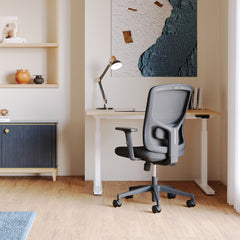
A properly sized office desk can reduce decision fatigue because it creates a predictable place for your daily tools, without tempting you to spread clutter across every corner.
A small space can still support high performance, but only if furniture scale is handled well. Oversized furniture creates tight walking paths and cramped corners. That physical restriction becomes psychological pressure. You feel boxed in. Stress rises. Focus drops.
This is why furniture selection matters just as much as furniture quality. Smart layouts use scale to preserve breathing room, which supports calm attention. If you want a helpful reference point, this guide on furniture for small spaces highlights how proportion and thoughtful placement can keep compact rooms functional and mentally comfortable.
The takeaway is simple: when a room feels easier to move through, it feels easier to think inside it.
Many people experience mental fatigue not because the work is difficult, but because their posture is working too hard. When shoulders creep upward or arms have no support, muscles stay engaged all day. That constant effort becomes a background drain.
Proper arm support reduces shoulder strain and keeps your upper body relaxed while you type, scroll, read, or take calls.
Reduces shoulder tightness during long typing periods
Prevents leaning forward, which increases neck strain
Makes posture feel “neutral” instead of forced
Helps you stay focused instead of fidgeting
Adding an ergonomic arm can make comfort feel consistent throughout the day. When your arms feel supported, your mind has less physical stress to manage.
A chair can feel “fine” at first and still be a problem. The real test is how your body feels after two to four hours. A supportive chair reduces fidgeting, reduces tension, and prevents fatigue from accumulating.
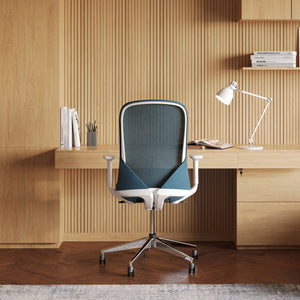
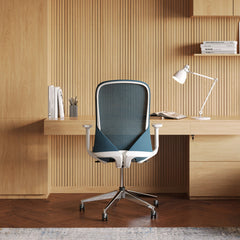
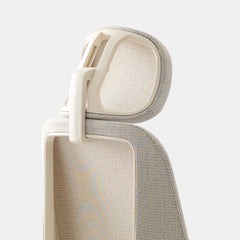
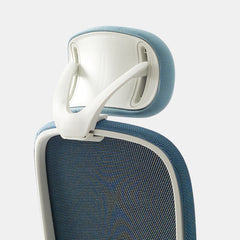
A high-quality ergonomic chair supports posture in a way that helps you stay focused longer. When seating keeps your body stable, your brain is not constantly checking in with discomfort. That is one of the simplest ways to improve mental endurance.
Comfortable seating supports mental performance by:
reducing interruptions caused by discomfort
lowering stress created by posture strain
improving attention span through physical stability
|
Comfort Factor |
What It Helps Physically |
What It Helps Mentally |
Best Result |
|
Movement options |
Reduces stiffness |
Keeps attention fresh |
Less brain fog |
|
Clear work surface |
Prevents clutter buildup |
Reduces visual overload |
Faster task flow |
|
Proper arm support |
Relieves shoulder strain |
Reduces fidgeting |
Longer focus |
|
Supportive seating |
Protects posture |
Lowers fatigue |
Better mental stamina |
|
Right-size furniture |
Preserves space flow |
Reduces stress |
Calm focus |
Decision fatigue is not only about big choices. It is often built from constant small adjustments:
Where should I put this?
Why does my neck hurt?
Should I stand or sit?
Why am I uncomfortable again?
A supportive workspace removes these questions.
When furniture supports your habits, your brain stops troubleshooting your setup. That frees mental energy for real work.
You stop rearranging your workspace during the day
You do not think about posture every few minutes
You can focus longer without needing frequent resets
You feel less mentally drained at the end of the day
Comfort supports productivity because it removes friction. Less friction means fewer decisions. Fewer decisions means stronger mental performance.
Mental performance is not only about being productive today. It is about being able to work well consistently without burning out. A workspace that causes strain creates cumulative fatigue. Over time, this can lower motivation, increase irritability, and reduce mental sharpness.
A comfort-first setup supports long-term performance by helping you:
maintain energy across the day
reduce stress and tension buildup
protect focus during demanding tasks
feel better after work, not just during it
When your body feels supported, your mind performs more reliably. This is why ergonomic choices matter even for people who do not think of themselves as “ergonomic.” Everyone benefits from a setup that works with the body, not against it.
Here is the simple truth: comfort is not a separate goal from productivity. It is one of the most direct ways to protect mental clarity. If your workspace supports the body, it supports your focus, patience, memory, and attention.
Can you change posture during the day without disrupting your workflow?
Is your work surface large enough for essentials without becoming a dumping zone?
Are your shoulders relaxed when typing?
Does your chair stay comfortable after several hours?
Does the space feel open enough to breathe and move?
Do you finish work feeling less tense than when you started?
When you can answer “yes” to most of these, you will likely notice a real improvement in mental performance, not just comfort.


You have unlocked free shipping!
You're saving $29 and unlocked free shipping!
Leave a comment