



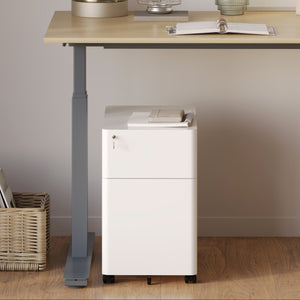






















Filing Cabinet Choices for Cleaner Workstation Planning
Cleaner workstation planning starts with filing storage that matches the desk, document volume, security needs, and daily workflow. Explore how cab...
Learn more
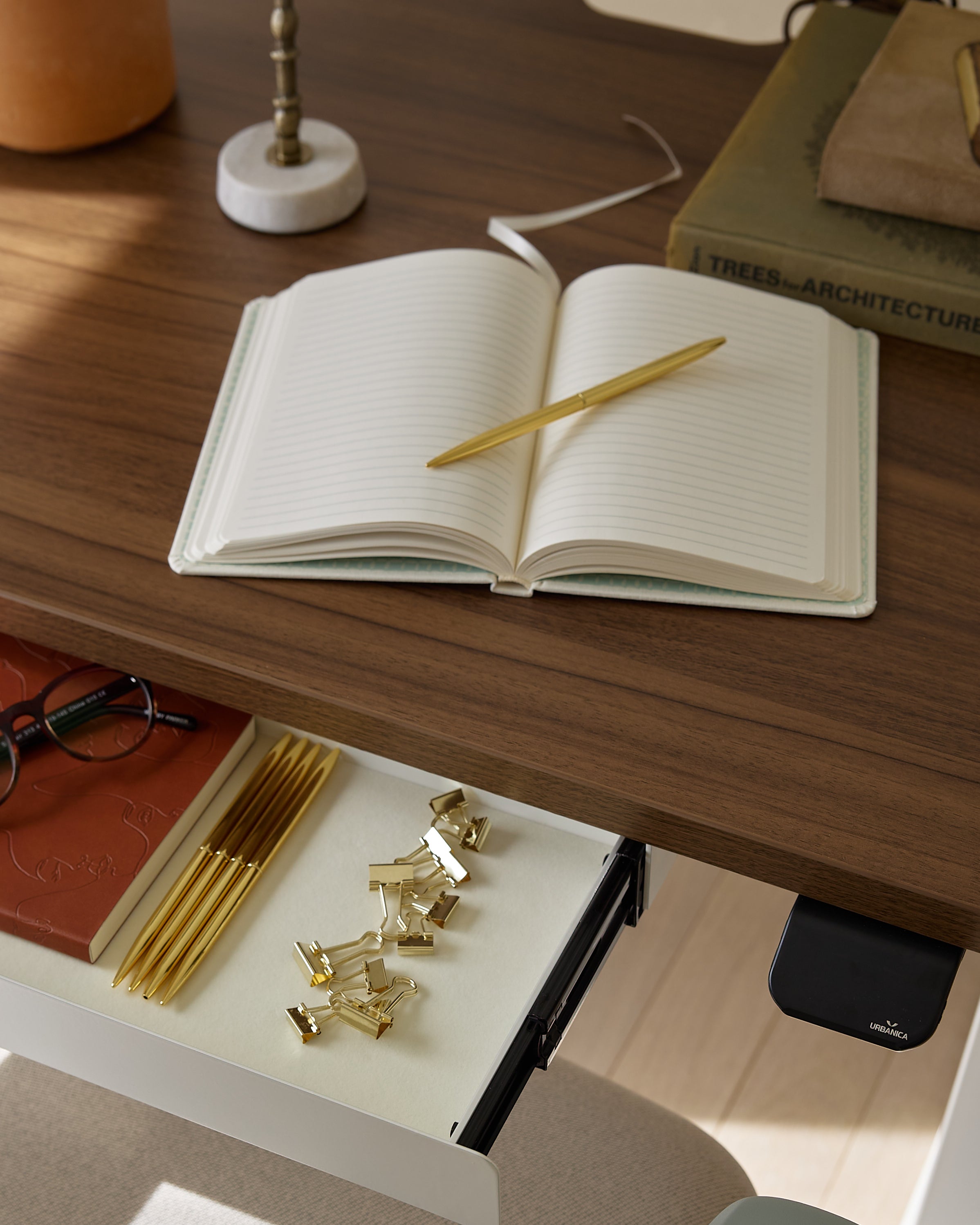
Visit quiz page to see how we makes it easy to create an inspiring workplace


When two partners share a workspace, the table is more than a surface. It is the operational center where habits, tools, and rhythms meet. We design with that reality in mind: a table must provide distinct personal zones, a shared common ground, and ergonomic flexibility so both people can sustain focus, health, and a sense of fairness. The right table reduces friction, preserves independence, and amplifies collaboration.
Choosing a table for two begins with clarity about how you work together. Start with three decisions: what tasks each person performs, how often you need to collaborate, and how the room itself limits or enables layout options. From there consider these practical attributes.
Personal work zones: Each user needs a clearly defined area for screens, input devices, and commonly used tools.
Shared center: A neutral middle area for shared references, chargers, or collaborative sketching.
Movement tolerance: A table that accommodates shifting postures and temporary devices without impacting the other person.
Measure the room, door swing, and walkways. A table that is too wide can block circulation; one that is too shallow forces constant reconfiguration. Plan for at least 24 inches of usable depth per user for laptops or tablets plus a shared center zone when possible.
Work habits evolve. A creative partner who starts with a laptop might grow into a multi-monitor setup. Pick a table that accepts upgrades to monitor arms, cable channels, and accessory trays.
Ergonomics is not a single-person problem when two people share a surface. Each partner will have different ideal chair heights, monitor heights, and keyboard positions. The table must allow those differences to coexist without compromise.
A table with height flexibility makes it possible for each user to set a comfortable working plane. If you prefer a fixed table, combine it with individually adjustable chairs and monitor arms to create separate ergonomic stacks.
Neutral wrist position, elbows near the body, and the top of the monitor at or slightly below eye level are practical rules that reduce strain and cumulative load. These principles are reflected in authoritative workstation guidance.
Shared setups double the exposure to awkward postures if the table forces a compromise. Good ergonomic design helps prevent work-related musculoskeletal disorders and supports productivity over long periods. Fitting the job to the person reduces fatigue and injury risk.
Many couples benefit when at least one zone supports standing and the other supports seated focus. Alternating between sitting and standing reduces static load and helps circulation, which can improve alertness and reduce discomfort over a workday.
There is no single best table for every couple. Choice depends on collaboration style, space constraints, and equipment needs. Below are configurations we recommend, and when each makes sense.
Best for partners who want to exchange ideas frequently while maintaining their own territory. Side-by-side layouts keep communication easy and let you share reference materials without moving around the room.
Product fit example: two person standing office desk — supports two adjacent users with height-adjustable capability, making it a strong fit for pairs who alternate postures.
Practical setup tips
Place shared items in the center, but keep personal cables routed to each side.
Use slim monitor arms to preserve sightlines and avoid physical crowding.
When one or both partners juggle a mix of digital and analog work, a modular workstation with separate zones lets each person customize their area without reconfiguring the entire desk.
Product fit example: four person modular workstation — its segmented surfaces and cable channels scale down nicely for two users who need distinct task zones.
Practical setup tips
Reserve one zone for high focus tasks and another for collaborative or messy work.
Label drawers or bins so tools remain predictable and easy to access.
If both partners use heavy equipment, multiple monitors, or physical drafting materials, a wide continuous desktop is invaluable. The extra surface removes micro-conflicts over space and allows large references, printers, or scanners to sit between users without intrusion.
Product fit example: large multi user workstation design — a long, stable surface built for multiple users that provides the room required for complex setups.
Practical setup tips
Stabilize the center with cable trays and a robust frame to avoid wobble when both type.
Add under-desk storage to keep the desktop visually clean.
When square footage is limited, intelligent compact desks preserve function. Choose depth over needless width to keep monitors at a comfortable viewing distance.
Product fit example: small footprint standing desk — compact but adjustable, this desk makes dual work feasible in tight rooms.
Practical setup tips
Use wall-mounted shelving rather than under-desk bins to save legroom.
Consider folding or mobile surfaces for occasional reconfiguration.
Not every zone needs to be adjustable. Where fixed monitor rigs and document stands are required, a high-quality seated desk keeps a reliable baseline for long, concentrated tasks.
Product fit example: modern office desk design — a stable, well finished seated desk that complements an adjustable neighbor zone.
Practical setup tips
Pair with adjustable monitor arms and footrests to individualize posture.
Keep frequently used items within a consistent arc to reduce twisting.
Shared friction is often administrative. The right storage and cable strategy prevents daily frustrations that can spill into partnership stress.
Dual drawers or split shelving help keep personal items separated.
Open center trays work well for truly shared items like staplers or reference prints.
Designate cable paths under the center of the table and branch to each user via short, labeled pigtails. Shared power strips with dedicated outlets per user keep conflicts predictable.
A dense tabletop reduces vibration and typing noise when both people are active. Laminate and finished wood offer easy cleaning while metal frames provide stability for monitor arms and heavy equipment.
The way a table sits in the room influences how partners move and interact. Plan placement for light, acoustics, and traffic flow.
Window-facing arrangements promote shared daylight and visual variety, which supports creativity.
Wall-facing placements reduce distraction and improve deep focus by limiting peripheral motion.
Back-to-back configurations are excellent when partners keep asynchronous meeting schedules. L-shaped solutions give each user a dedicated wing for their primary tasks while keeping a short shared axis for quick exchanges.
Use this short checklist when you compare options in store or online.
1. Depth per user: at least 24 inches of usable surface for screen and input.
2. Height options: adjustable, or compatible with adjustable chairs and monitor arms.
3. Frame strength: steady with minimal lateral flex when both type.
4. Cable management: integrated troughs or the ability to add trays.
5. Storage balance: a mix of shared and personal storage.
6. Surface finish: low reflection and noise dampening for dual typing.
7. Upgrade pathways: accepts monitor arms, privacy screens, and under-desk drawers.
The table is the hardware. Habits are the software. Two people who agree on a few consistent norms will get more from the same surface.
Keep personal work within your zone unless you ask.
Return shared tools to the center tray.
Agree on cable management and charging schedules that avoid blocking access.
Inspect monitor heights, keyboard reach, and chair adjustments. Small tweaks prevent chronic strain. For practical workstation benchmarks and setup tools, consult established guidance from recognized authorities: ergonomic workstation guidance.
A table must reflect how you function as a couple.
Choose side-by-side or large continuous desktops where ideation flows naturally and shared artifacts sit between you.
Pick back-to-back or L-shaped layouts with clear sightline separation and independent cable runs so one partner’s calls do not disturb the other.
Compact, adjustable desks paired with vertical storage create a flexible, low-footprint solution.
Compare configurations and identify a base model that can be tailored to your needs in our full collection of modern desks.
As more households blend living and working places, furniture that supports more than one user will become a standard requirement. Modular frames, easy adjustments, and integrated organization will make it simpler for partners to co-create effective, healthy work environments. Expect smarter surface planning and simpler integration of accessories that keep each person comfortable and productive without sacrificing the shared nature of the space.


You have unlocked free shipping!
You're saving $29 and unlocked free shipping!
Leave a comment