



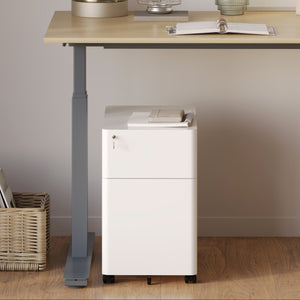






















Filing Cabinet Choices for Cleaner Workstation Planning
Cleaner workstation planning starts with filing storage that matches the desk, document volume, security needs, and daily workflow. Explore how cab...
Learn more
Visit quiz page to see how we makes it easy to create an inspiring workplace


Hybrid living has changed the center of gravity in our spaces. Work, learning, making, sharing meals, and gathering now happen in the same rooms, often on the same surface. From our vantage point as furniture designers and builders, the most capable object for this new reality is the table. A well-considered table can flex between roles without visual noise, support healthy posture, and scale from solo tasks to collaborative sessions. This long-form guide explains how and why the modern table earns its place as the most effective hybrid furniture, and how to select, configure, and care for one that will serve for years.
The strongest hybrid pieces hold two truths at once. They feel calm enough for home and practical enough for focused work. A table meets that bar because it is fundamentally defined by surface, clearance, and proportion. With the right height, leg geometry, and depth, a table can be a workstation at 9 a.m., a studio bench at noon, and a dining setting in the evening. The result is continuity. Your environment does not need to fight itself to accommodate the day’s rhythm.
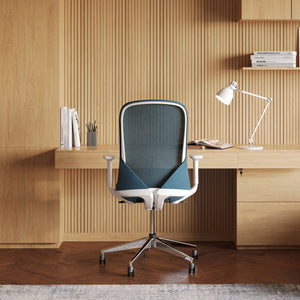
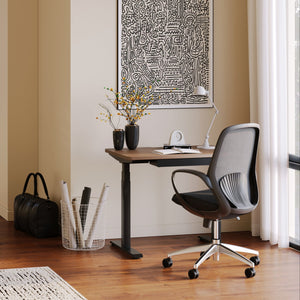
Hybrid spaces succeed when furniture does not force a theme. Neutral finishes, soft edges, and balanced massing let a table sit comfortably in living rooms, dens, and compact studios. Consider how a quiet silhouette, like the contemporary wood office desk, reads in both daylight and lamplight. The surface is calm, the frame is honest, and the proportions invite laptops, sketchbooks, or a shared meal without visual conflict.
Furniture that supports motion helps users reset posture and focus. Tables are particularly good at this because movement does not require a mode change. You can stand, sit, lean, or spread out materials without leaving the work zone. Casters, glides, and thoughtful weight distribution allow gentle repositioning to capture better daylight, camera angles, or social arrangements.
A hybrid table must offer enough depth for devices, notebooks, and elbows. Shallow surfaces cause clutter to encroach on the work area. Deeper tops with organized zones let tools live nearby without crowding. This balance is the difference between a surface that invites sustained focus and one that creates constant friction.
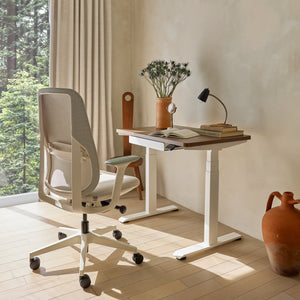
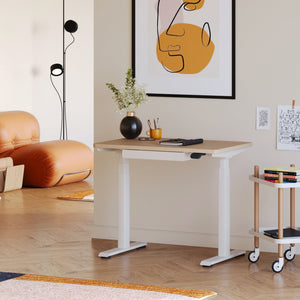
In smaller homes and apartments, adjustability is not a nice-to-have. It is the enabling feature that turns a corner into a purposeful workstation. Designs like the compact adjustable standing table bring height variation to tight layouts, offering sit-to-stand transitions without committing an entire room to office use.
Clarity is practical. Hybrid tables that reduce visual turbulence help the brain stay organized. Straightforward cable routing, clean underside geometry, and restrained hardware reduce clutter in the peripheral field. When the surface looks settled, the mind follows.
Healthy posture starts with correct relationships: seat height to table height, monitor position to eye level, and shoulder width to usable surface area. A table that respects these proportions reduces strain on wrists, neck, and lower back. The goal is not maximal adjustability at all costs. It is appropriate adjustability paired with stable surfaces and friendly edges.
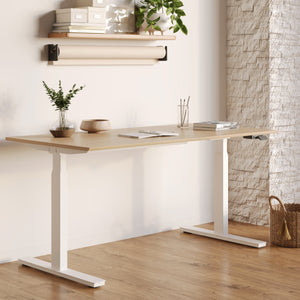
Standing options encourage circulation and help many people manage energy through the day. The height-adjustable standing workstation provides a stable surface that supports typing, pointing, and sketching while standing. Alternating positions can refresh attention, and with a consistent top dimension, transitions do not interrupt the work itself.
Good ergonomics is measurable. Viewing distance, elbow angle, and wrist alignment all play a role in comfort. For clear, practical direction, consult ergonomic workspace principles for posture, reach zones, and task rotation. We design with these fundamentals in mind so the furniture encourages safe habits rather than making them harder.
Measure the room in full scale, not just in drawings. Tape the intended footprint on the floor and walk around it. Can two people pass behind a seated user without bumping shoulders or chairs. Can the table rotate slightly to capture better daylight. A well-sized table respects flow on all sides and never forces tight bottlenecks.
Place the table along the long axis of the room when possible. Side light from windows reduces screen glare compared to direct backlight. Consider what is behind you on video calls and whether legroom aligns with floor outlets. Sound matters too. Hard parallel surfaces can amplify noise. A rug, curtains, and bookshelf absorption can tame echo without changing the table itself.
Hybrid spaces work best when they can reset quickly. Closed storage for peripherals, trays for in-progress work, and a dedicated caddy for chargers and dongles make it easy to clear the surface for meals or guests. The table remains the constant while tools circulate in and out as needed.
We build for longevity, which means choosing materials that look and feel better with use. Solid wood with balanced grain, quality veneers over stable cores, and durable finishes resist premature wear while preserving a tactile feel. Slight variations are not defects. They are the story of a surface you are not afraid to touch.
A table is only as honest as its frame. Stable joinery and thoughtful bracing prevent wobble without adding bulk. Powder-coated steel legs and well-seated fasteners keep the structure quiet. The result is confidence during typing, drawing, or cutting fabric at the edges of the top.
Parts that can be repaired or swapped reduce waste and protect the initial investment. Hardware access, replaceable glides, and panel systems support maintenance over time. Collections that prioritize modular longevity help spaces evolve. For example, Urbanica’s adaptive desk series reflects this approach with coordinated forms that can migrate between rooms as needs change.
Shared tables should prioritize eye contact, cable order, and equal access to the center. Clear sightlines and warm finishes support discussion. Edge radiuses help partners sit closer without hot spots on forearms. When the center zone is free of clutter, ideas can move from one laptop to another with ease.
Some work requires multiple people at once, with space for devices, samples, and notes. The four-station modular table system offers a coordinated arrangement that gives each person a defined zone while still enabling quick collaboration. When headcount grows or projects expand, a larger surface may serve better. The six-person collaborative workstation extends the shared area and maintains predictable geometry so teams can spread out materials without chaos.
Cable sprawl is more than a visual issue. It slows setup, interrupts flow, and can even be unsafe. Thoughtful routes, discreet grommets, and consistent power access are quiet but significant features. When a shared table keeps cords tidy, people focus on the work, not the wires.
The table below maps common hybrid needs to functional strengths. Use it to identify the right starting point, then tune dimensions and accessories to your context.
| Model | Primary Role | Best Setting | Core Strength | Typical Scenario |
|---|---|---|---|---|
| Contemporary Wood Office Desk | Minimal work and life balance | Living room or bedroom office | Calm profile that suits home settings | Laptop work in the morning, dinner in the evening |
| Compact Adjustable Standing Table | Height-flexible surface in tight spaces | Studio apartments and small dens | Quick sit-to-stand in a small footprint | Focused tasks and occasional drawing |
| Height-Adjustable Standing Workstation | Health-forward focus work | Dedicated corner or spare room | Stable standing posture support | Long sessions that benefit from movement |
| Four-Station Modular Table System | Small team collaboration | Open office or workshop | Defined personal zones within one surface | Project sprints, reviews, and planning |
| Six-Person Collaborative Workstation | Larger group coordination | Coworking bay or studio floor | Expansive shared area with order | Design charrettes and cross-functional meetings |
List the top five activities you expect the table to support. Rank them by frequency and intensity. If you sketch daily and host dinner twice a week, depth and finish durability may rank higher than maximum width. If video calls are constant, prioritize camera-friendly orientation and legroom for stable seating.
As a baseline, give each daily user at least 60 to 75 centimeters of horizontal space and ensure knees clear support structures while swiveling. Verify that chairs slide in and out without pinching against adjacent furniture. If two people will regularly share the surface, model their elbow radiuses on the top to confirm there is space for parallel devices.
Many homes now support two users at once. When both people need height control and clear cable routes, a dual station offers balance. The dual-standing workstation for two users provides side-by-side adjustability so each person can set an appropriate height without compromise. Clear center zones allow shared materials without crossing cords.
Hybrid success depends on ending each session with a quick reset. Store peripherals, clear cups, and park chairs in a consistent orientation. The table will welcome the next session with less friction, and the space will feel calm between uses.
Divide the top into zones: active work, reference, and staging. The active zone sits directly in front of you with keyboard or notebook. The reference zone holds a stand or secondary device just beyond arm’s reach. The staging zone sits to the side for samples, trays, or in-progress parts. This layout prevents important items from slipping under piles.
Pair overhead ambient light with a focused task lamp at the opposite side of your dominant hand. This minimizes shadows across the work zone. For screen-heavy tasks, favor side light over direct backlight to reduce glare and the need to overcompensate with brightness.
Chairs should not fight the surface. Check that armrests slide under the apron and that the seat pan supports a neutral pelvis. If you shift between sitting and standing, a simple footrest can reduce fatigue during either position by letting you change leg angles without thought.
Use coasters and soft trays for metal tools. Wipe spills promptly with a slightly damp cloth, then dry. Avoid harsh chemicals that can break down finishes. Rotating placements for keyboards and pads helps distribute wear evenly.
Re-torque accessible fasteners after the first months of use and then seasonally. Humidity and temperature changes settle joints in new environments. A few minutes with the right hex key preserves the desk’s quiet feel and extends its service life.
When needs change, consider repositioning the table, altering cable routes, or swapping accessories before replacing the core piece. A sturdy surface and stable frame can handle new roles for many years with small, targeted updates.
Choose a surface that tolerates cutting mats and sketch pens yet cleans up to a welcoming dining setting. Protect the top with removable pads during projects. Keep a low, closed cabinet nearby for tools so you can clear the table quickly before guests arrive.
Go for a height-flexible surface with simple cable order and a small auxiliary cart. Use vertical storage for peripherals and stands to free the main top. Position the table so the window sits to the side, not behind you, to tame glare on video calls.
Adopt a shared surface that gives each person elbow room, with center space reserved for materials or a shared device. Set a labeling system for chargers and adapters so they return to the same grommets after sessions. Keep a rolling whiteboard nearby to capture quick notes without crowding the table.
The hybrid era rewards furniture that supports attention, movement, and community without demanding center stage. The table will continue to lead because it earns its place through simple truths. A stable plane at the right height lets people think, make, and share. Adjustable options encourage healthier posture without forcing a different room. Repairable parts and durable materials protect both the user and the environment. As homes and workplaces keep evolving, the most capable hybrid furniture will remain the one that sets a clear surface for whatever comes next.


You have unlocked free shipping!
You're saving $29 and unlocked free shipping!
Leave a comment